How to Get Rid of a Stress Looking Face (2026 Guide)
You get rid of a stress looking face by reducing the cortisol and sympathetic nervous system activation that drives the visible changes, repairing the skin barrier and supporting collagen through targeted skincare and nutrition, restoring sleep quality, and releasing the chronic facial muscle tension that stress etches into your expression. The face you see in the mirror after months of stress is not permanent. It is the visible endpoint of specific hormonal, neural, and behavioral pathways that you can reverse.
According to the American Psychological Association, chronic stress accelerates cellular aging through multiple pathways including telomere shortening and increased oxidative stress. Research published in the Journal of Investigative Dermatology has documented that cortisol upregulates enzymes called matrix metalloproteinases that break down collagen and elastin in the dermis. The face ages faster under chronic stress not because time speeds up but because cortisol literally digests the structural proteins that keep skin firm and resilient.
This article gives you a complete, science-grounded daily plan for reversing the stressed-face appearance. You will learn the specific mechanisms that change your face under stress, what is reversible and what is not, and a practical morning-to-night routine that fits into a busy life. No product hype. No promises that a single cream will erase years of stress. Just the physiology of what happened to your face and the evidence-based steps to reverse it.
how to get rid of stress looking face
You get rid of a stress looking face by addressing the four interconnected causes: elevated cortisol and collagen breakdown, chronic facial muscle tension from sympathetic nervous system activation, sleep deprivation and its visible effects on the periorbital area, and stress-related behaviors including poor nutrition, dehydration, and facial touching or picking. A cream alone addresses none of these adequately.
The stressed face has a recognizable pattern. The skin looks dull, tired, and may have more visible fine lines, particularly around the eyes and mouth. The jaw and brow appear tight, creating a tense or worried expression even at rest. There may be under-eye darkness and puffiness from poor sleep and fluid retention. The complexion may be uneven, with stress-induced acne or eczema patches. This constellation of signs reflects months of neuroendocrine and behavioral stress effects on facial tissue.
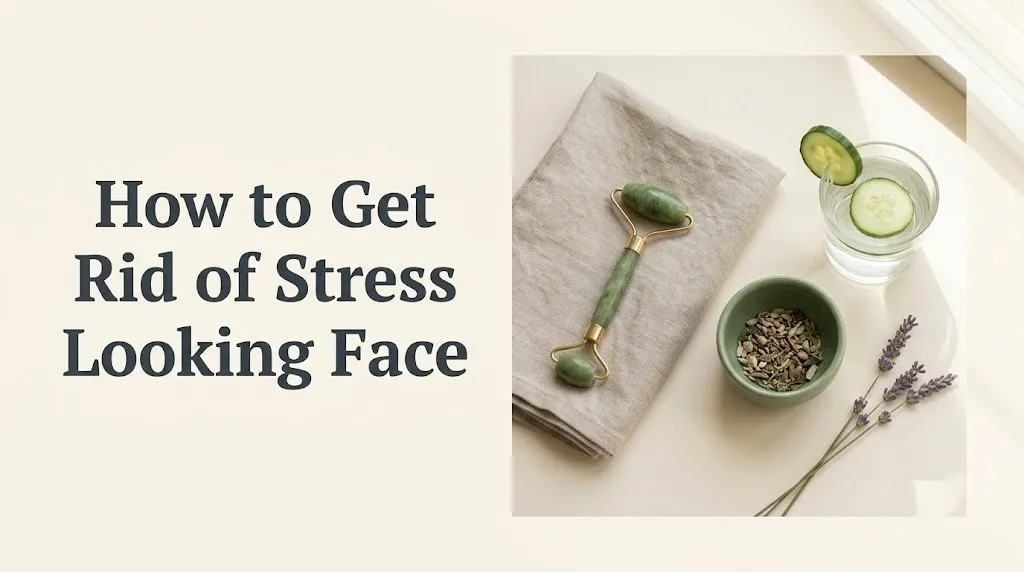
Reversal requires a multi-pronged approach sustained over weeks to months. The skin turns over approximately every 28 days, so visible improvement in skin quality takes at least one full cycle. Collagen rebuilding takes longer, on the order of months. Muscle tension can begin to release within days of consistent practice. Sleep-related improvements in under-eye appearance can show within a week of improved sleep quality. The timeline for reversal matches the timeline of the original damage.
The plan that follows integrates stress management, sleep optimization, targeted nutrition, facial muscle relaxation, and evidence-based skincare into a daily routine that does not require hours of your time. Consistency matters more than intensity. A few minutes of the right practices done daily produce more change than an elaborate weekend protocol done sporadically.
Key Takeaway: The stress face is reversible, but only by addressing the stress physiology that created it. Skincare helps. Stress reduction heals. You need both.
what does stress do to your face
Stress does multiple things to your face through hormonal, neural, immune, and behavioral pathways. Cortisol degrades collagen and elastin, producing fine lines and sagging. Epinephrine and norepinephrine constrict facial blood vessels, reducing the oxygen and nutrient delivery that gives skin its healthy glow. Facial muscles tense and hold that tension, creating expression lines. Sleep disruption impairs nightly skin repair. Stress behaviors including poor eating, alcohol use, and face touching add surface damage.
Cortisol’s effect on collagen is the most significant long-term mechanism. The dermis, the middle layer of skin, is a scaffold of collagen and elastin proteins that provide structure and elasticity. Cortisol stimulates dermal fibroblasts to produce matrix metalloproteinases, enzymes that cleave collagen fibers. Over months of chronic stress, collagen density decreases. The skin becomes thinner, less resilient, and more prone to wrinkling. This is the same process that occurs in normal aging, accelerated by cortisol.
The vascular effects produce the tired, sallow complexion. Sympathetic nervous system activation constricts the small blood vessels in the facial skin. Blood flow decreases. Oxygen and nutrient delivery drops. The skin’s natural turnover slows. Dead skin cells accumulate on the surface, reflecting light poorly and creating a dull, tired appearance. This vascular constriction also means the skin heals more slowly from minor injuries and blemishes.
Muscle tension changes facial expression. The corrugator muscles between the eyebrows contract, producing the vertical frown lines. The frontalis muscle on the forehead tightens, producing horizontal worry lines. The masseter and temporalis muscles of the jaw clench, widening the lower face and producing a square, tense jawline. This tension becomes habitual. Even when you think you are relaxed, the muscles may be holding residual contraction.
Key Takeaway: Stress ages your face through four mechanisms: collagen breakdown, reduced blood flow, chronic muscle tension, and impaired nightly repair. Understanding which mechanism dominates your face tells you where to focus your reversal efforts.
what stress does to your face
Stress does the following specific things to your face, and each has a named mechanism: it breaks down collagen through cortisol-induced matrix metalloproteinases, it reduces microvascular blood flow through sympathetic vasoconstriction, it creates expression lines through sustained muscle contraction, it causes acne through cortisol-driven sebum production, it produces dark circles and puffiness through sleep disruption and aldosterone-mediated fluid retention, and it impairs the skin barrier through reduced ceramide synthesis.
The skin barrier deserves special attention. The stratum corneum, the outermost layer of the epidermis, relies on lipids including ceramides, cholesterol, and free fatty acids to maintain its moisture barrier. Cortisol suppresses the enzymes that synthesize ceramides. The barrier weakens. Water escapes through increased transepidermal water loss. The skin becomes dry, flaky, and more permeable to irritants. A face with a compromised barrier looks rough, feels tight, and may be inflamed.
Stress-induced acne on the face follows a characteristic pattern. In women, it concentrates on the jawline, chin, and lower cheeks. Cortisol stimulates the sebaceous glands to produce more oil. The excess oil, combined with slower cell turnover at the follicle opening, creates plugged pores. Cutibacterium acnes bacteria proliferate in the plugged follicle, and the immune system responds with inflammation. The result is the tender, red, stress-related breakout that appears in crops during high-stress periods.
The periorbital area, the skin around the eyes, is particularly vulnerable to stress effects because the skin there is the thinnest on the body. Sleep deprivation from stress causes the blood vessels under the eyes to dilate and become more visible through the thin skin, producing dark circles. Cortisol and aldosterone dysregulation cause fluid retention, which can pool in the loose tissue under the eyes, producing morning puffiness. The combination of dark circles and puffiness is one of the most recognizable stress face features.
can stress change the shape of your face
Stress can change the appearance of your face shape temporarily through muscle hypertrophy from chronic clenching, fluid retention from hormonal dysregulation, and fat redistribution in extreme chronic stress, but the underlying bone structure does not change. The shape changes are soft tissue changes. They are visible, they are distressing, and they are largely reversible when the stress resolves and the contributing behaviors are addressed.
The jaw is the area where shape change is most noticeable. Chronic stress causes unconscious jaw clenching and teeth grinding, both during the day and during sleep. The masseter muscle, the primary muscle of chewing, can hypertrophy significantly from this constant exercise. Masseter hypertrophy widens the lower face, creating a more square, masculine jawline. In someone whose natural face shape is more oval, this can feel like a noticeable and unwelcome change. Botulinum toxin injections into the masseter are a medical treatment for this, but stress reduction and conscious jaw relaxation can also reduce the hypertrophy over time.
Fluid retention changes facial contours. Cortisol dysregulation in chronic stress affects aldosterone, the hormone that controls sodium and water balance. Cortisol can activate mineralocorticoid receptors, causing sodium retention and water retention. The face, with its loose connective tissue, shows fluid shifts readily. Morning facial puffiness, particularly around the eyes and jawline, can make the face look rounder and heavier. This fluid retention fluctuates day to day and resolves when the stress-hormone balance normalizes.
Fat redistribution is the most extreme and least common facial shape change from stress. In Cushing’s syndrome, a condition of pathological cortisol excess, fat redistributes to the face, producing the characteristic moon facies. Chronic psychological stress does not produce cortisol levels as high as Cushing’s syndrome, but prolonged severe stress can shift fat distribution subtly, contributing to facial fullness. If you have noticed a rounder face and have other signs of cortisol excess including abdominal weight gain, easy bruising, and muscle weakness, a primary care physician should evaluate you to rule out medical causes of hypercortisolism.
cortisol and your facial appearance explained
Cortisol affects your facial appearance by binding to glucocorticoid receptors on dermal fibroblasts, epidermal keratinocytes, sebaceous glands, and the endothelial cells of facial blood vessels. Each cell type responds to cortisol in a way that contributes to the stressed-face appearance, and understanding these responses allows you to target each one in your reversal plan.
Dermal fibroblasts are the cells that produce collagen, elastin, and the ground substance of the dermis. Cortisol binds to glucocorticoid receptors on fibroblasts and changes their gene expression. Collagen synthesis decreases. Matrix metalloproteinase production increases. The net effect is collagen breakdown exceeding collagen production. Over months, the dermis thins and loses its structural integrity. This is the cellular basis of cortisol-induced skin aging.
Epidermal keratinocytes respond to cortisol by reducing their proliferation rate and their production of barrier lipids. The epidermis becomes thinner and its barrier function weakens. The skin looks dull because the dead cell layer accumulates unevenly. It feels rough because the barrier lipids are depleted. It may be inflamed because irritants penetrate more easily through the weakened barrier.
Sebaceous glands have receptors for corticotropin-releasing hormone, adrenocorticotropic hormone, and cortisol. When these hormones bind, sebum production increases. More oil on the skin surface contributes to acne in those predisposed. The oil also oxidizes on contact with air, contributing to the dull, sallow complexion.
The endothelial cells lining facial blood vessels respond to sympathetic activation by constricting. Chronic cortisol exposure sensitizes these vessels to constrictive signals. Blood flow remains chronically reduced, even after the acute stress has passed, because the vasculature has adapted to a new, more constricted baseline.
Key Takeaway: Cortisol talks to every cell type in your face, and the message is consistent: break down structure, weaken the barrier, produce more oil, and reduce blood flow. Reversing this requires lowering cortisol and supporting each cell type’s recovery.
stress-induced collagen breakdown and skin aging
Stress-induced collagen breakdown is the primary mechanism by which chronic stress accelerates facial aging. The process involves cortisol upregulating matrix metalloproteinases, specifically MMP-1, MMP-3, and MMP-9, which are enzymes that cleave collagen fibers in the dermis. This is not a theory. It has been measured in human skin studies.
A 2019 study in the Journal of Investigative Dermatology examined skin biopsies from women with high versus low perceived stress scores. The high-stress group had significantly lower dermal collagen density and higher MMP-1 activity. The difference was equivalent to approximately five to ten years of chronological aging. The researchers controlled for sun exposure, smoking, and other confounders. Stress independently predicted collagen loss.
Collagen loss manifests visibly as fine lines, particularly around the eyes where skin is thinnest, deepening of the nasolabial folds from the nose to the mouth corners, loss of facial skin firmness and elasticity, and slower wound healing. A stressed face does not just look tired. It looks older because the structural scaffold of the skin has been partially dismantled by stress hormones.
Collagen rebuilding is possible but slow. The process requires lowering cortisol to reduce ongoing MMP activity, providing the nutritional building blocks for new collagen synthesis, including vitamin C, proline, and glycine, and protecting existing collagen from additional damage including UV exposure and smoking. Topical retinoids can stimulate dermal collagen production and are the most evidence-backed topical intervention for collagen restoration. A board-certified dermatologist can prescribe tretinoin or recommend over-the-counter retinol products appropriate for your skin type.
facial muscle tension from stress
Facial muscle tension from stress is produced by chronic sympathetic nervous system activation maintaining contraction in the muscles of facial expression and mastication. These muscles are controlled by the facial nerve and the trigeminal nerve, and they receive autonomic input that increases their resting tone during stress. The tension is unconscious. You do not decide to furrow your brow or clench your jaw. Your sympathetic nervous system increases the baseline contraction of these muscles without your awareness.
The key muscles involved in the stress face are the corrugator supercilii, which draws the eyebrows together to create the vertical frown line between them, the frontalis, which raises the eyebrows and creates horizontal forehead lines, the orbicularis oculi, which tightens around the eyes and contributes to crow’s feet, and the masseter and temporalis, which clench the jaw and contribute to lower face widening and jaw pain.
This chronic tension has two visible consequences. First, it creates expression lines that become etched into the skin over time. A line that only appeared during active frowning becomes a permanent crease when the muscle is chronically contracted. Second, it changes the resting expression. A person with chronic corrugator tension looks worried or angry even when they feel neutral. This resting tense expression is what people mean when they say someone has a stressed face.
Releasing facial muscle tension requires conscious awareness and specific relaxation practices. Progressive muscle relaxation adapted for the face, facial massage, and biofeedback can all reduce resting muscle tone. The key insight is that you cannot simply tell your face to relax. The tension is autonomic. You need to activate the parasympathetic nervous system through techniques like diaphragmatic breathing, and then the muscle relaxation follows the autonomic shift.
stress-related sleep deprivation and your face
Stress-related sleep deprivation affects your face through multiple pathways that compound the direct hormonal effects of cortisol. During deep sleep, the body releases growth hormone, which stimulates collagen synthesis and tissue repair. Sleep deprivation reduces growth hormone secretion, depriving the skin of its primary nightly repair signal. The skin does not get its maintenance shift, and the damage accumulates.
The periorbital skin is the most visible casualty. Sleep deprivation causes the blood vessels under the thin under-eye skin to dilate and become congested. The stagnant blood shows through the skin as dark circles. Simultaneously, fluid can pool in the loose connective tissue under the eyes, particularly if cortisol-induced aldosterone dysregulation is causing sodium and water retention. The combination of vascular congestion and fluid pooling produces the puffy, dark under-eye appearance that is one of the most reliable visual indicators of poor sleep.
Sleep deprivation also increases cortisol the following day. A single night of poor sleep raises afternoon cortisol levels and increases sympathetic nervous system activation. This means the skin faces another day of reduced blood flow, increased MMP activity, and impaired barrier function. The sleep-deprived stressed face is not just showing the effects of the missed sleep. It is showing the amplified stress response that the sleep debt triggers.
Restoring sleep is the highest-impact single intervention for the stress face. The skin repairs itself during the deep sleep stages, particularly during slow-wave sleep in the first half of the night. Protecting the first four to five hours of sleep, when slow-wave sleep predominates, maximizes the skin’s repair window. Consistent sleep and wake times, a cool dark bedroom, and a wind-down routine without screens for 30 to 60 minutes before bed are evidence-based sleep hygiene practices.
Quick Tip:
The fastest visible improvement in your stressed face will come from three consecutive nights of seven to eight hours of quality sleep. No product matches what your own growth hormone and reduced cortisol do for your skin during deep sleep.
dark circles, puffiness, and cortisol-related fluid retention
Dark circles and puffiness under the eyes are driven by stress through three mechanisms: vascular congestion from sleep deprivation, fluid retention from cortisol and aldosterone dysregulation, and structural changes from collagen loss in the already-thin periorbital skin. Each mechanism requires a different intervention, which is why a single eye cream rarely solves the problem.
Vascular dark circles are the bluish or purplish discoloration under the eyes. They occur because the skin under the eyes is so thin that the underlying blood vessels are visible. Sleep deprivation causes these vessels to dilate and become congested with deoxygenated blood, which appears blue through the skin. The blood also leaks small amounts of hemoglobin into the surrounding tissue, where it breaks down into pigmented byproducts that create a brownish tint over time. This is why chronic sleep deprivation can produce dark circles that persist even after a good night’s sleep.
Puffiness is fluid accumulation in the loose periorbital connective tissue. Cortisol can activate mineralocorticoid receptors, mimicking aldosterone and causing sodium and water retention. The periorbital tissue, with its loose structure, is a preferential site for fluid pooling. Puffiness is typically worse in the morning because fluid redistributes during the night when you are horizontal. It improves during the day as gravity drains the fluid.
The structural component is collagen loss in the periorbital skin. As cortisol breaks down collagen, the already-thin under-eye skin becomes even thinner and more translucent. The underlying structures, including the orbital bone and blood vessels, become more visible. This structural thinning is the slowest to develop and the slowest to reverse.
Reducing dark circles and puffiness requires improving sleep, reducing dietary sodium to minimize fluid retention, sleeping with the head slightly elevated to facilitate overnight fluid drainage, and protecting periorbital collagen through sun protection, topical retinoids if appropriate, and stress reduction.
stress acne, rashes, and facial skin conditions
Stress acne, rashes, and facial skin conditions are visible signs of stress on the face that require specific treatment beyond general stress reduction. Stress acne from cortisol-driven sebum production appears on the jawline and chin in women and on the face and back in men. Stress hives appear as transient red welts from mast cell histamine release. Stress eczema appears as dry, red, scaly patches, often on the eyelids, from barrier dysfunction.
Stress acne treatment requires a combination of stress management and topical acne therapy. A gentle cleanser, a non-comedogenic moisturizer to support the compromised barrier, and a topical acne treatment containing benzoyl peroxide or salicylic acid form the basic regimen. Benzoyl peroxide reduces Cutibacterium acnes bacteria. Salicylic acid helps clear plugged pores. Both can be drying, so moisturizer is essential. If over-the-counter treatments are insufficient, a board-certified dermatologist can prescribe topical retinoids, topical antibiotics, or oral medications.
Stress hives on the face are treated with oral non-sedating antihistamines such as cetirizine or loratadine. Topical antihistamines are not recommended for facial use because they can cause contact dermatitis. Cold compresses applied to the face for 10 minutes can reduce itching and swelling. If facial hives are accompanied by lip, tongue, or throat swelling, or difficulty breathing, this is anaphylaxis, not stress hives, and requires emergency medical attention.
Stress eczema on the face, particularly on the thin eyelid skin, requires gentle care. A fragrance-free ceramide moisturizer applied multiple times daily supports barrier repair. Over-the-counter 1 percent hydrocortisone cream can be used on small patches for no more than a week, but should not be used on the eyelids unless directed by a dermatologist. A dermatologist can prescribe topical calcineurin inhibitors like tacrolimus that are safe for eyelid use and do not thin the skin.
nutrition and hydration for a stressed face
Nutrition and hydration support stress face reversal by providing the building blocks for collagen synthesis, the antioxidants that protect against cortisol-induced oxidative stress, and the water that maintains skin turgor and barrier function. The stressed face is not just a cosmetic issue. It reflects underlying nutritional depletion that stress both causes and worsens through poor dietary choices during busy periods.
Collagen synthesis requires specific nutrients. Vitamin C is a cofactor for the enzymes that cross-link collagen fibers. Without adequate vitamin C, collagen production stalls. Sources include citrus, bell peppers, strawberries, and broccoli. The amino acids proline and glycine are the primary building blocks of collagen protein. They are found in bone broth, gelatin, and protein-rich foods including eggs, fish, and legumes. A diet that is low in protein will limit collagen repair regardless of topical treatments.
Antioxidants protect existing collagen and lipids from oxidative damage. Cortisol increases oxidative stress in the skin. Antioxidants including vitamin E, polyphenols from green tea and berries, and carotenoids from colorful vegetables neutralize free radicals before they damage structural proteins and lipids. These nutrients are best obtained from food rather than supplements, with the exception of vitamin D, which many people need to supplement and which plays a role in skin barrier function.
Hydration is straightforward but often neglected during stress. Dehydrated skin looks dull, shows fine lines more prominently, and has reduced barrier function. Water intake of approximately 1.5 to 2 liters daily, adjusted for body size and activity, supports skin hydration from the inside. Topical humectants including glycerin and hyaluronic acid draw water into the stratum corneum from the environment and from deeper skin layers.
Caffeine and alcohol, both of which stressed people often consume more of, have specific effects on facial appearance. Caffeine is a diuretic that can contribute to dehydration if water intake is not maintained. Alcohol is a vasodilator that can worsen facial redness and puffiness and disrupts sleep architecture, impairing the nightly skin repair window. Reducing both improves facial appearance independently of any topical treatment.
the daily stress face reversal routine
The daily stress face reversal routine integrates stress management, sleep, nutrition, facial muscle relaxation, and skincare into a morning and evening sequence that fits into a normal day. Consistency over weeks produces the visible changes. The routine is designed to work with your stress physiology, not against it.
Here is the morning and evening plan:
Morning routine:
- Within 10 minutes of waking, drink a full glass of water. This rehydrates after overnight water loss and supports skin turgor.
- Practice 2 minutes of diaphragmatic breathing. Inhale for 4 counts, exhale for 6 counts. This activates the parasympathetic nervous system and begins the process of releasing overnight facial muscle tension.
- Cleanse gently with a pH-balanced cleanser. Harsh cleansing strips the already-compromised barrier.
- Apply a vitamin C serum to support collagen synthesis and provide antioxidant protection against the day’s oxidative stress.
- Apply a ceramide-containing moisturizer to support the barrier.
- Apply broad-spectrum sunscreen, SPF 30 or higher. UV exposure compounds cortisol-induced collagen breakdown.
- Eat a breakfast containing protein for collagen amino acids and vitamin C from fruit.
Evening routine:
- Remove sunscreen and makeup with a gentle cleanser. Double cleansing may be appropriate if you wear heavy makeup.
- Apply a topical retinoid if prescribed or an over-the-counter retinol if appropriate for your skin. Retinoids stimulate dermal collagen production. Start with every third night and increase as tolerated.
- Apply a ceramide moisturizer. Evening is when barrier repair is most active.
- Perform 5 minutes of facial muscle relaxation. Systematically relax the forehead, brow, jaw, and around the eyes.
- Practice 5 minutes of diaphragmatic breathing or a body scan meditation before sleep. This lowers sympathetic tone and improves sleep quality.
- Aim for 7 to 8 hours of sleep in a cool, dark room.
facial relaxation techniques and massage
Facial relaxation techniques and massage reduce the chronic muscle tension that creates the stressed facial expression and etches lines into the skin. The techniques work by increasing your awareness of held tension and by mechanically releasing trigger points in the facial muscles. Consistent practice reprograms the resting tone of the facial muscles over weeks.
Progressive muscle relaxation for the face involves systematically tensing and then releasing each muscle group. Start with the forehead. Scrunch the eyebrows together tightly for 5 seconds, then release completely and notice the difference. Raise the eyebrows as high as they will go for 5 seconds, then release. Squeeze the eyes shut tightly for 5 seconds, then let the eyelids rest gently. Clench the jaw firmly for 5 seconds, then let the jaw hang slightly open with the lips touching but the teeth apart. This sequence teaches your brain what relaxed facial muscles actually feel like.
Facial massage can be performed with clean hands and a few drops of facial oil to reduce friction. Use your fingertips to make small circular motions over the masseter muscles, the large jaw muscles just below the cheekbones. You may find tender spots that refer pain or tension. Apply gentle sustained pressure to these points for 10 to 15 seconds while breathing slowly. This is a form of self-myofascial release. Work across the forehead with upward strokes, from the center out toward the temples, to release frontalis tension.
The jaw deserves specific attention. The masseter and temporalis muscles are among the strongest in the body relative to size and accumulate significant tension during stress. Place your fingertips on the fleshy part of your cheeks just below the cheekbones and above the jawline. Clench your teeth to feel the masseter bulge, then relax and massage the area. Perform this massage before bed to reduce nighttime clenching and in the morning to release tension accumulated during sleep.
Quick Tip:
Set a phone reminder to check your facial tension twice during the workday. Ask yourself: Are my teeth touching? Is my brow furrowed? Am I squinting? Reset each area deliberately. This awareness interrupts the cycle of unconscious tension.
sleep optimization for facial recovery
Sleep optimization for facial recovery involves creating the conditions that maximize the skin’s nightly repair processes. The skin enters a repair-dominant state during sleep, with increased blood flow, cell proliferation, and collagen synthesis. Sleep deprivation or poor sleep quality reduces this repair activity and leaves the skin vulnerable to the next day’s stress.
The most important sleep period for skin repair is slow-wave sleep, also called deep sleep, which dominates the first half of the night. Growth hormone is released in pulses during slow-wave sleep, and growth hormone is the primary hormonal signal for collagen synthesis and tissue repair. Protecting the first four to five hours of sleep is the highest priority for facial recovery. Consistent bedtimes and wake times, even on weekends, stabilize the circadian rhythm and optimize the timing of growth hormone release.
Sleep position affects the face. Sleeping on the side or stomach creates compression forces on the facial skin that, over years, contribute to sleep lines. Sleeping on the back eliminates this compression. A silk or satin pillowcase reduces friction and tugging on facial skin during sleep, though it does not eliminate the compression of side sleeping. If you cannot adjust to back sleeping, alternating sides reduces the cumulative compression on any one area.
The bedroom environment matters for skin repair. A cool room, ideally between 60 and 67 degrees Fahrenheit, supports deep sleep. Darkness supports melatonin production, and melatonin is a potent antioxidant that may have direct skin-protective effects. Eliminating light sources, including electronic lights from devices, supports the melatonin rhythm. A white noise machine or earplugs can reduce sleep disruption from environmental noise.
when to see a dermatologist or doctor
You should see a board-certified dermatologist when the changes in your facial appearance are severe, are not improving with stress management and skincare, or are accompanied by skin symptoms that require medical treatment. A primary care physician should evaluate you if you have signs of an underlying medical condition contributing to facial changes.
A dermatologist can assess the degree of collagen loss and skin aging and prescribe treatments that are not available over the counter. Topical tretinoin, a prescription retinoid, has the strongest evidence for stimulating dermal collagen production and improving the appearance of photoaging and stress-related aging. In-office procedures including laser treatments, microneedling, and chemical peels can stimulate collagen remodeling more aggressively than topical treatments alone.
If your facial appearance change includes persistent acne that does not respond to over-the-counter treatments, a dermatologist can prescribe topical or oral medications. Stress acne often requires prescription treatment to control, and the psychological distress of visible acne compounds the stress that is driving it. Treating the acne effectively can break this cycle.
A primary care physician evaluation is appropriate if you have multiple signs of cortisol excess, including facial rounding or fullness, abdominal weight gain, easy bruising, muscle weakness, and high blood pressure. These may indicate Cushing’s syndrome or another medical cause of hypercortisolism that requires specific diagnosis and treatment. A salivary cortisol test, 24-hour urine cortisol, or dexamethasone suppression test can evaluate cortisol levels.
If you are in crisis or experiencing thoughts of self-harm, contact the 988 Suicide and Crisis Lifeline by calling or texting 988 at any time. This service is free, confidential, and available 24 hours a day. Distress about appearance can be profound, and support is available.
evidence-based stress management for facial appearance
Evidence-based stress management for facial appearance targets the hormonal and neural pathways that produce the stressed face. The goal is to reduce cortisol levels, shift autonomic balance toward the parasympathetic nervous system, and improve sleep quality. The techniques with the strongest evidence are cognitive behavioral therapy, mindfulness-based stress reduction, and regular moderate physical activity.
Cognitive behavioral therapy, or CBT, reduces perceived stress and cortisol levels. A 2022 meta-analysis in Psychoneuroendocrinology found that CBT reduced salivary cortisol in adults with high baseline stress. Lower cortisol means less MMP activity, better barrier function, and improved collagen synthesis. CBT also improves sleep quality in people with insomnia, addressing the sleep deprivation component of the stress face.
Mindfulness-based stress reduction, or MBSR, reduces sympathetic nervous system activation and improves autonomic balance. A 2021 study in the Journal of Behavioral Medicine found that an eight-week MBSR program reduced perceived stress and improved heart rate variability, a measure of parasympathetic tone. For the stress face, improved parasympathetic tone means reduced facial muscle tension and improved facial blood flow.
Regular moderate physical activity reduces cortisol, improves sleep quality, and increases facial blood flow during exercise, which delivers oxygen and nutrients to the skin. The key is moderate intensity. Very intense exercise can acutely increase cortisol, which may be counterproductive if stress is already high. A daily 30-minute walk, a gentle yoga practice, or swimming provides the benefits without the cortisol spike.
These techniques are not alternatives to dermatologic care for diagnosed skin conditions. They are complementary strategies that address the stress component of facial aging and appearance. The combination of stress management and appropriate skincare produces better outcomes than either approach alone.
building a sustainable anti-stress face plan
Building a sustainable anti-stress face plan means creating a routine that you can maintain during the stressful periods when you need it most, not just during calm periods when you have time and energy. The plan must be minimal, anchored to existing habits, and forgiving of imperfection.
To build your plan:
- Identify the three most impactful interventions from this article for your specific face. If jaw tension and lower face widening are your primary concern, prioritize facial massage and jaw relaxation. If dark circles and dullness dominate, prioritize sleep and hydration. If you have stress acne, prioritize the skincare routine and dermatology consultation.
- Anchor each intervention to an existing daily habit. Practice diaphragmatic breathing while your coffee brews. Perform facial relaxation while lying in bed before sleep. Apply moisturizer after brushing your teeth. Anchoring eliminates the need for willpower or extra time.
- Track your progress with a weekly photo in consistent lighting. The changes are gradual, and daily mirror-checking can be discouraging. A weekly photo provides objective evidence of improvement that your brain, which adapts quickly to gradual change, will not notice in the mirror.
- Be patient with the timeline. Improved sleep will show in your face within a week. Reduced muscle tension will show in your resting expression within weeks. Collagen rebuilding will take months. The face you see in the mirror today reflects months of stress physiology. The reversal takes comparable time.
Your plan is a living document. Adjust it as you learn what works for your skin and your schedule. The goal is not perfection. It is consistent, small actions that shift your neuroendocrine state from stressed to recovering, and your face will reflect that shift.
Frequently Asked Questions About Stress and Facial Appearance
Can stress change the shape of your face?
Stress can temporarily change the appearance of your face shape through masseter muscle hypertrophy from jaw clenching, fluid retention from cortisol and aldosterone dysregulation, and fat redistribution in extreme chronic stress.
The underlying bone structure does not change, and these soft tissue changes are largely reversible when the stress resolves.
If you notice significant facial rounding with other symptoms like abdominal weight gain and easy bruising, a primary care physician should evaluate you for medical causes of cortisol excess.
What does cortisol face look like?
Cortisol face typically looks puffy or rounded, with dull skin, more visible fine lines, and possible acne concentrated on the jawline and chin.
The face may appear tired and tense, with dark circles under the eyes and a tightness in the jaw and brow.
This appearance results from the combination of collagen breakdown, fluid retention, reduced blood flow, and chronic muscle tension.
How long does it take to reverse a stress face?
Visible improvement in sleep-related features like dark circles can begin within a week of consistent good sleep.
Reduced muscle tension and a more relaxed resting expression develop over two to four weeks of daily facial relaxation practice.
Collagen rebuilding and significant improvement in fine lines and skin firmness take three to six months of sustained stress reduction and skincare.
Can stress cause facial bloating?
Stress can cause facial bloating through cortisol-induced activation of mineralocorticoid receptors, leading to sodium and water retention.
This puffiness is typically most noticeable in the morning and around the eyes and jawline.
Reducing dietary sodium, sleeping with the head slightly elevated, and managing stress helps reduce this fluid retention.
Does stress make your face age faster?
Stress makes your face age faster because cortisol upregulates matrix metalloproteinases that break down dermal collagen and elastin.
Research published in the Journal of Investigative Dermatology has shown that high perceived stress is associated with reduced collagen density equivalent to several years of chronological aging.
This accelerated aging is compounded by stress-related sleep deprivation, which impairs the nightly skin repair window.
What is the fastest way to look less stressed?
The fastest way to look less stressed is to get three consecutive nights of seven to eight hours of quality sleep.
Combine this with increased water intake to improve skin hydration and diaphragmatic breathing to reduce facial muscle tension.
These interventions produce visible improvement in dark circles, skin dullness, and resting facial expression within days to a week.
Your face is not permanently damaged by stress. The cortisol that broke down your collagen, the sympathetic activation that tightened your jaw, the sleepless nights that darkened your under-eyes each of these has a countermeasure. The collagen can rebuild. The muscles can release. The sleep can be restored. The face you see in the mirror today is a snapshot of your recent stress physiology, not a permanent portrait.
Start tonight. Drink a glass of water. Breathe slowly for two minutes. Release your jaw. Go to bed 30 minutes earlier than you did last night. Take a photo. Do it again tomorrow. In a week, take another photo. The changes will be small, cumulative, and real.
You now know the specific hormones that did this to your face and the specific practices that reverse them. That knowledge is the difference between chasing products and fixing the physiology. Fix the physiology, and the face follows.