Can Stress Cause MS Flare Ups? The 2026 Neuroimmunology Guide
Yes, stress can trigger MS flare-ups. A large body of research in psychoneuroimmunology has mapped a biological pathway connecting your brain’s stress response directly to immune system misfires and inflammation in your central nervous system. The relationship is not just a vague feeling of being unwell after a hard week. There are documented hormonal and cellular events where psychological stress precedes new multiple sclerosis lesions on an MRI.
The National Multiple Sclerosis Society consistently reports that managing stress is an essential part of living well with MS, not a luxury add-on. A 2023 meta-analysis in Neurology reinforced that stressful life events significantly correlate with an increased risk of exacerbations in relapsing-remitting MS (RRMS). This matters because understanding this link gives you more agency. If a biological stress response can flip a switch on your immune system, then evidence-based tools to regulate that response can potentially reduce the frequency of switches being flipped.
We are going to walk through the exact chain reaction, from your perception of a threat to the demyelination of a nerve. I’ll break down the difference between the acute boss-yelling-at-you stress and the chronic, grinding stress of caregiving, because your body processes them differently. You’ll get the honest assessment of what the research proves, what it suggests, and what stress management can realistically achieve versus when you need to call your neurologist.
can stress cause ms flare ups
Yes, research firmly links stress to an increased risk of MS relapses. The connection is not hypothetical. Longitudinal studies tracking thousands of patients show that distressing life events often cluster in the weeks before a clinical flare. This happens because your neuroendocrine stress pathways and your immune system share a common chemical language, and in MS, that conversation has a glitch.
When you perceive a stressor, your hypothalamus releases corticotropin-releasing hormone (CRH). CRH signals the pituitary gland to release adrenocorticotropic hormone (ACTH), which tells your adrenal glands to pump out cortisol. Cortisol’s primary job in this loop is to manage inflammation and eventually signal the brain to shut off the stress response. In a healthy system, this is a clean negative feedback loop. In a person with MS, the mechanisms that usually resolve inflammation can become corrupted.
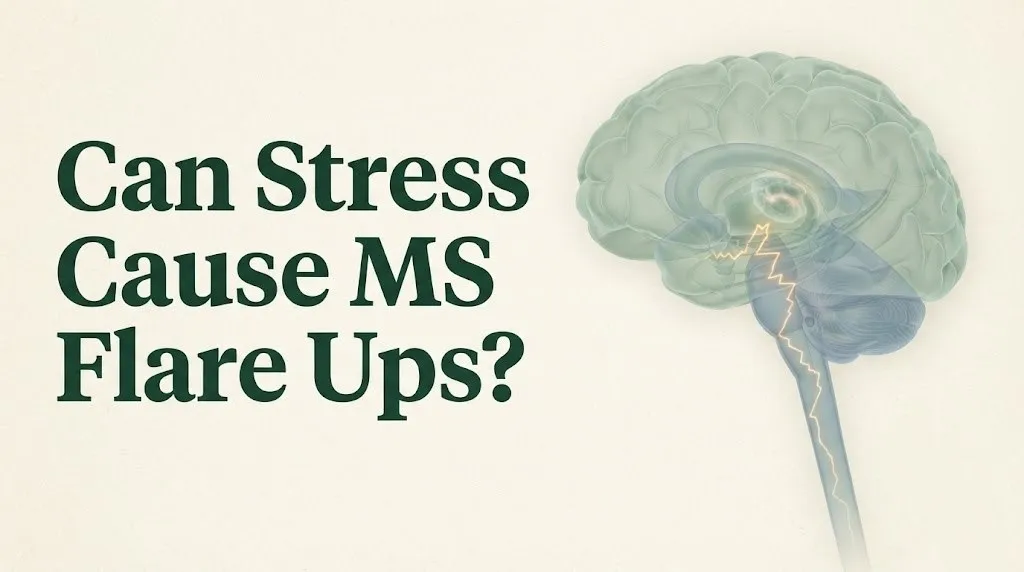
Research published in Psychoneuroendocrinology has identified that people with MS often exhibit a phenomenon called cortisol resistance. The high cortisol levels released during stress stop being effective at tamping down immune cells. Instead, the immune system, particularly the pro-inflammatory T-cells, remains active. This creates a state where psychological pressure directly translates into a sustained, unchecked inflammatory environment, setting the stage for a demyelinating attack on your myelin sheaths. The stress itself becomes an inflammatory event.
This information can feel overwhelming, but it points to a critical, actionable truth. You are not causing your MS by feeling stressed. You are navigating an autoimmune condition where a normal physiological response has an abnormal consequence. Recognizing that a major life event or a period of chronic burnout could destabilize your immune system is the first step in pre-emptively protecting yourself with targeted stress management techniques during those vulnerable times.
how does stress trigger multiple sclerosis relapse
Stress triggers an MS relapse by changing the behavior of your immune cells and the permeability of the barrier that protects your brain. The pathway begins with sympathetic nervous system activation. Your adrenal glands release epinephrine and norepinephrine. These fight-or-flight hormones bind to receptors on immune cells in your spleen and lymph nodes, preparing your body for a perceived injury or infection.
In a normal immune response, this mobilization is protective. In MS, this alarm signal promotes a shift toward Th17 immune cells, a subset of T-cells known to be highly inflammatory and directly involved in the attack on myelin. Norepinephrine can directly enhance the production of interleukin-6 (IL-6) and tumor necrosis factor-alpha (TNF-alpha). These cytokines are primary drivers of the autoimmune cascade in multiple sclerosis. They make blood vessels leaky and act as homing beacons, guiding destructive immune cells straight into the brain and spinal cord.
Simultaneously, mast cells, which are immune sentinels located near nerve endings and blood vessels in the brain, become activated. CRH released during stress can directly trigger mast cells to degranulate. This releases histamine, tryptase, and more pro-inflammatory cytokines directly onto the nearby blood-brain barrier. This process further escalates local inflammation, disrupting the tight junctions that normally keep the blood and brain compartments separate. The result is a gap in the barrier.
Once the blood-brain barrier is permeable, activated T-cells, B-cells, and macrophages cross into the central nervous system. There, they misidentify the myelin sheath as a foreign threat and launch an attack. This attack strips the insulation from your nerves, slowing or blocking the electrical signals between your brain and body. The specific neurological symptoms you experience, whether vision loss, numbness, or muscle weakness, depend entirely on the location of these new inflammatory lesions in your brain or spinal cord.
Key Takeaway: Stress fuels MS relapses not by a single hormone spike, but through a two-hit mechanism. It creates a pro-inflammatory immune cell army (Th17 cells) and simultaneously weakens the brain’s defensive wall (the blood-brain barrier), allowing that army to march through.
psychoneuroimmunology of multiple sclerosis and stress
Psychoneuroimmunology is the field of science that maps how your psychological state alters your nervous system and immune function. In MS, this field is the backbone of understanding why a non-physical event like a divorce or a work deadline can produce a physical brain lesion. It demonstrates that the brain and the immune system are not separate. They are a single, bidirectional system where mood and inflammation constantly talk.
The limbic system, your brain’s emotional processing center, is the central hub. The amygdala, which processes fear and threat, has a direct line to the HPA axis. When you experience chronic anxiety, your amygdala is hyperactive. This constant firing sends a continuous signal to the hypothalamus to release CRH. The immune system receives this relentless “threat” signal and begins operating from a defensive, pro-inflammatory baseline. Your body starts treating your own myelin proteins as more suspicious.
An important concept here is allostatic load. This is the wear and tear on your body from being in a chronic state of high alert. A 2024 study in Brain, Behavior, and Immunity found that higher allostatic load scores, measured by cardiovascular and metabolic markers, were correlated with a greater number of new gadolinium-enhancing lesions on MRI scans of people with MS. This means the daily, cumulative grind of stress has a physical cost that shows up on neurological imaging.
The practical takeaway from psychoneuroimmunology is profound but concrete. You do not need to live a stress-free life to protect your brain. That is impossible. The goal is to increase your physiological flexibility. You want your nervous system to spike in response to a true alarm, yes, but then rapidly return to a calm, reparative baseline where the anti-inflammatory pathways, driven by the parasympathetic nervous system, can do their job of cooling off the immune system.
HPA axis dysfunction and cortisol resistance in MS
HPA axis dysfunction in MS means your central stress response system loses its ability to regulate inflammation properly. In a healthy body, cortisol rises with stress and then efficiently signals the hypothalamus to stop producing CRH. Cortisol also directly tells immune cells to quiet down. In a subset of people with MS, this cortisol signal is ignored. The cells become resistant to it.
This cortisol resistance is partly caused by chronic inflammation itself. When your body is constantly fighting a low-grade autoimmune war, your immune cells downregulate their cortisol receptors. Imagine a crowded room where everyone is shouting. The anti-inflammatory shout from cortisol cannot be heard over the pro-inflammatory noise of IL-6 and TNF-alpha. This means even when your adrenal glands are producing plenty of cortisol, it has a muted anti-inflammatory effect, leaving the autoimmune process unchecked during times of psychological tension.
Glucocorticoid insensitivity is the technical term for this blunted response. Research shows that patients with MS who have higher levels of perceived stress also show a flatter diurnal cortisol rhythm. A normal cortisol rhythm peaks sharply in the morning and declines throughout the day. A flattened rhythm indicates a chronically exhausted or dysregulated HPA axis. This pattern was linked to fatigue and depression in a 2023 study in the Journal of Neurology, Neurosurgery & Psychiatry.
What this means for you is that managing stress in MS is not just about lowering your stress hormones. It is about improving the sensitivity and efficiency of your HPA axis’s feedback loop. Techniques that improve cortisol sensitivity are the ones that train your body to complete the stress cycle, like moderate aerobic exercise and consistent sleep patterns. They help your cells remove the metaphorical earplugs so cortisol can do its job, which is resolving inflammation after a stressful event ends.
stress and blood-brain barrier permeability in MS
Psychological stress directly increases blood-brain barrier (BBB) permeability, the critical step that allows a systemic immune response to become a localized brain lesion. The BBB is a tightly packed layer of endothelial cells that line the capillaries in your brain. In MS, a leaky BBB is a prerequisite for a relapse. Immune cells cannot attack myelin if they cannot physically access the central nervous system.
Mast cells are the primary disruptors here. They sit on the brain side of the BBB. CRH released during acute stress binds to receptors on these mast cells. A 2022 experimental model published in Brain demonstrated that CRH-induced mast cell activation could directly increase the permeability of brain endothelial cells. This happens through the release of vascular endothelial growth factor (VEGF) and matrix metalloproteinases, enzymes that chew through the structural proteins holding the barrier together.
Once the tight junctions between endothelial cells are loosened, inflammatory cytokines like TNF-alpha from the periphery flood through the breaches. They carry activated T-cells with them. The “outside” immune system now has a direct path to the brain’s “inside.” The BBB is no longer a fortress. It becomes a loosely guarded checkpoint, letting through the very cells that disease-modifying therapies (DMTs) try to keep sequestered in the lymph nodes.
Protecting the BBB through stress management involves reducing the frequency of intense mast cell activation. The parasympathetic nervous system, specifically via the vagus nerve, is your primary internal stabilizer. Stimulating the vagus nerve releases acetylcholine, which can inhibit mast cell degranulation. Slow, rhythmic breathing with extended exhales is a direct, non-invasive method to increase vagal tone and signal your endothelial cells and mast cells that the immediate threat has passed.
Key Takeaway: The primary target of stress in an MS relapse is not just the immune cell, but the brain’s own security gate. A leaky gate caused by stress mediators is what lets the misbehaving immune cells into a space they should never have entered.
acute stress versus chronic stress in multiple sclerosis
Acute stress and chronic stress are biologically distinct and have different implications for MS. Acute stress is a sudden, time-limited event. It causes a massive, rapid surge of norepinephrine and a sharp spike in cortisol, followed by a return to baseline. In small, controlled doses, some research paradoxically suggests acute stress can briefly suppress certain immune functions, a leftover evolutionary adaptation to prepare for physical injury.
Chronic stress is the sustained, unrelenting activation of your stress response with no clear off-ramp. This is where your immune system adapts in a way that is dangerous for MS. The HPA axis is repeatedly activated, leading to a persistent elevation of CRH and the eventual development of cortisol resistance. Your immune cells stop responding to the “calm down” signal, and the systemic inflammation drifts permanently higher than a healthy baseline.
A landmark 2018 study in Multiple Sclerosis Journal tracked patients over four years. The research found that chronic, moderate-intensity daily hassles were a stronger predictor of new MRI activity than acute, major life events. This finding is critical. It suggests the constant grinding stress, the annoying commute, the ongoing financial strain, the toxic workplace, does more cumulative damage to immune regulation in MS than a single acute shock, from which the body might still rebound.
This distinction matters for your management strategy. You cannot simply avoid bad things from happening. You can, however, target the physiological residue of chronic stress. The goal shifts from crisis management to building a consistent daily routine that lowers your allostatic load. Short, daily vagus nerve training sessions, like five minutes of box breathing, are more effective at recalibrating a chronically stressed system than a two-hour relaxation session once a month after a blow-up.
can emotional trauma cause an MS attack
A single severe emotional trauma, like an assault, the sudden death of a loved one, or a violent accident, can trigger an MS attack. The connection is not psychological fragility. It is a massive neurobiological event. Extreme trauma floods the brain with CRH and glutamate, an excitatory neurotransmitter, while severely disrupting the normal feedback loop of the cortisol awakening response.
Post-traumatic stress disorder (PTSD) and MS have a particularly well-documented and harmful overlap. A 2021 study in the American Journal of Medicine found that women with high PTSD symptom scores had a significantly elevated risk of developing autoimmune conditions, including MS. In people already diagnosed with MS, untreated PTSD is linked to a higher annualized relapse rate. The mechanism involves a chronically hyperactive amygdala and a shrunken hippocampus, a brain region involved in memory that also helps regulate the HPA axis.
The hippocampus normally acts as a brake on the stress response. High levels of cortisol from trauma can be neurotoxic to hippocampal cells, damaging the brake. With a damaged brake, the brain perceives threat more easily and calms down more slowly. This chronic hyper-vigilance keeps the sympathetic nervous system firing and the immune system in a state of heightened readiness, primed to misidentify self-tissue as a threat.
If you have a history of trauma, standard stress advice can feel ineffectual. The body has learned a very specific, persistent pattern of defense. Processing trauma through evidence-based therapies designed for PTSD is a direct neurological intervention for your MS. Therapies like Eye Movement Desensitization and Reprocessing (EMDR) and trauma-informed cognitive processing therapy (CPT) are designed to restore hippocampal regulation and calm an overactive amygdala, directly addressing the neurobiological root of the stress-inflammation loop.
Key Takeaway: Severe emotional trauma is a neuroendocrine earthquake. Its damage to the brain’s stress-braking systems (the hippocampus) can create a persistent pro-inflammatory state, making specialized trauma therapy a legitimate MS management tool, not just a mental health afterthought.
research evidence on stress and MS exacerbations
The research evidence on stress causing MS exacerbations is strong. It comes from a convergence of prospective cohort studies, advanced neuroimaging correlations, and clinical trials, though the gold standard of a randomized controlled trial exposing people to stress is unethical and impossible. The body of evidence is considered by the American Academy of Neurology to be clinically meaningful in guiding patient counseling.
The foundational data comes from large longitudinal studies. The classic work by Mohr and colleagues, replicated over decades, found that a composite measure of conflict and disruption in personal routines predicted new gadolinium-enhancing brain lesions four to eight weeks later. A 2023 Danish nationwide cohort study using register data from over 20,000 MS patients confirmed a temporal link. The study, published in Neurology, showed a 30% increased risk of a physician-diagnosed relapse in the two months following a documented severe stressful life event compared to periods without such events.
Neuroimaging provides the mechanistic link between psychology and pathology. Functional MRI studies show that people with MS who have higher perceived stress show greater amygdala reactivity to threatening facial expressions. This neural reactivity correlates with elevated circulating IL-6 levels. An experimental study in Brain, Behavior, and Immunity used an acute social stress test (the Trier Social Stress Test) and found that MS patients had a delayed cortisol recovery and an exaggerated IL-6 spike compared to healthy controls after the same stressor.
It is also important to note the evidence hierarchy. There are no large, double-blind studies proving that reducing stress alone stops all lesions, because stress management is a behavioral adjunct, not a monotherapy. However, randomized controlled trials of stress management interventions have shown that patients who complete them develop fewer new MRI lesions compared to wait-list controls. This experimental evidence closes the loop: modifying stress modifies disease activity.
what does an MS flare feel like compared to stress symptoms
An MS flare feels like a distinct neurological deficit directly caused by a new area of demyelination, while stress symptoms are diffuse and primarily psychosomatic. A true relapse or exacerbation involves a new symptom or the dramatic worsening of an old one, lasting for more than 24 hours and separated from a prior relapse by at least 30 days, with no fever or infection present.
Physical MS symptoms of a flare include specific, localized issues: optic neuritis causing painful eye movement and central vision blurring, a band-like squeezing around the torso known as the MS hug, Lhermitte’s sign (an electric shock sensation down the spine when bending the neck forward), or a new, clear-cut region of numbness on one side of your body. These are focal. They map to a specific spot on the brain or spinal cord where inflammation is currently active.
Stress symptoms are systemic and non-focal. A tense jaw, a pounding heart, stomach cramps, sweaty palms, or a general feeling of being scattered and mentally foggy are classic stress responses. Stress can absolutely worsen your existing MS symptoms by raising your core body temperature or simply due to neural fatigue in already-damaged pathways. Your old foot drop might get more pronounced when you are stressed and tired, but it is not caused by a new lesion. This temporary worsening is critical to identify.
The key differentiator is novelty. A fatigue so crushing you cannot lift your head is a shared symptom. But a new numb patch that appeared on your left thigh, that is not there when you wake up but appears by noon, and stays, is a potential relapse. A 2024 clinical review in the Cleveland Clinic Journal of Medicine emphasizes that patients should be taught to differentiate between the constant, global feeling of being stressed and the discrete, time-limited onset of a new neurological sign, as the medical urgency is completely different.
Key Takeaway: Stress feels like your whole system is overloaded and your old symptoms are amplified by a faulty electrical system. A new MS flare feels like a specific circuit, a new patch of skin or one eye, just went dark or numb from localized inflammation.
stress-induced pseudo flare versus a real MS relapse
A pseudo flare is a temporary reappearance or worsening of old MS symptoms triggered by a physiological stressor, not by a new demyelinating lesion. A real MS relapse is caused by new inflammation and myelin damage in a previously unaffected area of the central nervous system. Distinguishing between the two is vital because the treatment is different and unnecessary steroid use has side effects.
The primary trigger for a pseudo flare is a rise in your core body temperature, known as Uhthoff’s phenomenon. Stress can cause a physiological temperature spike due to sympathetic activation and altered blood flow. When your body heats up, nerve conduction along previously demyelinated axons slows down or blocks. This causes the old symptoms from a past lesion, like a weak leg or blurred vision from old optic neuritis, to resurface temporarily.
A true flare is a cellular attack happening right now. Activated immune cells have crossed the blood-brain barrier and are actively stripping myelin. The symptoms are new or significantly worse than before, and they evolve over hours to days. A true relapse does not resolve when you cool down or rest. The inflammation has its own pathological timeline, which usually involves a plateau of symptoms before a slow, natural recovery or a recovery aided by high-dose corticosteroids.
A practical rule of thumb from neurologists is the “24-hour cooling test.” If you overheat from stress, a hot bath, or a fever, and you experience a symptom, remove yourself from the heat source, practice a few minutes of diaphragmatic breathing to downregulate your sympathetic nervous system, and place a cool cloth on your neck. If the neurological symptom completely vanishes within a few hours of cooling down, it was a pseudo flare. If a new, specific neurological deficit remains the next day, call your neurologist.
stress management and multiple sclerosis guidelines
Effective stress management for multiple sclerosis requires a multi-modal approach that targets the neuroendocrine pathway directly. The 2024 consensus guidelines from the National Multiple Sclerosis Society and the American Academy of Neurology emphasize a combination of physical activity, mind-body practices, and cognitive behavioral therapy as first-line behavioral interventions for stress-induced symptom worsening.
The core principle is completing the stress cycle. Your body has prepared for a physical fight. Sitting in traffic, you did not fight. The epinephrine and ATP molecules are still circulating. Physical movement is the most direct way to metabolize these stress hormones. The guidelines recommend 150 minutes of moderate aerobic exercise per week for people with mild to moderate MS. An aquatic exercise program is especially useful because water’s cooling effect prevents Uhthoff’s phenomenon, allowing you to exhaust your large muscle groups without overheating your core.
Mind-body practices are prescribed not for relaxation alone, but for direct vagal tone improvement. A 2022 meta-analysis of mind-body therapies for MS in Neurology and Therapy found that regular practice of techniques like diaphragmatic breathing and progressive muscle relaxation significantly reduced perceived stress scores and inflammatory markers like IL-6. The guidelines suggest scheduling these practices. Do not wait until you feel stressed. A daily 10-minute morning session trains your parasympathetic tone, making your recovery from unexpected acute stressors throughout the day faster and less inflammatory.
Social connection is a powerful moderator of the HPA axis. The guidelines stress that social isolation is a chronic stressor in itself. Structured support groups, specifically those for people with MS, provide a unique form of stress relief by normalizing the experience and reducing the hypervigilance that comes from feeling alone with a terrifying and unpredictable disease. Sharing coping strategies with others who understand reduces the cognitive load and, subsequently, the cortisol output associated with hiding your symptoms.
Key Takeaway: Stress management for MS is not a hot bath and a candle. It is a neuroendocrine training program involving daily physical movement to clear stress metabolites, daily breathwork to increase vagal tone, and social connection to signal safety to your amygdala.
mindfulness-based stress reduction for MS fatigue
Mindfulness-based stress reduction (MBSR) is an eight-week structured program that combines mindfulness meditation, body awareness, and gentle yoga. For MS fatigue, MBSR does not aim to remove the tiredness directly but to change your neurobiological relationship to it. Fatigue in MS is a combination of primary disease processes, inflammation, sleep disturbance, and the mental exhaustion of managing a chronic condition.
MBSR targets the mental proliferation component of fatigue. The constant worrying about future disability or the rumination on current symptoms activates the amygdala and consumes an enormous amount of neural energy. By training attentional control through meditation, MBSR reduces this cognitive drain. A 2023 clinical trial published in Multiple Sclerosis and Related Disorders found that MS patients who completed MBSR showed a significant reduction in the impact of fatigue on their daily lives, despite objective motor fatigue tests remaining unchanged.
The program teaches a body scan technique. You systematically move your attention through different parts of your body without judgment. For someone with MS, this can be initially anxiety-provoking, you become acutely aware of numb patches or buzzing sensations. Over time, however, this practice helps you differentiate between the raw physical sensation and the emotional suffering layered on top of it. You learn to observe a buzzing foot without catastrophizing about what it means, and this breaks the feedback loop of anxiety and muscle tension that worsens fatigue.
MBSR is not a replacement for physical therapy or medication for fatigue. It is a neurocognitive tool. The research suggests the effects are most pronounced on the psychological and emotional dimensions of fatigue. If you experience the kind of exhaustion that feels like a dense brain fog and a heavy, emotionally depleted body, MBSR offers a clinical-grade method to reduce the secondary suffering caused by fighting against the fatigue itself.
cognitive behavioral therapy for MS anxiety and stress
Cognitive behavioral therapy (CBT) is a targeted, short-term therapy that addresses the thought patterns driving chronic stress and anxiety in MS. It works by identifying and restructuring specific cognitive distortions unique to life with an unpredictable neurological condition. Catastrophizing, fortune-telling (I will definitely end up in a wheelchair), and all-or-nothing thinking (If I can’t walk a mile, I am completely useless) are the primary targets.
From a neuroendocrine perspective, each catastrophic thought is a micro-stressor that activates the amygdala. A person with MS might feel a slight increase in leg stiffness and immediately think, “This is it, a major relapse is starting.” This thought alone triggers a sympathetic nervous system discharge. CBT trains you to examine that thought like a hypothesis, not a fact. You learn to counter with data: “A relapse is possible, but stiffness also happens when I haven’t stretched or when I’m tired. I will monitor it for 24 hours without panicking.”
This cognitive restructuring directly lowers allostatic load. A 2019 trial in the Lancet Neurology group of journals examined a CBT protocol specifically adapted for MS. Researchers found that after 16 weeks, the CBT group not only had lower anxiety and depression scores but also showed a lower cortisol awakening response compared to the supportive listening control group. The therapy literally changed the morning HPA axis rhythm from a hyper-reactive state to a more typical one.
CBT also provides behavioral activation strategies. Anxiety often leads to avoidance. You might stop seeing friends or doing activities because you fear a flare or a bout of embarrassing fatigue. This avoidance creates isolation, which is a profound stressor. CBT systematically guides you to re-engage with meaningful activities in a graded, manageable way. Each successful engagement is a piece of evidence against the catastrophic belief, rebuilding a sense of self-efficacy that directly buffers against the stress of the disease.
Key Takeaway: Your inner monologue is a physiological event. CBT is a method to edit that monologue, stopping the constant leak of stress hormones caused by catastrophic thinking, and has been shown in clinical trials to normalize the cortisol rhythms disrupted by MS and anxiety.
can adaptogenic herbs trigger autoimmune flares
Yes, some adaptogenic herbs can theoretically trigger or worsen autoimmune flares, and people with MS should approach them with extreme caution. An adaptogen is a substance that aims to normalize the stress response. The problem is that many adaptogens normalize the immune response by stimulating it. In a condition defined by an overactive immune system, an immunostimulatory herb is potentially dangerous.
Ashwagandha (Withania somnifera) is a prime example. It is heavily marketed for stress relief and cortisol reduction. Its active compounds, withanolides, achieve this in part by enhancing the activity of natural killer cells and T-cells. For someone with MS, where T-cells are already pathologically attacking myelin, further boosting their activity is a speculative risk. There are isolated case reports, including one published in BMC Complementary Medicine and Therapies, documenting a temporal association between ashwagandha supplementation and the onset of acute demyelinating events, though a definitive causal link has not been established in a large trial.
Echinacea and alfalfa are clearer examples of herbs to avoid. Echinacea directly stimulates the innate immune system via toll-like receptors, the same pathway that can trigger a relapse. Alfalfa contains L-canavanine, a non-protein amino acid that can cause a lupus-like syndrome and has been shown to exacerbate autoimmune pathology in animal models. The National Multiple Sclerosis Society advises against alfalfa supplementation for people with MS.
This does not mean all herbal stress relievers are off the table. Nervines, which calm the nervous system without stimulating the immune system, are a different category. Lemon balm (Melissa officinalis) and passionflower (Passiflora incarnata) work primarily by modulating GABA receptors in the brain, creating a calming effect without the immune stimulation of ashwagandha. However, always discuss any supplement, even a mild nervine, with your MS-specialist neurologist and pharmacist to check for interactions with disease-modifying therapies and other medications like muscle relaxants.
stress relief techniques safe for relapsing-remitting MS
The safest and most effective stress relief techniques for relapsing-remitting MS (RRMS) are those that physically downregulate the sympathetic nervous system without elevating your core body temperature too much or stimulating your immune system. In RRMS, the primary concern is the peripheral immune system being triggered to cross into the central nervous system. Your techniques should target the vagus nerve, not the T-cells.
The first technique is progressive muscle relaxation (PMR) modified for a cool body. Standard PMR involves tensing and releasing muscle groups. For MS, you should practice PMR in a cool room, perhaps in front of a fan, with only a 30% muscle contraction rather than a full-force clench. A full clench can raise your core temperature and trigger spasticity. The slow, controlled release of the muscle is the key. It sends a powerful signal of safety up the vagus nerve to your brainstem, telling the hypothalamus to lower its CRH output. This directly eases the central stress state without immune activation.
The second is cooling breathwork. Sheetali pranayama, or the cooling breath, involves curling the tongue into a tube and inhaling through it, creating a cooling sensation in the mouth and throat. If you cannot roll your tongue, clenching your teeth and inhaling through the gaps has a similar cooling effect. This technique bypasses the heat issue entirely. The extended exhale associated with pranayama breathing is a potent vagus nerve stimulator. A 2024 study in the International Journal of MS Care found that a simple program of daily cooling breathwork reduced perceived stress and the subjective impact of fatigue in a small cohort of RRMS patients during a summer heatwave.
Weightless exercise is the third pillar. Swimming, water aerobics, or simply floating in a cool pool is an unmatched stress reliever for RRMS. The buoyancy offloads your spastic muscles and joints, providing proprioceptive input that calms the central nervous system. The water continuously wicks away heat, preventing the Uhthoff’s phenomenon that can occur with land-based exercise. A 30-minute session combines the cortisol-clearing effects of aerobic exercise with the vagal calming of the rhythmic breathing required during swimming.
These techniques are safe because they do not push you. They are methods of turning down the volume on a system that is stuck in the “on” position. They create a physiological container where your body can run its natural anti-inflammatory repair processes, clearing the damage-associated molecular patterns that accumulate with daily life. This is distinct from forcing a change in your immune cell count, which is the job of your DMT.
Key Takeaway: For RRMS, abandon “fight stress with force.” Use cool, restorative techniques like modified PMR, cooling breaths, and pool exercise that drain the stress response out of your body through the vagus nerve, not by heating up your metabolism or stimulating immune cells.
when to contact your neurologist about MS symptom changes
Contact your neurologist or MS nurse practitioner immediately if a new neurological symptom lasts longer than 24 hours and is not explained by a rise in body temperature or an infection. This is the clinical threshold for a suspected relapse, and timely confirmation allows for rapid treatment with high-dose corticosteroids, which can shorten the duration and severity of the attack.
You need to have a specific conversation, not just a generic “I feel worse” message. Prepare the “new, not old” checklist. Write down what the symptom is, the time it started, and whether it is a new symptom you have never experienced, or an old symptom that returned but feels different. A new dragging leg is more concerning than an old numb patch that flickered back on during a heatwave. Tell them your body temperature, as a fever of 99.5°F can fully explain a sudden pseudo flare.
Another threshold for urgent contact is a symptom that significantly limits your function and has a steep slope of worsening. If you wake up with a slight blurring in one eye, and by lunch, you cannot see clearly enough to read your phone, do not wait days. This rapid progression suggests an acute inflammatory attack that may respond best to early steroid intervention. The same rule applies to motor symptoms. A foot that is dragging slightly that progresses to you tripping over it hourly requires a same-day phone call.
A video call for a preliminary neurological exam is now a standard part of many MS practices. Prepare for this by having good lighting. Be ready to walk a few steps back and forth to show a foot drop, do finger-to-nose testing, and show the full range of your eye movements. This helps your neurologist differentiate a true relapse from a severe pseudo flare caused by a UTI or other systemic stressor. If you are in crisis or experiencing thoughts of self-harm, contact the 988 Suicide and Crisis Lifeline by calling or texting 988 at any time. This service is free, confidential, and available 24 hours a day.
Frequently Asked Questions About Stress and MS
Can stress really cause an MS flare up?
Yes, a large body of research shows that chronic stress and significant negative life events can precede MS relapses by four to eight weeks.
The stress hormones cortisol, epinephrine, and CRH alter immune cell behavior and make the blood-brain barrier permeable, allowing a new wave of inflammation in the brain.
How long after stress does an MS flare occur?
Clinical research suggests a delay of roughly one to two months between a highly stressful life event and a new MS exacerbation.
This window reflects the time required for chronic stress to dysregulate the HPA axis and for a new wave of primed T-cells to cross the blood-brain barrier and cause a lesion that becomes clinically noticeable.
What does a stress-induced MS flare feel like?
A true stress-induced relapse feels like a distinct, new neurological problem, such as sudden vision loss in one eye or a new, clearly defined area of numbness.
If you feel a temporary, diffuse worsening of old symptoms like fatigue or patchy tingling that resolves with rest and cooling, that is more likely a pseudo flare triggered by the heat or exhaustion of stress.
How can I reduce stress to prevent MS flares?
Use techniques that stimulate the vagus nerve and cool the body, such as diaphragmatic breathing with extended exhales, progressive muscle relaxation, or swimming in a cool pool.
You are aiming to build daily resilience by clearing stress hormones through movement and breaking the cycle of catastrophic thinking with a practice like mindfulness or CBT.
Can emotional abuse trigger multiple sclerosis symptoms?
Yes, the chronic hyper-vigilance and fear caused by emotional abuse creates a state of sustained HPA axis activation and cortisol resistance that is highly inflammatory.
People with a history of severe trauma and PTSD have a higher annualized relapse rate, and targeted trauma therapies like EMDR are a form of direct neurobiological intervention for this specific trigger.
What is the best stress relief for someone with MS?
The best relief is a multi-modal routine combining temperature-controlled exercise, mind-body practices for vagal tone, and cognitive restructuring therapy to manage fear.
There is no single pill or cure, but this combination targets the three main points where stress biology intersects with MS pathology: hormone clearance, amygdala reactivity, and blood-brain barrier integrity.
Stress shapes the internal terrain your immune system operates on. The evidence makes it clear that chronic psychological strain is not just a feeling; it is a series of measurable biological events, from mast cells bursting open to T-cells slipping past a compromised barrier, that can accelerate the rhythm of your MS. But the same science that explains this vulnerability also maps a path back to stability.
That path has two lanes. The first is the medical lane you travel with your neurologist, using disease-modifying therapies to re-educate your immune system. The second is the behavioral lane, where you use targeted, physically oriented practices to show your nervous system a way out of high alert. Start with a single five-minute routine tomorrow morning: slow, cooling belly breaths with your hands wrapped around a cool glass of water. Do it before you check your phone. The physiological signal of safety you send in those minutes is not a cure. It is better than a cure. It is an act of protecting the brain you live in.