How Long Does a Nuclear Stress Test Take? Full 2026 Guide
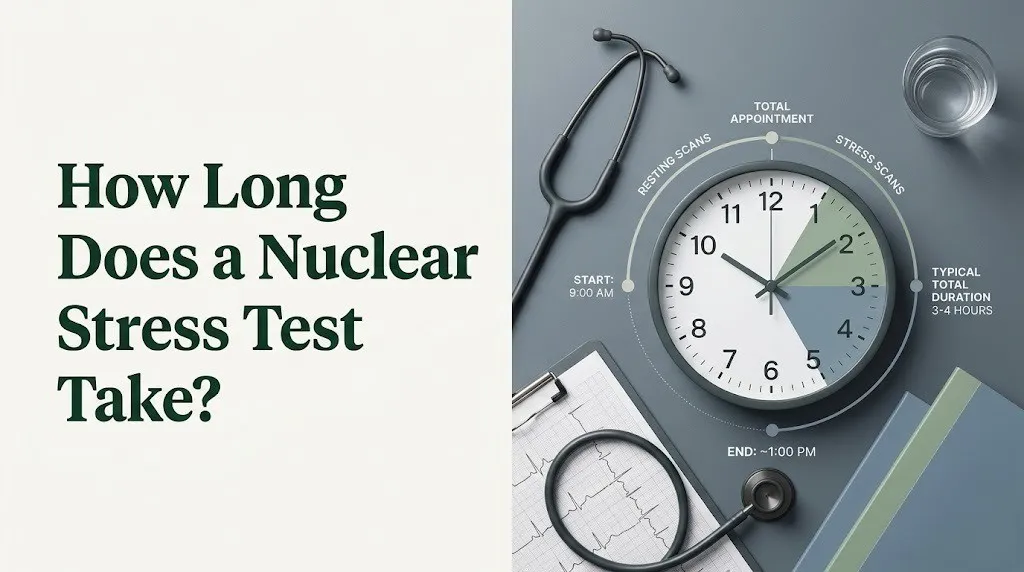
A nuclear stress test takes between 3 and 5 hours from check-in to discharge, though the active imaging portions themselves last far less time. Most of that window is occupied by waiting periods between radiotracer injections and scanning, not continuous testing.
This matters beyond just scheduling. The pharmacological agents used in chemical stress tests produce real cardiovascular effects that persist for a defined window after the test ends. According to the American College of Cardiology, nuclear stress testing with pharmacological agents is one of the most widely used non-invasive tools for evaluating coronary artery disease, performed on millions of patients annually in the United States. Understanding what happens during each phase helps you prepare properly and know exactly what to expect when you arrive.
This guide covers the full timeline of a nuclear stress test, how each phase works, why driving restrictions exist and for how long, what medications you need to hold beforehand, and what the results will and will not tell your cardiologist.
What Is a Nuclear Stress Test and What Does It Show
A nuclear stress test is a cardiac imaging procedure that uses a radioactive tracer injected into your bloodstream to produce detailed images of blood flow through your heart muscle at rest and under physical or pharmacological stress.
The technical name for the procedure is myocardial perfusion imaging (MPI). A nuclear medicine camera captures gamma rays emitted by the radiotracer as it circulates through coronary arteries and settles in heart muscle tissue. Areas of the heart that receive adequate blood flow absorb the tracer normally. Areas with reduced or absent blood flow due to narrowed or blocked coronary arteries appear as darker regions on the scan.
The most commonly used radiotracers are technetium-99m sestamibi (Cardiolite) and technetium-99m tetrofosmin (Myoview). Both emit gamma radiation that the imaging camera detects to construct a three-dimensional map of myocardial perfusion. Some facilities still use thallium-201 for specific clinical indications, though technetium-based agents are now the standard at most centers.
What makes this test clinically valuable is the comparison between two image sets. The resting scan shows baseline blood flow. The stress scan, taken after your heart has been challenged with exercise or a pharmacological agent, shows how flow responds under demand. A narrowed artery may deliver adequate blood at rest but fall short when the heart needs more. That difference is what the cardiologist is looking for.
According to guidelines from the Society of Nuclear Medicine and Molecular Imaging (SNMMI), myocardial perfusion imaging can also assess left ventricular ejection fraction and wall motion abnormalities, giving the cardiologist additional data about overall heart function beyond just blood flow patterns.
Note for women: Breast tissue can cause attenuation artifacts in nuclear stress test images, meaning the breast absorbs some gamma rays and can make certain areas appear hypoperfused when they are not. Experienced nuclear cardiologists account for this, but women should ask their physician whether additional imaging such as attenuation correction software or a stress echocardiogram might be appropriate for their specific anatomy.
How Long Does a Nuclear Stress Test Take
A nuclear stress test takes approximately 3 to 5 hours total, from the moment you arrive at the facility to when you are cleared to leave.
That range exists because different protocols handle the timing of resting and stress scans differently. Some facilities use a same-day two-day protocol, where the rest scan and stress scan are performed on separate days. Others, and this is more common, complete both phases in a single appointment on the same day. The single-day appointment is what produces that 3 to 5 hour total.
The single largest time consumer is not the scanning itself. It is the waiting period between the radiotracer injection and the scan. After you receive the radiotracer, your body needs time for it to circulate and settle into myocardial tissue before the camera can produce a usable image. That uptake window typically runs 30 to 60 minutes depending on the specific tracer and protocol used.
For many patients, the actual scan time under the nuclear medicine camera is only 15 to 20 minutes per image set. But between registration, IV placement, resting tracer injection, waiting for uptake, resting scan, stress phase preparation, stress tracer injection, a second waiting period, stress scan, and post-procedure monitoring, the hours accumulate.
| Protocol Type | Typical Total Duration | Notes |
|---|---|---|
| Same-day rest-stress protocol | 3 to 5 hours | Most common; both scans in one visit |
| Stress-rest same-day protocol | 3 to 5 hours | Stress scan done first; order reversed |
| Two-day protocol | Two separate 1.5 to 2 hour visits | Less patient burden per day; often used for larger body habitus |
| Pharmacological stress protocol | 3.5 to 5 hours | Slightly longer due to observation post-infusion |
Older adults often experience appointments on the longer end of this range. Recovery monitoring after pharmacological stress agents may be extended in patients over 75 or those with a history of arrhythmia, as the cardiovascular response to the stress agents can be more pronounced.
What Happens During a Nuclear Stress Test Step by Step
A nuclear stress test follows a structured sequence. Knowing the order in advance makes the appointment far less confusing.
Here is exactly what happens:
- Arrival and check-in. You will confirm your medical history, current medications, and any relevant cardiac symptoms. An IV line is placed in your arm, typically in the antecubital vein at the bend of your elbow.
- Resting radiotracer injection. The nuclear medicine technologist injects the radiotracer through the IV. You will feel nothing from this injection. The tracer is non-allergenic in the vast majority of patients and does not cause contrast reactions the way iodinated contrast used in CT angiography can.
- Uptake waiting period (rest). You wait 30 to 60 minutes in a waiting area while the tracer circulates and is absorbed by heart muscle tissue. Most facilities allow you to sit quietly or read during this time.
- Resting scan. You lie still on an imaging table while a SPECT (single-photon emission computed tomography) camera rotates around your chest, capturing gamma emissions from the resting tracer. This typically takes 15 to 20 minutes.
- Stress phase. Depending on your physical capacity and cardiac history, you will either walk on a treadmill (exercise protocol) or receive a pharmacological stress agent through your IV (chemical protocol). Heart rate, blood pressure, and a 12-lead electrocardiogram are monitored continuously during this phase.
- Stress radiotracer injection. At peak stress, a second dose of the radiotracer is injected. This captures blood flow distribution under maximum cardiac demand.
- Post-stress recovery monitoring. Heart rate and blood pressure are monitored until they return toward baseline. This typically takes 10 to 30 minutes.
- Uptake waiting period (stress). Another 30 to 60 minute wait before the stress scan.
- Stress scan. A second SPECT imaging session, also 15 to 20 minutes.
- Discharge assessment. The technologist reviews image quality and your vital signs. If stable, you are cleared to leave.
Your nurse or technologist will explain each step as it occurs. Do not hesitate to ask what is happening at any point. The procedure involves no surgical components and produces no immediate pain.
Exercise Nuclear Stress Test vs. Chemical Stress Test: Key Differences
The primary distinction between an exercise nuclear stress test and a chemical stress test is how cardiac stress is induced: one uses physical exertion, the other uses a pharmacological agent injected through an IV.
In an exercise nuclear stress test, you walk on a treadmill following a standardized protocol, most commonly the Bruce Protocol, which increases both speed and incline at defined intervals. The goal is to raise your heart rate to a target level calculated as 85% of your age-predicted maximum (220 minus your age). The radiotracer is injected when you reach peak heart rate, and the imaging captures blood flow distribution at that level of demand.
In a pharmacological (chemical) nuclear stress test, a vasodilator or inotropic agent is infused through your IV to simulate the cardiovascular effects of exercise without requiring physical exertion. The pharmacological approach is used when a patient cannot exercise adequately due to orthopedic limitations, severe deconditioning, peripheral artery disease, neurological conditions, or chronotropic incompetence (the inability to raise heart rate sufficiently with exercise).
| Feature | Exercise Nuclear Stress Test | Chemical Nuclear Stress Test |
|---|---|---|
| How stress is induced | Treadmill walking, increasing speed and incline | IV pharmacological agent (regadenoson, adenosine, or dobutamine) |
| Who it is used for | Patients able to walk adequately on a treadmill | Patients unable to achieve target heart rate with exercise |
| Total appointment duration | 3 to 4 hours | 3.5 to 5 hours |
| Driving restriction after | Typically not required | Required for 4 to 24 hours depending on agent |
| Caffeine restriction before | Yes, 24 hours | Yes, 24 hours (mandatory for adenosine/regadenoson) |
| Beta-blocker hold | Yes, often 24 to 48 hours | Varies by agent; dobutamine tests require hold |
| Common side effects during | Chest discomfort, shortness of breath, fatigue | Flushing, chest tightness, headache, dizziness, nausea |
People with a left bundle branch block on their electrocardiogram are typically directed to pharmacological protocols. Exercise in these patients can produce septal perfusion artifacts that mimic ischemia, leading to false positive results. Using a vasodilator instead avoids this pattern.
What Drugs Are Used in a Chemical Stress Test
Three pharmacological agents are used in chemical nuclear stress tests: regadenoson, adenosine, and dobutamine, each working through a different cardiac mechanism.
Regadenoson (brand name Lexiscan) is the most commonly used pharmacological stress agent in the United States. It is a selective adenosine A2A receptor agonist that acts on coronary artery smooth muscle, causing vasodilation. This increases coronary blood flow in healthy vessels. Narrowed or diseased vessels cannot dilate as effectively, creating the flow difference that shows up as a perfusion defect on imaging. Regadenoson is administered as a single rapid IV bolus over approximately 10 seconds, which is one of its practical advantages over adenosine. According to the FDA prescribing information for Lexiscan, its plasma half-life after a rapid injection is approximately 2 to 4 minutes for the initial distribution phase, with a longer terminal half-life of 2 to 3 hours.
Adenosine works via the same A2A receptor pathway as regadenoson but requires continuous IV infusion rather than a single bolus. It has a very short half-life of under 10 seconds in plasma, which is why its effects terminate almost immediately when the infusion stops. It is used less commonly now that regadenoson is available but remains an option at some centers.
Dobutamine works differently. Rather than producing coronary vasodilation, it is a synthetic beta-1 adrenergic receptor agonist that directly stimulates the heart to beat faster and contract more forcefully, mimicking the hemodynamic effects of exercise. It is the preferred agent in patients who cannot receive vasodilators due to severe reactive airway disease (asthma or COPD), as adenosine and regadenoson can cause bronchoconstriction via A2B and A3 receptor activation.
Patients who take theophylline, aminophylline, or consume caffeine before testing with adenosine or regadenoson will have blunted pharmacological stress responses. Methylxanthines like caffeine competitively block adenosine receptors, directly opposing the mechanism of both adenosine and regadenoson. That is precisely why caffeine must be avoided for 24 hours before these tests.
Key Takeaway: A nuclear stress test takes 3 to 5 hours total at a single appointment, but the actual scan time is only about 30 to 40 minutes across both image sets. The rest of the time is waiting for the radiotracer to settle into heart muscle tissue between injections.
How Long Does a Nuclear Stress Test Take for Each Phase
Breaking the full appointment into individual phases reveals exactly where the time goes during a nuclear stress test.
| Phase | Activity | Typical Duration |
|---|---|---|
| Registration and IV placement | Paperwork, medical history, IV line | 15 to 30 minutes |
| Resting radiotracer injection | Tracer injected; patient waits | 5 minutes injection; 30 to 60 minutes uptake |
| Resting SPECT scan | Lying still under rotating camera | 15 to 20 minutes |
| Stress phase preparation | ECG lead placement, blood pressure monitoring setup | 10 to 15 minutes |
| Active stress phase | Treadmill walk or pharmacological infusion | 8 to 15 minutes |
| Post-stress monitoring | Heart rate and BP return toward baseline | 10 to 30 minutes |
| Stress radiotracer injection and uptake | Second tracer injection; waiting period | 30 to 60 minutes |
| Stress SPECT scan | Second imaging session | 15 to 20 minutes |
| Discharge assessment | Vital sign check, technologist review | 10 to 15 minutes |
| Total | 3 to 5 hours |
The uptake waiting periods are the key to understanding why this test takes so long. Think of it like developing film in photography. The radiotracer is the film. Injecting it is like exposing the film. But you cannot print the image until the development process is complete. That process cannot be rushed without compromising image quality.
For patients with larger body habitus, the nuclear medicine technologist may need to run extended scan times for each image set to capture enough photon counts for a diagnostically clear picture. This can add 5 to 10 minutes per scan.
Children and adolescents undergoing nuclear stress testing for congenital heart conditions may have significantly different protocols. Pediatric nuclear cardiology uses weight-based radiotracer dosing and modified acquisition parameters. Parents should confirm the specific protocol with the pediatric cardiologist before the appointment.
How to Prepare for a Nuclear Stress Test
Preparing correctly for a nuclear stress test directly affects both the test’s diagnostic accuracy and your safety during the procedure.
Here are the preparation steps your care team will typically give you:
- Avoid all caffeine for 24 hours before the test. This includes coffee, tea, energy drinks, cola, chocolate, and any medication containing caffeine. If you are scheduled for an adenosine or regadenoson test, this restriction is mandatory, not optional. Caffeine directly blocks the adenosine A2A receptors that the pharmacological agent needs to activate.
- Hold specific medications as directed by your ordering physician. Beta-blockers (metoprolol, atenolol, carvedilol, etc.) blunt the heart rate response during exercise tests and may be held for 24 to 48 hours. Theophylline and aminophylline must be held before adenosine or regadenoson protocols. Dipyridamole (Persantine), used as a blood thinner, interacts with adenosine metabolism and must be held for at least 48 hours. Never stop any cardiac medication without explicit instruction from your cardiologist.
- Do not eat for 4 hours before the test. A light meal is generally acceptable before that window. A full stomach can cause nausea during the pharmacological stress phase and may affect tracer biodistribution.
- Wear comfortable, flat-soled walking shoes. This applies even if you are scheduled for a pharmacological test. Exercise protocols may begin with light walking before progressing, and comfortable footwear is required on the treadmill.
- Inform the team about all medications including over-the-counter drugs. Some antihistamines, cold remedies, and herbal supplements can contain methylxanthines or affect cardiac conduction.
- Arrive 15 minutes before your scheduled appointment. Nuclear imaging facilities run on tightly scheduled radiotracer batches. Late arrival can delay tracer preparation and push your appointment into the next imaging slot.
Patients with severe kidney disease should notify their ordering physician before the test. While technetium-based radiotracers are generally considered safe in renal impairment and do not require the same precautions as iodinated contrast media, the nuclear medicine team should be aware of any significant renal compromise so they can adjust post-procedure monitoring.
Can You Drive After a Nuclear Stress Test
Whether you can drive after a nuclear stress test depends entirely on which type of stress test you received.
If you had an exercise nuclear stress test with no pharmacological agents, there is generally no driving restriction once you have rested and your vital signs have returned to normal. Your physical state after a supervised, submaximal exercise test on a treadmill is not meaningfully different from your state after a moderate workout at a gym.
If you received a pharmacological stress agent such as regadenoson, adenosine, or dobutamine, you should not drive for a defined period after the test. The specific window varies by agent and individual response, but most nuclear cardiology facilities recommend having someone else drive you home after any pharmacological stress test, full stop.
The reason is pharmacological, not precautionary vagueness. Regadenoson and adenosine produce systemic vasodilation that can cause a significant drop in blood pressure (hypotension), lightheadedness, and dizziness for up to 30 minutes after peak effect. Dobutamine raises heart rate substantially and can cause arrhythmias in a small percentage of patients. Any of these effects can impair your ability to operate a vehicle safely.
Per the Mayo Clinic’s clinical guidance on pharmacological stress testing, patients who receive IV pharmacological stress agents are advised to arrange transportation in advance. This is not optional guidance at most accredited nuclear cardiology centers.
Plan to have a driver available for your appointment if there is any chance you will receive a pharmacological agent. If you are unsure which type of test you are scheduled for, call the ordering facility before your appointment and ask directly.
Why Can’t You Drive After a Stress Test
You cannot drive after certain stress tests because the pharmacological agents used to stress the heart produce cardiovascular effects that persist after the imaging is complete and can compromise your ability to safely control a vehicle.
Here is the specific mechanism. Agents like regadenoson and adenosine work by binding to adenosine A2A receptors on coronary artery smooth muscle, causing vasodilation. However, A2B receptors are also found in peripheral blood vessels, and activation at those receptors causes systemic vasodilation, a drop in peripheral vascular resistance, and a consequent fall in blood pressure. For most patients this is mild and transient, but for some, particularly older adults, those with baseline hypertension, or those who are dehydrated, the blood pressure drop can be clinically meaningful.
The effects can include:
- Dizziness and lightheadedness from reduced cerebral perfusion pressure
- Facial flushing and a sensation of warmth throughout the body
- Chest tightness from mild coronary vasodilation effects
- Shortness of breath (dyspnea), particularly with adenosine at higher receptor affinity
- Nausea and headache from hemodynamic changes
- Transient heart rate changes (both increases and decreases depending on the agent and individual)
These effects are intentional during the stress phase and are managed by trained clinical staff in the testing room. The problem is that residual hemodynamic instability can persist for 15 to 45 minutes after the infusion ends, even after your vital signs appear stable on the monitor. Driving during this window is genuinely risky.
Dobutamine, which works by stimulating beta-1 receptors to increase heart rate and contractility, carries a different risk: it can trigger arrhythmias including atrial fibrillation, supraventricular tachycardia, or ventricular ectopy in susceptible patients. The risk is managed during the test with continuous cardiac monitoring and immediate reversal capability, but residual effects on heart rhythm can occasionally persist.
For older adults especially, the combination of hemodynamic changes and the extended duration of the appointment itself (3 to 5 hours, often without eating) can produce fatigue and reduced alertness that further impairs driving safety.
Key Takeaway: The driving restriction after a chemical stress test is not bureaucratic caution. It exists because pharmacological vasodilators like regadenoson drop systemic blood pressure and can cause dizziness and lightheadedness that persist for up to 45 minutes after the test ends.
Can You Drive After a Chemical Stress Test
You should not drive yourself home after a chemical stress test. This restriction is standard across virtually all accredited nuclear cardiology facilities that perform pharmacological stress testing.
A chemical stress test uses regadenoson, adenosine, or dobutamine injected through an IV to produce cardiovascular stress. All three agents produce physiological effects that, while monitored and managed in the clinical setting, can leave a patient feeling lightheaded, fatigued, or hemodynamically unstable for a period after discharge.
The post-procedure observation window at most facilities runs 15 to 30 minutes after the pharmacological infusion ends. But this monitoring period is designed to catch acute adverse events, not to certify that you are fully recovered for driving. The FDA prescribing information for regadenoson (Lexiscan) notes that patients may experience cardiovascular effects including chest pain, hypotension, dyspnea, and arrhythmia. The prescribing label does not set a specific driving-restriction window in hours, but standard nuclear cardiology practice is to prohibit driving for the remainder of the test day.
Practically speaking, this means arranging your transportation before the appointment, not after. Most facilities will confirm at scheduling whether you need a driver. Do not assume the pharmacological agent will have no effect on you simply because a previous test was uneventful.
| Stress Test Type | Driving After Test | Recommended Action |
|---|---|---|
| Exercise-only nuclear stress test | Generally permitted once stable | Confirm with your care team |
| Regadenoson (Lexiscan) test | Not recommended for remainder of day | Arrange a driver in advance |
| Adenosine infusion test | Not recommended for remainder of day | Arrange a driver in advance |
| Dobutamine stress test | Not recommended for remainder of day | Arrange a driver in advance |
Patients who live alone or lack a support network should tell their scheduling coordinator. Some facilities can arrange transport assistance, particularly for elderly or mobility-limited patients.
How Long Does It Take to Get Nuclear Stress Test Results
Preliminary nuclear stress test results are often available on the same day or within 24 to 48 hours of the procedure, though a formal report signed by the interpreting physician typically takes 1 to 3 business days.
Here is what the timeline looks like in practice:
The nuclear medicine technologist processes and reconstructs the SPECT images immediately after your scans are complete. A preliminary review happens before you leave to confirm image quality. You will generally not receive a diagnostic interpretation at that point. The images then go to a board-certified nuclear cardiologist or cardiologist trained in nuclear imaging for formal interpretation.
In many hospital-based or cardiology-affiliated facilities, the interpreting physician is available on the same day and can provide a preliminary verbal or written impression, particularly if the images show clearly abnormal or clearly normal patterns. If your test is performed at an independent imaging center, the images may be read by a cardiologist who is not physically present and the report sent to your ordering physician.
Your ordering cardiologist or primary care physician receives the formal report and is responsible for discussing the results with you. A normal result typically indicates no significant areas of reduced blood flow under stress, making obstructive coronary artery disease unlikely at the level detectable by perfusion imaging. An abnormal result does not mean you need a stent or surgery. It means further evaluation is warranted.
If you do not hear from your physician within 5 business days of the test, contact their office and ask specifically about the nuclear stress test report. Do not assume that no news is good news for a cardiac imaging result.
What to Expect After a Nuclear Stress Test
After a nuclear stress test, most patients feel tired but otherwise physically normal, particularly if the test used only exercise stress without pharmacological agents.
After a pharmacological stress test, the physical effects that occurred during the infusion (flushing, chest tightness, shortness of breath, dizziness) should resolve within 5 to 15 minutes of the infusion ending. The nuclear medicine team typically administers aminophylline (a methylxanthine drug) to reverse adenosine or regadenoson effects if they are persistent or uncomfortable. This reversal agent works by competing with the pharmacological agent at adenosine receptors, effectively canceling the vasodilatory effect.
Post-test care involves:
- Resting quietly in the facility until vital signs stabilize
- Drinking extra fluids to help the radiotracer clear your system more quickly through urinary excretion
- Avoiding strenuous physical activity for the remainder of the test day
- Not driving after a pharmacological stress test, as covered in the previous sections
- Eating a light meal once you feel ready, especially if you fasted before the test
The radiotracer itself continues to emit low-level radiation for a short period after you leave the facility. Technetium-99m has a physical half-life of approximately 6 hours, meaning that after 24 hours, over 16 half-lives would have elapsed and the vast majority of radioactivity has decayed. You do not need to isolate yourself from family members after a nuclear stress test using standard technetium-based tracers. However, some centers recommend briefly limiting extended close contact with pregnant women and infants for 24 hours as a precautionary measure.
Contact the facility or go to an emergency department immediately if you experience persistent chest pain, shortness of breath at rest, severe dizziness, an irregular or racing heartbeat, or fainting after the test.
Key Takeaway: After a pharmacological nuclear stress test, aminophylline can be given on-site to reverse the effects of adenosine and regadenoson if they are uncomfortable or prolonged. This reversal agent works within minutes by blocking the same adenosine receptors the stress agents used.
Nuclear Stress Test Side Effects and Risks
Nuclear stress tests are considered safe when performed in appropriately selected patients at accredited facilities, but they carry real risks that deserve honest acknowledgment rather than dismissal.
Risks from the pharmacological stress agents:
- Hypotension (low blood pressure): Occurs in a minority of patients receiving vasodilators, more common in those who are dehydrated or have baseline hypertension treated with multiple medications.
- Bronchoconstriction: Adenosine and regadenoson can constrict airways via A2B and A3 receptor activation. Patients with active asthma or severe COPD should not receive these agents. Dobutamine is used instead in this population.
- Arrhythmias: Dobutamine can provoke atrial fibrillation, supraventricular tachycardia, or ventricular ectopy. All pharmacological stress tests are performed with defibrillation capability immediately available.
- Serious cardiac events: Myocardial infarction or cardiac arrest can rarely occur during stress testing in patients with severely compromised coronary circulation. Published rates of serious adverse events during pharmacological nuclear stress testing are very low, estimated at less than 1 per 10,000 procedures in appropriately screened patients, according to data summarized in the Journal of Nuclear Cardiology.
Risks from radiation exposure:
A standard technetium-99m nuclear stress test exposes patients to an effective radiation dose of approximately 9 to 15 millisieverts (mSv), depending on the protocol and radiotracer dose. For reference, the American College of Radiology notes that average background radiation exposure in the United States is approximately 3 mSv per year. The radiation risk from a single nuclear stress test is considered very low on an absolute basis but is a relevant consideration for patients who require repeated imaging over time.
For women of childbearing age: pregnancy is a relative contraindication for nuclear stress testing due to fetal radiation exposure. If pregnancy is possible, inform your physician and the nuclear medicine team before the test is performed.
Who Should Not Have a Nuclear Stress Test
Not every patient who is referred for cardiac evaluation is an appropriate candidate for nuclear stress testing, and some individuals have absolute or relative contraindications that require alternative imaging or modified protocols.
The following groups require specific consideration:
- Pregnant women: Radiation exposure to the fetus is the primary concern. Nuclear stress testing is generally deferred unless the clinical need is urgent and no safer alternative exists. The ordering cardiologist and obstetrician should make this decision jointly.
- Patients with active severe asthma or obstructive airway disease: As noted above, adenosine and regadenoson can trigger bronchoconstriction. These patients can still have nuclear stress testing but must receive dobutamine as the stress agent instead of a vasodilator. The team must know about severe respiratory disease before the test is scheduled.
- Patients with poorly controlled arrhythmias: Pharmacological stress testing in patients with uncontrolled atrial fibrillation or high-grade ventricular arrhythmias carries elevated risk of provoking further rhythm disturbances. The managing cardiologist should address rate or rhythm control before stress testing is performed.
- Patients in acute hemodynamic instability: Anyone presenting with active myocardial infarction, unstable angina, decompensated heart failure, severe aortic stenosis, or hemodynamically significant pericarditis should not undergo elective stress testing. Emergency cardiac catheterization is the appropriate pathway.
- Patients with significant renal impairment: Technetium-based radiotracers are renally cleared, though they are not nephrotoxic. Patients with advanced chronic kidney disease (stage 4 to 5) may have prolonged tracer retention, which the nuclear medicine team should account for in imaging timing.
- Patients with recent caffeine intake or theophylline use: If caffeine restrictions were not followed before an adenosine or regadenoson test, the pharmacological stress response will be significantly blunted, potentially producing a non-diagnostic or falsely reassuring result. Some facilities perform a urine caffeine screen before proceeding.
How Accurate Is a Nuclear Stress Test
A nuclear stress test is among the most diagnostically accurate non-invasive tools available for detecting obstructive coronary artery disease, but its accuracy is not absolute and depends on several technical and patient-related factors.
Published meta-analyses cited in the Journal of the American College of Cardiology report that myocardial perfusion SPECT imaging has a sensitivity of approximately 85 to 90% and a specificity of approximately 70 to 85% for detecting hemodynamically significant coronary artery disease compared to coronary angiography as the reference standard. In practical terms, sensitivity measures how well the test identifies disease that is actually present. Specificity measures how well it correctly identifies patients without disease.
The specificity figure is where accuracy questions most commonly arise. A false positive result (the test suggests a perfusion problem where none exists) is more common in certain populations:
- Women, due to breast tissue attenuation of gamma rays producing artifactual perfusion defects
- Patients with left bundle branch block, who can show false septal ischemia with exercise protocols
- Patients with elevated body mass index, where soft tissue attenuation reduces image quality
- Patients with microvascular disease rather than obstructive epicardial disease, which may not be detected by standard MPI
A normal nuclear stress test carries a strong negative predictive value. Research published in the Journal of Nuclear Cardiology has found that a normal myocardial perfusion imaging result is associated with an annual rate of major adverse cardiac events (cardiac death or non-fatal myocardial infarction) of less than 1%, making it a reassuring result when achieved.
An abnormal result requires clinical correlation with symptoms, risk factors, and sometimes additional testing such as coronary CT angiography or cardiac catheterization, as directed by a board-certified cardiologist.
Key Takeaway: A normal nuclear stress test result carries a very strong negative predictive value, with published data showing a less than 1% annual rate of major cardiac events in patients with normal myocardial perfusion imaging, making it one of the more clinically meaningful reassuring findings in non-invasive cardiology.
Frequently Asked Questions About Nuclear Stress Tests
How long does a nuclear stress test take from start to finish?
A nuclear stress test takes approximately 3 to 5 hours from check-in to discharge.
Most of that time is spent waiting for the radiotracer to be absorbed by heart muscle tissue between the resting and stress image sets.
The actual time spent under the imaging camera is typically 30 to 40 minutes total across both scans.
Can I drive myself home after a nuclear stress test?
You can drive yourself home after an exercise-only nuclear stress test once your vital signs have stabilized and you feel physically normal.
If you received a pharmacological stress agent such as regadenoson, adenosine, or dobutamine, you should not drive for the remainder of the day.
Arrange a driver before your appointment if there is any chance you will receive a chemical stress agent.
Why can’t you drive after a chemical stress test?
Chemical stress agents like regadenoson and adenosine cause systemic vasodilation that can drop blood pressure and cause dizziness and lightheadedness for up to 45 minutes after the infusion ends.
Dobutamine can trigger heart rate changes and arrhythmias that make driving unsafe.
These effects may persist even after the facility’s standard post-procedure monitoring period has ended.
What should I avoid before a nuclear stress test?
Avoid all caffeine for at least 24 hours before the test, including coffee, tea, chocolate, energy drinks, and cola.
Hold any beta-blockers, theophylline, dipyridamole, or aminophylline as directed by your ordering physician, and do not stop any cardiac medication without explicit instructions.
Do not eat for 4 hours before the appointment, and wear comfortable, flat-soled shoes.
How long does the radiotracer stay in my body after a nuclear stress test?
Technetium-99m, the most commonly used radiotracer in nuclear stress testing, has a physical half-life of approximately 6 hours.
After 24 hours, the tracer activity has decayed to a clinically negligible level.
Drinking extra fluids after the test helps clear the tracer from your body more quickly through urinary excretion.
What is the difference between an exercise stress test and a chemical stress test?
An exercise stress test uses treadmill walking to raise your heart rate and create cardiac demand, while a chemical stress test uses an IV-administered pharmacological agent to simulate that demand without physical exertion.
Chemical stress tests are used for patients who cannot exercise adequately due to physical limitations, neurological conditions, or the inability to reach target heart rate.
Both types produce equivalent diagnostic information when performed correctly, and both involve nuclear imaging of myocardial blood flow.
What the Test Clock Actually Means for Your Day
A nuclear stress test appointment is a genuine time commitment. Three to five hours is not an exaggeration, and going in with that expectation makes the experience far less frustrating than arriving expecting to be done in an hour.
Plan your day accordingly. Block the full morning or afternoon. Arrange childcare if needed. If you are scheduled for a pharmacological test, arrange your transportation before you arrive, not after. Have a light snack ready for when you finish, because you will likely be fasting and the test day is long.
The procedure itself, once you understand the phases, is straightforward. The imaging is painless. The pharmacological agents feel strange briefly, and the staff is trained specifically to manage those feelings. What you will walk away with is clinically meaningful data about your heart’s blood flow under demand. That information gives your cardiologist real, specific insight into whether your coronary arteries are delivering what your heart needs. That is worth the afternoon.