Stress Tinnitus Treatment: What Works in 2026
You can treat tinnitus caused by stress, and in many cases, the ringing or buzzing will reduce significantly or resolve completely when your stress levels come down. The most effective approaches combine direct stress reduction techniques with specific tinnitus management strategies that address both the auditory perception and the emotional distress it creates.
Stress-induced tinnitus affects approximately 15% of adults during their lifetime according to the American Tinnitus Association, and research published in the Journal of the American Academy of Audiology confirms that perceived stress level is one of the strongest predictors of tinnitus-related distress. Your auditory system and stress response are wired together through direct neural pathways connecting your limbic system to every level of auditory processing, from your brainstem to your temporal lobes.
This article walks through exactly how stress creates or amplifies that ringing, buzzing, or humming you hear, what the research says about which treatments actually work, and how to build a practical plan to quiet both your stress response and your tinnitus. You will learn specific techniques you can use tonight, understand when self-management is enough, and know exactly when an audiologist or ENT specialist needs to get involved.
What Is Stress-Induced Tinnitus
Stress-induced tinnitus is the perception of sound in one or both ears or in the head that is triggered, amplified, or maintained by activation of the body’s stress response systems rather than by direct damage to the ear itself. This type of tinnitus is closely tied to your autonomic nervous system state and can fluctuate dramatically based on your stress levels, sleep quality, and emotional state.
Tinnitus itself is not a disease. It is a symptom, a perception of sound without an external acoustic source. The American Tinnitus Association estimates that over 50 million Americans experience some form of tinnitus, with roughly 20 million experiencing chronic bothersome tinnitus. Stress does not necessarily create tinnitus from nothing in a perfectly healthy auditory system, but it can unmask subclinical neural activity that your brain normally filters out, making it audible for the first time.
What distinguishes stress-induced tinnitus from tinnitus caused primarily by hearing loss or ear damage is its variability. If your tinnitus gets noticeably louder during high-stress periods, softer during relaxation or vacation, and fluctuates with your anxiety level rather than with noise exposure, stress is likely playing a central role. The dorsal cochlear nucleus in your brainstem, one of the first relay stations for auditory information, receives direct input from stress-sensitive brain regions and can increase its spontaneous firing rate when your stress hormones are elevated.
Quick Tip:
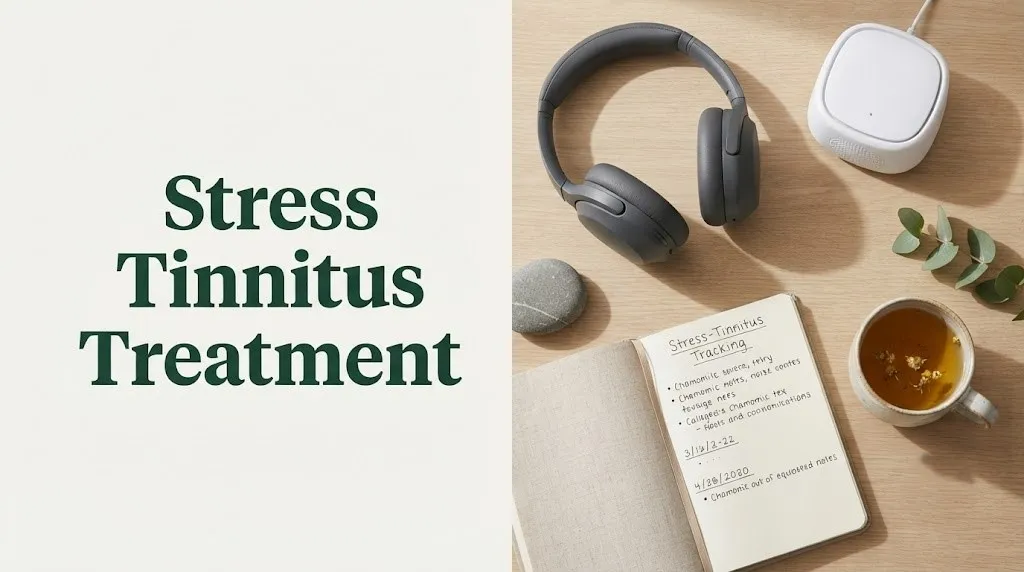
The first step in treating stress-induced tinnitus is confirming the stress connection. Track your tinnitus intensity on a 1-to-10 scale alongside your subjective stress level three times daily for one week. If the patterns rise and fall together consistently, stress management should be your primary intervention target.
Can Stress and Anxiety Cause Ringing in Ears
Yes, stress and anxiety can cause ringing in your ears by activating neural pathways that connect your emotional brain centers directly to your auditory processing regions, increasing spontaneous neural activity that your brain interprets as sound. Research published in Hearing Research confirms that the amygdala, your brain’s threat detection center, has direct projections to the auditory cortex and can increase its baseline firing rate during periods of heightened stress.
The mechanism works through two parallel pathways. First, the sympathetic nervous system releases norepinephrine at nerve terminals throughout your brain and body, including in auditory processing regions where it increases neuronal excitability. Second, the HPA axis triggers cortisol release from your adrenal glands, and cortisol receptors are present throughout the auditory pathway from the cochlea to the auditory cortex. Elevated cortisol changes how auditory neurons process and filter signals.
What makes the relationship particularly challenging is that it becomes self-reinforcing. You hear the ringing, which makes you anxious about what it means. That anxiety activates your stress response further, releasing more cortisol and norepinephrine, which amplifies the tinnitus perception. The American Psychological Association identifies this type of bidirectional feedback loop as a common feature of stress-symptom interactions, where the symptom itself becomes a stressor that perpetuates the physiological response that created it.
| Stress Type | Effect on Tinnitus | Typical Duration |
|---|---|---|
| Acute stress (exam, presentation) | Temporary spike in tinnitus volume | Hours to 1-2 days |
| Episodic stress (work deadline week) | Moderate increase, variable throughout day | Days to 1-2 weeks |
| Chronic stress (ongoing life strain) | Persistent tinnitus with less daily fluctuation | Weeks to months |
| Panic or anxiety attack | Sharp spike, may suddenly notice tinnitus for first time | Minutes to hours, but can trigger ongoing awareness |
The Stress-Tinnitus Connection Explained
The stress-tinnitus connection operates through a specific neurophysiological circuit that links your limbic system, autonomic nervous system, and auditory processing network. When you perceive a stressor, your amygdala signals the hypothalamus to activate the HPA axis and the sympathetic nervous system, and the same amygdala simultaneously sends excitatory signals to your auditory cortex and brainstem auditory nuclei, increasing their sensitivity and spontaneous activity.
This is not a vague mind-body link. It is a wired neural circuit. The amygdala receives input about sounds from your auditory thalamus and auditory cortex. When the amygdala is in a heightened state from stress, it projects back to those same auditory regions and increases their gain, essentially turning up the volume on internal neural noise that your brain normally filters out. A 2023 study published in Frontiers in Neuroscience demonstrated that individuals with higher perceived stress scores on the Perceived Stress Scale showed significantly greater amygdala-auditory cortex functional connectivity on fMRI scans.
The secondary pathway involves muscle tension. Chronic stress increases baseline muscle tone in the neck, jaw, and upper shoulders through sustained sympathetic nervous system activation. This tension affects the somatosensory inputs to the dorsal cochlear nucleus, which integrates auditory and somatosensory information. For many people with stress-induced tinnitus, consciously relaxing the jaw and neck muscles produces an immediate but temporary reduction in tinnitus volume, confirming the somatic component of their stress-tinnitus connection.
Key Takeaway: Your stress and tinnitus are not just correlated; they are connected through a physical neural circuit. Treating the stress directly treats the tinnitus at its neurophysiological source.
How Cortisol Affects Your Auditory System
Cortisol affects your auditory system by binding to glucocorticoid receptors located throughout the inner ear, auditory nerve, brainstem auditory nuclei, and auditory cortex, where it alters neuronal excitability, ion channel function, and neurotransmitter release. Your cochlea, the sound-sensing organ in your inner ear, contains glucocorticoid receptors in both the hair cells and the supporting cells, making it directly responsive to circulating stress hormones.
When cortisol binds to receptors in the auditory pathway, it changes how neurons process sound signals. In the dorsal cochlear nucleus, cortisol increases spontaneous firing rates in fusiform cells, which are the primary output neurons of this nucleus. These cells normally fire in response to actual sound input. Under elevated cortisol, they begin firing even without acoustic stimulation, and your brain interprets this spontaneous activity as sound. This is one of the proposed mechanisms for how stress generates or amplifies tinnitus at the brainstem level.
The effect is not immediate in the way that a loud noise instantly damages hearing. Cortisol’s impact on auditory processing builds over hours to days of sustained elevation. The National Institute on Deafness and Other Communication Disorders notes that the auditory system has remarkable plasticity, which is usually beneficial for learning and adaptation. But under chronic stress, that same plasticity can become maladaptive, strengthening the neural circuits that generate tinnitus perception until the phantom sound becomes a persistent feature of your auditory experience.
Individual variation note: People taking corticosteroid medications (prednisone, dexamethasone) for autoimmune conditions, asthma, or other inflammatory disorders may experience tinnitus changes related to exogenous glucocorticoid effects on the auditory system that are separate from their psychological stress level. If you take corticosteroids and notice tinnitus changes, discuss this with your prescribing physician rather than attributing it solely to stress.
What Does Stress Tinnitus Sound Like
Stress tinnitus typically sounds like a high-pitched ringing, hissing, or buzzing that fluctuates in volume and intensity based on your current stress level and is often more noticeable in quiet environments or when trying to fall asleep. The sound quality differs from tinnitus caused primarily by hearing loss, which tends to be more constant and less variable day to day.
People with stress-dominant tinnitus often describe the sound as a high-frequency tone around 4,000 to 8,000 Hz, similar to the sound of an old television left on or the ringing after a loud concert. Some hear a hissing sound like steam escaping or a buzzing like electrical interference. The key characteristic is its variability. Stress tinnitus may be barely noticeable during a relaxed weekend and then become intrusively loud on a Monday morning before a difficult meeting.
The lateralization pattern matters diagnostically. Stress-induced tinnitus is typically bilateral, perceived in both ears or diffusely in the head. Unilateral tinnitus, ringing only in one ear, is more concerning for structural causes such as acoustic neuroma, Meniere’s disease, or unilateral hearing loss. If your tinnitus is one-sided, that finding should prompt an audiology evaluation regardless of whether stress seems to make it worse.
| Tinnitus Sound Quality | Common Association | Stress-Link Strength |
|---|---|---|
| High-pitched ringing (bilateral) | Stress, anxiety, high-frequency hearing loss | Strong for stress |
| Hissing or static (bilateral) | Stress, medication effects | Moderate to strong |
| Low humming or roaring | Meniere’s disease, eustachian tube dysfunction | Weak to moderate |
| Pulsatile (heartbeat rhythm) | Vascular causes, requires imaging | Weak (needs medical workup) |
| Clicking or crackling | Middle ear muscle spasms, TMJ | Moderate (TMJ stress link) |
| Unilateral ringing (one ear only) | Acoustic neuroma, unilateral hearing loss | Weak (needs ENT evaluation) |
How to Tell If Your Tinnitus Is From Stress
You can tell if your tinnitus is primarily from stress by tracking whether it fluctuates in direct correlation with your stress level, improves during relaxation or vacation, worsens during periods of high anxiety, and is accompanied by other stress symptoms like jaw tension, neck tightness, or sleep disturbance. The strongest indicator is a consistent pattern where the tinnitus volume rises and falls with your subjective stress over several weeks of tracking.
Several distinguishing features separate stress-dominant tinnitus from tinnitus caused primarily by auditory damage. Stress tinnitus often appears or becomes noticeable during a specific stressful life period rather than after a noise exposure event. It tends to be worse in the morning after a night of poor, stress-disrupted sleep. It responds noticeably to relaxation techniques within the same session, which tinnitus from cochlear damage typically does not. And it is frequently accompanied by somatic modulation, meaning you can change the volume or pitch by clenching your jaw, turning your neck, or pressing on certain areas of your face or scalp.
The Tinnitus Handicap Inventory, a validated clinical questionnaire used by audiologists, includes items that assess both the functional and emotional impact of tinnitus. Research published in the International Journal of Audiology shows that people whose tinnitus is stress-driven tend to score high on the emotional distress subscale but may have relatively lower scores on the functional hearing interference subscale, because their tinnitus distress is more about the anxiety the sound creates than about actual hearing difficulty.
Quick Tip:
Keep a simple log for two weeks. Each evening, rate your average tinnitus volume (1 to 10), your average stress level (1 to 10), and note any jaw or neck tension. If the two numbers move together on at least 70% of days, stress is the primary driver, and stress management is your most direct treatment path.
Immediate Relief for Stress Tinnitus
The fastest immediate relief for stress tinnitus comes from activating your parasympathetic nervous system through slow, controlled breathing while simultaneously reducing the attentional focus on the tinnitus sound through low-level background sound enrichment. This two-pronged approach addresses both the physiological driver (sympathetic overactivation) and the perceptual amplifier (focused attention on the sound).
When you shift from sympathetic fight-or-flight activation to parasympathetic rest-and-digest mode, the norepinephrine that has been keeping your auditory neurons in a hyperexcitable state begins to clear. This process takes roughly 10 to 20 minutes of sustained slow breathing or relaxation practice. The effect is not permanent, but for many people with stress-dominant tinnitus, a single relaxation session can reduce tinnitus volume by 30 to 50% for several hours afterward according to clinical observations published by the American Tinnitus Association.
The second component, sound enrichment, works by reducing the contrast between the tinnitus and the background silence. Your brain’s auditory system is designed to detect contrast. In a completely quiet room, even a mild tinnitus signal stands out. Adding a low level of neutral background sound, such as a fan, white noise app set just below your tinnitus volume, or nature sounds, reduces that contrast and makes the tinnitus far less noticeable. Combining immediate relaxation activation with sound enrichment gives most people noticeable relief within 20 to 30 minutes.
| Technique | Mechanism | Time to Effect | Duration of Relief |
|---|---|---|---|
| Diaphragmatic breathing (5-7 breaths/min) | Parasympathetic activation, norepinephrine reduction | 5-15 minutes | 1-4 hours |
| Progressive muscle relaxation | Reduces somatic input to dorsal cochlear nucleus | 15-20 minutes | 2-6 hours |
| Low-volume white/pink noise | Reduces tinnitus-to-silence contrast | Immediate | While sound is present |
| Brief aerobic exercise (15-min walk) | Endorphin release, cortisol metabolism | 20-30 minutes | Several hours |
| Jaw and neck gentle stretching | Reduces somatosensory tinnitus modulation | 5-10 minutes | 30 minutes to 2 hours |
Key Takeaway: When tinnitus spikes during stress, do not sit in a quiet room focusing on it. That makes it louder. Instead, turn on low background sound and do five minutes of slow breathing. This combination addresses the two main amplifiers of stress tinnitus simultaneously.
Breathing Exercises That Help Tinnitus
Breathing exercises help tinnitus by shifting your autonomic nervous system from sympathetic dominance to parasympathetic activation, which reduces the norepinephrine and cortisol that drive auditory neuron hyperexcitability. The specific breathing pattern that has the strongest evidence for autonomic regulation is slow, diaphragmatic breathing at a rate of five to seven breaths per minute with an extended exhalation.
The mechanism involves the vagus nerve, your primary parasympathetic highway. When you exhale slowly and fully, stretch receptors in your lungs signal through the vagus nerve to your brainstem, which then reduces sympathetic outflow and increases parasympathetic tone. Your heart rate decreases during exhalation, and with consistent slow breathing, your overall heart rate variability increases, which is a marker of healthy autonomic balance. Research published in Psychophysiology demonstrates that this pattern directly reduces circulating norepinephrine levels within 15 to 20 minutes.
For tinnitus specifically, a breathing practice called resonant frequency breathing has shown particular promise. This involves breathing at your personal resonant frequency, typically between 4.5 and 6.5 breaths per minute, which maximizes heart rate variability. A 2022 study in the Journal of Clinical Medicine found that participants who practiced 20 minutes of resonant frequency breathing daily for eight weeks showed significant reductions on the Tinnitus Handicap Inventory compared to a waitlist control group.
To practice diaphragmatic breathing for tinnitus relief:
- Sit upright or lie down with one hand on your chest and one on your belly
- Inhale through your nose for a count of four, feeling only your belly hand rise
- Exhale through your mouth or nose for a count of six to eight, making exhalation longer than inhalation
- Pause briefly after exhalation before the next breath begins naturally
- Continue for five to ten minutes, ideally with low background sound present
Individual variation note: People with diagnosed anxiety disorders, particularly panic disorder, may initially find focused breathing increases anxiety rather than reducing it. If breath awareness triggers panic sensations, shift to a distraction-based relaxation method like listening to a guided body scan or nature sounds, and discuss breathing-based anxiety with a licensed clinical psychologist.
Progressive Muscle Relaxation for Tinnitus Relief
Progressive muscle relaxation, or PMR, reduces tinnitus by systematically decreasing the muscle tension in your jaw, neck, shoulders, and scalp that contributes to somatic tinnitus modulation while simultaneously lowering overall sympathetic nervous system activation. For many people with stress-induced tinnitus, the muscle tension component is as important as the direct stress hormone component.
The dorsal cochlear nucleus in your brainstem receives input from both your auditory nerve and from somatosensory nerves serving your face, jaw, neck, and upper shoulders. When these muscles are chronically tight from stress, the somatosensory input to the dorsal cochlear nucleus increases, and this nucleus integrates that input with auditory signals. The result is that muscle tension can directly modulate, and in many cases amplify, tinnitus perception. PMR addresses this by systematically tensing and then releasing each muscle group, teaching your nervous system what genuine relaxation feels like.
A 2021 randomized controlled trial published in the Journal of the American Academy of Audiology compared PMR to a passive control condition in 78 adults with chronic subjective tinnitus. The PMR group practiced 25 minutes of guided PMR five days per week for eight weeks and showed a statistically significant reduction on both the Tinnitus Handicap Inventory and a visual analog scale of tinnitus loudness compared to controls. The effect was strongest in participants who had high baseline scores on the Perceived Stress Scale, reinforcing that PMR is particularly effective for stress-driven tinnitus.
To practice PMR for tinnitus:
- Find a quiet, comfortable place where you can sit or lie down undisturbed for 15 to 20 minutes
- Starting with your feet, tense the muscles firmly but not painfully for five seconds
- Release suddenly and focus on the sensation of relaxation for 10 to 15 seconds
- Move upward through calves, thighs, abdomen, chest, hands, arms, shoulders, neck, jaw, face, and scalp
- Spend extra time on the jaw (unclench fully, let your tongue rest on the floor of your mouth) and neck
- Finish with one minute of quiet awareness of the relaxed state throughout your body
| PMR Phase | Target Area | Tinnitus Relevance |
|---|---|---|
| Phase 1: Lower body | Feet, calves, thighs | Builds relaxation skill, general sympathetic reduction |
| Phase 2: Core and upper body | Abdomen, chest, back, shoulders | Releases shoulder tension that refers to neck and jaw |
| Phase 3: Neck and jaw (critical) | Neck extensors, masseter, temporalis | Directly reduces somatic input to dorsal cochlear nucleus |
| Phase 4: Face and scalp | Frontalis, orbicularis, scalp | Reduces tension patterns often unnoticed during stress |
| Phase 5: Integration | Full body awareness | Consolidates parasympathetic state, reduces tinnitus attention |
Key Takeaway: PMR works for stress tinnitus through two distinct mechanisms: general autonomic calming and direct reduction of the muscle tension that feeds somatosensory input into your auditory processing system. The jaw and neck phase is non-negotiable for tinnitus relief.
Cognitive Behavioral Therapy for Stress Tinnitus
Cognitive behavioral therapy for tinnitus, often called CBT-t, is the most strongly evidence-supported treatment for tinnitus-related distress, with a Cochrane systematic review concluding it produces significant and clinically meaningful reductions in tinnitus annoyance and improves quality of life. CBT does not claim to eliminate the tinnitus sound itself. Instead, it changes your relationship to the sound, reducing the distress reaction that amplifies both the perception and the stress-tinnitus feedback loop.
Standard CBT for tinnitus typically includes several components: psychoeducation about the stress-tinnitus mechanism, cognitive restructuring to challenge catastrophic thoughts about tinnitus (“this will drive me crazy,” “it will never stop”), behavioral experiments to test whether avoiding silence is necessary, attention training to shift focus away from the tinnitus, and relapse prevention planning. The treatment is typically delivered over 8 to 12 weekly sessions by a licensed clinical psychologist or an audiologist with specialized CBT training.
The mechanism is not just psychological. Neuroimaging research published in NeuroImage has shown that successful CBT for tinnitus is associated with reduced functional connectivity between the amygdala and the auditory cortex, essentially weakening the neural circuit that links emotional distress to auditory perception. The prefrontal cortex, your brain’s regulatory center, shows increased activation after CBT as it learns to downregulate the amygdala’s response to the tinnitus signal.
Key facts about CBT for tinnitus:
- The Cochrane review found that CBT reduces tinnitus distress with a large effect size (Cohen’s d approximately 0.7) compared to no treatment or passive controls
- Effects persist at follow-up assessments of six to twelve months, indicating durable change
- CBT is effective whether or not hearing loss is also present, making it suitable for stress-dominant tinnitus
- Group CBT formats are effective and more accessible than individual therapy
- Online and self-guided CBT programs for tinnitus have growing evidence and can be a starting point for people without access to specialist providers
Individual variation note: CBT requires active participation and between-session practice. People with severe untreated depression or active trauma symptoms may need those conditions addressed concurrently or before CBT for tinnitus is effective. A licensed clinical psychologist can help determine treatment sequencing.
Sound Therapy and Masking for Stress-Related Tinnitus
Sound therapy for stress-related tinnitus uses external sounds to reduce the contrast between your tinnitus and the background acoustic environment, making the tinnitus less noticeable and less distressing. It does not cure the underlying mechanism, but it is one of the most immediately accessible tools for reducing tinnitus perception, particularly at night when stress tinnitus often feels loudest.
The approach ranges from simple environmental sound enrichment, such as running a fan, opening a window, or playing low-volume nature sounds, to specialized devices that deliver customized sound profiles matched to your tinnitus pitch. The American Academy of Audiology’s clinical practice guidelines recommend sound therapy as a first-line management tool, emphasizing that the sound should be set at or just below the tinnitus volume rather than attempting to completely cover it. Total masking, where the external sound is louder than the tinnitus, can create a stark return of the tinnitus when the sound stops and may delay habituation.
A specific approach called notched music therapy has shown promising results in research settings. This involves listening to music from which the frequency band matching your tinnitus pitch has been removed. The theory is that this encourages the auditory cortex to reorganize around the tinnitus frequency, reducing the overrepresentation of that frequency that maintains tinnitus perception. A 2023 meta-analysis in the International Journal of Audiology found moderate evidence for notched music therapy reducing tinnitus loudness, though the effect on distress was smaller than CBT.
| Sound Therapy Type | How It Works | Best For | Evidence Strength |
|---|---|---|---|
| White/pink noise (low volume) | Reduces tinnitus-to-silence contrast | Nighttime, quiet environments | Moderate (clinical consensus) |
| Nature sounds (rain, ocean) | Pleasant masking, relaxation promotion | Daytime, stress reduction | Moderate |
| Notched music therapy | Auditory cortex reorganization | Long-term loudness reduction | Preliminary to moderate |
| Hearing aids (if hearing loss) | Amplifies ambient sound, reduces tinnitus awareness | Those with concurrent hearing loss | Strong |
| Tinnitus maskers (ear-level) | Direct sound generation at ear level | Persistent bothersome tinnitus | Moderate |
| Sequential sound therapy | Structured progression of sound types | Audiologist-supervised programs | Moderate |
Key Takeaway: The goal of sound therapy is not to drown out tinnitus completely but to make it a neutral background feature rather than an intrusive foreground signal. Set sound volumes at or slightly below your tinnitus level for the best long-term habituation results.
Sleep and Stress Tinnitus Management
Sleep and stress tinnitus share a destructive bidirectional relationship: stress disrupts sleep, poor sleep elevates next-day cortisol and perceived stress, and that elevated stress amplifies tinnitus, which makes the next night’s sleep even harder to achieve. Breaking this cycle requires addressing sleep specifically as part of tinnitus treatment rather than hoping it improves on its own.
The physiological mechanism involves the HPA axis diurnal rhythm. In a healthy stress system, cortisol peaks in the early morning and reaches its lowest point around midnight. Chronic stress flattens this rhythm, keeping evening cortisol elevated. Elevated evening cortisol delays sleep onset and reduces slow-wave sleep, which is the deep sleep stage when your auditory system normally undergoes a period of reduced responsiveness. Without adequate slow-wave sleep, your auditory neurons do not get their nightly reset, and tinnitus perception remains heightened.
A 2022 study published in the Journal of Clinical Sleep Medicine examined sleep architecture in adults with chronic tinnitus and found they spent significantly less time in slow-wave sleep compared to matched controls, independent of whether they subjectively reported poor sleep. This suggests that even if you feel you are sleeping adequately, tinnitus may be preventing the specific sleep stages needed for auditory system recovery.
Sleep management strategies for stress tinnitus:
- Use low-volume pink noise (deeper than white noise, more sleep-compatible) throughout the night
- Set a consistent pre-sleep wind-down routine starting 60 minutes before bed without screens or bright light
- Practice 10 minutes of diaphragmatic breathing or a guided body scan after getting into bed
- Keep the bedroom cool (65 to 68 degrees Fahrenheit), as cooler temperatures promote slow-wave sleep
- If you wake and notice tinnitus, use a bedside sound machine with a remote to restart sound without fully waking
- Avoid alcohol within three hours of bedtime; it fragments sleep architecture and can spike tinnitus in the early morning hours
Individual variation note: People with diagnosed obstructive sleep apnea may find their tinnitus worsens with untreated apnea due to intermittent hypoxia affecting cochlear blood flow. If you snore heavily, wake gasping, or have daytime sleepiness despite adequate hours in bed, a sleep study referral from your primary care physician is warranted.
Jaw Tension, TMJ, and Stress Tinnitus Connection
Jaw tension from stress, often manifesting as clenching or grinding (bruxism), contributes to tinnitus through the somatosensory-auditory integration that occurs in the dorsal cochlear nucleus, where sensory input from your jaw muscles and temporomandibular joint converges with auditory signals and can directly modulate tinnitus perception. This type of tinnitus is called somatic tinnitus, and it has a tighter stress connection than tinnitus without somatic modulation.
The temporomandibular joint sits immediately in front of the ear canal, and the muscles that close your jaw, particularly the masseter and temporalis, attach near the temporal bone that houses your inner ear. When these muscles are chronically tight from stress-related clenching, they create mechanical tension that can affect the middle ear ossicles and alter the somatosensory input to the auditory brainstem. Up to one-third of people with chronic tinnitus can modulate their tinnitus by jaw movements or pressure on the face, confirming the somatosensory connection.
A 2024 systematic review in the Journal of Oral Rehabilitation examined the prevalence of tinnitus in patients with temporomandibular joint disorder and found that approximately 40% of TMJ patients also have tinnitus, compared to roughly 10 to 15% in the general population. Treatment of the TMJ disorder through physical therapy, occlusal splints, and stress management reduced tinnitus severity in a majority of cases, particularly when the tinnitus was bilateral and described as a low-frequency hum or buzzing rather than a high-pitched ring.
Signs your tinnitus has a TMJ component:
- You can change the tinnitus volume or pitch by clenching your jaw, opening wide, or moving your jaw side to side
- You wake with jaw soreness, facial pain, or temporal headaches consistent with nighttime clenching
- You have clicking, popping, or locking of the jaw joint
- Your tinnitus fluctuates with jaw use, such as worsening after a meal requiring heavy chewing
- Neck and shoulder tension consistently accompany tinnitus spikes
Referral guidance: If you identify a significant TMJ component, a dentist specializing in orofacial pain or a physical therapist with TMJ training can provide targeted treatment. Addressing the jaw component often reduces tinnitus even before stress management fully takes effect.
Key Takeaway: For roughly one in three people with stress tinnitus, the jaw is a major amplifier. If you can modulate your tinnitus by clenching or moving your jaw, treating the TMJ component should be part of your treatment plan.
How Long Does Stress Tinnitus Last
Stress tinnitus can last anywhere from a few hours following an acute stressor to many months in cases of chronic, unresolved stress, but the duration depends primarily on how quickly and effectively the underlying stress state is addressed. In most cases, stress-induced tinnitus that appears during a defined stressful period begins to recede within two to eight weeks of consistent stress management and reduction of the triggering stressor.
The recovery timeline follows a pattern that mirrors the nervous system’s adjustment. Acute stress tinnitus that spikes during a single stressful event, such as a difficult conversation or a near-accident, typically subsides within hours to a day as norepinephrine and epinephrine clear and parasympathetic tone is restored. Episodic stress tinnitus tied to a defined situation, like a work deadline or family crisis, usually persists at a lower level for days to a week after the stressor resolves, gradually fading as sleep normalizes and jaw tension releases.
Chronic stress tinnitus is the most variable. If you have been under sustained high stress for months or years, your auditory system may have undergone longer-term neuroplastic changes that take more time to reverse. The American Tinnitus Association notes that the habituation process, where the brain learns to filter out the tinnitus signal, can take three to six months of consistent management even after stress levels improve. This does not mean the tinnitus remains at full volume for that entire period; it typically decreases gradually and becomes less emotionally charged over time.
Factors that speed recovery:
- Early intervention: addressing stress and tinnitus within weeks of onset leads to faster resolution than waiting months
- Consistent sound enrichment: preventing the brain from focusing on tinnitus in silence allows faster habituation
- Jaw and neck treatment: addressing somatic components removes an amplifier that can maintain tinnitus independently of stress
- Sleep restoration: re-establishing normal sleep architecture accelerates auditory system recovery
- Professional guidance: structured programs with an audiologist produce faster results than self-management alone in moderate to severe cases
Preventing Tinnitus From Coming Back When Stressed
Preventing stress tinnitus from recurring requires building a resilient autonomic nervous system that can experience stress without escalating to the level of sustained hyperarousal that triggers auditory system sensitization. This means developing daily practices that keep your baseline stress level lower and your recovery from stressors faster, rather than waiting until the tinnitus returns to take action.
The concept of allostatic load is central here. Allostatic load refers to the cumulative wear and tear on your body from repeated stress responses that do not fully resolve. Each stress episode that does not end with a complete return to baseline adds a small amount of physiological strain. Over time, this accumulated load means that even mild stressors can trigger disproportionate responses, including tinnitus. Prevention involves actively reducing your allostatic load through regular practice rather than reacting only when symptoms appear.
Research on stress inoculation, originally developed by psychologist Donald Meichenbaum, suggests that regular exposure to manageable physical or psychological challenges followed by full recovery builds stress resilience over time. Moderate aerobic exercise, deliberate cold exposure (if medically safe for you), and structured breathing practices all function as forms of hormetic stress, strengthening the parasympathetic rebound after sympathetic activation.
Prevention practices with specific tinnitus relevance:
- Daily 20-minute vagus nerve toning (slow breathing, humming, or gargling) to improve parasympathetic responsiveness
- Regular moderate cardiovascular exercise (150 minutes weekly) to improve HPA axis feedback sensitivity and cortisol regulation
- Consistent sleep schedule with sound enrichment to protect slow-wave sleep architecture
- Weekly full-body relaxation practice (PMR, yoga nidra, or guided body scan) to prevent accumulating muscle tension
- Quarterly self-monitoring with a tinnitus and stress log to catch early signs of recurrence before it escalates
Individual variation note: People in high-demand occupations with limited control over their schedule, such as healthcare shift workers, first responders, or new parents, may need to focus on micro-practices (two-minute breathing sessions, brief jaw relaxation checks) rather than longer formal practices. Even small, frequent autonomic resets throughout the day can meaningfully reduce allostatic load when longer sessions are not feasible.
When Stress Tinnitus Requires an Audiologist
You should see an audiologist for stress tinnitus when the tinnitus is unilateral or only in one ear, when it is pulsatile and synchronized with your heartbeat, when it began suddenly with hearing loss, when it persists at a distressing level for more than three months despite consistent stress management, or when it significantly interferes with sleep or concentration. These features indicate that the tinnitus may have structural or medical causes beyond stress that require diagnostic evaluation.
An audiologist will typically perform a comprehensive audiological evaluation including pure-tone audiometry, speech discrimination testing, tympanometry, and tinnitus-specific assessments. The Tinnitus Handicap Inventory or Tinnitus Functional Index will be administered to quantify the impact on your life. The audiologist will also assess for hyperacusis, which is reduced tolerance to normal environmental sounds that frequently co-occurs with tinnitus and can make sound therapy challenging without professional guidance.
The American Academy of Audiology recommends referral to an otolaryngologist (ENT physician) when tinnitus is unilateral, pulsatile, accompanied by vertigo or balance disturbance, or associated with sudden hearing loss. These red-flag symptoms warrant imaging or specialized medical evaluation. For bilateral, non-pulsatile tinnitus consistent with a stress pattern, audiologists typically begin with structured tinnitus management including sound therapy guidance, CBT referral, and follow-up monitoring rather than immediate medical referral.
| Symptom Pattern | Provider to See | Urgency |
|---|---|---|
| Bilateral, stress-linked, no hearing loss | Audiologist for management; can be scheduled routinely | Non-urgent |
| Unilateral tinnitus (one ear only) | ENT physician for evaluation and likely MRI | Prompt (within weeks) |
| Pulsatile tinnitus (heartbeat-sound) | ENT or vascular specialist | Prompt |
| Sudden tinnitus with hearing loss | ENT or emergency department | Urgent (within 24-48 hours) |
| Tinnitus with vertigo/spinning | ENT or neurotologist | Prompt |
| Tinnitus with suicidal thoughts | Mental health crisis services: 988 Lifeline | Emergency |
If you are in crisis or experiencing thoughts of self-harm related to severe tinnitus distress, contact the 988 Suicide and Crisis Lifeline by calling or texting 988 at any time. This service is free, confidential, and available 24 hours a day.
Building a Daily Routine to Manage Stress and Tinnitus
A structured daily routine for managing stress and tinnitus integrates autonomic nervous system regulation practices, sound management, physical tension reduction, and cognitive reframing into predictable patterns that reduce the uncertainty that amplifies tinnitus distress. Consistency matters more than intensity. Fifteen minutes of practice every day produces better outcomes than two hours once a week.
The routine should be organized around the natural daily rhythm of your HPA axis. Cortisol is highest in the first hour after waking, making morning a good time for brief practices that set autonomic tone for the day. Mid-afternoon often brings a natural dip in alertness that can make tinnitus more noticeable. Evening wind-down practices are critical for protecting the slow-wave sleep that allows auditory system recovery. A 2024 study in the Journal of Behavioral Medicine found that participants who followed a structured daily tinnitus management routine for 12 weeks showed significantly greater reductions on the Tinnitus Functional Index than those who practiced ad hoc.
Sample daily tinnitus-stress management structure:
- Morning (5-10 minutes): Five minutes of resonant-frequency breathing upon waking, before checking phone. Brief jaw and neck stretch. Set a daily intention to notice sound enrichment opportunities.
- Midday (2-5 minutes): One-minute jaw relaxation check (teeth apart, tongue resting on palate). Brief sound break if in a noisy environment. Two minutes of slow breathing if stress is building.
- Afternoon dip (5-10 minutes): If tinnitus becomes noticeable, use low-volume sound enrichment immediately. Three minutes of progressive muscle relaxation focused on shoulders, neck, and jaw. Brief walk outdoors if possible.
- Evening wind-down (20-30 minutes): No screens 60 minutes before bed. Set bedroom sound enrichment for the night. Ten minutes of full-body PMR or guided body scan. Bedroom cool and dark.
Key Takeaway: The routine is not about eliminating tinnitus entirely. It is about teaching your nervous system, over weeks and months, that tinnitus is a neutral signal rather than a threat. Your brain will follow what you practice.
Medications That Can Worsen Stress Tinnitus
Several commonly prescribed medications can worsen or trigger tinnitus, and if you are taking any of these while also experiencing high stress, the combination can create tinnitus that is more severe than either factor would cause alone. The American Academy of Audiology identifies ototoxic medications as an important consideration in any tinnitus evaluation, and if you suspect a medication is contributing, you should discuss this with your prescribing physician rather than stopping any prescribed medication abruptly.
The most tinnitus-relevant medication classes for someone managing stress include certain antidepressants, particularly SSRIs and SNRIs, which are paradoxically prescribed for both anxiety and depression that may be driving the stress-tinnitus loop. While many people take these medications without tinnitus effects, a subset experiences tinnitus onset or worsening. This creates a clinical challenge because the medication that treats the anxiety feeding the tinnitus may simultaneously be amplifying the auditory symptom.
Aspirin and other salicylates in high doses are well-established as tinnitus triggers, though the low doses used for cardiovascular protection rarely cause problems. Loop diuretics, certain aminoglycoside antibiotics, and some chemotherapy agents have stronger ototoxic profiles but are typically only used in specific medical circumstances. Caffeine and alcohol are not medications but are worth noting: caffeine can increase sympathetic activation and tinnitus perception in sensitive individuals, while alcohol may temporarily reduce tinnitus during consumption but often causes a rebound increase hours later as it is metabolized.
| Medication Class | Examples | Tinnitus Risk | What to Do |
|---|---|---|---|
| SSRIs | Sertraline, fluoxetine, escitalopram | Low to moderate, individual | Discuss with prescriber; do not stop abruptly |
| SNRIs | Venlafaxine, duloxetine | Low to moderate | Discuss; alternative agents may be available |
| Benzodiazepines | Alprazolam, clonazepam | Low with short-term use; withdrawal can spike tinnitus | Use only as prescribed; discuss tapering plan |
| High-dose aspirin | >3 grams daily | Well-established | Dose reduction under medical supervision |
| Loop diuretics | Furosemide | Moderate with IV high dose | Discuss with cardiologist or nephrologist |
| Aminoglycoside antibiotics | Gentamicin, tobramycin | High with prolonged use | Used only when medically necessary; monitoring |
Critical safety note: Never discontinue an SSRI, SNRI, or benzodiazepine abruptly. Abrupt discontinuation of SSRIs and SNRIs can cause discontinuation syndrome that includes dizziness, sensory disturbances, and tinnitus spikes. Benzodiazepine withdrawal can be medically dangerous. Any medication change must be done under the supervision of the prescribing physician with a proper tapering schedule.
Key Takeaway: If you started a new medication in the months before your tinnitus began or worsened, bring this timeline to both your prescribing physician and your audiologist. The stress-medication-tinnitus intersection requires coordinated care rather than separate management.
Frequently Asked Questions About Stress Tinnitus
Can anxiety cause ringing in ears?
Anxiety can cause ringing in the ears by activating the amygdala and sympathetic nervous system, which send excitatory signals to auditory processing regions and increase spontaneous neural firing that is perceived as sound.
The connection is direct and neuroanatomical, not just a vague feeling of being overwhelmed.
Treatment of the underlying anxiety through cognitive behavioral therapy, medication where appropriate, and stress management often reduces anxiety-induced tinnitus.
How do I know if my tinnitus is from stress or hearing loss?
Stress tinnitus typically fluctuates with your emotional state, worsens during anxiety or tension, improves during relaxation, and often responds immediately to jaw relaxation or breathing exercises.
Hearing-loss tinnitus is usually more constant, may be accompanied by difficulty hearing conversations or specific frequencies, and does not change much with relaxation alone.
An audiologist can perform testing to determine whether hearing loss is present and to what degree stress versus auditory damage is driving your symptoms.
What is the fastest way to stop stress tinnitus?
The fastest way to reduce stress tinnitus is combining low-volume background sound such as white noise or nature sounds with five to ten minutes of slow diaphragmatic breathing at five to seven breaths per minute.
This simultaneously addresses the attentional amplifier through sound enrichment and the physiological driver through parasympathetic activation.
Most people notice a meaningful reduction within 15 to 20 minutes.
Can stress tinnitus go away on its own?
Stress tinnitus can go away on its own when the triggering stressor resolves and the nervous system returns to baseline, particularly if the tinnitus appeared recently and is clearly linked to an identifiable stressful period.
Chronic stress tinnitus that has been present for months may not disappear completely but typically becomes much less intrusive with consistent stress management and sound therapy.
Early intervention leads to better outcomes, so addressing stress and tinnitus within the first few weeks is recommended.
Does magnesium help with stress tinnitus?
Magnesium glycinate has preliminary evidence for reducing tinnitus severity in some people, possibly through its role in regulating NMDA receptors in the auditory pathway and reducing neural hyperexcitability, but the evidence is not as strong as for CBT or sound therapy.
Magnesium also supports parasympathetic nervous system function and sleep quality, which may indirectly benefit stress tinnitus.
Discuss magnesium supplementation with your primary care physician before starting, especially if you have kidney disease or take medications that affect magnesium levels.
When should I see an audiologist for tinnitus?
You should see an audiologist for tinnitus when it is unilateral or only in one ear, pulsatile or heartbeat-synchronized, accompanied by hearing loss or vertigo, or when it persists at a distressing level for more than three months despite consistent self-management.
The audiologist will perform a comprehensive hearing evaluation and tinnitus-specific assessments to determine the cause and guide treatment.
Early audiology involvement leads to faster improvement and can rule out rare but serious causes that require ENT evaluation.
Stress-induced tinnitus is treatable, and the same stress reduction practices that quiet your nervous system also quiet the auditory hyperexcitability that generates the ringing you hear. The most direct path forward starts tonight with two simple actions: set up a low-volume sound source for your bedroom and practice five minutes of slow breathing before sleep.
If your tinnitus consistently tracks with your stress level, stress management is not a side approach; it is the primary treatment. What you have learned about the HPA axis, the dorsal cochlear nucleus, the amygdala-auditory connection, and the somatic component gives you specific targets rather than vague advice to relax. Focus on the techniques that address your particular pattern, whether that is jaw tension, sleep disruption, or the stress-tinnitus attention loop.
For tinnitus that persists, is one-sided, or is causing significant distress, the right professional is an audiologist who specializes in tinnitus management. You do not need to manage this alone, and structured professional treatment produces better and faster outcomes than self-management for moderate to severe cases. Your auditory system has remarkable plasticity, and with the right approach, you can teach it to treat the tinnitus signal as irrelevant background noise rather than a threat that demands your attention.