Can Stress Cause Herpes Outbreaks in 2026? The Science Explained
Stress can cause herpes outbreaks by activating the body’s hormonal stress response, which directly suppresses the immune cells that keep the herpes simplex virus dormant in your nerve cells. This is not a myth or an old wives’ tale. It is a well-established biological mechanism supported by decades of virology and psychoneuroimmunology research.
According to the Centers for Disease Control and Prevention, approximately 47.8% of adults in the United States carry HSV-1 and 11.9% carry HSV-2, though most do not know they are infected. Among those who do experience outbreaks, stress is consistently reported as the most common trigger, ahead of illness, fatigue, and sun exposure. Research published in the Journal of Virology has identified specific glucocorticoid responsive elements in the herpes simplex virus genome that allow stress hormones to directly promote viral reactivation.
You are about to learn exactly how stress awakens a dormant virus, why some stressful periods trigger outbreaks while others do not, what happens inside your nerve cells and immune system during this process, and the specific, evidence-backed strategies that reduce stress-related outbreaks. No vague wellness advice. Just the immunology and neuroendocrinology of what is actually happening in your body.
Can Stress Cause Herpes Outbreak
Stress can cause herpes outbreaks by triggering a hormonal cascade that suppresses the immune cells responsible for keeping herpes simplex virus in its dormant state, allowing the virus to reactivate and travel along nerve pathways to the skin surface. This connection is not merely anecdotal. It has been demonstrated in prospective human studies where researchers measured viral shedding during periods of documented psychological stress.
A landmark prospective study published in Psychosomatic Medicine followed women with HSV-2 over six months and found that periods of high self-reported stress were associated with a two to threefold increase in the likelihood of viral shedding and clinical outbreak. The relationship followed a dose-response pattern where higher stress levels predicted higher outbreak rates.
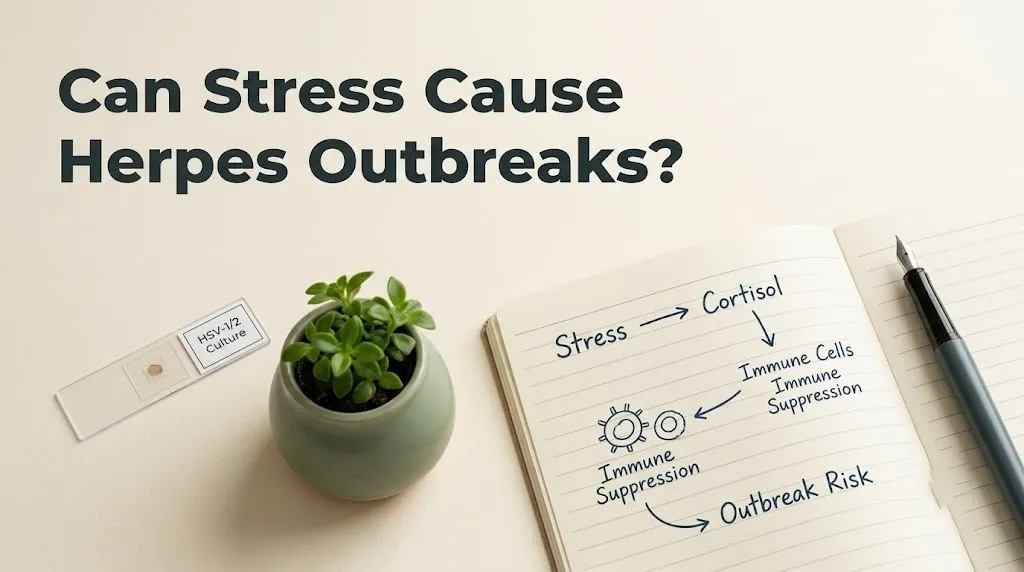
The biological chain works like this. Psychological stress activates the hypothalamic-pituitary-adrenal axis, releasing cortisol from the adrenal glands. Cortisol binds to glucocorticoid receptors on immune cells, particularly natural killer cells and CD8+ T-cells, reducing their ability to survey for and suppress viral reactivation. At the same time, the herpes simplex virus genome contains glucocorticoid responsive elements that can directly respond to stress hormones by initiating the gene expression cascade that leads to viral replication.
Key Takeaway: Stress does not just feel like it causes outbreaks. It creates a measurable immunological environment where herpes reactivation becomes more likely, and this pathway has been documented in controlled research.
Does Stress Cause Herpes Outbreaks
Yes, stress causes herpes outbreaks through a dual mechanism involving immune suppression and direct viral reactivation signaling. The scientific evidence supporting this connection spans molecular virology, clinical immunology, and psychological research, making it one of the better-established links between psychological state and infectious disease outcome.
The evidence base includes laboratory stress-induction studies where researchers exposed participants to acute stressors such as public speaking tasks or cognitive challenges while measuring immune markers relevant to herpes viral control. A study published in Brain, Behavior, and Immunity found that acute psychological stress reduced natural killer cell activity by approximately 30% within 30 minutes, and that this suppression lasted for up to two hours after the stressor ended.
Epidemiological data from the American Psychological Association’s Stress in America survey consistently shows that adults reporting high chronic stress levels also report more frequent illness and longer recovery times, patterns consistent with the immune dysregulation that permits herpes reactivation.
The consistency of the finding across different study designs is what makes this connection strong. Laboratory studies show the acute mechanism. Prospective cohort studies show the real-world pattern. And molecular studies show the receptor-level interaction between stress hormones and viral DNA.
Can You Get Herpes from Stress
You cannot get an initial herpes infection from stress alone because stress does not create the herpes simplex virus. The virus must be transmitted from an infected person through direct skin-to-skin contact, typically involving mucous membranes, during a period of viral shedding. Stress can trigger outbreaks in someone who already carries the virus. It cannot create a new infection in someone who has never been exposed to HSV.
This distinction matters because many people experiencing their first recognized outbreak after a stressful period may mistakenly believe stress caused them to acquire herpes. What typically occurs is that the person was already infected, often asymptomatically and possibly years earlier, and the stressful period suppressed their immune control enough to permit the first clinically visible outbreak.
The Centers for Disease Control and Prevention states that most people with herpes simplex virus infections are asymptomatic or have such mild symptoms that they go unrecognized. A first recognized outbreak following a period of intense stress does not indicate a recent infection. It indicates that stress allowed an existing latent infection to reactivate at a level that produced noticeable symptoms.
How Does Stress Trigger Herpes Reactivation
Stress triggers herpes reactivation through a coordinated neuroendocrine-immune pathway that begins with the perception of stress in the brain, travels through the HPA axis and sympathetic nervous system, and ends with suppressed immune surveillance and direct viral gene activation in the nerve cells where herpes simplex virus lies dormant.
The process starts in the amygdala and hypothalamus, the brain regions that process threats and initiate the stress response. The hypothalamus releases corticotropin-releasing hormone, which signals the anterior pituitary gland to release adrenocorticotropic hormone into the bloodstream. ACTH travels to the adrenal cortex and triggers the release of cortisol.
Cortisol then does two things relevant to herpes reactivation. First, it enters immune cells and binds to the glucocorticoid receptor, a nuclear receptor that, when activated, translocates to the cell nucleus and alters gene expression. In natural killer cells and CD8+ T-cells, this means reduced production of interferon-gamma and other antiviral cytokines that actively suppress herpes viral replication. Second, cortisol can directly affect the sensory neurons in the trigeminal ganglia for oral herpes or dorsal root ganglia for genital herpes, where the virus lies latent. The herpes simplex virus genome contains glucocorticoid responsive elements, DNA sequences that respond to the cortisol-glucocorticoid receptor complex by initiating transcription of viral genes that drive reactivation.
The sympathetic nervous system adds a second pathway through the release of epinephrine and norepinephrine from the adrenal medulla and sympathetic nerve terminals. These catecholamines can also suppress cell-mediated immunity and may directly influence viral gene expression, though the cortisol pathway is better studied.
Key Takeaway: The herpes virus has evolved to detect stress hormones in its host as a signal that immunity may be compromised, making it an opportune moment to reactivate. The mechanism is built into viral DNA.
Stress Hormones and Herpes Simplex Virus
Stress hormones and herpes simplex virus interact at the molecular level through specific receptor systems that scientists have identified in both the virus and the host immune cells. The relationship is not a coincidence. It reflects an evolutionary adaptation where the virus has developed the ability to sense when its host is under immunological pressure and seize that moment to replicate.
Cortisol is the primary stress hormone involved. It operates through the glucocorticoid receptor, which is expressed on nearly every immune cell type relevant to herpes control. When cortisol binds to this receptor on a natural killer cell, it reduces the cell’s ability to release perforin and granzyme B, the proteins that natural killer cells use to destroy virus-infected cells. When it binds to the receptor on a CD8+ T-cell, it reduces the production of interferon-gamma, the cytokine that is specifically critical for maintaining herpes simplex virus in a latent state.
A 2023 study published in the Journal of Virology demonstrated that the herpes simplex virus type 1 genome contains multiple glucocorticoid responsive elements in the promoter regions of genes required for reactivation. These DNA sequences act like cortisol sensors. When the glucocorticoid receptor bound to cortisol attaches to these elements, it increases the transcription of viral genes, essentially providing the molecular signal that tells the virus to wake up.
Epinephrine and norepinephrine contribute through the beta-adrenergic receptors found on immune cells. Activation of these receptors by catecholamines during acute stress can suppress type 1 cytokine production, including interferon-gamma, further weakening the immune control that keeps herpes in check.
The HPA Axis Cortisol Herpes Connection
The HPA axis cortisol herpes connection represents the central pathway by which psychological stress translates into viral reactivation. This axis functions as the body’s primary stress response system, and its end product, cortisol, directly undermines the immunological mechanisms that maintain herpes latency.
The hypothalamic-pituitary-adrenal axis operates as a three-gland cascade. The hypothalamus senses stress through neural inputs from the amygdala and prefrontal cortex and releases corticotropin-releasing hormone. This hormone travels through the portal blood system to the anterior pituitary, which releases adrenocorticotropic hormone into general circulation. ACTH reaches the adrenal glands and stimulates the production and release of cortisol.
Under normal circumstances, cortisol follows a diurnal rhythm with a sharp morning peak and a gradual decline throughout the day. This pattern is regulated by negative feedback where cortisol suppresses further CRH and ACTH release. Chronic psychological stress disrupts this feedback loop. A 2024 study in Psychoneuroendocrinology found that individuals with high perceived stress scores on the Perceived Stress Scale showed a flattened diurnal cortisol slope, meaning cortisol remained elevated into the evening when it should have been low. This sustained elevation provides a persistent signal that suppresses herpes-specific immune surveillance.
The clinical implication of this connection is clear. Stress management that lowers baseline cortisol, whether through cognitive behavioral therapy, mindfulness-based stress reduction, or regular physical activity, may reduce the frequency of herpes outbreaks by removing the hormonal trigger that awakens the virus. The HPA axis is the pathway, and managing it is a biologically rational approach to outbreak prevention.
Natural Killer Cells and Herpes Immune Surveillance
Natural killer cells and CD8+ T-cells are the primary immune cells that maintain herpes simplex virus in a latent state, and their function is directly suppressed by stress hormones. Understanding this immune surveillance system explains why stress, illness, fatigue, and other immune challenges consistently trigger outbreaks.
Natural killer cells are part of the innate immune system and provide the first line of defense against viral reactivation. They patrol the body and recognize cells that show signs of viral activity, destroying them before the virus can complete its replication cycle. In the sensory ganglia where herpes lies dormant, natural killer cells and CD8+ T-cells surround infected neurons and actively suppress viral gene expression through the release of interferon-gamma and other antiviral cytokines.
Research published in Brain, Behavior, and Immunity has shown that cortisol reduces natural killer cell activity in a dose-dependent manner. Higher cortisol levels produce greater suppression. A single episode of acute stress can reduce natural killer cell activity measurably within 30 minutes. Chronic stress produces a more sustained suppression that leaves the herpes virus with extended windows of reduced immune surveillance.
CD8+ T-cells provide the second, more targeted layer of immune control. These cells specifically recognize herpes simplex virus antigens presented on the surface of infected cells and respond by releasing cytotoxic granules that destroy the cell and the virus within it. Cortisol reduces both the number of circulating CD8+ T-cells and their functional capacity, and this effect is particularly pronounced in individuals with high chronic stress levels.
Key Takeaway: Your immune system actively suppresses herpes every day. Stress hormones weaken that suppression. Outbreaks occur when immune surveillance drops below the threshold needed to keep the virus latent.
How Long After Stress Does Herpes Outbreak Occur
A herpes outbreak typically occurs between two and seven days after a significant stressful event, though the timeline varies based on whether the stress is acute or chronic and on individual factors including immune function and outbreak history. The delay reflects the biological time required for the reactivation cascade to complete.
The sequence moves at a measurable pace. The stressful event triggers the hormonal response within minutes. Cortisol suppression of immune function begins within 30 to 60 minutes and can last for hours after acute stress or persist indefinitely under chronic stress conditions. If viral reactivation is initiated during this window of reduced immune surveillance, the virus must then replicate within the neuron, travel along the nerve axon to the skin surface, and begin infecting skin cells. This process takes several days.
Most people who track their outbreaks notice a predictable pattern. They experience a stressful event and, within the next week, notice the early warning signs of an outbreak. Understanding this timeline allows for early intervention. If you know you have been through a significant stressor, you can be alert for prodromal symptoms including tingling, itching, or burning at the site where outbreaks typically occur.
The 2-to-7-day window is an estimate based on the known biology of viral reactivation and patient self-report data. Individual variation is substantial. Some people may notice outbreaks within 24 hours of acute stress, which likely reflects the faster catecholamine pathway rather than the slower cortisol-mediated mechanism.
Stress Herpes Outbreak Timeline and Patterns
The stress herpes outbreak timeline follows a predictable sequence from the stressful event through viral reactivation to visible outbreak and healing. Recognizing this pattern helps you anticipate outbreaks and intervene early with antiviral medication or stress management techniques.
The timeline typically unfolds across these stages. Day zero represents the stressful event or the peak of a stressful period. Within hours, cortisol levels rise and immune function begins to decline. Between days one and three, if reactivation occurs, the virus begins replicating in the sensory ganglion and traveling down the nerve axon. Around day three to five, prodromal symptoms appear, including tingling, itching, burning, or a sensation of pressure at the outbreak site. By days five through seven, visible lesions appear as small fluid-filled vesicles that may be painful or tender. Days eight through fourteen involve the crusting and healing phase.
| Outbreak Stage | Approximate Timing | What Happens Biologically |
|---|---|---|
| Stress exposure | Day 0 | Cortisol and catecholamine surge begins |
| Immune suppression window | Hours 1 to 72 | Natural killer cell and CD8+ T-cell function reduced |
| Viral reactivation initiation | Days 1 to 3 | Viral gene transcription begins in sensory ganglia |
| Axonal transport | Days 2 to 5 | Virus particles travel along nerve to skin surface |
| Prodromal symptoms | Days 3 to 6 | Tingling, itching, burning at outbreak site |
| Visible outbreak | Days 5 to 8 | Vesicles appear, viral shedding at maximum |
| Crusting and healing | Days 8 to 14 | Immune response controls local infection, lesions resolve |
This pattern is most consistent for recurrent outbreaks in people with established herpes infections. First outbreaks may follow different timelines and tend to be more severe and longer lasting regardless of the trigger.
Can Stress Cause a First Herpes Outbreak
Stress can cause the first clinically recognized herpes outbreak in someone who was previously infected but asymptomatic, though stress does not create the initial infection. Many people discover they carry herpes only after a period of intense stress triggers their first visible outbreak, sometimes years after the original exposure.
The mechanism is the same as for recurrent outbreaks. The person acquired the virus at some point in the past, often without knowing it because the initial infection was asymptomatic or so mild it was mistaken for something else. The virus established latency in the sensory ganglia, and the person’s immune system maintained control, keeping the virus suppressed and preventing visible outbreaks. Then a period of chronic stress, acute trauma, or combined stress and illness weakened immune surveillance enough to allow the first clinically evident reactivation.
This scenario is psychologically difficult because it combines the shock of a new herpes diagnosis with the confusion of not knowing when or how the infection was acquired. The timing can also create relationship stress if partners incorrectly assume the outbreak indicates recent infidelity, when in reality the infection may predate the relationship by years.
If you are experiencing a first suspected herpes outbreak, see a primary care physician or board-certified dermatologist for viral culture or PCR testing to confirm the diagnosis and determine whether it is HSV-1 or HSV-2. Knowing the type guides treatment decisions and provides information about expected recurrence patterns.
Key Takeaway: A first outbreak after stress does not mean you were recently infected. It means stress allowed a dormant infection you already had to surface for the first time.
Acute Stress Versus Chronic Stress Herpes Triggers
Acute stress and chronic stress trigger herpes outbreaks through overlapping but distinct physiological pathways, and the type of stress you experience affects both the timing and the likelihood of an outbreak. Understanding the difference helps you identify which situations pose the highest risk.
Acute stress is a sudden, intense stressor with a clear onset and relatively short duration. Examples include a job interview, a public speaking engagement, a car accident, an argument, or a frightening experience. Acute stress activates the sympathetic-adrenal-medullary axis, producing a rapid surge of epinephrine and norepinephrine from the adrenal medulla. This catecholamine release can transiently suppress immune function, including natural killer cell activity, creating a brief window of reduced viral surveillance. Outbreaks triggered by acute stress tend to appear within two to five days of the event and may be less severe than chronic stress-triggered outbreaks.
Chronic stress is ongoing, persistent stress without a clear endpoint. Examples include ongoing financial strain, a toxic work environment, caregiving for an ill family member, or a difficult divorce. Chronic stress produces sustained HPA axis activation with elevated baseline cortisol, flattened diurnal cortisol rhythm, and accumulation of allostatic load. This creates a prolonged state of immune suppression where natural killer cells and CD8+ T-cells remain below optimal function for weeks or months. Outbreaks triggered by chronic stress tend to be more frequent, potentially more severe, and less predictably tied to a single event.
For people with frequent outbreaks, addressing chronic stress is often more impactful than trying to manage acute stress alone. Chronic stress creates the immunological background that makes acute stress triggers more potent.
HSV-1 Cold Sores and Stress Compared to HSV-2
HSV-1 cold sores and HSV-2 genital herpes are both triggered by stress through the same fundamental neuroendocrine-immune mechanism, but there are differences in outbreak frequency, anatomical location, and the specific stress patterns most commonly implicated.
HSV-1 typically establishes latency in the trigeminal ganglia located near the base of the skull, which supply sensory innervation to the face, lips, and oral mucosa. Stress reactivation travels along the trigeminal nerve branches, producing cold sores or fever blisters typically on or around the lips. HSV-1 reactivates more frequently than HSV-2 in most individuals, and cold sore sufferers often report that acute stress, combined with other triggers like UV exposure or fatigue, is particularly effective at producing outbreaks.
HSV-2 typically establishes latency in the dorsal root ganglia in the sacral region, which supply sensory innervation to the genital and perianal areas. Stress reactivation travels along sacral nerve pathways to produce genital outbreaks. HSV-2 generally reactivates less frequently than HSV-1 in oral sites, but outbreaks may be more prolonged. Chronic stress appears to be a more prominent trigger for HSV-2 than acute stress alone.
| Characteristic | HSV-1 (Oral Herpes) | HSV-2 (Genital Herpes) |
|---|---|---|
| Latency site | Trigeminal ganglia | Sacral dorsal root ganglia |
| Average outbreak frequency (untreated) | 0 to 6+ per year | 0 to 4+ per year |
| Most common stress trigger type | Acute stress often combined with UV or illness | Chronic stress more prominent than acute alone |
| Prodrome characteristics | Tingling or burning at lip border | Tingling, burning, or nerve pain in genital or leg area |
| Response to stress management | Reduces frequency but outbreaks may still occur | Reduces frequency, often more responsive to combined stress management and suppressive therapy |
The stress management and antiviral strategies that work for one type generally work for the other because the underlying biology is so similar. The anatomical location differs, but the cortisol mechanism is the same.
How to Prevent Stress-Related Herpes Outbreaks
You can prevent stress-related herpes outbreaks by combining stress management practices that reduce cortisol levels with antiviral medication strategies that provide pharmacological suppression of viral reactivation. The most effective approach addresses both sides of the equation simultaneously.
Stress management reduces the hormonal trigger. A 2023 meta-analysis published in Psychosomatic Medicine found that mindfulness-based stress reduction programs reduced herpes outbreak frequency by a clinically meaningful margin in individuals who practiced regularly. Cognitive behavioral therapy has also shown benefit by helping people reframe stress perceptions and reduce the physiological stress response to challenging situations.
Regular physical activity reduces baseline cortisol and improves immune function when practiced consistently. Moderate aerobic exercise performed for 30 minutes, five days per week, has the strongest evidence for immune benefit. Sleep quality directly affects both cortisol rhythm and natural killer cell function. The National Sleep Foundation recommends seven to nine hours per night for adults, and consistent sleep deprivation is strongly associated with increased outbreak frequency in observational studies.
Antiviral medication provides the pharmaceutical line of defense. Suppressive therapy with daily valacyclovir, acyclovir, or famciclovir reduces outbreak frequency by 70% to 80% in most people and also reduces asymptomatic viral shedding. When stress management and suppressive therapy are combined, many people with frequent outbreaks achieve near-complete outbreak suppression.
Key Takeaway: Neither stress management alone nor antivirals alone are as effective as the two strategies combined. The biology of herpes reactivation involves both a hormonal trigger and a viral process, and effective prevention addresses both.
Stress Management Techniques for Herpes Outbreak Reduction
Specific stress management techniques with documented evidence for reducing herpes outbreak frequency work by lowering cortisol levels, improving immune function, or interrupting the stress perception cycle that activates the HPA axis. These techniques are most effective when practiced consistently rather than deployed only during high-stress periods.
Mindfulness-based stress reduction has the strongest evidence base for herpes outbreak reduction. MBSR programs typically involve eight weeks of training in mindfulness meditation, body scanning, and gentle yoga. The mechanism involves reducing amygdala reactivity to stressors, which lowers the intensity and duration of HPA axis activation. A study in the Journal of Behavioral Medicine found that participants in an MBSR program showed improved natural killer cell activity compared to waitlist controls.
Cognitive behavioral therapy helps by addressing the stress perception and catastrophizing patterns that amplify the stress response. CBT for stress management focuses on identifying distorted stress-inducing thoughts and replacing them with more accurate, less physiologically activating cognitions. For people whose stress is compounded by distress about herpes itself, CBT can address both the external stressors and the internal shame or anxiety that adds to the allostatic load.
Diaphragmatic breathing and progressive muscle relaxation are lower-commitment techniques that can be deployed during acute stress to reduce sympathetic nervous system activation. Slow, deep breathing at a rate of five to six breaths per minute stimulates the vagus nerve and activates the parasympathetic nervous system, counteracting the catecholamine surge of acute stress. These techniques are most useful for preventing acute stress-triggered outbreaks when practiced at the first sign of a stressor.
Antiviral Medication and Stress-Triggered Outbreaks
Antiviral medication is the most effective single intervention for preventing stress-triggered herpes outbreaks, and it works through a mechanism completely separate from stress management. Antivirals directly inhibit viral DNA replication, reducing the likelihood that a stress-induced reactivation signal will progress to a full clinical outbreak.
Three oral antiviral medications are FDA-approved for herpes simplex virus management. Acyclovir, the oldest, is effective but requires more frequent dosing due to lower bioavailability. Valacyclovir, a prodrug of acyclovir with higher absorption, allows twice-daily dosing and is the most commonly prescribed medication for both episodic and suppressive therapy. Famciclovir, a prodrug of penciclovir, offers similar efficacy with different pharmacokinetics.
Suppressive therapy involves taking a daily dose of antiviral medication regardless of symptoms, with the goal of preventing outbreaks before they start. The Centers for Disease Control and Prevention notes that suppressive therapy with valacyclovir reduces recurrent genital herpes outbreaks by approximately 70% to 80%. For stress-triggered outbreaks specifically, suppressive therapy provides consistent viral suppression that makes the virus less responsive to stress hormone signals.
Episodic therapy involves taking antiviral medication only when prodromal symptoms appear or during a known high-stress period. This approach works for people with infrequent outbreaks who can reliably identify their prodrome. Starting antiviral medication at the first sign of tingling, burning, or itching can abort an outbreak or reduce its severity and duration.
The combination of suppressive therapy for baseline protection plus intensified stress management during known high-stress periods is the approach that infectious disease specialists often recommend for people with frequent stress-related outbreaks.
When to See a Doctor for Stress-Related Herpes Outbreaks
See a primary care physician, board-certified dermatologist, or infectious disease specialist for stress-related herpes outbreaks when you experience more than six outbreaks per year, when outbreaks are severe or unusually painful, when you need confirmation of a first suspected outbreak, or when stress management and over-the-counter measures are not controlling your symptoms.
Frequent outbreaks warrant a discussion about suppressive antiviral therapy, which requires a prescription and regular monitoring. A physician can assess whether daily suppressive therapy is appropriate for your situation based on outbreak frequency, severity, impact on quality of life, and any contraindications you may have.
Severe outbreaks with extensive lesions, significant pain that interferes with daily activities, or systemic symptoms including fever or swollen lymph nodes should be evaluated promptly. These presentations may require higher-dose antiviral treatment and assessment for secondary bacterial infection, which can occur when skin lesions become contaminated.
If the psychological distress of living with herpes is interfering with your quality of life, relationships, or mental health, request a referral to a licensed clinical psychologist who has experience with chronic health conditions. The stress of a herpes diagnosis can create a feedback loop where distress about the condition increases stress, which triggers more outbreaks, which increases distress further. Cognitive behavioral therapy specifically addresses this cycle.
If you are in crisis or experiencing thoughts of self-harm, contact the 988 Suicide and Crisis Lifeline by calling or texting 988 at any time. This service is free, confidential, and available 24 hours a day.
Frequently Asked Questions About Stress and Herpes Outbreaks
Can stress really cause a herpes outbreak or is that a myth?
Stress really can cause herpes outbreaks through a well-documented biological mechanism involving cortisol suppression of natural killer cells and CD8+ T-cells. This is not a myth. Prospective human studies published in Psychosomatic Medicine and Brain, Behavior, and Immunity have demonstrated the connection. The herpes simplex virus genome even contains glucocorticoid responsive elements that allow stress hormones to directly promote viral reactivation at the DNA level.
How long after a stressful event does a herpes outbreak appear?
A herpes outbreak typically appears two to seven days after a significant stressful event. The delay reflects the biological time required for cortisol to suppress immune function, the virus to reactivate in the sensory ganglia, travel along the nerve axon, and begin infecting skin cells. Some people notice prodromal symptoms including tingling or burning as early as 24 hours after acute stress, which may reflect the faster catecholamine pathway.
Can you get herpes for the first time from stress alone?
You cannot get an initial herpes infection from stress alone because stress does not create the herpes simplex virus. The virus must be transmitted through direct skin-to-skin contact with an infected person. Stress can trigger the first visible outbreak in someone who was already infected but previously asymptomatic, sometimes years after the original exposure.
What type of stress is most likely to trigger herpes?
Chronic stress with sustained cortisol elevation is the type most strongly associated with herpes outbreaks because it produces prolonged immune suppression. Acute stress can also trigger outbreaks through catecholamine-mediated immune effects, particularly when combined with other triggers like fatigue or illness. The combination of chronic stress providing a permissive immunological background and acute stress providing a sudden additional suppression is particularly potent.
How can I stop stress from causing herpes outbreaks?
You can reduce stress-related outbreaks by combining daily suppressive antiviral medication, which reduces outbreak frequency by 70% to 80%, with consistent stress management practices including mindfulness-based stress reduction, regular aerobic exercise, and adequate sleep. Addressing both the pharmacological and the stress-hormonal side of the equation produces better results than either approach alone.
Do antivirals work on stress-triggered herpes outbreaks?
Antiviral medications are equally effective against stress-triggered herpes outbreaks as they are against outbreaks triggered by other causes. Valacyclovir, acyclovir, and famciclovir work by inhibiting viral DNA replication regardless of what triggered the reactivation. Starting antiviral medication at the first sign of prodromal symptoms can abort or reduce the severity of a stress-triggered outbreak.
Stress causes herpes outbreaks because your body’s hormonal response to pressure, worry, and overwhelm directly weakens the immune cells that keep the virus dormant. This is not a matter of willpower or a sign that you are handling stress poorly. It is a physiological reality that affects millions of people who carry HSV-1 or HSV-2.
The most effective strategy addresses both sides of the equation. If your outbreaks are frequent, talk to your primary care physician or dermatologist about suppressive antiviral therapy. At the same time, adopt at least one evidence-backed stress management practice, whether that means mindfulness meditation, regular aerobic exercise, cognitive behavioral therapy, or progressive muscle relaxation, and practice it consistently, not just during crises.
Your immune system keeps herpes in check every day. Stress makes that job harder. By reducing the frequency and intensity of your stress response and supporting your immune system with medication when needed, you are giving your body the conditions it needs to maintain viral latency and reduce the disruption that outbreaks cause in your life.