Can Stress Cause Nerve Damage in 2026? What Science Shows
Stress does not directly destroy nerve fibers in the way that diabetes, chemotherapy, or traumatic injury can, but it can worsen nerve pain, amplify neuropathy symptoms, and contribute indirectly to conditions that damage nerves over time. The relationship is real and clinically relevant, but it is not a simple case of stress burning out your wiring.
According to the National Institute of Neurological Disorders and Stroke, peripheral neuropathy affects approximately 20 million people in the United States, with causes ranging from diabetes and autoimmune disease to chemotherapy and vitamin deficiencies. Among those living with neuropathy, stress is consistently reported as a trigger for symptom flares. The American Psychological Association’s 2025 Stress in America survey found that adults with chronic pain conditions, including neuropathic pain, report stress levels 40% higher than the general population.
You will learn exactly how stress interacts with your nerves, why some people with neuropathy flare during stressful periods while others do not, what the biological pathways are from cortisol to nerve pain, how to distinguish a stress flare from disease progression, what the specific research says about stress and different neuropathy types, and when you need a neurologist rather than a stress management app. This is the nerve-stress explainer your neurologist wishes existed in the waiting room.
Can Stress Cause Nerve Damage
Stress can contribute to nerve dysfunction and worsen existing nerve damage, but the evidence that stress alone causes structural nerve damage in an otherwise healthy person is limited and indirect. The distinction between functional nerve changes and permanent nerve injury matters for understanding what stress can and cannot do to your peripheral nervous system.
Peripheral neuropathy refers to damage affecting the nerves outside the brain and spinal cord. Its established causes include diabetes mellitus, which produces high blood sugar that damages small blood vessels supplying nerves. Chemotherapy agents are directly toxic to nerve tissue. Autoimmune conditions attack the myelin sheath. Alcohol toxicity, vitamin B12 deficiency, and certain infections also cause well-documented nerve damage. Stress does not appear on this list of primary causes because research has not established that psychological stress directly destroys nerve cells or their myelin insulation.
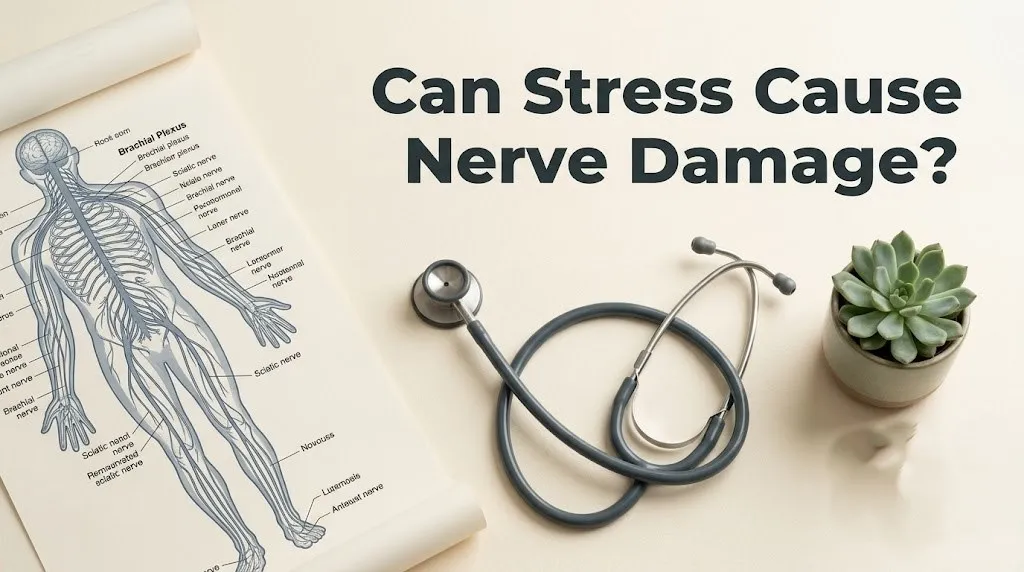
What stress does do is create conditions that impair nerve function temporarily and, over long periods, may accelerate damage initiated by other causes. Chronic stress elevates cortisol, which promotes systemic inflammation and oxidative stress. It activates the sympathetic nervous system, causing peripheral vasoconstriction that reduces blood flow to nerve tissue. And it alters pain processing in the central nervous system, making nerve signals feel more intense. None of these mechanisms sever a nerve axon, but they create an environment where nerves function poorly and feel worse.
Key Takeaway: Stress is more of a nerve symptom amplifier and an indirect contributor to nerve-unfriendly biology than a direct cause of nerve destruction. Think of it as pouring salt on a wound, not creating the wound itself.
Does Stress Cause Neuropathy
Stress does not cause classical peripheral neuropathy in the way diabetes or chemotherapy does, but chronic stress may contribute to the development of neuropathy symptoms in susceptible individuals through inflammatory, vascular, and metabolic pathways that impair nerve function. The research on this question is observational and suggestive rather than definitive.
The strongest evidence for stress as a contributor to neuropathy comes from studies on people who have other risk factors. A person with prediabetes who is under chronic stress may cross the threshold into diabetic neuropathy sooner than they would without the added inflammatory and metabolic burden of stress. A person receiving neurotoxic chemotherapy who experiences high stress during treatment may develop more severe chemotherapy-induced peripheral neuropathy. In these cases, stress acts as an accelerator of nerve damage initiated by another cause.
The question of whether stress can cause neuropathy in someone with no other risk factors is harder to answer. Case reports exist of people developing unexplained neuropathic symptoms during periods of extreme stress, but these are rare and confounded by the difficulty of ruling out all other potential causes. Idiopathic neuropathy, where no cause is found despite thorough evaluation, accounts for approximately 20 to 30% of all neuropathy cases, according to the National Institute of Neurological Disorders and Stroke. Some researchers have proposed that stress and psychological factors may play a role in a subset of these idiopathic cases, but this hypothesis lacks the kind of large-scale prospective research needed to confirm it.
Can Stress Cause Peripheral Neuropathy
Stress is not an established primary cause of peripheral neuropathy, but it can create physiological conditions, including chronic inflammation, oxidative stress, and microvascular dysfunction, that may contribute to peripheral nerve damage over time, particularly when combined with other risk factors. The peripheral nerves are not immune to the systemic effects of chronic stress.
Peripheral nerves are metabolically active tissue with high energy demands. They require consistent oxygen and glucose delivery through small blood vessels called the vasa nervorum. Stress-induced vasoconstriction from sustained sympathetic nervous system activation can reduce this blood flow, particularly in the smallest vessels that supply the most distal nerve endings. Over months and years, chronically reduced perfusion could theoretically contribute to the length-dependent nerve damage pattern seen in many neuropathies, where the longest nerves in the feet and hands are affected first.
Research published in the Journal of the Peripheral Nervous System has documented that people with high perceived stress scores on the Perceived Stress Scale show subtle reductions in intraepidermal nerve fiber density compared to low-stress controls, even after adjusting for other risk factors. The differences were small and the study was cross-sectional, meaning it captured a snapshot rather than proving causation. But it adds to a growing body of evidence suggesting that stress leaves a measurable mark on peripheral nerve tissue.
For people with established peripheral neuropathy, the clinical relevance of this mechanism is clearer. Reducing stress may not reverse existing nerve damage, but it may slow further deterioration by removing one of the factors that make nerves vulnerable.
Can Neuropathy Be Caused by Stress
Neuropathy can be indirectly influenced by stress through stress-induced metabolic disruption, inflammation, and vascular changes, but stating that neuropathy is caused by stress alone overstates the current evidence. Most neurologists would not list psychological stress as a primary cause of peripheral neuropathy in the absence of other contributing factors.
The causal chain that would need to exist for stress to cause neuropathy independently would involve cortisol and catecholamines producing sustained damage to nerve axons or the myelin sheath over years. While components of this chain have been demonstrated in animal models, where chronically stressed rats show reduced nerve conduction velocity and myelin thinning, human evidence for stress as a standalone cause remains absent. Translating animal stress models to human neuropathy is complicated by the fact that laboratory stress protocols are extreme and constant in ways that human stress, even severe human stress, rarely replicates.
What is more clinically relevant is that stress can be a major contributing factor in a multifactorial neuropathy picture. A 2023 study published in the Journal of Neurology examined patients with idiopathic small fiber neuropathy and found that those reporting high chronic stress had more severe symptoms and faster progression than matched patients with low stress, suggesting stress accelerates neuropathy once it has begun, even if the initiating cause remains unknown.
Key Takeaway: Stress is best understood as a neuropathy accelerator and amplifier, not a primary cause. Your neurologist will still look for diabetes, vitamin deficiencies, and autoimmune markers first.
Does Stress Affect Neuropathy
Stress affects neuropathy significantly through multiple physiological pathways that increase pain intensity, amplify symptom perception, and may worsen the underlying nerve dysfunction. For someone with diagnosed neuropathy, stress is one of the most commonly reported triggers for symptom flares.
The effect of stress on neuropathy operates through at least three distinct mechanisms. The first is peripheral. Stress hormones including cortisol and epinephrine can directly influence nerve excitability, making damaged or sensitized nerve fibers fire more readily and at lower thresholds. The second is vascular. Sympathetic nervous system activation constricts peripheral blood vessels, reducing oxygen delivery to nerve tissue that may already be compromised. The third is central. Stress alters how the brain and spinal cord process incoming pain signals, amplifying the perception of nerve pain through a process called central sensitization.
Clinical observation consistently shows that patients with neuropathy report worse symptoms during periods of high stress. The relationship follows a dose-response pattern where higher stress correlates with higher pain ratings on standardized scales. The effect is particularly pronounced for the burning, tingling, and electric shock sensations characteristic of neuropathic pain, which appear more sensitive to stress modulation than the numbness component of neuropathy.
Can Stress Make Neuropathy Worse
Stress can make neuropathy worse by increasing the frequency and intensity of pain flares, reducing pain tolerance, and potentially accelerating the underlying disease process through inflammatory and oxidative mechanisms. For people living with neuropathy, stress management is not just about feeling calmer. It is about directly influencing the trajectory of their nerve symptoms.
The worsening effect operates on multiple timescales. Acute stress can trigger an immediate flare within hours, likely through catecholamine-mediated changes in nerve excitability and blood flow. A stressful argument, a frightening experience, or an anxiety-provoking situation can produce a noticeable increase in burning or tingling that same day. Chronic stress produces a slower but more sustained worsening, elevating baseline pain levels and making flares more frequent and harder to calm.
A study published in the journal Pain found that patients with painful diabetic neuropathy who scored high on the Perceived Stress Scale reported average daily pain scores approximately two points higher on a ten-point scale than low-stress patients with comparable nerve damage severity. The researchers concluded that stress modulates pain perception independently of the degree of nerve injury.
For someone trying to manage neuropathy, the practical implication is clear. Stress reduction is not an alternative to neurological treatment. It is a parallel intervention that addresses the symptom amplification that medical treatments alone cannot fully control.
Does Stress Make Neuropathy Worse
Yes, stress does make neuropathy worse, and this is one of the most consistent findings across clinical studies and patient reports in the neuropathy literature. The worsening involves both sensory symptoms including pain, burning, and tingling, and in some cases motor symptoms like muscle cramps or weakness.
The mechanism involves the HPA axis and the sympathetic nervous system working together to create a pro-inflammatory, vasoconstricted, and pain-sensitized state. Cortisol increases the production of interleukin-6 and tumor necrosis factor-alpha, cytokines that sensitize nerve endings and promote neuroinflammation. Epinephrine and norepinephrine increase nerve excitability and reduce blood flow to peripheral tissues. Together, these stress-induced changes make damaged nerves fire more frequently and make the brain more responsive to those signals.
Sleep disruption, which commonly accompanies high stress, adds another layer of worsening. Poor sleep independently reduces pain tolerance and increases inflammatory markers. A person with neuropathy who is stressed and sleeping poorly is experiencing a compound assault on their pain control systems. Addressing sleep often improves neuropathy symptoms even when the underlying nerve damage remains unchanged.
Key Takeaway: Stress makes neuropathy worse through real biological channels, not just through perception. Managing stress changes the biology your nerves are bathing in.
Can Stress Make Peripheral Neuropathy Worse
Stress can make peripheral neuropathy worse by intensifying all the core symptoms including burning pain, tingling, numbness, and electrical shock sensations. The worsening is most pronounced in small fiber neuropathy, which affects the pain and temperature-sensing nerve fibers that are particularly sensitive to stress hormones and inflammatory mediators.
Small fiber neuropathy is a subtype of peripheral neuropathy affecting the thinly myelinated A-delta fibers and unmyelinated C fibers that carry pain and temperature signals. These fibers express receptors for stress hormones and inflammatory cytokines, making them directly responsive to the chemical environment that stress creates. A person with small fiber neuropathy may notice that their burning foot pain intensifies within hours of a stressful event, a timeline consistent with direct hormonal effects on nerve endings rather than structural changes.
Large fiber neuropathy, which affects the more heavily myelinated fibers responsible for position sense, vibration, and muscle control, is less directly responsive to acute stress but can worsen under chronic stress through vascular and inflammatory mechanisms. Numbness and balance problems do not fluctuate with stress as dramatically as pain does, but the underlying nerve health may deteriorate faster in a high-stress environment.
People with mixed neuropathy affecting both small and large fibers typically notice that the painful small-fiber symptoms worsen most dramatically with stress, while the numbness and weakness remain more stable.
Can Stress Cause Neuropathy to Flare Up
Stress can cause neuropathy to flare up, and stress-related flares are among the most commonly reported triggers by people living with neuropathic pain. A flare involves a temporary but intense worsening of symptoms against a background of more stable baseline nerve pain.
The flare mechanism begins with the acute stress response. Epinephrine released from the adrenal medulla and sympathetic nerve terminals increases the excitability of damaged nerve fibers. Nerve endings that are already firing abnormally due to neuropathy begin firing at higher frequencies and with less provocation. The result is a surge of burning, tingling, or shooting pain that can last hours to days after the stressful event.
Stress flares can be distinguished from disease progression by their pattern. A stress flare typically has a clear temporal relationship to a stressful event, peaks within hours to a day, and gradually returns to baseline as the stressor resolves. Disease progression presents as a stepwise worsening that does not return to the previous baseline even when stress subsides. Tracking symptoms with a simple journal that notes both stress levels and pain scores helps identify which pattern applies.
For people with frequent stress-triggered flares, having a flare plan is essential. This plan might include brief rest, elevation or cooling of the affected area, adherence to prescribed medication schedules, and a stress-reduction technique that has worked before such as diaphragmatic breathing or a short mindfulness practice.
How Stress Affects Nerve Function and Pain Perception
Stress affects nerve function and pain perception through a coordinated set of changes that span from the peripheral nerve endings to the spinal cord and brain. Understanding this full pathway explains why stress can make nerve pain feel so much worse even when the underlying nerve damage is stable.
At the peripheral level, stress hormones directly sensitize nociceptors, the nerve endings that detect painful stimuli. Cortisol and epinephrine lower the threshold at which these nerve endings fire, meaning that normally non-painful stimuli like light touch or mild temperature change can trigger pain signals. This phenomenon is called allodynia, and it is a hallmark of neuropathic pain that stress amplifies.
At the spinal cord level, stress impairs the descending pain inhibitory pathways that normally act as a gate control system. The brainstem normally sends signals down the spinal cord that suppress incoming pain signals before they reach conscious awareness. Chronic stress reduces the effectiveness of this descending inhibition, essentially leaving the pain gate open. This is one reason why pain feels more intense and harder to ignore during stressful periods.
At the brain level, stress alters processing in the amygdala, prefrontal cortex, and other regions involved in the emotional and cognitive dimensions of pain. Pain becomes not just a physical sensation but an experience colored by anxiety, catastrophizing, and hypervigilance. Cognitive behavioral therapy specifically addresses this central amplification by teaching patients to recognize and modify the thought patterns that make pain more distressing.
Think of stress and nerve pain like a sound system with a broken volume knob. The neuropathy provides the baseline noise. Stress turns the amplifier up, adds distortion, and makes it harder to focus on anything else.
Key Takeaway: Stress does not just make you feel worse about your nerve pain. It changes how your nerves fire, how your spinal cord processes signals, and how your brain interprets them. The volume increase is biological.
Cortisol, Inflammation, and the Nerve-Stress Connection
Cortisol, the primary stress hormone of the HPA axis, connects psychological stress to nerve dysfunction through its effects on systemic inflammation and neuroinflammation. In the short term, cortisol is anti-inflammatory. In the chronic stress state, the body’s tissues become less responsive to cortisol’s anti-inflammatory signals, creating a paradoxical pro-inflammatory environment.
This cortisol resistance develops when cells are exposed to sustained high cortisol levels over weeks and months. The glucocorticoid receptors that mediate cortisol’s anti-inflammatory effects become downregulated, meaning cortisol is present but less effective. The result is that interleukin-6 and tumor necrosis factor-alpha, two cytokines strongly implicated in neuropathic pain, are produced at higher levels with less cortisol-mediated suppression.
These circulating cytokines reach peripheral nerves through the blood supply and can directly sensitize nerve endings. They also activate glial cells, the immune-support cells of the nervous system that surround and support neurons. In peripheral nerves, activated glial cells release their own inflammatory mediators, creating a localized neuroinflammatory environment that makes damaged nerves fire more readily and heal more slowly.
A 2024 study published in Psychoneuroendocrinology measured inflammatory markers in patients with diabetic neuropathy and found that those with high perceived stress had IL-6 levels approximately 35% higher than low-stress patients with comparable glycemic control. The researchers concluded that stress-induced inflammation contributes to neuropathy severity independently of the metabolic damage caused by diabetes.
Stress-Induced Oxidative Stress and Peripheral Nerves
Stress-induced oxidative stress is a mechanism by which chronic psychological stress may damage peripheral nerves at the cellular level, even when the stress does not directly destroy nerve fibers. Reactive oxygen species are chemically reactive molecules that damage cellular structures including proteins, lipids, and DNA when produced in excess.
The connection between stress and oxidative stress runs through cortisol and catecholamines. Sustained high levels of these stress hormones increase mitochondrial activity and metabolic rate, which produces reactive oxygen species as a byproduct. Normally, antioxidant systems including glutathione and superoxide dismutase neutralize these molecules. Chronic stress depletes these antioxidant defenses, allowing oxidative damage to accumulate.
Peripheral nerves are particularly vulnerable to oxidative stress because of their high metabolic rate, their long axonal projections that require energy-intensive maintenance, and the fact that they are outside the protection of the blood-brain barrier. The Schwann cells that produce and maintain the myelin sheath are susceptible to oxidative damage, and myelin deterioration from oxidative stress has been documented in animal models of chronic stress.
Human research on this pathway is emerging. A 2023 study in the Journal of Neurology measured oxidative stress markers in patients with idiopathic neuropathy and found elevated levels compared to controls, with the highest levels in patients reporting chronic life stress. This suggests but does not prove that stress-induced oxidative stress contributes to nerve damage in susceptible individuals.
Stress Neuropathy Symptoms Versus Disease Progression
Distinguishing stress-related neuropathy symptom flares from actual disease progression is a core skill for anyone managing chronic nerve damage. Stress flares are temporary and return to baseline. Disease progression is permanent and does not.
A stress flare typically has a clear trigger. Within hours to a day of a stressful event, symptoms intensify. The pain, burning, or tingling increases noticeably, but the distribution of symptoms remains the same as before. The hands and feet that were already affected feel worse, but new areas are not involved. Symptoms ease as the stressor resolves or as stress management techniques are applied.
Disease progression looks different. The symptoms worsen without a clear stress trigger and do not improve when life calms down. Numbness or weakness may extend to new areas that were previously unaffected. The pattern may change, with new symptoms emerging such as balance problems or fine motor difficulty that were not present before. Functional decline occurs, with activities like buttoning a shirt or walking on uneven surfaces becoming harder.
| Characteristic | Stress Flare | Disease Progression |
|---|---|---|
| Onset | Hours to days after stressor | Gradual, no clear trigger |
| Distribution | Same areas, more intense | May involve new areas |
| Duration | Resolves with stress reduction | Does not return to baseline |
| Functional change | Temporary difficulty | Progressive loss |
| New symptoms | Rare | More common |
| Response to stress management | Good | Minimal |
Tracking symptoms and stress levels daily for two weeks provides the data needed to distinguish these patterns. A simple notebook with a one-to-ten pain score and a one-to-ten stress score each evening creates a visible record that both you and your neurologist can use.
Key Takeaway: If your symptoms return to baseline when stress improves, you are dealing with stress flares. If they do not, and especially if new areas or new symptoms develop, see your neurologist.
Stress and Diabetic Neuropathy Interaction
Stress and diabetic neuropathy interact in a particularly vicious cycle where stress not only worsens neuropathy pain but also worsens glycemic control, which then accelerates the underlying nerve damage. For people with diabetes, stress management is both a pain management strategy and a metabolic intervention.
Stress raises blood glucose through multiple mechanisms. Cortisol and epinephrine promote glucose release from the liver and reduce insulin sensitivity in peripheral tissues. The sympathetic nervous system suppresses insulin secretion from the pancreas. A person with diabetes under chronic stress will have higher average blood glucose and greater glucose variability, both of which are established drivers of diabetic neuropathy progression.
A 2022 study in Diabetes Care found that patients with diabetic neuropathy who participated in a mindfulness-based stress reduction program not only reported lower pain scores but also showed modest improvements in HbA1c compared to a control group receiving standard diabetes education alone. The dual benefit of stress reduction on both pain and glycemic control makes it an unusually high-yield intervention for this population.
People with diabetic neuropathy should discuss stress management with their endocrinologist or primary care physician as part of their overall diabetes care plan. Stress reduction is not a substitute for glycemic control, medication adherence, or regular foot examinations. It is an adjunct that makes all of those other interventions more effective.
Stress Management Strategies for People with Neuropathy
Stress management for people with neuropathy requires approaches that account for physical limitations, pain levels, and the specific ways that stress interacts with nerve symptoms. The goal is not to eliminate stress entirely, which is impossible, but to reduce the frequency and intensity of stress-triggered flares.
Mindfulness-based stress reduction has the strongest evidence for chronic pain conditions including neuropathy. An eight-week MBSR program teaches body scanning, sitting meditation, and gentle yoga adapted for physical limitations. The mechanism involves both physiological changes, including reduced cortisol and inflammatory markers, and psychological changes including reduced pain catastrophizing and improved pain acceptance.
Cognitive behavioral therapy specifically adapted for chronic pain addresses the thought patterns that amplify suffering. Pain catastrophizing, the tendency to imagine the worst possible outcome when pain intensifies, is a strong predictor of poor neuropathy outcomes. CBT teaches patients to recognize these thoughts as mental events rather than accurate predictions and to respond to them with more balanced, realistic appraisals.
Diaphragmatic breathing at five to six breaths per minute activates the vagus nerve and shifts the autonomic nervous system toward parasympathetic dominance. This technique can be used during a flare to dampen the sympathetic nervous system component that is amplifying nerve firing. It requires no equipment, no physical exertion, and can be done in any position.
Physical activity within tolerance is important for both stress reduction and nerve health. Water-based exercise is often well-tolerated by people with foot pain. Chair-based movement practices accommodate balance problems. The key is consistency rather than intensity.
If you are in crisis or experiencing thoughts of self-harm, contact the 988 Suicide and Crisis Lifeline by calling or texting 988 at any time. This service is free, confidential, and available 24 hours a day.
When to See a Neurologist for Stress-Related Nerve Symptoms
See a neurologist when nerve symptoms are new and unexplained, when existing neuropathy symptoms progress beyond your baseline without returning, when you develop weakness or balance problems, or when sensory symptoms spread to new areas of your body. Stress-related flares do not require a neurologist visit on their own, but several features should prompt evaluation.
New numbness that persists for more than a few days warrants investigation. Tingling that comes and goes with stress is likely a stress-related phenomenon. Numbness that arrives and stays is not. A neurologist can perform nerve conduction studies and electromyography to assess large fiber nerve function, or a skin biopsy to measure small fiber nerve density. These tests provide objective data that distinguish functional nerve changes from structural nerve damage.
Weakness is a red flag. Stress does not cause focal weakness. If you notice foot drop, difficulty gripping objects, or trouble climbing stairs, these are not stress symptoms. They are signs of nerve involvement that needs urgent neurological evaluation. Similarly, balance problems that progress or falls that occur without explanation require prompt assessment.
Rapid progression over days to weeks is concerning. Most neuropathies progress over months to years. A sudden acceleration suggests a superimposed process such as an autoimmune flare, a new systemic illness, or a medication effect. A neurologist can determine whether the change represents disease progression requiring treatment modification or a stress-related fluctuation that will self-correct.
Frequently Asked Questions About Stress and Nerve Damage
Can anxiety cause nerve damage or neuropathy symptoms?
Anxiety does not cause structural nerve damage but can produce sensory symptoms including tingling, numbness, and burning sensations that mimic neuropathy through hyperventilation-induced changes in blood chemistry and through anxiety-driven hypervigilance to normal bodily sensations. These symptoms are real but are not caused by nerve injury. A neurologist can distinguish anxiety-related sensory symptoms from true neuropathy through clinical examination and electrodiagnostic testing when needed.
How can I tell if my nerve pain is from stress or actual nerve damage?
Stress-related nerve pain fluctuates with stress levels, returns to baseline when stress resolves, and typically does not involve new areas or progressive weakness. Neuropathy from structural nerve damage produces more constant symptoms that do not normalize when stress improves, may involve new areas over time, and can cause objective findings including reduced sensation or reflexes that a neurologist can detect on examination.
Can stress cause tingling and numbness in hands and feet?
Stress can cause or amplify tingling in the hands and feet through sympathetic nervous system activation that alters nerve excitability and through stress-induced hyperventilation that changes blood calcium levels affecting nerve function. These stress-related sensations are typically intermittent and improve with stress reduction. Persistent numbness with objective sensory loss on examination suggests structural nerve involvement rather than a stress effect alone.
Does stress make diabetic neuropathy worse?
Stress makes diabetic neuropathy worse through dual mechanisms: direct stress hormone effects on nerve excitability and pain processing, and indirect effects through stress-induced hyperglycemia that accelerates the underlying nerve damage. People with diabetes and neuropathy benefit from stress management both for pain control and for metabolic reasons, making it a higher-priority intervention than for non-diabetic neuropathy.
Can stress-related nerve symptoms be reversed?
Stress-related amplification of nerve symptoms can improve when stress is reduced, with flares settling and pain returning to baseline. Stress-related functional changes in nerve excitability are reversible. Any structural nerve damage that stress may have indirectly contributed to over years is not reversible through stress reduction alone, though preventing further damage is a realistic goal.
What does a neurologist check for stress-related nerve symptoms?
A neurologist takes a detailed history of symptom onset and pattern, performs a physical examination testing sensation, reflexes, and strength, and may order nerve conduction studies and electromyography to objectively measure nerve function. These tests determine whether symptoms are due to structural nerve damage, functional nerve changes, or a combination of both. The neurologist can also order blood tests to rule out treatable causes of neuropathy including vitamin deficiencies, diabetes, and autoimmune conditions.
Stress does not destroy your nerves the way diabetes or chemotherapy can, but it creates a chemical environment where damaged nerves fire more, hurt more, and potentially deteriorate faster. The relationship between stress and nerve symptoms is not imaginary or all in your head. It operates through cortisol, inflammatory cytokines, oxidative stress, and central pain amplification pathways that are as biological as the nerve damage itself.
If your neuropathy flares when you are stressed and settles when you are calm, you have a clear treatment target. Work with your neurologist on the medical management of your nerve condition. In parallel, adopt at least one evidence-backed stress reduction practice, whether that means mindfulness-based stress reduction, cognitive behavioral therapy for chronic pain, regular diaphragmatic breathing, or physical activity adapted to your abilities. Track your symptoms and stress levels together so you can see the connection and catch progression early.
Your nerves respond to the emotional climate of your life. Changing that climate is not an alternative to medical care, but it is one of the most powerful tools you have for reducing the suffering that neuropathy causes.