Can Stress Cause Pelvic Pain? The Science Explained 2026
Yes, stress can cause pelvic pain through a specific, well-documented mechanism: psychological stress activates your sympathetic nervous system and HPA axis, releasing norepinephrine and cortisol that directly increase the resting tone of your pelvic floor muscles, creating chronic muscle tension that compresses nerves, develops painful trigger points, and amplifies pain signals in your central nervous system.
This is not a vague or imagined connection. The International Pelvic Pain Society recognizes stress as a significant contributor to chronic pelvic pain syndromes. Your pelvic floor muscles contain a high density of receptors for stress hormones, and when those receptors are repeatedly activated by chronic stress, the muscles develop a state of sustained hypertonicity that produces real, measurable pain. The mechanism involves both peripheral changes in the muscles themselves and central changes in how your brain and spinal cord process pain signals.
This article explains the exact neurophysiological pathway from a stressful thought to pelvic pain, distinguishes stress-related pelvic pain from other causes like infection or endometriosis, and provides specific, practical techniques to release pelvic floor tension and reduce pain. You will learn which breathing exercises directly relax the pelvic floor, how pelvic floor physical therapy works, and exactly when you need a gynecologist, urologist, or pelvic floor physical therapist.
Can Stress Cause Pelvic Pain
Stress causes pelvic pain by activating the sympathetic nervous system, which releases norepinephrine that binds to receptors on your pelvic floor muscles and increases their resting tension, while simultaneously elevating cortisol which sensitizes pain pathways and reduces your body’s natural pain inhibition systems.
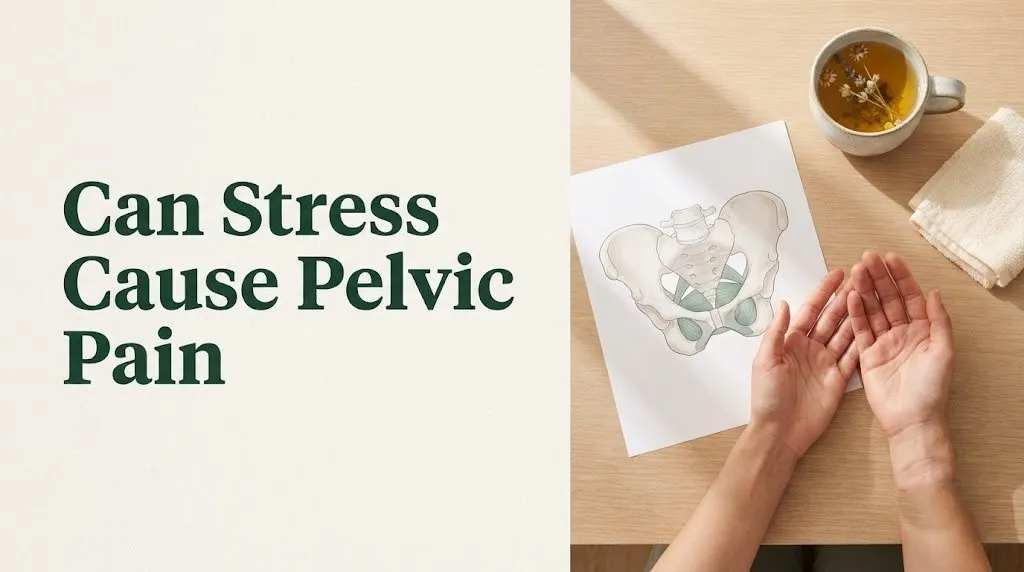
The pelvic floor is a sling of muscles at the base of your pelvis that supports your bladder, uterus or prostate, and rectum. These muscles are innervated by sympathetic nerve fibers that release norepinephrine when you are stressed. Norepinephrine binds to alpha-adrenergic receptors on the muscle fibers and tells them to contract. Under acute stress, this is a normal, adaptive response. Under chronic stress, the muscles never fully relax. They develop a state of sustained hypertonicity, a constant partial contraction that reduces blood flow, creates oxygen deprivation in the tissue, and produces metabolic waste products that activate pain-sensing nerves.
Research published in the Journal of Urology has documented that patients with chronic pelvic pain syndrome have significantly higher resting pelvic floor muscle tone compared to pain-free controls, and that this hypertonicity correlates with both perceived stress levels and pain severity. A 2023 study in Obstetrics and Gynecology found that women with high scores on the Perceived Stress Scale were significantly more likely to have pelvic floor muscle tenderness on examination and to report pelvic pain, even after controlling for other known risk factors.
| Stress Type | Effect on Pelvic Floor | Pain Pattern |
|---|---|---|
| Acute stress (argument, deadline) | Temporary increase in pelvic floor tension | Brief pain, resolves when stress passes |
| Episodic stress (repeated work crises) | Cumulative tension, developing trigger points | Pain that worsens with each stress episode |
| Chronic stress (ongoing life strain) | Sustained hypertonicity, central sensitization | Persistent or recurrent pelvic pain |
| Stress with trauma history | Hypervigilance plus conditioned guarding response | Often severe, complex pain presentation |
How Stress Affects the Pelvic Floor Muscles
Stress affects the pelvic floor muscles through direct sympathetic innervation: the levator ani, puborectalis, coccygeus, and obturator internus muscles receive sympathetic nerve fibers that release norepinephrine during stress, increasing muscle tone and reducing the muscles’ ability to fully relax between contractions.
The pelvic floor is not like other muscle groups. It maintains a baseline level of tone even at rest to provide continence and organ support. This resting tone is precisely regulated by the autonomic nervous system. Sympathetic activation increases it. Parasympathetic activation decreases it. During chronic stress, sympathetic dominance shifts the set point upward. The pelvic floor becomes chronically tighter, even when you are not consciously stressed. Many people with stress-related pelvic pain are unaware that their pelvic floor is tight because they have never experienced what a fully relaxed pelvic floor feels like.
The consequences of chronic pelvic floor hypertonicity extend beyond pain. A tight pelvic floor can cause urinary symptoms including urgency, frequency, hesitancy, and incomplete emptying. It can cause bowel symptoms including constipation, straining, and incomplete evacuation. It can cause sexual symptoms including pain with intercourse (dyspareunia), pain with arousal or orgasm, and erectile dysfunction in men. These symptoms create additional stress, which further tightens the pelvic floor, creating a self-perpetuating cycle.
How sympathetic activation affects the pelvic floor:
- Norepinephrine binds to alpha-adrenergic receptors on pelvic floor muscle fibers
- Muscle resting tone increases, reducing the ability to fully relax
- Sustained tension reduces blood flow, creating localized ischemia
- Ischemic muscle tissue produces lactic acid and other metabolic irritants
- Metabolic irritants activate nociceptors, producing pain signals
- Pain increases stress, which increases sympathetic activation, which further tightens muscles
Key Takeaway: Your pelvic floor muscles are wired into your stress response system. Every time your sympathetic nervous system activates, your pelvic floor tightens. If stress is chronic, your pelvic floor stays chronically tight, and that tightness produces real, structural pain.
The Sympathetic Nervous System and Muscle Tension
The sympathetic nervous system increases muscle tension throughout your body during stress, and the pelvic floor is particularly vulnerable because it maintains continuous resting tone, unlike limb muscles that are fully relaxed between movements, making it susceptible to chronic stress-induced hypertonicity.
When your brain perceives a stressor, the amygdala activates the sympathetic nervous system through the brainstem and spinal cord. Sympathetic nerves release norepinephrine at their terminals, including at the neuromuscular junctions and muscle spindles of skeletal muscles. Norepinephrine increases the sensitivity of muscle spindles, the stretch receptors within muscles, making them fire at lower stretch thresholds. It also directly increases the contractile state of muscle fibers through effects on calcium handling within muscle cells. This is why your shoulders rise toward your ears, your jaw clenches, and your fists tighten when you are stressed. The pelvic floor responds the same way, but you are less consciously aware of it.
The pelvic floor is particularly vulnerable to stress-induced tension because it never fully relaxes, even during sleep. It must maintain enough tone to prevent urinary and fecal incontinence. This baseline tone is set by the autonomic nervous system, and chronic stress shifts the autonomic balance toward sustained sympathetic activation. Over months and years, the pelvic floor adapts to this higher tone as its new normal. Muscle fibers shorten. Connective tissue remodels. Trigger points develop. The pelvic floor becomes a repository of accumulated stress, holding tension from every stressful experience like a physical memory.
Sympathetic effects on skeletal muscle:
- Norepinephrine increases muscle spindle sensitivity, lowering stretch threshold
- Increased calcium release within muscle fibers enhances contractile state
- Reduced blood flow to muscle tissue during sympathetic activation
- Sustained low-level contraction increases metabolic demand with reduced oxygen supply
- Pelvic floor is uniquely vulnerable due to its continuous resting tone requirements
- Chronic tension leads to structural changes: shortened fibers, trigger points, connective tissue remodeling
Individual variation note: People with anxiety disorders have elevated baseline sympathetic tone and reduced parasympathetic tone, meaning their pelvic floor operates at a higher resting tension even between stress episodes. If you have generalized anxiety disorder or panic disorder, your pelvic floor may rarely experience full relaxation, making you more susceptible to stress-related pelvic pain at lower stress thresholds.
Stress Hormones, Cortisol, and Pelvic Muscle Hypertonicity
Cortisol contributes to pelvic muscle hypertonicity not by directly causing contraction like norepinephrine does, but by sensitizing pain pathways, reducing the effectiveness of the body’s natural anti-inflammatory and pain-relieving systems, and promoting central nervous system changes that amplify pain perception.
Cortisol is the primary stress hormone released by the adrenal glands through HPA axis activation. Under acute stress, cortisol is anti-inflammatory and helps the body recover. Under chronic stress, the relationship changes. Tissues can develop cortisol resistance, where they stop responding to cortisol’s anti-inflammatory signals. At the same time, cortisol’s effects on the central nervous system continue, including its ability to sensitize pain pathways. The result is a state of heightened pain sensitivity without adequate anti-inflammatory counterbalance.
Cortisol also affects connective tissue and muscle over time. Chronic cortisol exposure can alter collagen synthesis and connective tissue properties, potentially contributing to the structural changes in chronically tight pelvic floor muscles. Cortisol affects the function of the hypothalamic-pituitary-gonadal axis, altering estrogen, progesterone, and testosterone levels. These hormonal changes can affect pelvic tissue health, vaginal lubrication, and pain sensitivity, creating additional sources of pelvic discomfort during stress.
Cortisol effects relevant to pelvic pain:
- Sensitizes pain pathways in the spinal cord and brain
- Reduces descending pain inhibition from the brainstem
- Chronic elevation leads to cortisol resistance, reducing anti-inflammatory effects
- Alters connective tissue metabolism and collagen synthesis
- Affects reproductive hormone balance, impacting pelvic tissue health
- Promotes central sensitization, where normal sensations become painful
- Effects accumulate over weeks to months of chronic stress
Pelvic Floor Anatomy and Why Stress Targets These Muscles
The pelvic floor muscles are specifically targeted by stress because they are innervated by both the somatic nervous system for voluntary control and the autonomic nervous system for involuntary tone regulation, they maintain continuous baseline activity unlike most skeletal muscles, and they are anatomically positioned to respond to the protective, guarding response that stress triggers.
The pelvic floor is composed of several muscles that form a bowl-shaped sling at the base of the pelvis. The levator ani is the largest component, consisting of the pubococcygeus, puborectalis, and iliococcygeus muscles. The coccygeus and obturator internus contribute to pelvic support and function. These muscles have multiple roles: supporting pelvic organs, maintaining urinary and fecal continence, contributing to sexual function, and working with the diaphragm and abdominal muscles to regulate intra-abdominal pressure. The dual innervation of these muscles, voluntary control from the pudendal nerve and somatic fibers, and involuntary tone from autonomic fibers, makes them uniquely responsive to both conscious and unconscious stress signals.
The pelvic floor is part of the body’s protective response system. When faced with threat, animals and humans instinctively contract their core and pelvic floor in a guarding response that protects the vulnerable pelvic and abdominal organs. This is evolutionarily adaptive for acute physical threats. For chronic psychological threats, work deadlines, financial worries, relationship conflict, the same protective contraction becomes maladaptive. The muscles guard against a threat that cannot be physically fought or fled, and the sustained guarding produces pain.
| Pelvic Floor Muscle | Primary Function | Stress Response |
|---|---|---|
| Levator ani (pubococcygeus, puborectalis, iliococcygeus) | Organ support, continence, core stability | Increases resting tone, develops trigger points |
| Coccygeus | Pelvic support, sacral stability | Tightens, contributes to coccyx pain |
| Obturator internus | Hip rotation, pelvic wall support | Tightens, can compress pudendal nerve |
| Piriformis | Hip rotation (not technically pelvic floor but closely related) | Tightens, can compress sciatic and pudendal nerves |
| External anal sphincter | Fecal continence | Increases tone, contributes to constipation |
Key Takeaway: Your pelvic floor is anatomically designed to contract protectively during threat. Stress activates this protective response continuously. The muscles that evolved to guard you from physical danger are now guarding you from emails, deadlines, and traffic, and they are not built for that kind of sustained activation.
The Pudendal Nerve and Stress-Related Compression Pain
The pudendal nerve is the primary nerve of the pelvic floor, and when stress-induced muscle hypertonicity compresses this nerve as it passes through narrow anatomical spaces between the sacrospinous and sacrotuberous ligaments and through Alcock’s canal, the result is neuropathic pain in the genitals, perineum, and rectum.
The pudendal nerve originates from sacral nerve roots S2 through S4. It exits the pelvis through the greater sciatic foramen, crosses behind the sacrospinous ligament near its attachment to the ischial spine, and re-enters the pelvis through the lesser sciatic foramen. It then travels through Alcock’s canal, a tunnel formed by the fascia of the obturator internus muscle. This convoluted path makes the pudendal nerve vulnerable to compression at multiple points. When the pelvic floor muscles, particularly the obturator internus and piriformis, are chronically tight from stress, they can compress the pudendal nerve at any of these narrow passages.
Pudendal nerve compression produces a characteristic pattern of symptoms: pain, burning, numbness, or tingling in the distribution of the nerve, which includes the perineum, labia or scrotum, clitoris or penis, and rectum. The pain is often worse with sitting, as this position increases pressure on the nerve, and may improve with standing or lying down. It is commonly misdiagnosed as a gynecologic, urologic, or proctologic condition because the symptoms involve these organ systems, but the source is the compressed nerve. Stress management and pelvic floor physical therapy, which relax the muscles compressing the nerve, are effective treatments for many cases of pudendal neuralgia caused by muscle tension.
Pudendal nerve compression symptoms:
- Pain, burning, or tingling in the genitals, perineum, or rectum
- Pain worsened by sitting, improved by standing or lying
- Sensation of a foreign body in the rectum or vagina
- Pain with intercourse or sexual activity
- Urinary urgency or frequency without infection
- Symptoms in the distribution of the pudendal nerve: S2-S4 dermatomes
- May be misdiagnosed as recurrent UTIs, prostatitis, vulvodynia, or hemorrhoids
Trigger Points and Myofascial Pelvic Pain From Stress
Myofascial trigger points are hyperirritable spots within taut bands of muscle that develop when muscles are chronically tight, and stress-induced pelvic floor hypertonicity creates the perfect conditions for trigger point formation in the pelvic floor, producing local and referred pain throughout the pelvis, hips, and lower abdomen.
A trigger point is a localized area of muscle fibers that are locked in a contracted state. These fibers have increased metabolic demand and reduced blood flow, creating a local energy crisis. The sustained contraction compresses local blood vessels, reducing oxygen delivery. Without adequate oxygen, the muscle fibers cannot relax, perpetuating the contraction. Inflammatory mediators and pain-producing substances accumulate, activating and sensitizing nociceptors. The trigger point becomes a self-sustaining source of pain that can persist even after the original stressor has passed.
Pelvic floor trigger points can refer pain to other locations, meaning the pain you feel may not be where the trigger point actually is. A trigger point in the levator ani can refer pain to the lower abdomen, hip, or lower back. A trigger point in the obturator internus can refer pain deep in the pelvis or down the back of the thigh. This referred pain pattern often confuses diagnosis, as patients and providers search for the source of pain in the location where it is felt rather than in the pelvic floor muscles where it originates. Skilled pelvic floor physical therapists map these referral patterns and treat the source.
Trigger point characteristics in stress-related pelvic pain:
- Develop in chronically tight muscles due to sustained contraction and reduced blood flow
- Feel like tender knots or taut bands within the pelvic floor muscles
- Can refer pain to locations distant from the trigger point itself
- Common referral patterns: levator ani to hip and low abdomen, obturator internus to deep pelvis and posterior thigh
- Persist after stress resolves, requiring direct treatment for release
- Respond to manual therapy, dry needling, and muscle relaxation techniques provided by trained practitioners
Central Sensitization and Stress-Amplified Pelvic Pain
Central sensitization is a condition where the central nervous system becomes hyperexcitable and amplifies pain signals, and chronic stress is one of the most powerful drivers of central sensitization, meaning that stress can make your pelvic pain worse even when the pelvic floor muscle tension itself has not changed.
Under normal conditions, the nervous system filters sensory information, allowing non-threatening signals to be ignored and amplifying signals that indicate tissue damage. This filtering occurs at multiple levels: in the spinal cord dorsal horn, in the brainstem, and in the cortex. Chronic stress disrupts this filtering system. The periaqueductal gray and rostral ventromedial medulla, brainstem regions that provide descending pain inhibition, become less effective. The spinal cord neurons that receive pelvic pain signals become more excitable, firing in response to stimuli that would normally be below the threshold for pain perception. This is allodynia, where normal touch or pressure feels painful. It is also hyperalgesia, where mildly painful stimuli feel severely painful.
The clinical implications of central sensitization for stress-related pelvic pain are significant. It explains why some people with relatively mild pelvic floor tension experience severe pain, while others with significant tension have minimal pain. It explains why stress management can reduce pain even before the pelvic floor muscles have fully relaxed. It explains why treatments that only address the peripheral tissues, muscle relaxants, trigger point injections, surgery, may provide incomplete relief if the central sensitization is not also addressed. Effective treatment requires both peripheral desensitization through pelvic floor physical therapy and central desensitization through stress reduction, improved sleep, and sometimes medications that reduce central nervous system excitability.
Central sensitization features in stress-pelvic pain:
- Pain out of proportion to peripheral findings on examination
- Pain that spreads beyond the original area
- Normal touch or pressure perceived as painful (allodynia)
- Mild pain stimuli perceived as severe (hyperalgesia)
- Pain that persists after the original trigger has resolved
- Associated with poor sleep, anxiety, and chronic stress
- Requires both peripheral and central treatment approaches for best outcomes
Key Takeaway: Your stress level directly determines how much pain you feel from the same amount of pelvic floor tension. Central sensitization means your nervous system has turned up the volume on pelvic pain signals. Reducing stress turns the volume back down, providing pain relief even before the muscles fully relax.
What Does Stress-Related Pelvic Pain Feel Like
Stress-related pelvic pain typically feels like a dull ache, pressure, or heaviness in the lower abdomen, pelvis, or perineum, often accompanied by a sensation of tightness or tension that worsens during stressful periods, improves with relaxation, and may be associated with urinary urgency, pain with intercourse, or difficulty with bowel movements.
The quality of stress-related pelvic pain is distinct from other types of pelvic pain. Infection pain, such as from a urinary tract infection or pelvic inflammatory disease, is often sharp, burning, and associated with fever or discharge. Endometriosis pain is often cyclical, worsening with menstruation. Stress-related pelvic floor pain is more likely to be described as a constant dull ache, pressure, or heavy sensation, like something is being pulled or clenched inside the pelvis. Some people describe it as feeling like they are sitting on a ball or like there is a tight band across their pelvis.
The pain often migrates or changes location. Trigger points in different pelvic floor muscles refer pain to different areas. Levator ani trigger points may cause hip or lower back pain. Obturator internus trigger points may cause deep pelvic or posterior thigh pain. The pain is typically worse at the end of the day, after prolonged sitting, or during periods of high stress. It often improves with a warm bath, gentle movement, or relaxation. Many people notice that their pain significantly improves or resolves during vacation, confirming the stress connection.
| Pain Quality | Stress-Related Pelvic Pain | Infection (UTI, PID) | Endometriosis |
|---|---|---|---|
| Sensation | Dull ache, pressure, heaviness, tightness | Sharp, burning, stinging | Cramping, stabbing, cyclical |
| Location | Diffuse pelvis, perineum, may refer to hips/back | Bladder area (UTI), lower abdomen (PID) | Often one-sided, may involve bowel and bladder |
| Timing | Worse with stress, end of day, prolonged sitting | Constant or with urination | Cyclical with menstruation |
| Associated symptoms | Urinary urgency, dyspareunia, constipation | Fever, discharge, dysuria | Heavy bleeding, painful periods, infertility |
| Stress correlation | Strong: worsens with stress, improves with relaxation | Weak: more related to infectious exposure | Moderate: stress can worsen but hormonal cycle is primary |
Types of Pelvic Pain Caused or Worsened by Stress
Stress can cause or worsen several distinct types of pelvic pain: myofascial pelvic pain from muscle trigger points, pudendal neuralgia from nerve compression, vulvodynia and vaginismus in women, chronic prostatitis/chronic pelvic pain syndrome in men, dyspareunia (painful intercourse), and stress-exacerbated pain from underlying conditions including endometriosis and interstitial cystitis.
Myofascial pelvic pain is the most direct stress-related pelvic pain type. Chronic stress creates sustained pelvic floor hypertonicity, which generates trigger points in the levator ani, obturator internus, and other pelvic muscles. These trigger points produce local and referred pain. Myofascial pelvic pain is often described as a deep ache or pressure. Pudendal neuralgia results from compression of the pudendal nerve by tight pelvic floor muscles, producing burning, tingling, or electric shock sensations in the pudendal nerve distribution. Both conditions respond to pelvic floor physical therapy and stress reduction.
Vulvodynia, chronic vulvar pain without an identifiable cause, and vaginismus, involuntary contraction of the pelvic floor muscles that prevents vaginal penetration, are strongly associated with stress and anxiety. The mechanism involves both peripheral muscle hypertonicity and central sensitization. Chronic prostatitis/chronic pelvic pain syndrome in men produces pelvic pain, urinary symptoms, and sexual dysfunction without evidence of bacterial infection. Stress is a well-established risk factor, and stress management is a component of treatment. Dyspareunia, pain with intercourse, can result from pelvic floor hypertonicity that makes the muscles unable to relax and accommodate penetration.
Conditions where stress is a primary contributor to pelvic pain:
- Myofascial pelvic pain: trigger points in pelvic floor muscles
- Pudendal neuralgia: compression of pudendal nerve by tight muscles
- Vulvodynia: chronic vulvar pain, often with pelvic floor hypertonicity
- Vaginismus: involuntary pelvic floor contraction preventing penetration
- Chronic prostatitis/CPPS in men: pelvic pain without infection
- Dyspareunia: pain with intercourse from inability to relax pelvic floor
- Interstitial cystitis: bladder pain syndrome worsened by stress and pelvic floor tension
- Irritable bowel syndrome: visceral hypersensitivity and pelvic floor dysfunction amplified by stress
How to Tell If Pelvic Pain Is From Stress or Something Else
You can begin to distinguish stress-related pelvic pain from other causes by tracking the correlation between stress levels and pain intensity, noting the quality and location of pain, identifying associated symptoms, and observing whether pain improves during low-stress periods like vacations.
The strongest indicator of stress-related pelvic pain is a consistent temporal correlation. If your pelvic pain reliably worsens during high-stress periods and improves or resolves during low-stress periods, stress is likely the primary driver. This pattern is not typical of structural conditions like endometriosis, which follows a menstrual cycle pattern, or chronic infection, which is more constant. Keep a simple daily log rating stress from 1 to 10 and pelvic pain from 1 to 10. After two to three weeks, if the two numbers track together on most days, the stress connection is supported.
The presence of pelvic floor muscle tenderness on self-examination is suggestive but should be done gently and ideally with guidance from a pelvic floor physical therapist. Symptoms that suggest pelvic floor involvement include pain that worsens with prolonged sitting, pain that is relieved by a warm bath or gentle movement, urinary urgency without infection, constipation or straining with bowel movements, and pain with intercourse or tampon insertion. The absence of infectious symptoms like fever, abnormal discharge, or burning with urination makes infection less likely. Pain that is not clearly cyclical makes endometriosis less likely, though endometriosis and stress-related pelvic pain can coexist.
Self-assessment indicators for stress-related pelvic pain:
- Pain intensity closely tracks stress level over time
- Pain improves during low-stress periods (weekends, vacations)
- Associated with symptoms of pelvic floor tension: urinary urgency, constipation, dyspareunia
- Pain described as pressure, heaviness, or tightness rather than sharp or burning
- No fever, abnormal discharge, or other signs of infection
- Pain worsens with prolonged sitting, improves with warm bath or relaxation
- Multiple negative workups for infection or structural causes
- History of anxiety, chronic stress, or trauma
Stress Pelvic Pain vs Infection, Endometriosis, and Other Causes
Distinguishing stress-related pelvic pain from other causes is essential because the treatments differ: stress pelvic pain responds to pelvic floor physical therapy and stress reduction, while infections require antibiotics, endometriosis may require hormonal treatment or surgery, and structural causes may require specific interventions.
Urinary tract infections and pelvic inflammatory disease produce pain that is typically acute in onset and accompanied by signs of infection: fever, abnormal discharge, and burning with urination (for UTI) or cervical motion tenderness (for PID). These symptoms are not typical of stress-related pelvic pain, and infection pain does not fluctuate with psychological stress. A urinalysis and pelvic examination can rule out infection. Endometriosis pain is characteristically cyclical, worsening significantly with menstruation, and may involve heavy bleeding, painful periods, and infertility. While stress can worsen endometriosis pain, the primary driver is the endometrial tissue outside the uterus responding to hormonal cycles.
Interstitial cystitis, also called painful bladder syndrome, produces bladder pain, urinary urgency, and frequency that can be difficult to distinguish from pelvic floor-related urinary symptoms. The two conditions frequently overlap, as pelvic floor tension can worsen IC symptoms and IC pain can cause pelvic floor guarding. A urologist or urogynecologist can help differentiate and treat both components.
| Condition | Pain Pattern | Key Differentiating Features | Diagnostic Approach |
|---|---|---|---|
| Stress pelvic pain | Correlates with stress, pressure/heaviness | Pelvic floor tenderness on exam, no infection signs | Pelvic floor PT evaluation |
| UTI | Acute, burning with urination | Positive urinalysis, fever sometimes | Urinalysis, urine culture |
| PID | Lower abdominal, cervical motion tenderness | Fever, discharge, history of STI | Pelvic exam, STI testing |
| Endometriosis | Cyclical with menstruation | Severe period pain, heavy bleeding, infertility | Laparoscopy for definitive diagnosis |
| Interstitial cystitis | Bladder pain, urgency, frequency | Pain with bladder filling, relief with emptying | Cystoscopy, urology evaluation |
| Ovarian cyst | Often one-sided, may be sharp | Mass on exam, ultrasound findings | Pelvic ultrasound |
Key Takeaway: The presence of stress does not rule out other pelvic conditions, and the presence of another pelvic condition does not mean stress is not also contributing to your pain. Many people have overlapping causes. A thorough evaluation by a gynecologist, urologist, or pelvic floor physical therapist can identify all contributing factors.
How to Relax Pelvic Floor Muscles Tightened by Stress
Relaxing pelvic floor muscles tightened by stress requires a combination of parasympathetic nervous system activation through diaphragmatic breathing, direct pelvic floor relaxation techniques, and consistent practice to retrain the muscles that have adapted to chronic tension.
Diaphragmatic breathing is the foundation of pelvic floor relaxation because the diaphragm and pelvic floor are mechanically and neurologically linked. When you inhale and the diaphragm descends, the pelvic floor naturally relaxes and lengthens. When you exhale and the diaphragm rises, the pelvic floor gently contracts. This coordinated movement is called the piston mechanism. During stress, the diaphragm becomes restricted and the pelvic floor remains in a state of chronic tension, disrupting this rhythm. Conscious diaphragmatic breathing restores the coordination, teaching the pelvic floor to relax fully with each inhale.
Specific pelvic floor relaxation techniques build on this breathing foundation. The “pelvic floor drop” involves consciously releasing the pelvic floor as if you are beginning to urinate or pass gas, allowing the muscles to lengthen and descend. This can be practiced in various positions: lying on your back with knees bent, in a deep squat, or in child’s pose. The key is to practice regularly, multiple times daily, so that relaxation becomes the default state rather than tension. Warm baths, gentle pelvic floor stretching, and self-massage of accessible trigger points can supplement the relaxation practice.
Pelvic floor relaxation practice:
- Lie on your back with knees bent and feet flat, or sit comfortably with back support
- Place one hand on your lower belly and one on your lower ribs
- Inhale slowly through your nose, feeling expansion under both hands and into your pelvic floor
- As you inhale, consciously allow the pelvic floor to relax and descend
- Exhale slowly through your mouth, allowing the belly and ribs to fall naturally
- Do not forcefully push the pelvic floor down; simply allow it to release
- Practice for 5 to 10 minutes, two to three times daily
- Over weeks, the pelvic floor learns to release its chronic tension pattern
Breathing Exercises and Techniques for Pelvic Floor Release
Specific breathing exercises for pelvic floor release maximize the mechanical and neurological connection between the diaphragm and the pelvic floor: 360-degree breathing expands the ribcage and abdomen in all directions, while extended exhale breathing activates the parasympathetic nervous system and promotes muscle relaxation.
Three-dimensional breathing, also called 360-degree breathing, involves directing the inhale into the front, sides, and back of the lower ribcage and abdomen. This pattern maximizes diaphragmatic excursion, the distance the diaphragm moves with each breath. Greater diaphragmatic movement produces greater pelvic floor relaxation through the piston mechanism. To practice, sit or lie comfortably and place your hands on the sides of your lower ribs. Inhale and feel your ribs expand outward into your hands, your belly rise, and your lower back press gently into the surface behind you. Exhale and feel everything release. Practice for five minutes, several times daily.
Extended exhale breathing specifically targets the parasympathetic nervous system. The vagus nerve, which carries parasympathetic signals to the pelvic organs and pelvic floor, is activated during exhalation. By making the exhale longer than the inhale, you increase parasympathetic tone and promote pelvic floor relaxation. Inhale for a count of four, exhale for a count of six to eight. Practice this pattern for ten minutes before bed or during periods of high stress. Combined with conscious pelvic floor release, this breathing pattern is one of the most effective tools for reducing stress-related pelvic tension.
Breathing techniques for pelvic floor release:
- 360-degree breathing: direct inhale into front, sides, and back of lower ribcage; feel pelvic floor lengthen with each inhale
- Extended exhale: inhale 4 counts, exhale 6-8 counts; activates parasympathetic nervous system
- Practice in positions of ease: lying with knees bent, child’s pose, or reclined against pillows
- Combine with pelvic floor awareness: consciously release the pelvic floor during each inhale
- Frequency: 5-10 minutes, 2-3 times daily; also use during acute stress or pain episodes
- Consistency over weeks produces lasting changes in pelvic floor resting tone
Individual variation note: Some people with pelvic pain find that focusing attention on the pelvic floor increases pain or anxiety. If this occurs, practice breathing without pelvic floor awareness initially. Simply breathe slowly and deeply, and the pelvic floor will relax indirectly. A pelvic floor physical therapist can provide individualized guidance.
Pelvic Floor Physical Therapy for Stress-Related Pain
Pelvic floor physical therapy is the most effective treatment for stress-related pelvic pain, combining manual therapy to release trigger points and tight muscles, neuromuscular re-education to restore normal muscle coordination, biofeedback to improve awareness and control, and instruction in self-management techniques for long-term relief.
A pelvic floor physical therapist is a licensed physical therapist with specialized training in pelvic floor dysfunction. At the initial evaluation, the therapist takes a detailed history of your pain, stress levels, bowel and bladder function, and relevant medical and trauma history. The physical examination includes assessment of posture, breathing patterns, hip and spine mobility, and external and internal pelvic floor muscle evaluation. The internal examination is performed with your consent and can be modified or deferred based on your comfort level and history.
Treatment typically includes manual therapy techniques: myofascial release to reduce trigger points, soft tissue mobilization to lengthen tight muscles, and joint mobilization to improve pelvic girdle mobility. Biofeedback uses sensors to provide real-time information about pelvic floor muscle activity, helping you learn to recognize tension and practice relaxation. Neuromuscular re-education teaches the pelvic floor to contract and relax in coordination with the diaphragm and deep core muscles. The therapist also provides a home exercise program customized to your specific pattern of dysfunction.
| PT Component | What It Does | Frequency |
|---|---|---|
| Manual therapy | Releases trigger points, lengthens tight muscles | Weekly sessions with therapist |
| Biofeedback | Teaches pelvic floor awareness and relaxation | During PT sessions |
| Neuromuscular re-education | Restores coordinated diaphragm-pelvic floor movement | Practice daily at home |
| Postural training | Reduces pelvic floor strain from poor posture | Throughout the day |
| Home exercise program | Customized stretches and relaxation exercises | Daily, 10-20 minutes |
| Stress management integration | Combines PT with breathing and relaxation techniques | Daily practice |
Stress Management Techniques for Chronic Pelvic Pain
Stress management techniques for chronic pelvic pain specifically target the autonomic nervous system imbalance that drives pelvic floor hypertonicity and the central sensitization that amplifies pain perception, with cognitive behavioral therapy (CBT) , mindfulness-based stress reduction (MBSR) , and progressive muscle relaxation adapted for pelvic floor awareness having the strongest evidence.
CBT for chronic pain addresses the thoughts and behaviors that amplify the stress-pain cycle. Catastrophic thinking about pain (“this will never get better,” “something must be seriously wrong”) increases anxiety and sympathetic activation, which tightens the pelvic floor and increases pain. CBT helps identify these thought patterns and replace them with more balanced cognitions. It also addresses pain-related avoidance behaviors, helping patients gradually return to activities they have avoided due to pain. A 2022 study in the Journal of Urology found that CBT significantly reduced pain and improved quality of life in patients with chronic pelvic pain syndrome.
Mindfulness-based stress reduction teaches non-judgmental awareness of body sensations, including pelvic pain and tension. Rather than reacting to pain with fear, tension, and catastrophic thoughts, mindfulness practice allows the experience of pain without the secondary layer of emotional distress that amplifies it. Brain imaging studies show that mindfulness practice reduces activity in the amygdala and increases activity in prefrontal regions involved in pain regulation. For pelvic pain, mindfulness can help break the cycle where noticing pelvic tension triggers anxiety, which increases tension, which increases pain.
| Technique | Mechanism for Pelvic Pain | Evidence |
|---|---|---|
| CBT for chronic pain | Reduces catastrophic thoughts, decreases anxiety-driven muscle tension | Strong |
| MBSR | Reduces emotional reactivity to pain, lowers sympathetic tone | Moderate to strong |
| Progressive muscle relaxation | Teaches pelvic floor awareness and voluntary relaxation | Moderate |
| Diaphragmatic breathing | Directly activates parasympathetic nervous system, relaxes pelvic floor | Moderate |
| Guided imagery | Uses mental imagery to promote relaxation and reduce pain perception | Limited to moderate |
Key Takeaway: Stress management is not an optional add-on for pelvic pain treatment. It directly addresses the autonomic imbalance that keeps your pelvic floor tight and the central sensitization that amplifies your pain. The techniques with the strongest evidence, CBT and MBSR, produce lasting improvements that no muscle relaxant can match.
When Pelvic Pain Requires a Gynecologist, Urologist, or Pelvic Floor PT
You should see a gynecologist or urologist for pelvic pain when the pain is new, severe, or accompanied by red-flag symptoms including fever, abnormal bleeding, or signs of infection, and you should see a pelvic floor physical therapist when pelvic pain involves symptoms of pelvic floor dysfunction including pain with intercourse, urinary urgency, constipation, or a sensation of pelvic pressure.
A gynecologist is the appropriate first point of evaluation for most women with pelvic pain to rule out gynecologic causes including infection, endometriosis, ovarian cysts, and uterine conditions. A urologist evaluates bladder-related pelvic pain and is the appropriate specialist for men with pelvic pain to rule out prostatitis and other urologic conditions. A primary care physician can coordinate initial evaluation and referrals. The evaluation typically includes a detailed history, physical examination including pelvic examination, urinalysis, and possibly ultrasound or other imaging.
A pelvic floor physical therapist is the appropriate provider when pelvic floor muscle dysfunction is suspected as a primary or contributing cause of pain. Symptoms that suggest pelvic floor involvement include pain with intercourse or tampon use, a sensation of pelvic heaviness or pressure, urinary urgency or frequency without infection, straining or incomplete evacuation with bowel movements, and pain that worsens with prolonged sitting. You can see a pelvic floor physical therapist directly in many states without a physician referral, though some insurance plans may require one.
Provider guide for pelvic pain:
- New, undiagnosed pelvic pain: gynecologist (women), urologist (men), or primary care physician
- Pelvic pain with fever or signs of infection: gynecologist or primary care physician, urgent evaluation
- Pelvic pain with pelvic floor symptoms (dyspareunia, urgency, pressure): pelvic floor physical therapist
- Chronic pelvic pain not responsive to initial treatment: consider multidisciplinary approach with gynecologist, pelvic floor PT, and pain psychologist
- Pelvic pain with trauma history: seek trauma-informed providers specifically trained in this area
- Pelvic pain with bladder symptoms: urogynecologist or urologist
Building a Daily Routine to Break the Stress-Pelvic Pain Cycle
A daily routine to break the stress-pelvic pain cycle integrates regular pelvic floor relaxation practice, stress regulation, physical activity that does not exacerbate pain, adequate sleep, and attention to posture and body mechanics throughout the day.
Morning practice sets the tone for pelvic floor relaxation. Before getting out of bed, take five deep diaphragmatic breaths with conscious pelvic floor release. This brief practice can reduce the morning pelvic tension that accumulates overnight. Throughout the day, use posture check-ins to notice pelvic floor tension. Many people unconsciously clench their pelvic floor when concentrating, driving, or feeling stressed. A brief check-in every hour, taking one conscious breath and releasing the pelvic floor, prevents the accumulation of tension.
Evening practice focuses on unwinding the day’s accumulated tension and preparing for restorative sleep. A warm bath relaxes muscles generally and can provide direct heat to the pelvic region. Ten minutes of diaphragmatic breathing with pelvic floor awareness before sleep reduces sympathetic tone and promotes the deep relaxation that allows the pelvic floor to release overnight. Consistent sleep and wake times support the circadian rhythm, which helps regulate both stress hormones and pain perception.
Daily routine for stress-pelvic pain management:
- Morning: 5 minutes diaphragmatic breathing with pelvic floor release before getting out of bed
- Throughout day: hourly posture and pelvic floor check-ins; release tension with one conscious breath
- Movement: gentle walking, stretching, or water exercise; avoid activities that exacerbate pain
- Hydration: adequate water intake to support tissue health and prevent constipation
- Stress check-ins: notice stress levels and use brief breathing breaks when stress increases
- Evening: warm bath; 10 minutes breathing with pelvic floor awareness; consistent bedtime
- Sleep: cool, dark, quiet bedroom; consistent sleep and wake times
- Self-compassion: pelvic pain is not your fault; healing takes time and consistency
The pelvic pain you experience during stress has a specific, treatable cause. Stress hormones tighten your pelvic floor muscles. Chronically tight muscles develop trigger points, compress nerves, and create real tissue pain. Your stressed nervous system amplifies those pain signals. This is not in your head. It is in your muscles and nerves and spinal cord, and it responds to treatment that addresses both the peripheral tension and the central amplification.
Start tonight with ten minutes of diaphragmatic breathing with conscious pelvic floor release before sleep. Track your stress and pain levels for two weeks. If the pattern confirms a stress-pelvic pain connection, add the techniques described in this article. Pelvic floor physical therapy is the most effective treatment and is appropriate even without a physician referral in many areas. You do not need to accept pelvic pain as your normal.
If your pain is severe, accompanied by fever or abnormal bleeding, or not responding to stress management and physical therapy, the right next step is a gynecologist, urologist, or pelvic floor physical therapist. Pelvic pain has multiple potential causes, and a thorough evaluation ensures you are treating the right one. You deserve answers and relief.
If you are in crisis or experiencing thoughts of self-harm, contact the 988 Suicide and Crisis Lifeline by calling or texting 988 at any time. This service is free, confidential, and available 24 hours a day.