Can Stress Cause Oral Thrush in Adults? The Science 2026
Yes, stress can contribute to oral thrush in adults by elevating cortisol, which suppresses Th17 cells and reduces production of interleukin-17 (IL-17) and interleukin-22 (IL-22) , the cytokines most critical for your mouth’s antifungal defense against Candida albicans, while simultaneously reducing salivary flow and antimicrobial peptide secretion.
Oral thrush is a fungal infection caused by overgrowth of Candida albicans, a yeast that lives harmlessly in the mouths of 30 to 60% of healthy adults. The infection develops not because Candida suddenly appears, but because the immune controls that keep it in check fail. Chronic stress attacks those controls at multiple points: it weakens the specific immune cells that patrol your oral mucosa, reduces the antifungal proteins in your saliva, and drives behavioral changes like increased sugar consumption and reduced oral hygiene that give Candida the opportunity to overgrow.
This article explains the specific immunological pathway from a stressful thought to a white patch on your tongue, distinguishes stress-related thrush from thrush caused by antibiotics, diabetes, or other conditions, and provides practical guidance for treatment and prevention. You will learn which antifungal treatments are most effective, how to combine them with stress management, and exactly when oral thrush warrants evaluation by a physician or dentist.
Can Stress Cause Oral Thrush in Adults
Stress causes oral thrush by activating the HPA axis and elevating cortisol, which suppresses the Th17 cell immune response that normally keeps Candida albicans controlled on oral surfaces, reduces salivary antimicrobial peptides and IgA, and creates conditions in the mouth that favor fungal overgrowth over bacterial balance.
Oral thrush is an opportunistic infection. Candida albicans lives on the oral mucosa of most adults without causing disease because the immune system, the oral microbiome, and salivary defenses work together to keep it in check. Stress attacks all three layers of this defense. Cortisol directly suppresses Th17 cells, the CD4+ T-cell subset that produces IL-17 and IL-22, cytokines essential for stimulating oral epithelial cells to release antifungal peptides and for recruiting neutrophils to sites of fungal invasion. Without adequate Th17 function, the oral epithelium loses its primary antifungal shield.
The connection between stress and oral thrush is not merely theoretical. Research published in the Journal of Oral Microbiology has documented that psychological stress is associated with increased oral Candida colonization and higher rates of clinical oral candidiasis. The mechanism is multifactorial: immunological (Th17 suppression), physiological (reduced salivary flow and antimicrobial factors), and behavioral (stress-related changes in diet, oral hygiene, and health behaviors). Stress rarely causes thrush in a person with no other risk factors, but it frequently tips the balance in someone with pre-existing vulnerabilities.
| Stress Type | Effect on Oral Candida | Clinical Pattern |
|---|---|---|
| Acute stress (exam, presentation) | Temporary salivary flow reduction | Mild thrush that resolves when stress passes |
| Episodic stress (deadline week) | Cumulative immune suppression | Thrush appears near end of stress period |
| Chronic stress (ongoing life strain) | Sustained Th17 suppression, salivary changes | Recurrent or persistent thrush |
| Stress with other risk factors | Additive or synergistic effect | More severe, treatment-resistant thrush |
What Is Oral Thrush and What Causes It
Oral thrush, medically called oropharyngeal candidiasis, is a fungal infection of the mouth caused by overgrowth of Candida albicans, appearing as creamy white lesions on the tongue, inner cheeks, gums, or throat that can be wiped off to reveal red, sometimes bleeding tissue underneath.
Candida albicans is a dimorphic fungus, meaning it can exist in two forms. In its yeast form, it is a small, round, single-celled organism that lives harmlessly on mucosal surfaces. In its hyphal form, it produces long, filamentous projections that invade epithelial cells and cause tissue damage. The transition from yeast to hyphae is the key event in the shift from harmless colonization to infection. Candida also produces virulence factors including secreted aspartyl proteinases that break down host tissues and candidalysin, a peptide toxin that damages oral epithelial cells and triggers inflammation.
The most common causes of oral thrush are factors that either suppress the immune system or alter the oral environment in ways that favor Candida overgrowth. Antibiotic use kills the commensal bacteria that compete with Candida for space and nutrients. Inhaled corticosteroids for asthma and COPD deposit immunosuppressive medication directly on the oral mucosa. Diabetes, particularly when poorly controlled, provides elevated glucose in saliva that feeds Candida. Dentures create a protected reservoir where Candida can proliferate. Immunosuppressive conditions and medications, including chemotherapy and HIV/AIDS, severely impair the antifungal immune response. Stress acts as an additional factor that can trigger thrush when one or more of these other risk factors are present, or contribute to recurrent thrush in people with underlying susceptibility.
Common causes of oral thrush in adults:
- Antibiotic use disrupting the oral bacterial microbiome
- Inhaled corticosteroid use for asthma or COPD
- Diabetes mellitus with hyperglycemia
- Dentures, especially if worn continuously or ill-fitting
- Immunosuppressive medications or conditions
- Dry mouth from medications, radiation, or medical conditions
- Nutritional deficiencies including iron, vitamin B12, and folate
- Stress as a contributing factor that amplifies other risks
Key Takeaway: Oral thrush is not a random infection. It develops when something disrupts the normal controls on Candida, whether that is antibiotics, corticosteroids, diabetes, or stress. Understanding which factors apply to you guides both treatment and prevention.
How Stress Affects the Immune System and Infection Risk
Stress affects the immune system through the HPA axis and sympathetic nervous system, which release cortisol and norepinephrine that, during chronic stress, suppress the specific immune pathways responsible for defending mucosal surfaces against fungal infections, including Th17 cell function, neutrophil activity, and antimicrobial peptide production.
The acute stress response is a brief, adaptive activation of the immune system. Cortisol and norepinephrine mobilize immune cells in preparation for potential injury. This response lasts minutes to hours and does not cause immunosuppression. Chronic stress, lasting weeks to months, produces the opposite effect. Sustained cortisol elevation suppresses multiple arms of the immune system. Cortisol binds to glucocorticoid receptors inside immune cells and alters gene expression, reducing the production of pro-inflammatory cytokines and shifting the immune response away from the Th1 and Th17 pathways that defend against intracellular pathogens and fungi, toward a Th2-dominant response that is less effective against Candida.
The sympathetic nervous system adds another layer of immune suppression. Norepinephrine, released from sympathetic nerve terminals throughout the body, binds to beta-adrenergic receptors on immune cells and can suppress their function. In the oral cavity, sympathetic activation reduces salivary gland blood flow through vasoconstriction, decreasing saliva production. Saliva is the mouth’s primary defense system, containing antimicrobial peptides, antibodies, and enzymes that control microbial populations. Stress-induced dry mouth removes this defense, creating an environment where Candida can proliferate.
Stress effects on antifungal immunity:
- Cortisol suppresses Th17 cell differentiation and IL-17 production
- Cortisol impairs neutrophil phagocytosis and oxidative burst against Candida
- Cortisol reduces salivary flow, decreasing antimicrobial peptide delivery
- Norepinephrine reduces salivary gland blood flow, causing dry mouth
- Chronic stress reduces salivary IgA, the antibody that prevents Candida adherence
- Stress shifts immune balance away from Th1/Th17 antifungal responses
Cortisol, Th17 Cells, and Antifungal Immunity
Cortisol suppresses Th17 cells by reducing the expression of RORγt, the master transcription factor required for Th17 differentiation, resulting in decreased production of interleukin-17 (IL-17) and interleukin-22 (IL-22) , the two cytokines most critical for defending the oral mucosa against Candida albicans.
Th17 cells are a subset of CD4+ helper T-cells that specialize in defending mucosal and epithelial surfaces against extracellular pathogens, particularly fungi. They are named for their signature cytokine, IL-17. When Candida albicans begins to overgrow on the oral mucosa, epithelial cells and local immune cells release signals that activate Th17 cells. Activated Th17 cells produce IL-17 and IL-22. IL-17 stimulates oral epithelial cells to produce antimicrobial peptides including beta-defensins and calprotectin, proteins that directly kill or inhibit Candida. IL-22 promotes epithelial barrier integrity and repair. Together, these cytokines create a hostile environment for fungal invasion.
Cortisol disrupts this system at its root. The glucocorticoid receptor, when bound by cortisol, translocates to the cell nucleus and interferes with the transcription factors that drive Th17 development. RORγt, the master regulator of Th17 differentiation, is downregulated by cortisol signaling. Without adequate RORγt, naive T-cells cannot commit to the Th17 lineage, and the pool of IL-17-producing cells shrinks. Research published in Infection and Immunity has demonstrated that glucocorticoid treatment significantly reduces IL-17 levels in oral tissues and increases susceptibility to oral candidiasis in animal models. The same mechanism operates in humans under chronic psychological stress, where endogenous cortisol levels can reach concentrations sufficient to suppress Th17 function.
The cortisol-Th17-Candida axis:
- Cortisol binds to glucocorticoid receptors in T-cells
- Glucocorticoid receptor activation reduces RORγt expression
- Reduced RORγt impairs Th17 cell differentiation
- Fewer Th17 cells means less IL-17 and IL-22 production
- Less IL-17 means reduced antimicrobial peptide production by epithelial cells
- Less IL-22 means reduced epithelial barrier integrity
- The oral mucosa loses its primary antifungal defense
How Stress Suppresses the Cytokines That Fight Candida
Stress suppresses the specific cytokines that fight Candida through a dual mechanism: cortisol directly inhibits IL-17 and IL-22 gene transcription in Th17 cells, while simultaneously impairing the function of neutrophils, the immune cells that are recruited by these cytokines and that perform the actual killing of Candida through phagocytosis and oxidative burst.
IL-17 is the central cytokine for mucosal antifungal defense. Its importance is demonstrated by the severe, recurrent mucocutaneous candidiasis that occurs in people with genetic defects in the IL-17 pathway or in people with HIV who lose Th17 cells. IL-17 acts on oral epithelial cells, binding to IL-17 receptors and triggering the production of antimicrobial peptides. It also stimulates the release of chemokines that attract neutrophils to the site of infection. IL-22 works synergistically with IL-17, promoting epithelial cell proliferation and barrier repair. When cortisol suppresses these cytokines, the oral epithelium loses both its antimicrobial shield and its ability to repair Candida-induced damage.
Neutrophils are the effector cells of antifungal immunity. They are recruited to the oral mucosa by the chemokines produced in response to IL-17. Once at the site of Candida invasion, neutrophils phagocytose fungal cells and kill them through oxidative burst, the production of reactive oxygen species that destroy the fungal cell wall and internal structures. Cortisol impairs neutrophil function at multiple levels: it reduces neutrophil recruitment, suppresses phagocytosis, and diminishes oxidative burst capacity. A 2023 study in Brain, Behavior, and Immunity found that participants with high perceived stress had neutrophils with significantly reduced candidacidal activity compared to low-stress participants.
Cytokines critical for antifungal defense suppressed by stress:
- IL-17: stimulates epithelial antimicrobial peptide production and neutrophil recruitment
- IL-22: promotes epithelial barrier integrity and repair
- IL-23: supports Th17 cell maintenance and expansion
- G-CSF and GM-CSF: support neutrophil production and function
- Antimicrobial peptides: beta-defensins, calprotectin, histatins (not cytokines but production is IL-17-dependent)
Key Takeaway: Your mouth’s defense against Candida depends on a specific immune pathway: Th17 cells produce IL-17, which tells your oral epithelial cells to make antifungal peptides and recruit neutrophils. Cortisol shuts down this pathway at its source. Without IL-17, Candida faces a defenseless epithelium.
Salivary Changes During Stress and Oral Defense
Stress reduces salivary flow and alters salivary composition through sympathetic nervous system activation: norepinephrine constricts blood vessels supplying the salivary glands, reducing saliva production, while cortisol alters the protein composition of saliva, decreasing immunoglobulin A (IgA) and antimicrobial peptides that normally control Candida populations.
Saliva is the oral cavity’s primary defense system. It contains multiple antimicrobial factors that directly inhibit Candida: histatins are small proteins that kill Candida by disrupting its cell membrane and entering the fungal cell to target mitochondria; lysozyme breaks down fungal cell walls; lactoferrin sequesters iron that Candida needs for growth; and secretory IgA prevents Candida from adhering to oral epithelial cells, the first step in infection. Saliva also mechanically washes Candida cells from oral surfaces and maintains a neutral pH that is less favorable for fungal growth. Normal salivary flow is approximately 0.3 to 0.5 mL per minute at rest, producing roughly 0.5 to 1.5 liters of saliva daily.
Sympathetic activation reduces salivary flow dramatically. The salivary glands receive dense sympathetic innervation, and norepinephrine released during stress binds to alpha-adrenergic receptors on blood vessels supplying the glands. Vasoconstriction reduces blood flow, which reduces saliva production. The saliva that is produced under sympathetic stimulation is thicker, more mucinous, and contains lower concentrations of antimicrobial factors. Chronic stress can lead to persistent xerostomia, the subjective sensation of dry mouth, even if some saliva is still being produced. This creates an environment where Candida can adhere more easily, proliferate more rapidly, and transition to its invasive hyphal form.
Salivary defenses reduced by stress:
- Salivary flow: reduced by sympathetic vasoconstriction
- Secretory IgA: reduced by chronic cortisol, impairs Candida adherence prevention
- Histatins: reduced concentration in stress, key candidacidal proteins
- Lysozyme and lactoferrin: reduced, impair bacterial and fungal control
- Salivary pH: may become more acidic, favoring Candida growth
- Mechanical washing: reduced flow means less physical removal of Candida
The Oral Microbiome and How Stress Disrupts It
The oral microbiome is the community of bacteria, fungi, and viruses that inhabit the mouth, and stress disrupts this ecosystem through multiple mechanisms: reduced salivary antimicrobial factors allow Candida overgrowth, stress-induced dietary changes feed fungal populations, and decreased oral hygiene during stress allows plaque accumulation that provides Candida substrate.
The healthy oral microbiome contains over 700 bacterial species that exist in a balanced ecosystem. Commensal bacteria like Streptococcus salivarius and various Lactobacillus species compete with Candida for adhesion sites on the oral mucosa and produce substances that inhibit fungal growth. This bacterial competition is one of the main reasons Candida remains a harmless commensal in most people. Antibiotics disrupt this balance by killing the competing bacteria, which is why oral thrush commonly follows antibiotic treatment. Stress disrupts the balance more subtly but with similar consequences.
Stress-related behaviors compound the direct physiological effects. During high-stress periods, people consume more sugar and refined carbohydrates, which feed Candida and promote its growth. Oral hygiene often declines; brushing and flossing frequency decrease. Mouth breathing during sleep, which increases with stress and anxiety, dries the oral mucosa and alters the oral microbiome. Smoking and alcohol consumption may increase during stress, both of which are independent risk factors for oral thrush. The combination of immunological suppression, salivary dysfunction, and behavioral changes creates a perfect environment for Candida to transition from controlled commensal to invasive pathogen.
How stress disrupts the oral microbiome:
- Reduced salivary antimicrobial factors allow Candida to proliferate
- Decreased bacterial competition from commensal organisms
- Stress-related sugar consumption feeds Candida
- Reduced oral hygiene allows plaque accumulation
- Mouth breathing during sleep dries and alters the oral environment
- Smoking and alcohol use during stress add additional risk
- The cumulative effect shifts the oral ecosystem toward Candida dominance
Candida Albicans: From Harmless Commensal to Infection
Candida albicans transitions from a harmless commensal organism to an invasive pathogen through a process called the yeast-to-hyphae switch: under conditions that favor its growth and when host defenses are weakened, Candida produces elongated filamentous hyphae that invade epithelial cells and secrete virulence factors including secreted aspartyl proteinases and candidalysin that cause tissue damage and inflammation.
In its commensal yeast form, Candida albicans is a small, round, single-celled organism that lives on the surface of the oral mucosa without causing damage. The immune system and the oral microbiome keep it in this state. When conditions change, Candida undergoes a morphological switch. It produces germ tubes that extend into hyphae, long, branching filaments that can penetrate between epithelial cells and invade the tissue beneath. Hyphae express different genes than the yeast form, including genes for virulence factors. Secreted aspartyl proteinases break down host proteins, including components of the epithelial barrier and immune molecules. Candidalysin is a peptide toxin that forms pores in epithelial cell membranes, causing direct cell damage and triggering an inflammatory response that produces the redness and discomfort of clinical thrush.
Candida also responds directly to stress hormones. Research published in Mycopathologia has demonstrated that Candida albicans expresses a cortisol-binding protein and that exposure to cortisol in vitro increases its growth rate, enhances hyphal formation, and upregulates the expression of virulence factor genes. This means stress not only weakens the host’s defense against Candida but may also directly stimulate the fungus to become more aggressive. Norepinephrine has also been shown to promote Candida biofilm formation, a growth mode where Candida cells adhere to surfaces and produce a protective extracellular matrix that makes them resistant to antifungal drugs and host defenses.
Candida virulence factors upregulated by stress hormones:
- Hyphal formation: cortisol promotes the yeast-to-hyphae transition
- Secreted aspartyl proteinases: enzymes that degrade host tissues and immune molecules
- Candidalysin: pore-forming toxin that damages epithelial cells
- Biofilm formation: norepinephrine promotes biofilm production, increasing antifungal resistance
- Adhesins: proteins that allow Candida to attach to oral epithelial cells
- Phenotypic switching: ability to change surface antigens, evading immune recognition
Key Takeaway: Candida is not a passive organism waiting for your immune system to fail. It actively senses stress hormones in its environment and responds by becoming more aggressive. Stress gives Candida both the opportunity (weakened host defenses) and the motivation (direct hormonal stimulation) to cause infection.
What Does Stress-Related Oral Thrush Look Like
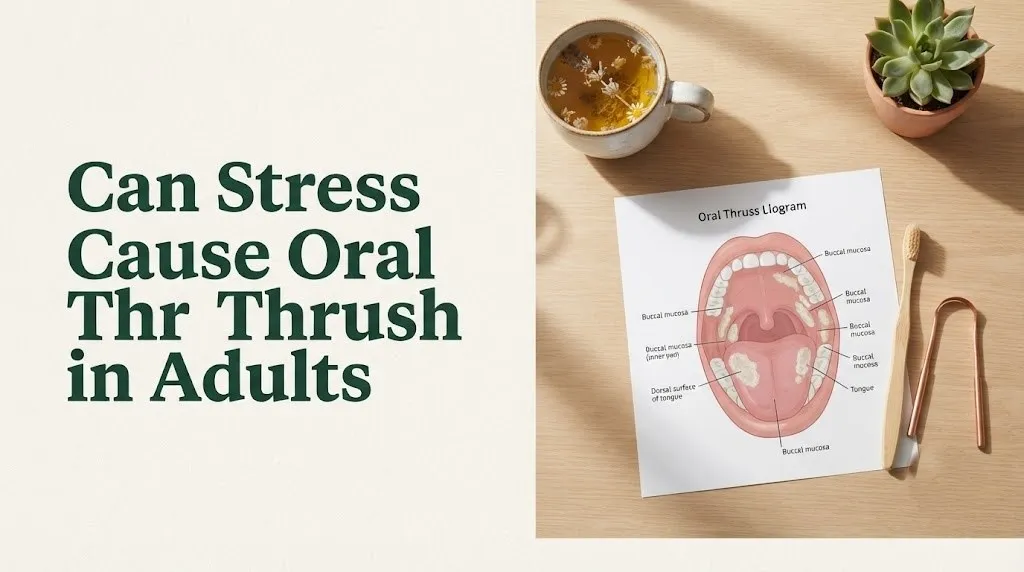
Stress-related oral thrush looks identical to thrush from other causes: creamy white, slightly raised lesions on the tongue, inner cheeks, gums, tonsils, or roof of the mouth that can be scraped off to reveal red, inflamed tissue underneath that may bleed slightly.
The lesions are often described as looking like cottage cheese or curdled milk. They can be small, isolated patches or larger, confluent plaques covering significant portions of the oral mucosa. The appearance alone does not distinguish stress-related thrush from thrush caused by antibiotics, diabetes, or other factors. The distinguishing feature is the context: thrush that appears during or shortly after a period of significant stress, that may have occurred during previous stress episodes, and that resolves with antifungal treatment but returns with the next stress period.
The location can provide some clinical clues. Thrush on the dorsal tongue, the top surface, may appear as a thick white coating that reveals a red, sometimes depapillated surface when scraped. Angular cheilitis, redness and cracking at the corners of the mouth, often accompanies oral thrush and is frequently caused by Candida. Thrush on the palate, the roof of the mouth, is particularly common in people who use inhaled corticosteroids without rinsing afterward and in denture wearers. The buccal mucosa, the inner cheeks, is another common location where the lesions appear as white patches that rub off easily.
| Thrush Characteristic | Typical Appearance |
|---|---|
| Color | Creamy white or yellowish white |
| Texture | Soft, slightly raised, cottage cheese-like |
| Location | Tongue, inner cheeks, palate, gums, tonsils |
| Removability | Scrapes off with difficulty, leaving red tissue that may bleed |
| Surrounding tissue | Red, inflamed, may be painful |
| Associated symptoms | Burning sensation, cottony mouth feel, altered taste, angular cheilitis |
| Distinguishing from leukoplakia | Thrush scrapes off; leukoplakia does not |
Symptoms of Oral Thrush in Adults
The primary symptoms of oral thrush in adults include creamy white lesions in the mouth, a burning sensation or soreness, a cottony feeling, altered taste or loss of taste, redness and cracking at the corners of the mouth, and difficulty eating or swallowing if the infection is severe or extends into the esophagus.
The burning sensation is one of the most distressing symptoms. The oral mucosa becomes inflamed and sensitive, and spicy, acidic, or hot foods and beverages can cause significant discomfort. Some people describe a metallic or unpleasant taste in their mouth that does not go away with brushing or rinsing. The cottony or dry sensation reflects the combination of the physical presence of the fungal plaques and the underlying inflammation of the oral tissues. Angular cheilitis, redness, cracking, and soreness at the corners of the mouth, is often caused by Candida and may be the only visible sign of infection in some people, particularly older adults.
Severe or untreated thrush can extend beyond the mouth. The infection can spread to the esophagus, causing esophagitis with symptoms of difficulty swallowing, pain with swallowing, and a sensation of food sticking in the chest. This is more common in people with significant immunosuppression, including those with uncontrolled HIV or those undergoing chemotherapy. Systemic Candida infection, where the fungus enters the bloodstream and disseminates to internal organs, is rare and occurs almost exclusively in severely immunocompromised hospitalized patients. Oral thrush in an otherwise healthy adult is a localized infection and does not typically progress to invasive disease.
Symptoms of oral thrush in adults:
- White, creamy patches on oral surfaces that scrape off with difficulty
- Burning sensation or soreness in the mouth
- Cottony or dry feeling
- Altered taste, metallic taste, or loss of taste
- Redness and cracking at the corners of the mouth (angular cheilitis)
- Slight bleeding when lesions are scraped or when brushing teeth
- Pain or discomfort with eating, especially spicy or acidic foods
- Difficulty swallowing if infection extends to the esophagus (seek medical evaluation)
How to Tell If Thrush Is From Stress or Something Else
You can distinguish stress-related thrush from other causes by identifying the temporal correlation with stress, checking for the presence of other risk factors, and noting whether the thrush recurs during subsequent stress periods, though the clinical appearance of the thrush itself is the same regardless of cause.
The most useful diagnostic tool is a timeline. If you developed oral thrush during or within a week or two of a significant stress period, and you do not have other obvious causes like recent antibiotic use or new inhaled corticosteroids, stress is a plausible contributing factor. If you have had thrush before, and those episodes also occurred during stressful periods, the pattern strongly supports stress as a trigger. Keep a simple log noting stress levels and any thrush symptoms. After two to three episodes, the pattern, or lack thereof, becomes clear.
The presence of other risk factors does not rule out stress as a contributing cause. Many people have multiple risk factors, and stress can be the tipping point. For example, a person using an inhaled corticosteroid for asthma may not develop thrush until a stressful period when cortisol further suppresses their oral immune defenses. The key question is not “is stress the only cause?” but “is stress contributing to my thrush?” If stress management reduces recurrence, the answer is yes regardless of what other factors are present.
Self-assessment for stress-related thrush:
- Thrush onset correlates temporally with high-stress periods
- Thrush has recurred during previous stress episodes
- Thrush improves when stress decreases, even without treatment
- No new medications, antibiotics, or changes in inhaler use
- No known diabetes or other significant risk factors
- Thrush responds to antifungal treatment but returns with next stress period
- Other stress-related symptoms present: sleep disturbance, tension, irritability
Stress Thrush vs Antibiotic Thrush vs Diabetes Thrush
Stress-related thrush, antibiotic-related thrush, and diabetes-related thrush are clinically indistinguishable in appearance but differ in their context, contributing factors, and prevention strategies, requiring different approaches to reduce recurrence even though the antifungal treatment is the same.
Antibiotic-related thrush develops during or shortly after a course of antibiotics, particularly broad-spectrum antibiotics that kill the commensal oral bacteria that compete with Candida. It typically resolves with antifungal treatment and does not recur unless antibiotics are taken again. Prevention focuses on probiotic use during and after antibiotics and good oral hygiene. Diabetes-related thrush occurs in people with poorly controlled blood glucose. Elevated glucose in saliva provides a nutrient source for Candida. It may be recurrent until glycemic control improves. Prevention focuses on diabetes management, including diet, medication adherence, and regular blood glucose monitoring.
Stress-related thrush occurs in the context of identifiable psychological stress and may recur with subsequent stress episodes. It may coexist with other stress-related conditions. Prevention focuses on stress management alongside oral hygiene. Distinguishing between these causes matters because the long-term prevention strategy differs: probiotics for antibiotic thrush, glycemic control for diabetes thrush, and stress reduction for stress thrush. Many people benefit from addressing multiple factors simultaneously.
| Thrush Trigger | Key Features | Prevention Focus |
|---|---|---|
| Stress | Onset during stress, recurs with stress | Stress management, oral hygiene during stress |
| Antibiotics | Onset during or after antibiotic course | Probiotics, oral hygiene during antibiotics |
| Diabetes | Associated with poor glycemic control | Blood glucose management, diabetes care |
| Inhaled corticosteroids | Thrush despite rinsing after use | Spacer use, rinsing technique, antifungal prophylaxis |
| Dentures | Thrush under denture, worse with continuous wear | Denture hygiene, removal at night, proper fit |
| Immunosuppression | Severe, recurrent, or extensive thrush | Medical management of underlying condition |
Key Takeaway: The white patches look the same, but the path to preventing the next episode is different. If stress is your trigger, treating the thrush with antifungals without addressing the stress is like bailing water from a boat without patching the leak. The water will return.
How to Treat Oral Thrush Caused by Stress
Oral thrush caused by stress is treated with the same antifungal medications used for thrush from other causes, typically topical nystatin suspension or clotrimazole troches for mild to moderate cases and oral fluconazole for more severe or resistant infections, but treatment should be combined with stress management to reduce the risk of recurrence.
Nystatin suspension is a liquid antifungal that is swished around the mouth and then swallowed, typically used four times daily for 7 to 14 days. It is effective for most cases of oral thrush and has the advantage of being topical, meaning it acts directly on the oral mucosa with minimal systemic absorption. Clotrimazole troches are lozenges that dissolve slowly in the mouth, delivering antifungal medication over 15 to 30 minutes, used five times daily for 7 to 14 days. Both are available by prescription in the United States.
Fluconazole is an oral systemic antifungal used when topical treatments fail, when thrush is severe, or when the infection has extended beyond the mouth. It is taken as a single dose or as a course over several days. Fluconazole is effective but has more potential for drug interactions and side effects than topical treatments. For stress-related thrush, topical treatment is usually sufficient. The addition of stress management, however, is what prevents the next episode. Without addressing the underlying stress-induced immune suppression, the thrush is likely to return when the next stress period hits.
Treatment approach for stress-related oral thrush:
- Confirm diagnosis with a primary care physician or dentist, especially for first episode
- Use prescribed topical antifungal (nystatin or clotrimazole) for the full course, even if symptoms improve
- Combine treatment with stress management techniques
- Improve oral hygiene: gentle brushing, tongue cleaning, rinse mouth after inhaled corticosteroid use
- Reduce dietary sugar during treatment and recovery
- Stay hydrated to combat stress-related dry mouth
- If thrush recurs after treatment, evaluate for underlying risk factors and intensify stress management
- Do not self-treat recurrent thrush indefinitely; seek medical evaluation for underlying causes
Antifungal Treatments and Stress Management Combined
Combining antifungal treatment with stress management addresses both the infection and the underlying susceptibility: the antifungal clears the current Candida overgrowth, while stress reduction through diaphragmatic breathing, cognitive behavioral therapy, or mindfulness-based stress reduction helps restore the Th17 immune function and salivary defenses that prevent recurrence.
Antifungal medication works quickly to clear Candida from the oral mucosa, typically within 3 to 7 days. Symptom relief often begins within 24 to 48 hours of starting treatment. Completing the full course is essential, even if symptoms resolve early, because residual Candida cells that survive incomplete treatment can recolonize and cause recurrence. While the medication is working, stress management should begin simultaneously. Even a few days of reduced stress can begin to restore salivary flow and improve immune function.
The combination is particularly important for people with recurrent stress-related thrush. Each episode indicates that the underlying stress-induced immune suppression has not been addressed. A pattern of treating thrush with antifungals alone, without stress management, often leads to a cycle of recurrence that becomes frustrating and increasingly difficult to break. Integrating stress reduction into the treatment plan transforms the approach from reactive (treating each episode) to preventive (reducing the likelihood of the next episode).
Combined treatment and prevention plan:
- During acute thrush: take prescribed antifungal medication for the full course
- Simultaneously: begin daily stress management practice (10-20 minutes diaphragmatic breathing or meditation)
- After thrush clears: continue stress management as ongoing prevention
- Improve oral hygiene: brush twice daily, clean tongue, floss, rinse after inhaler use
- Hydrate adequately to maintain salivary flow
- Reduce refined sugar intake, particularly during stress periods
- Track stress levels and thrush episodes to identify personal patterns
- If thrush recurs despite combined approach, consult a physician for further evaluation
Oral Hygiene Practices During High-Stress Periods
Oral hygiene during high-stress periods requires extra attention because stress both impairs oral immune defenses and reduces adherence to normal hygiene routines, creating conditions where Candida can proliferate: brush twice daily with a soft toothbrush, clean the tongue, floss, use an alcohol-free mouth rinse, and rinse the mouth after using inhaled corticosteroids.
Tongue cleaning is particularly important for Candida prevention. The dorsal tongue has a rough surface with deep fissures and papillae that provide an ideal environment for Candida colonization. Brushing the tongue gently with a toothbrush or using a tongue scraper removes the biofilm where Candida resides and reduces the fungal load. During high-stress periods, when salivary antimicrobial factors are reduced, mechanical removal through tongue cleaning becomes even more important.
For people who use inhaled corticosteroids for asthma or COPD, rinsing the mouth and gargling with water after each inhaler use is essential for preventing thrush. The corticosteroid medication deposits on the oral mucosa, causing local immunosuppression. Rinsing removes the medication residue before it can suppress local immune function. Using a spacer device with metered-dose inhalers also reduces the amount of medication deposited in the mouth and throat. These practices are especially important during stress, when the additional immunosuppressive burden of cortisol makes corticosteroid-induced thrush more likely.
Oral hygiene priorities during stress:
- Brush teeth twice daily with a soft toothbrush; replace toothbrush after thrush resolves
- Clean the tongue daily with a toothbrush or tongue scraper
- Floss once daily to reduce oral bacterial load
- Use an alcohol-free mouth rinse; alcohol dries the oral mucosa
- Rinse mouth and gargle with water after each inhaled corticosteroid use
- Clean dentures thoroughly and remove them at night
- Stay hydrated to maintain salivary flow
- Chew sugar-free gum or use sugar-free lozenges to stimulate saliva production
Diet, Sugar, and Candida Overgrowth During Stress
Diet plays an amplifying role in stress-related oral thrush: cortisol increases cravings for high-sugar and high-carbohydrate foods, and dietary sugar directly feeds Candida albicans, promoting its growth and providing the metabolic substrate for the yeast-to-hyphae transition that causes invasive infection.
Candida is a sugar-fermenting organism. Glucose is its preferred energy source, and elevated glucose in the oral environment promotes Candida proliferation. This is why people with poorly controlled diabetes are at high risk for oral thrush. The same principle applies during stress, even in people without diabetes. When stress drives consumption of sugary foods and beverages, salivary glucose levels rise, providing Candida with additional nutrition. The combination of stress-induced immune suppression and increased dietary sugar creates optimal conditions for thrush development.
Reducing dietary sugar during high-stress periods is a practical preventive measure. This does not require a permanent dietary overhaul but a temporary shift during the stress period. Focus on whole foods, protein, vegetables, and complex carbohydrates that do not produce rapid salivary glucose spikes. Limit sugary beverages, candy, pastries, and refined carbohydrates. Probiotic foods like yogurt with live cultures, kefir, and fermented vegetables may help support the oral and gut microbiome, though the evidence for probiotics preventing oral thrush specifically is preliminary. Adequate hydration with water helps maintain salivary flow and wash sugars from the oral cavity.
Dietary strategies during stress to reduce Candida risk:
- Limit refined sugar and high-glycemic carbohydrates
- Choose whole foods with protein, fiber, and healthy fats
- Stay hydrated with water to maintain salivary flow
- Include probiotic foods (yogurt with live cultures, kefir) if tolerated
- Limit alcohol, which contains sugar and dries the oral mucosa
- Avoid frequent snacking on sugary foods throughout the day
- If you use sugar-containing cough drops or lozenges, choose sugar-free alternatives
- After consuming sugary foods, rinse mouth with water or brush teeth
When Oral Thrush Requires a Doctor or Dentist
You should see a primary care physician or dentist for oral thrush when it is your first episode, when symptoms persist for more than two weeks despite over-the-counter treatment, when thrush recurs more than three to four times per year, when you have difficulty swallowing suggesting esophageal involvement, or when you have other concerning symptoms including unexplained weight loss or fever.
A primary care physician or dentist can confirm the diagnosis through clinical examination. Oral thrush has a characteristic appearance, but other conditions including oral lichen planus, leukoplakia, and hairy leukoplakia can mimic thrush. A potassium hydroxide preparation, where a scraping from the lesion is examined under a microscope, can confirm the presence of Candida hyphae. This simple test provides definitive diagnosis and is particularly useful for atypical presentations.
Recurrent thrush warrants investigation for underlying causes. Blood tests may include a complete blood count, fasting blood glucose or hemoglobin A1C for diabetes, iron studies for iron deficiency, and vitamin B12 and folate levels for nutritional deficiencies. In some cases, HIV testing may be recommended if other risk factors or clinical findings are present. If thrush extends into the esophagus, endoscopy may be performed to confirm the diagnosis and rule out other esophageal conditions.
When to seek medical evaluation for oral thrush:
- First episode: confirm diagnosis and discuss risk factors
- Thrush persisting more than two weeks despite treatment
- Recurrent thrush (more than three to four episodes per year)
- Difficulty or pain with swallowing, suggesting esophageal involvement
- Thrush accompanied by unexplained weight loss, fever, or fatigue
- Thrush in the absence of known risk factors (no antibiotics, no steroid inhalers, no diabetes, no dentures)
- Thrush that appears unusually severe or extensive
Preventing Recurrent Stress-Related Oral Thrush
Preventing recurrent stress-related oral thrush requires a dual approach: managing the stress that creates immune susceptibility and maintaining the oral hygiene, dietary, and health practices that deny Candida the opportunity to overgrow even during periods of reduced immune function.
Stress management is the foundation of prevention. The specific technique matters less than consistency. Diaphragmatic breathing practiced daily for 10 to 20 minutes reduces sympathetic tone, lowers cortisol, and over time can restore the HPA axis balance that chronic stress disrupts. Cognitive behavioral therapy addresses the thought patterns that amplify and prolong the stress response. Mindfulness-based stress reduction reduces both perceived stress and measured cortisol. Regular physical exercise, adequate sleep, and social connection are evidence-based stress buffers. The goal is not to eliminate stress, which is impossible, but to process it efficiently so that cortisol levels return to baseline rather than remaining chronically elevated.
Oral hygiene and dietary practices provide the second layer of prevention. Even when stress is high and immune function is somewhat suppressed, a mouth with low Candida colonization, good salivary flow, and minimal sugar substrate is less likely to develop clinical thrush. The practices described in the oral hygiene and diet sections become preventive habits during stress periods. Tracking stress levels and early thrush symptoms allows early intervention before a full infection develops.
Recurrent thrush prevention plan:
- Daily stress management: breathing, meditation, exercise, adequate sleep
- Consistent oral hygiene: brushing, tongue cleaning, flossing, rinsing after inhaler use
- Dietary awareness during stress: limit sugar, stay hydrated
- Regular dental checkups for denture fit and oral health assessment
- Early intervention: at first sign of thrush symptoms, intensify oral hygiene and stress management
- Medical follow-up: if thrush recurs despite prevention efforts, discuss additional evaluation with your physician
- Address contributing factors: improve diabetes control, optimize inhaler technique, ensure proper denture care
Stress can cause oral thrush in adults through a specific, scientifically grounded mechanism: chronic stress elevates cortisol, which suppresses the Th17 cells and IL-17 cytokines that your mouth depends on to keep Candida albicans controlled. Simultaneously, stress reduces salivary flow and antimicrobial peptides, increases sugar consumption, and may even directly stimulate Candida to become more aggressive. The white patches on your tongue are the visible result of this multi-layered breakdown in your mouth’s antifungal defenses.
Treating the current infection requires antifungal medication, typically topical nystatin or clotrimazole for mild to moderate cases, which your primary care physician or dentist can prescribe. But preventing the next episode requires addressing the stress that created the susceptibility. Daily stress management, consistent oral hygiene, and dietary awareness during high-stress periods are not optional add-ons. They are the difference between a single treated episode and a frustrating cycle of recurrence.
If your thrush is your first episode, see a physician or dentist for diagnosis and treatment. If it recurs, do not simply treat it again and again. Ask your provider to evaluate for underlying conditions like diabetes, and commit to the stress management practices that restore your immune system’s ability to control Candida on its own. The mouth is a window into the immune system. Recurrent thrush is telling you something. Listen, investigate, and address the stress and any other contributing factors at their source.