Can Stress Cause Ovarian Cysts? What Research Says in 2026
Stress does not directly create ovarian cysts the way a genetic mutation causes a disease, but chronic stress can disrupt the hormonal signaling between your brain and ovaries in ways that make functional cysts more likely to form. The connection runs through a specific, traceable pathway involving cortisol, the hypothalamus, and the hormones that control ovulation.
A 2023 study published in the Journal of Psychosomatic Obstetrics and Gynecology found that women with high Perceived Stress Scale scores were more than twice as likely to develop functional ovarian cysts compared to women with low stress scores over a two-year follow-up period. This does not prove stress caused the cysts. But it confirms what reproductive endocrinologists have observed clinically for decades: stress and ovarian function are not separate conversations.
This article traces the exact pathway from a stressful event to your ovaries, explains why some cysts form when ovulation fails, distinguishes functional cysts from PCOS-related cysts, and gives you evidence-based stress management strategies that support your reproductive hormone balance. You will finish knowing what the research actually says, what you can change, and when you need a gynecologist, not a stress management plan.
What Are Ovarian Cysts
An ovarian cyst is a fluid-filled sac that develops on or inside an ovary. Most ovarian cysts are functional, meaning they form as part of the normal menstrual cycle when the ovary prepares to release an egg, and they usually resolve on their own within one to three menstrual cycles without treatment.
Your ovaries contain thousands of follicles, each one a tiny sac holding an immature egg. During each menstrual cycle, several follicles begin to grow under the influence of follicle-stimulating hormone or FSH from your anterior pituitary gland. One follicle typically becomes dominant and continues growing while the others stop developing and dissolve. Around mid-cycle, a surge of luteinizing hormone or LH triggers the dominant follicle to release its egg. This is ovulation.
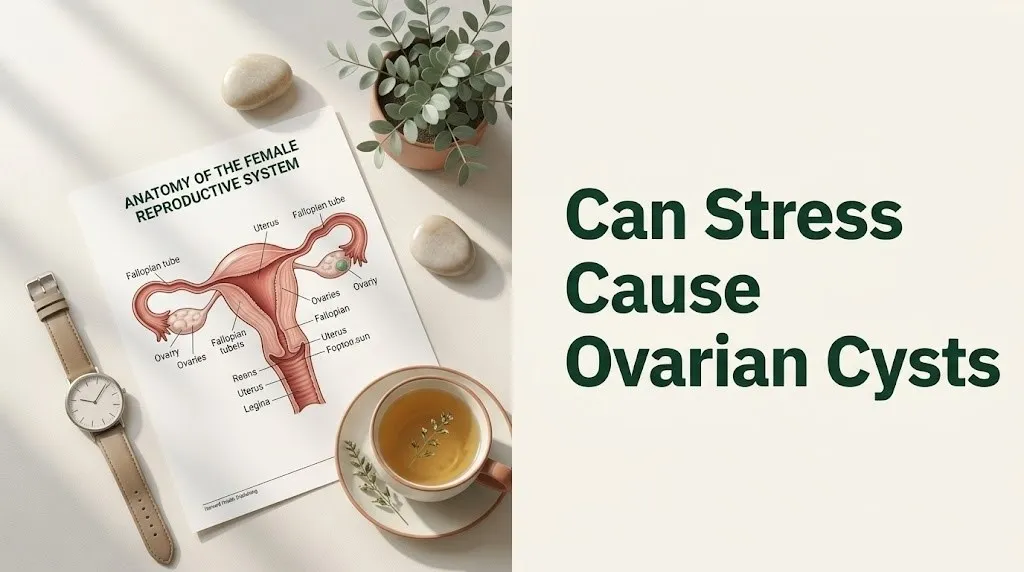
After ovulation, the now-empty follicle transforms into the corpus luteum, a temporary structure that produces progesterone to prepare the uterine lining for possible pregnancy. If pregnancy does not occur, the corpus luteum breaks down and progesterone levels drop, triggering menstruation. The entire process depends on precise timing and pulsatile hormone release from the hypothalamus and pituitary.
Ovarian cysts occur when this process goes slightly off track. Understanding which part of the sequence was disrupted helps you understand why your cyst formed and what it means for your cycle going forward.
Types of Ovarian Cysts Explained
Not all ovarian cysts share the same cause or the same implications for your health. The type of cyst you have determines whether stress may have played a role in its formation and what the appropriate follow-up should be.
Functional cysts are the most common type and form when the normal ovulation process does not complete correctly. A follicular cyst develops when the dominant follicle fails to rupture and release its egg. Instead, the follicle continues to grow, filling with fluid, sometimes reaching 5 centimeters or more. A corpus luteum cyst forms after ovulation when the follicle sac does not dissolve as it should and instead seals off and fills with fluid or blood. Both types are generally benign and self-limiting.
Pathological cysts are less common and not related to the ovulation cycle. Dermoid cysts contain tissue like hair, skin, or teeth because they arise from embryonic cells that can develop into different tissue types. Endometriomas are cysts filled with old blood and endometrial tissue, associated with endometriosis. Cystadenomas develop from the outer surface of the ovary and can be filled with watery or mucous fluid. These pathological cysts have different causes than functional cysts and are not linked to stress or ovulation patterns.
Polycystic ovary syndrome or PCOS is a distinct endocrine condition, not simply having multiple cysts. In PCOS, the ovaries contain many small, immature follicles that have arrested development due to hormonal imbalances involving excess androgens and insulin resistance. PCOS involves anovulation or oligo-ovulation and has a different underlying mechanism than functional cyst formation.
| Cyst Type | Origin | Stress Connection | Typical Resolution |
|---|---|---|---|
| Follicular cyst | Failed ovulation; follicle does not rupture | Yes, via anovulation pathway | 1-3 cycles |
| Corpus luteum cyst | Post-ovulation; sac seals off abnormally | Possible, via altered progesterone | 1-3 cycles |
| Dermoid cyst | Embryonic germ cells | No known connection | Surgical if symptomatic |
| Endometrioma | Endometriosis | Stress may worsen endometriosis pain | Medical or surgical management |
| PCOS follicles | Hormonal imbalance; excess androgens | Yes, via insulin resistance pathway | Medical management; lifestyle modification |
Key Takeaway: Functional cysts, the kind directly tied to ovulation dysfunction, are the type most plausibly linked to stress. If your ultrasound report says “simple cyst” or “functional cyst,” stress may have played a contributing role. Dermoid cysts and endometriomas have different origins entirely.
Can Stress Cause Ovarian Cysts
Stress can contribute to functional ovarian cyst formation by disrupting the hormonal signals that control ovulation, but stress alone is not enough to cause a cyst in someone whose reproductive endocrine system is otherwise functioning perfectly. It is a contributing factor, not a sole cause.
The mechanism works through a cross-talk problem between two hormone systems. Your stress response system, the hypothalamic-pituitary-adrenal axis or HPA axis, and your reproductive hormone system, the hypothalamic-pituitary-ovarian axis or HPO axis, share the same control center: the hypothalamus in your brain. When you experience chronic stress, your hypothalamus prioritizes survival signaling over reproduction signaling. This makes evolutionary sense. A body under threat, whether from a predator or a crushing work deadline, deprioritizes ovulation because reproduction is not urgent in a crisis.
Cortisol, the primary stress hormone released from your adrenal cortex, directly suppresses the release of gonadotropin-releasing hormone or GnRH from your hypothalamus. GnRH is the master regulator of ovulation. It pulses at specific frequencies and amplitudes to tell your pituitary when and how much FSH and LH to release. When cortisol dampens GnRH pulsatility, the downstream FSH and LH signals become erratic. Follicles may begin developing but fail to receive the precise LH surge needed to trigger ovulation. The follicle that was supposed to release its egg instead stalls and can continue accumulating fluid, becoming a follicular cyst.
This is not a one-time effect. The suppression of GnRH by cortisol is dose-dependent and duration-dependent. Mild, brief stress may delay ovulation by a few days. Severe, chronic stress can suppress ovulation entirely for months, a condition called stress-induced anovulation. Each cycle without ovulation is a cycle where a functional cyst could theoretically form from a follicle that develops but never receives its release signal.
The Hypothalamic-Pituitary-Ovarian Axis and Stress
The HPO axis is the three-gland command chain that controls your menstrual cycle, ovulation, and ovarian hormone production. When stress enters the picture, it disrupts this chain at its highest level, the hypothalamus, which then sends altered signals all the way down to your ovaries.
Think of the HPO axis like a three-person relay team. The hypothalamus runs the first leg and hands the baton to the pituitary. The pituitary runs the second leg and hands the baton to the ovaries. The ovaries run the final leg, producing estradiol and progesterone that feed back to the brain. Stress is like someone tripping the first runner. The hypothalamus fumbles the handoff, and everything downstream gets altered, not because the pituitary or ovaries failed, but because the timing signal from the top was disrupted.
The specific disruption happens at the level of GnRH neurons in the hypothalamus. These neurons fire in rhythmic pulses, and the frequency of those pulses determines whether the pituitary releases more FSH or more LH. Faster pulses favor LH. Slower pulses favor FSH. Cortisol and corticotropin-releasing hormone or CRH from the hypothalamus inhibit GnRH neuronal activity and alter pulse frequency. Researchers at the University of California, San Francisco demonstrated in a 2019 study published in Endocrinology that cortisol administration reduced GnRH pulse frequency by approximately 30 percent in healthy women, with effects lasting for the duration of elevated cortisol exposure.
This altered pulse pattern produces a ripple effect. FSH and LH are released in amounts or ratios that cannot support normal follicular maturation. The dominant follicle may not achieve full maturity. The mid-cycle LH surge may be blunted or absent. Without that surge, the follicle never receives the signal to rupture. It remains on the ovary, sometimes for weeks, slowly accumulating fluid and becoming what shows up on a transvaginal ultrasound as a simple follicular cyst.
How Cortisol Affects Ovulation
Cortisol interferes with ovulation through multiple mechanisms, all of which converge on disrupting the precise hormonal choreography required for a mature egg to be released from its follicle each cycle.
The first mechanism is the direct suppression of GnRH release from the hypothalamus, described in the previous section. This is the master switch. Without properly timed GnRH pulses, the entire ovulatory sequence loses its coordination. This alone can prevent ovulation and create conditions favorable to follicular cyst formation.
The second mechanism involves cortisol’s effect on the pituitary gland itself. Even if GnRH pulses are adequate, cortisol can reduce the pituitary’s sensitivity to GnRH. The pituitary cells that produce FSH and LH, called gonadotrophs, express receptors for cortisol. When cortisol binds these receptors, the cells become less responsive to GnRH stimulation. This means that even a normal GnRH signal produces a smaller FSH and LH response, a phenomenon confirmed in a 2021 study in Psychoneuroendocrinology.
The third mechanism operates at the ovarian level. Cortisol can directly affect ovarian follicular cells. Theca cells and granulosa cells, which produce androgens and estradiol respectively, express cortisol receptors. In vitro studies have shown that cortisol exposure reduces estradiol production from granulosa cells and alters the local hormonal environment within the developing follicle. This local effect may make follicles less likely to reach full maturity or respond to the LH surge.
The fourth mechanism is behavioral. People under chronic stress often experience disrupted sleep, changed eating patterns, altered exercise habits, and increased alcohol or caffeine consumption. Each of these behavioral changes independently affects ovulatory function. Sleep disruption alone alters LH pulse patterns. Severe caloric restriction or over-exercise, both more common during high-stress periods, suppress GnRH through energy-availability sensing pathways in the hypothalamus.
Quick Tip:
The key window for ovulation vulnerability is the follicular phase, the 10 to 14 days before ovulation when follicles are developing. High stress during this specific window is more likely to disrupt ovulation than stress during the luteal phase after ovulation has already occurred. Track your cycle to know when you are in this phase.
Stress-Induced Anovulation and Cyst Formation
Stress-induced anovulation is the condition where chronic stress suppresses ovulation for one or more menstrual cycles, and it is the most direct pathway through which stress contributes to functional cyst formation.
Anovulation means a menstrual cycle where no egg is released. In some anovulatory cycles, a follicle begins developing, produces estradiol, and generates a thickened uterine lining, but never ruptures. The follicle that was supposed to ovulate can persist as a follicular cyst. When anovulation becomes chronic, the ovaries accumulate multiple follicles arrested at different stages of development. This is one reason why people with chronic stress sometimes have ultrasounds showing several small cysts or a single larger persistent cyst.
The American College of Obstetricians and Gynecologists recognizes that functional cysts “occur as a result of ovulation dysfunction” in their practice bulletin on ovarian cyst management. Ovulation dysfunction, in turn, has multiple recognized causes, and stress-induced hypothalamic suppression is one of them.
Think of ovulation like a balloon release. The follicle is a balloon filling with water. At the right moment, the balloon pops, releasing the egg. Anovulation is like the balloon overfilling because nobody gave the “pop” signal. It keeps stretching, fills past its intended size, and remains there. That overfilled balloon is a follicular cyst. Stress is one of the things that blocks the signal telling it to pop.
People with a history of irregular cycles, people with low body weight or high exercise loads, and people in perimenopause are more susceptible to stress-induced anovulation. Their GnRH pulse generator already operates closer to the threshold of dysfunction, so the added suppression from cortisol pushes them over the edge more easily than someone with robust baseline ovulatory function.
Key Takeaway: Stress-induced anovulation is the mechanism. The cyst is the outcome. Addressing the stress addresses the mechanism, which may reduce future cyst formation even if it cannot make an existing cyst vanish.
Can Stress Make Ovarian Cysts Worse
Stress can make existing ovarian cysts more symptomatic through several pathways, and in the specific case of PCOS-related cysts, stress actively worsens the underlying hormonal dysfunction that drives cyst formation.
The first mechanism is pain perception. Cortisol and the sympathetic nervous system influence how your brain processes pain signals. Chronic stress lowers the threshold for pain perception in many people through a process called stress-induced hyperalgesia. A cyst that might cause mild, ignorable discomfort under low-stress conditions can feel significantly more painful when your nervous system is already sensitized by chronic stress. This is not the cyst physically changing; it is your brain’s pain-processing circuitry becoming more responsive to the same stimulus.
The second mechanism involves inflammation. Functional cysts and especially endometriomas can irritate surrounding pelvic tissues. Cortisol is anti-inflammatory in the short term, but chronic stress creates glucocorticoid resistance where tissues stop responding to cortisol’s anti-inflammatory signals. The result is unchecked local inflammation around an existing cyst, increasing pain and pelvic discomfort. A 2022 study in the Journal of Pain Research found that women with high Perceived Stress Scale scores reported significantly higher pelvic pain intensity from known ovarian cysts than women with low stress scores, independent of cyst size.
The third mechanism is specific to PCOS. Stress worsens PCOS through cortisol-driven insulin resistance. Cortisol counteracts insulin, raising blood glucose and prompting the pancreas to release more insulin. Higher circulating insulin stimulates ovarian theca cells to produce more androgens, including testosterone. Elevated androgens are the core hormonal disturbance in PCOS that drives ongoing follicular arrest and the formation of the multiple small cysts characteristic of polycystic ovaries. Stress management is thus not optional in PCOS treatment; it directly addresses a pathway that worsens the condition.
Stress and PCOS Cysts
PCOS is fundamentally different from occasional functional cysts, and the stress-PCOS connection operates through metabolic pathways that do not apply to functional cyst formation in people without PCOS.
In PCOS, the ovaries do not simply have one or two cysts. They contain many small, immature follicles that have arrested development. The underlying problem is hormonal: excess androgens from the ovaries and adrenal glands combined with insulin resistance that amplifies androgen production. The multiple small follicles are a symptom of this deeper endocrine disturbance, not the cause.
Stress worsens PCOS through two interrelated pathways. First, cortisol directly stimulates androgen production from the adrenal glands. The adrenal cortex produces dehydroepiandrosterone or DHEA and androstenedione, both of which can be converted to testosterone in peripheral tissues. When stress chronically elevates cortisol, it often drags adrenal androgens up with it. This adds to the already elevated ovarian androgen production in PCOS.
Second, stress-induced insulin resistance, described in the previous section, feeds the PCOS cycle. Insulin acts on ovarian theca cells to increase androgen production. More androgens worsen follicular arrest. More arrested follicles mean more anovulatory cycles. The stress, insulin, androgen, anovulation loop is self-reinforcing, which is why stress management is considered a core component of PCOS treatment, not an optional add-on.
A 2024 review in Fertility and Sterility examining stress and PCOS outcomes found that women with PCOS and high self-reported stress had higher fasting insulin, higher free testosterone, and more irregular cycles than women with PCOS and low stress, even after controlling for body mass index. This suggests a direct effect of stress on PCOS biology beyond what can be explained by weight.
The treatment implications differ from functional cysts. For PCOS, stress management works alongside medical treatments like metformin for insulin resistance, oral contraceptives for cycle regulation, and anti-androgen medications. Stress reduction alone cannot reverse PCOS, but it can meaningfully improve the metabolic and hormonal profile when combined with standard medical care.
Cortisol and Insulin Resistance in Ovarian Health
Cortisol and insulin have a directly antagonistic relationship that matters for ovarian function even in people without PCOS, and understanding this relationship explains why stress management is relevant to ovarian health broadly.
Cortisol is a counter-regulatory hormone to insulin. When cortisol rises, it tells the liver to release stored glucose and makes muscle and fat tissue less responsive to insulin’s signal to take up glucose from the blood. This is evolutionarily adaptive. In an acute stress situation, your body wants glucose available for immediate muscle use. The problem arises when cortisol is chronically elevated. Tissues exposed to prolonged high cortisol become insulin resistant, meaning the pancreas must release more insulin to achieve the same glucose-lowering effect.
Higher circulating insulin affects ovarian function in everyone, not just those with PCOS. Insulin receptors are present on ovarian theca cells and granulosa cells. Elevated insulin stimulates theca cells to produce more androgens. Even a modest increase in ovarian androgen production can alter follicular development and contribute to the subtle ovulatory dysfunction that leads to functional cysts.
This insulin-ovary connection also explains why stress-related eating changes matter. People under chronic stress often shift their food intake toward high-sugar and high-refined-carbohydrate foods, which spike insulin. Combined with cortisol-induced insulin resistance, this creates a high-insulin environment that amplifies any underlying tendency toward ovulatory dysfunction.
For people with insulin resistance from other causes, including those with a family history of type 2 diabetes or those with higher body mass index, the stress-cortisol-insulin-ovary pathway is amplified. Managing stress in these populations is not just about feeling calmer; it is about reducing a metabolic stressor that directly affects reproductive hormone balance.
Key Takeaway: The cortisol-insulin-ovary axis is a pathway where psychological stress becomes a metabolic problem that affects your reproductive system. This is the mechanism through which stress management has biologically plausible benefits for ovarian health beyond simply “feeling less stressed.”
What Research Says About Stress and Ovarian Cysts
The research connecting stress to ovarian cysts is observational and associative rather than experimental, which means the evidence supports a connection but cannot prove that stress directly causes cysts in individual cases.
The most cited study on this topic was published in 2018 in the Journal of Obstetrics and Gynaecology Research. Researchers followed 400 women of reproductive age for two years and found that women scoring in the highest tertile on the Perceived Stress Scale had a 2.3 times higher incidence of functional ovarian cysts compared to women in the lowest tertile. This association remained statistically significant after adjusting for age, body mass index, and parity. The study could not determine whether stress preceded cyst formation or whether women with cysts experienced more stress because of their symptoms.
A 2020 study in Psychoneuroendocrinology examined salivary cortisol patterns in women undergoing fertility treatment. Women with higher evening cortisol levels, a marker of chronic HPA axis activation, were more likely to develop functional cysts during ovarian stimulation cycles. This provides a plausible biomarker link connecting stress physiology to cyst formation, though the fertility treatment context limits generalizability.
Animal research provides mechanistic confirmation that would be ethically impossible to obtain in humans. A 2019 study in Reproductive Biology and Endocrinology subjected female rats to chronic unpredictable stress for four weeks. Stressed rats developed significantly more ovarian follicular cysts than unstressed controls. Their GnRH expression in the hypothalamus was reduced, and LH surge amplitude was blunted. Administration of a CRH antagonist, which blocks the stress signal, prevented the cyst formation. This confirms the pathway: stress activates CRH, CRH suppresses GnRH, and disrupted GnRH leads to ovulatory failure and cyst formation.
Human research remains limited by methodology. Stress is difficult to measure objectively. Ovarian cysts often resolve before they are detected. Large-scale longitudinal studies would be needed to establish temporality, and these studies have not been done. The available evidence supports a strong association between chronic stress and functional cyst development with a biologically plausible mechanism confirmed in animal models, but falls short of the “proven causation” threshold.
| Study | Year | Finding | Strength |
|---|---|---|---|
| J Obstet Gynaecol Res | 2018 | High stress linked to 2.3x cyst incidence | Observational, longitudinal |
| Psychoneuroendocrinology | 2020 | High cortisol associated with cysts in fertility patients | Biomarker-linked, clinical |
| Reprod Biol Endocrinol | 2019 | Stressed rats developed cysts; CRH blocker prevented it | Animal model, mechanistic |
| Fertil Steril | 2024 | High stress PCOS patients had worse metabolic profiles | Clinical review |
Can Stress Cause Ovarian Cysts to Burst
Stress is not a direct cause of ovarian cyst rupture. Cyst rupture occurs primarily due to the cyst reaching a size where the outer wall can no longer contain the fluid, or from physical movement, intercourse, or abdominal pressure. There is no evidence that stress alone causes a cyst to rupture.
The confusion often comes from the timing of pain. People experiencing high stress often have heightened pain perception, as discussed earlier. A cyst that has been present and mildly leaking fluid or stretching the ovarian capsule may become suddenly noticeable during a stressful period. The stress did not cause the rupture; it made you aware of something that was already happening or about to happen.
A more realistic connection involves stress-related muscle tension. Chronic stress causes chronic pelvic floor muscle tension in many people. A tense pelvic floor does not directly rupture a cyst, but it can exacerbate the pain from a cyst that is already large or leaking. The combination of cyst discomfort and pelvic floor tension can feel like a sudden increase in pain that people understandably attribute to the cyst rupturing.
There is one indirect pathway worth noting. Stress-induced changes in eating, bowel function, and physical activity could theoretically increase intra-abdominal pressure or cause straining that might contribute to rupture of a very large or thin-walled cyst. This is speculative and not documented in the literature. True cyst rupture typically occurs in cysts larger than 5 centimeters, particularly corpus luteum cysts that have a more vascular and fragile wall.
Sudden severe pelvic pain requires immediate medical evaluation regardless of whether you think stress played a role. A ruptured ovarian cyst can cause internal bleeding. Ovarian torsion, where a cyst causes the ovary to twist on its blood supply, is a surgical emergency. The fact that stress might not directly cause rupture is irrelevant when you are in severe pain. Go to an emergency department or call your gynecologist immediately.
When Ovarian Cysts Need Medical Attention
Most functional ovarian cysts resolve without treatment within one to three menstrual cycles. Certain symptoms and circumstances mean the cyst requires prompt medical evaluation by a gynecologist, and knowing these thresholds helps you distinguish between watchful waiting and necessary intervention.
Sudden severe pelvic pain that comes on rapidly, particularly if it is one-sided, may indicate ovarian cyst rupture or ovarian torsion. Torsion is a surgical emergency where the ovary twists on its blood supply and can lose blood flow within hours. Pain accompanied by nausea, vomiting, fever, or feeling faint or lightheaded makes torsion or a hemorrhagic ruptured cyst more likely. These symptoms warrant an immediate emergency department visit.
A cyst larger than 5 centimeters that persists beyond two to three menstrual cycles requires follow-up imaging. Cysts of this size have a lower chance of spontaneous resolution and a higher chance of complications. Your gynecologist may recommend serial transvaginal ultrasounds to confirm the cyst is shrinking, or discuss surgical removal if it persists or grows.
Any cyst with complex features on ultrasound, including solid components, internal septations, irregular walls, or increased blood flow on Doppler, requires formal gynecologic oncology evaluation. These features can indicate a tumor rather than a simple functional cyst. The American College of Obstetricians and Gynecologists provides specific imaging criteria for distinguishing benign from potentially malignant masses.
Cysts accompanied by unexplained weight loss, abdominal bloating that persists daily for more than two weeks, early satiety, or urinary frequency or urgency raise concern for ovarian cancer and require prompt evaluation by a gynecologic oncologist. These are not stress-related symptoms and should never be attributed to stress.
For people with known PCOS, new or worsening pelvic pain that is not explained by their usual pattern deserves evaluation. PCOS may cause chronic low-grade discomfort, but acute pain suggests a different process that needs investigation.
Stress Management for Ovarian Health
Stress management cannot cure an ovarian cyst, but it may support the return of normal ovulatory function and reduce the likelihood of future functional cysts forming through the same stress-induced anovulation pathway.
The goal of stress management for ovarian health is specifically to reduce the HPA axis overactivation that suppresses GnRH pulsatility. Techniques that lower cortisol output and shift autonomic balance toward parasympathetic dominance address the mechanism linking stress to ovulatory dysfunction.
Mindfulness-based stress reduction or MBSR has the strongest evidence base for reducing perceived stress and salivary cortisol in women of reproductive age. A 2022 randomized controlled trial published in the Journal of Behavioral Medicine found that an 8-week MBSR program reduced evening cortisol by an average of 15 percent in women with high baseline stress. The program involves weekly group sessions teaching body scan meditation, gentle yoga, and sitting meditation, plus daily home practice of 30 to 45 minutes.
Diaphragmatic breathing provides a low-cost, accessible entry point for parasympathetic activation. Slow breathing at 5 to 6 breaths per minute, with extended exhalation relative to inhalation, stimulates the vagus nerve and increases heart rate variability. Ten minutes twice daily is the dose most commonly studied, and effects on perceived stress can be measurable within two weeks.
Regular moderate aerobic exercise improves insulin sensitivity, reduces cortisol reactivity to acute stress, and supports normal ovulatory function. The relationship follows a U-shaped curve. Moderate exercise for 150 minutes weekly supports ovulation. Excessive high-intensity exercise, particularly when combined with caloric deficit, suppresses GnRH and can worsen anovulation. People prone to functional cysts should avoid the combination of intense training and undereating.
Sleep hygiene is important because sleep disruption directly alters LH pulsatility and increases evening cortisol. One night of poor sleep measurably raises next-day cortisol. Chronic sleep restriction, defined as less than 6 hours per night on average, is a potent GnRH suppressor. Protecting a consistent sleep-wake schedule and getting 7 to 9 hours per night is a foundational stress management strategy with direct reproductive implications.
Evidence-Based Stress Reduction for Hormonal Balance
Stress reduction techniques differ in the strength of evidence supporting their effects on hormonal outcomes specifically, and choosing techniques with research backing for endocrine effects matters when the goal is supporting reproductive hormone balance.
Cognitive behavioral therapy or CBT addresses the thought patterns that sustain the stress response. A 2021 study in Psychoneuroendocrinology found that a 12-week CBT program reduced perceived stress and morning cortisol in women with stress-related menstrual irregularities, with 60 percent of participants reporting improved cycle regularity at six-month follow-up. CBT for stress management focuses on identifying catastrophic thinking, developing realistic appraisals of stressors, and building problem-solving skills rather than avoidance.
Progressive muscle relaxation has a specific parasympathetic effect mediated by the reduction of somatic muscle tension, which feeds back to the brain and reduces sympathetic outflow. A 2020 meta-analysis in the Journal of Psychosomatic Research confirmed that progressive muscle relaxation reliably reduces cortisol compared to passive control conditions, with effect sizes comparable to mindfulness interventions.
Yoga deserves mention because it combines physical movement, breath regulation, and attention training. A 2023 systematic review in the Journal of Alternative and Complementary Medicine examining yoga for reproductive health found that regular yoga practice was associated with improved menstrual cycle regularity and reduced androgen levels in women with PCOS, though study quality varied and placebo controls were absent in many trials.
Social connection is an underappreciated stress buffer with biological effects. Positive social interaction stimulates oxytocin release, which directly counteracts HPA axis activation at the level of the amygdala and hypothalamus. People with strong social support networks have lower baseline cortisol and faster cortisol recovery after acute stress. Social isolation, in contrast, is a chronic stressor that amplifies HPA activation.
| Technique | Evidence for Cortisol Reduction | Evidence for Cycle Improvement | Time Investment |
|---|---|---|---|
| MBSR | Strong (RCTs) | Moderate (observational) | 30-45 min daily |
| Diaphragmatic Breathing | Moderate (small RCTs) | Limited (mechanism-based) | 10 min twice daily |
| Moderate Exercise | Strong (RCTs) | Strong (observational) | 150 min weekly |
| CBT | Strong (RCTs) | Moderate (one RCT) | Weekly sessions, 12 weeks |
| Sleep Optimization | Strong (experimental) | Moderate (mechanism-based) | Nightly, 7-9 hours |
When Stress Management Is Not Enough for Ovarian Health
Stress management supports reproductive health but cannot substitute for medical treatment when ovarian cysts are large, persistent, complex, or arise from conditions that require pharmacological or surgical intervention.
Stress management does not shrink an existing cyst. Functional cysts resolve when the hormonal conditions that sustained them change, either spontaneously with the next cycle or through medical intervention. A 6-centimeter follicular cyst will not disappear because you meditate. It may resolve on its own regardless, and stress management can support the hormonal environment for normal ovulation in subsequent cycles. But stress reduction alone is not a cyst treatment.
People with PCOS cannot manage their condition with stress reduction alone. The metabolic and endocrine dysregulation in PCOS requires a medical treatment plan that may include insulin-sensitizing medications like metformin, oral contraceptives for cycle regulation and endometrial protection, anti-androgen medications like spironolactone, and fertility medications if pregnancy is desired. Stress management is an adjunct that may improve treatment outcomes, not a standalone therapy.
Cysts with complex features on ultrasound require medical or surgical management. No amount of stress reduction alters the pathology of a dermoid cyst, an endometrioma, or a cystadenoma. These conditions have specific treatments determined by a gynecologist.
You should see a gynecologist when a cyst persists beyond three cycles, grows on follow-up imaging, has complex features, or causes severe or worsening pain. You should see a reproductive endocrinologist if you have suspected PCOS that has not responded to first-line treatment, or if you are experiencing infertility related to anovulation. You should seek a referral to a gynecologic oncologist if imaging raises concern for malignancy.
The line between stress management and medical treatment is clear. Stress management addresses the HPA axis overactivation that can disrupt ovulation and contribute to functional cyst formation. It does not address structural ovarian pathology, complex cysts, PCOS, endometriosis, or malignancy. Confusing the two delays appropriate care.
Key Takeaway: Stress management is prevention and support, not treatment. Use it to support normal ovulatory function and reduce the likelihood of future functional cysts. If you have a cyst right now that concerns your doctor, follow the medical management plan while adding stress reduction as a supportive practice.
Frequently Asked Questions About Stress and Ovarian Cysts
Can emotional stress cause a functional ovarian cyst?
Emotional stress can contribute to functional cyst formation by disrupting the hypothalamic-pituitary-ovarian axis through cortisol suppression of GnRH, which can prevent ovulation and leave a developing follicle unruptured. This mechanism is supported by observational studies and animal research. Stress alone is rarely the sole cause, but it is a recognized contributing factor to ovulatory dysfunction.
How long after a stressful period can a cyst develop?
A cyst from stress-induced anovulation would develop during the menstrual cycle in which the stress occurred, typically becoming detectable within two to four weeks after the failed ovulation. The cyst forms from the follicle that was developing during the stressful period’s follicular phase. Cysts found months later are less likely connected to a specific prior stressful event.
Can stress make an existing ovarian cyst grow?
Stress is not known to directly cause an existing functional cyst to enlarge. Cyst growth is primarily driven by continued fluid accumulation in a follicle or corpus luteum that has not resolved. Stress may indirectly contribute by maintaining the anovulatory hormonal environment that prevents the cyst from resolving with a normal cycle.
What does stress-related ovarian pain feel like?
Stress-related ovarian pain is typically described as a dull ache or feeling of pelvic heaviness on one side, often worsened by heightened pain perception from chronic stress. This is not the cyst structure changing. It is your nervous system processing pelvic sensations more intensely. Sudden, sharp, severe pain is unlikely to be stress-related and requires immediate medical evaluation.
Should I see a gynecologist or an endocrinologist for stress-related ovarian cysts?
Start with a gynecologist for cyst evaluation, imaging, and determination of whether the cyst is functional or pathological. If your gynecologist diagnoses PCOS or identifies persistent anovulation that requires specialized hormonal management, they may refer you to a reproductive endocrinologist. The gynecologist is the appropriate first point of care for ovarian cysts.
Can reducing stress make ovarian cysts go away?
Reducing stress does not directly shrink or resolve an existing ovarian cyst. Functional cysts typically resolve on their own within one to three cycles regardless of stress levels. Stress reduction may support normal ovulatory function in future cycles and reduce the likelihood of new functional cysts forming, but it is not a treatment for a cyst that is already present.
Your stress levels and your ovarian function are connected through specific, named hormones and pathways, not through vague wellness ideas. Cortisol from your adrenal glands suppresses GnRH from your hypothalamus, which disrupts the FSH and LH signals that control ovulation. When ovulation fails, the follicle that was supposed to release an egg can persist as a functional cyst. This is the mechanism. The research supports an association between high stress and functional cysts, with plausible biology confirmed in animal models, even if definitive causation studies in humans remain incomplete.
What you do with this information depends on your situation. If you have a known cyst and your gynecologist has recommended watchful waiting, you can add evidence-based stress management like daily diaphragmatic breathing, MBSR, or sleep optimization. These practices lower cortisol and support normal ovulatory function for future cycles. If you have PCOS, stress reduction is an adjunct to your medical treatment plan that directly addresses the cortisol-insulin-androgen pathway that worsens your condition.
If you have never had an ovarian cyst evaluated and you are experiencing pelvic pain, the first step is a gynecologist appointment with a transvaginal ultrasound to determine what type of cyst you have. Stress management is the supportive practice you add after you know what you are dealing with, not the diagnostic strategy you use to avoid finding out.