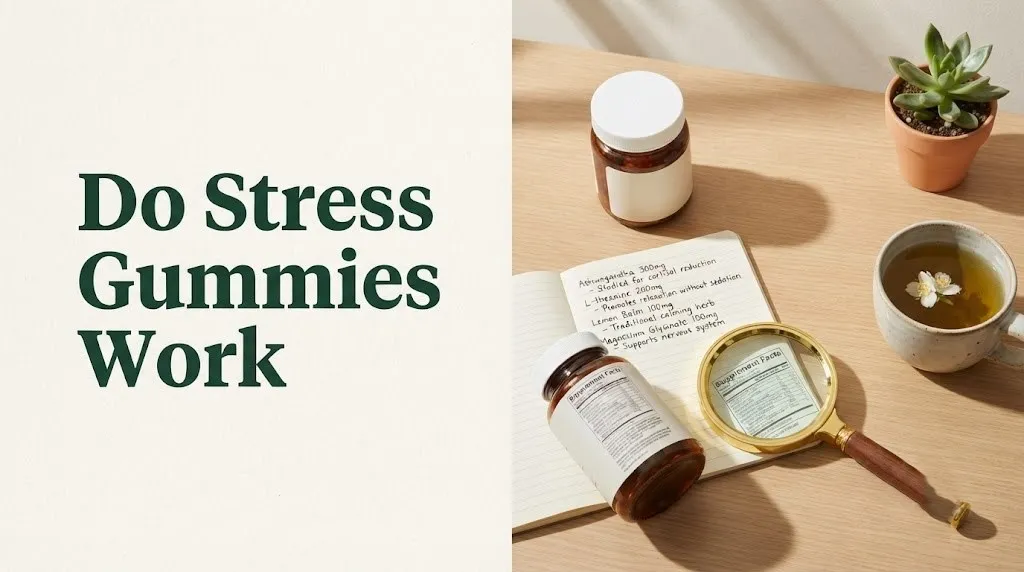
Do Stress Gummies Work? Evidence and Honest Review 2026
Some stress gummies do work, but it depends entirely on which active ingredients they contain, at what doses, and in what forms, with ashwagandha and L-theanine having the strongest human evidence for stress reduction while many other common ingredients like oral GABA have little to no proven efficacy due to fundamental bioavailability problems.
The stress gummy market has exploded into a multi-billion dollar category, with products promising calm, relaxation, and stress relief in a convenient, candy-like format. The American Psychological Association’s 2024 Stress in America survey found that approximately 30% of adults report using dietary supplements for stress management, a number that has risen steadily. But the regulatory reality is that the FDA does not approve dietary supplements for safety or efficacy before they reach store shelves, and companies can make “structure-function” claims like “promotes relaxation” without submitting evidence to any regulatory body.
This article evaluates the actual scientific evidence for every common stress gummy ingredient, names the specific active compounds and their mechanisms of action in your nervous system, and gives you a practical framework for deciding whether a particular product is worth your money. You will learn which ingredients have real clinical trial backing, which are mostly placebo, what dosage actually matters, and exactly when stress gummies are an appropriate tool versus when you need professional mental health support.
Do Stress Gummies Work
The answer is not a simple yes or no: stress gummies containing ashwagandha (Withania somnifera) or L-theanine at clinically studied doses do have evidence for mild to moderate stress reduction, while gummies relying on oral GABA, underdosed herbs, or proprietary blends with hidden amounts of active ingredients generally do not work beyond placebo.
The effectiveness of a stress gummy depends on three factors: whether the ingredients have human clinical trial evidence for stress reduction, whether those ingredients are present at the doses used in the successful trials, and whether the gummy delivery format compromises the stability or absorption of those ingredients. Many popular stress gummies fail on at least two of these criteria. A 2023 analysis by ConsumerLab found that several top-selling stress gummies contained less of their advertised active ingredients than claimed on the label, and some contained forms of ingredients with poor bioavailability compared to the forms used in research.
The stress gummy market operates in a regulatory gap. The FDA regulates dietary supplements under a different set of rules than prescription medications or over-the-counter drugs. Supplement manufacturers are responsible for ensuring their products are safe and that label claims are truthful, but they are not required to submit evidence of efficacy to the FDA before marketing. The Federal Trade Commission has issued warning letters to multiple supplement companies for making unsubstantiated claims about treating anxiety, which is a disease claim not permitted for dietary supplements. The “stress relief” you see on the label is a carefully worded structure-function claim, not a guarantee of efficacy.
| Factor | What Makes a Stress Gummy Effective | Red Flag |
|---|---|---|
| Ingredients | Ashwagandha, L-theanine, or magnesium glycinate with clinical trial support | Oral GABA, unknown “proprietary blends” |
| Dosage | Matches clinical trial doses (e.g., 300-600 mg ashwagandha, 200-400 mg L-theanine) | Below clinical dose, or dose hidden in a blend |
| Form | Standardized extract with known active constituent percentage | Whole herb powder, unspecified extract |
| Quality markers | Third-party tested (USP, NSF, or ConsumerLab) | No third-party certification |
| Label transparency | Each ingredient amount listed individually | Proprietary blend with total weight only |
What Are Stress Gummies and Their Common Ingredients
Stress gummies are chewable dietary supplements marketed for stress relief and relaxation, typically containing a combination of herbal extracts, amino acids, vitamins, and minerals suspended in a gelatin or pectin base with sweeteners and flavorings, designed to deliver active compounds in a more palatable and convenient format than capsules or tablets.
The most common active ingredients in stress gummies fall into several categories. Adaptogenic herbs, primarily ashwagandha (Withania somnifera) and sometimes Rhodiola rosea, are plant extracts that claim to help the body resist and recover from stress. Amino acids and related compounds, primarily L-theanine from green tea and sometimes GABA directly, target neurotransmitter systems involved in relaxation. Minerals, most commonly magnesium in various forms, support neurological function and muscle relaxation. Botanicals including lemon balm (Melissa officinalis) and passionflower (Passiflora incarnata) have traditional use for calming effects. Cannabinoids, primarily CBD (cannabidiol) from hemp, target the endocannabinoid system.
The gummy format creates specific advantages and disadvantages. Gummies are more enjoyable to take than capsules, which improves adherence for some people. The act of chewing and tasting something pleasant may itself have a calming, ritualistic effect. However, gummies typically contain added sugar, often 2 to 5 grams per gummy, which can cause blood sugar fluctuations that may counteract stress-reducing effects. The manufacturing process for gummies involves heat that can degrade some active compounds. Gummies have a shorter shelf life than capsules, and active ingredient content can decline over time. The gummy format also limits how much active ingredient can fit into a single serving, as the base material takes up volume.
Common stress gummy ingredients at a glance:
- Ashwagandha (Withania somnifera): adaptogenic herb, most studied for cortisol reduction
- L-theanine: amino acid from green tea, increases relaxing alpha brain waves
- Magnesium: essential mineral, multiple forms with different bioavailability
- GABA: primary inhibitory neurotransmitter, but oral absorption to brain is questionable
- Lemon balm (Melissa officinalis): calming herb, mild evidence
- Passionflower (Passiflora incarnata): traditional calming herb, preliminary evidence
- CBD: cannabinoid from hemp, preliminary stress evidence, regulatory complexity
- Vitamin B complex: supports nervous system function but not specifically stress-reducing
- Melatonin: sleep hormone sometimes added to nighttime stress gummies
How Stress Supplements Claim to Work in the Body
Stress supplements claim to work through three primary mechanisms: modulating the HPA axis and reducing cortisol output, enhancing GABA neurotransmission to promote neural inhibition, and regulating the glutamate system through NMDA receptor antagonism, though different ingredients target different parts of these pathways with varying degrees of evidence.
The HPA axis mechanism is the most physiologically direct approach to stress reduction. In this pathway, an ingredient would reduce the release of CRH from the hypothalamus, decrease ACTH secretion from the pituitary, lower cortisol production from the adrenal glands, or block cortisol’s effects at target tissues. Ashwagandha is the ingredient with the strongest evidence for this mechanism. Withanolides, the active compounds in ashwagandha, appear to reduce CRH release and modulate the HPA axis response to stressors. Human trials have documented cortisol reductions of 15 to 30% with ashwagandha supplementation over 6 to 12 weeks.
The GABAergic mechanism targets the brain’s primary inhibitory system. GABA, gamma-aminobutyric acid, is the neurotransmitter that reduces neuronal excitability throughout the nervous system. Increasing GABA signaling produces calm, reduces anxiety, and promotes sleep. L-theanine increases GABA levels in the brain, along with serotonin and dopamine, while also increasing alpha brain wave activity associated with relaxed alertness. Lemon balm inhibits GABA transaminase, the enzyme that breaks down GABA, leading to increased GABA availability. Oral GABA supplements face the fundamental challenge of crossing the blood-brain barrier, which is discussed in detail later.
The glutamatergic mechanism addresses the brain’s primary excitatory system. Glutamate is the major excitatory neurotransmitter, and overactivation of glutamate NMDA receptors contributes to anxiety and the physiological stress response. L-theanine is structurally similar to glutamate and acts as a competitive antagonist at NMDA receptors, blocking glutamate from binding and reducing excitatory signaling. Magnesium also regulates the NMDA receptor through the magnesium block site; adequate magnesium prevents excessive calcium influx through the NMDA channel, protecting against excitotoxicity.
| Mechanism | Target | Key Ingredients | Evidence Strength |
|---|---|---|---|
| HPA axis modulation | Cortisol reduction | Ashwagandha, Rhodiola | Moderate to strong (ashwagandha), moderate (Rhodiola) |
| GABA enhancement | Neural inhibition | L-theanine, lemon balm, ashwagandha | Moderate (L-theanine), limited (lemon balm) |
| NMDA antagonism | Reduce excitotoxicity | L-theanine, magnesium | Moderate (both) |
| Serotonin modulation | Mood regulation | L-theanine, CBD | Moderate (L-theanine), preliminary (CBD) |
| Direct GABA supplementation | Brain GABA increase | Oral GABA | Poor (BBB penetration unproven) |
Key Takeaway: The most evidence-supported stress gummies work by modulating your HPA axis to reduce cortisol or by enhancing GABA signaling in your brain. Ingredients with these mechanisms (ashwagandha, L-theanine) have clinical trial backing. Ingredients claiming to work through unproven mechanisms or with fundamental bioavailability problems do not.
The Evidence for Stress Gummies: What Research Actually Shows
The overall evidence for stress gummies as a category is mixed and highly ingredient-dependent: products containing ashwagandha or L-theanine at clinical doses have moderate evidence for stress reduction, while products containing oral GABA, underdosed herbs, or proprietary blends have little to no evidence, and no stress gummy has evidence comparable to that for evidence-based stress management techniques like cognitive behavioral therapy (CBT) or mindfulness-based stress reduction (MBSR) .
The Natural Medicines Database, an independent, evidence-based resource that evaluates dietary supplements, rates ashwagandha as “possibly effective” for stress based on multiple human clinical trials. L-theanine is rated as “possibly effective” for anxiety and stress. Magnesium is rated as “effective” for magnesium deficiency and “possibly effective” for anxiety, with the caveat that benefits are most pronounced in people with low baseline magnesium status. Oral GABA is rated as “possibly ineffective” for anxiety due to the blood-brain barrier issue. Lemon balm and passionflower have insufficient evidence for definitive ratings.
A critical point that most stress gummy marketing does not disclose: the evidence for stress reduction from supplements is modest compared to the evidence for behavioral stress management techniques. A 2022 systematic review in the Cochrane Database of Systematic Reviews found that cognitive behavioral therapy produced large effect sizes for anxiety reduction that substantially exceeded those reported in supplement trials. Supplements may be helpful adjuncts, but they are not replacements for evidence-based psychological interventions for people with moderate to severe stress or clinical anxiety.
| Evidence Quality | What It Means | Example Ingredients |
|---|---|---|
| Strong (multiple consistent RCTs) | Several well-designed human trials show benefit | None in stress gummy category at this level |
| Moderate (several RCTs, some inconsistency) | Generally positive evidence, more research needed | Ashwagandha, L-theanine |
| Limited (few small trials, mixed results) | Some positive signals, not definitive | Lemon balm, passionflower, CBD, Rhodiola |
| Poor (mechanism implausible or evidence negative) | Unlikely to work as currently formulated | Oral GABA, most “proprietary blends” |
| No evidence (no human studies) | Marketing claims without research backing | Many combinations of multiple underdosed ingredients |
Ashwagandha in Stress Gummies: Benefits and Evidence
Ashwagandha (Withania somnifera) is the most evidence-supported ingredient found in stress gummies, with multiple human randomized controlled trials demonstrating that standardized extracts containing 5 to 10% withanolides reduce cortisol levels by 15 to 30% and lower scores on the Perceived Stress Scale compared to placebo over 6 to 12 weeks of daily use.
The mechanism of ashwagandha is multi-targeted and relatively well-characterized for an herbal supplement. Withanolides, particularly withaferin A and withanolide A, are the primary active constituents. These compounds act as GABA-A receptor positive allosteric modulators, meaning they enhance the effect of GABA at its receptor without directly activating it. This produces a calming effect without the sedation or dependence risk of direct GABA agonists like benzodiazepines. Withanolides also appear to reduce HPA axis activation at the hypothalamic level, lowering CRH release and subsequently reducing cortisol production. A 2023 meta-analysis published in Phytomedicine examined 12 randomized controlled trials of ashwagandha for stress and anxiety and found a statistically significant reduction in stress scores and cortisol levels compared to placebo.
The clinical trial evidence specifies the extract type and dose. Most positive trials used a standardized root extract (such as KSM-66 or Sensoril) at doses of 300 to 600 mg per day, standardized to 5 to 10% withanolides. These trials ran for 6 to 12 weeks. This is important information for evaluating a stress gummy: if the gummy contains ashwagandha as a whole root powder rather than a standardized extract, or if the dose is below 300 mg of extract per serving, the evidence for effectiveness does not apply to that product. The extract type and withanolide standardization should be clearly stated on the label.
Ashwagandha evidence summary:
- Multiple human RCTs with consistent positive results
- Cortisol reduction documented: typically 15-30% decrease from baseline
- Perceived Stress Scale scores reduced compared to placebo
- Effective dose: 300-600 mg daily of standardized extract (5-10% withanolides)
- Onset: effects typically noticed within 2-4 weeks, maximum at 8-12 weeks
- Not appropriate for: pregnancy, autoimmune conditions, upcoming surgery, or without consulting a healthcare provider if taking medications
Individual variation note: People with autoimmune thyroid disease (Hashimoto’s or Graves’) should exercise particular caution with ashwagandha. It can increase thyroid hormone levels, which could push someone with borderline thyroid function into hyperthyroidism. Consult an endocrinologist or primary care physician before using ashwagandha if you have any thyroid condition.
Key Takeaway: Ashwagandha is the strongest ingredient in the stress gummy category. But it only works if the product contains a standardized extract at 300-600 mg daily. If the label just says “ashwagandha powder” without extract standardization or withanolide percentage, you are not getting the studied form, and the evidence does not apply.
L-Theanine for Stress: How It Affects Your Brain
L-theanine (gamma-ethylamino-L-glutamic acid) , an amino acid found in green tea (Camellia sinensis), reduces stress by crossing the blood-brain barrier and increasing alpha brain wave activity within 30 to 40 minutes of ingestion, while simultaneously elevating GABA, serotonin, and dopamine levels and blocking excitatory glutamate at NMDA receptors.
The alpha wave effect is one of the most well-documented acute effects of any dietary supplement. Electroencephalography (EEG) studies consistently show that L-theanine supplementation at doses of 200 to 400 mg produces a significant increase in alpha brain wave activity, particularly in the 8 to 14 Hz range associated with a relaxed but alert mental state. This is the same brain wave pattern observed during meditation and is distinct from the theta and delta patterns of drowsiness or sleep. L-theanine produces calm without sedation. A 2022 study in the Journal of Clinical Psychopharmacology found that 200 mg of L-theanine given to healthy adults under a laboratory stressor reduced heart rate and salivary cortisol compared to placebo, with effects evident within one hour.
L-theanine’s molecular structure is nearly identical to glutamate, the brain’s primary excitatory neurotransmitter. Because of this structural similarity, L-theanine can bind to glutamate receptors, specifically the NMDA receptor, without activating them. This competitive antagonism means L-theanine physically blocks glutamate from binding and triggering excitatory signaling. Reduced glutamate signaling at NMDA receptors decreases neuronal excitability and produces calming effects. This mechanism is fundamentally different from GABA enhancement and means L-theanine works through multiple complementary pathways.
L-theanine evidence summary:
- EEG studies confirm increased alpha waves at 200-400 mg within 30-60 minutes
- Human trials show reduced stress markers including heart rate and cortisol under acute stress
- Mechanism: NMDA receptor antagonism, GABA/serotonin/dopamine elevation, alpha wave induction
- Effective dose: 200-400 mg per single dose for acute effect
- Onset: 30-60 minutes for acute calming effect
- Safety: very well-tolerated; no significant adverse effects at standard doses
- Ideal for: situational stress, pre-meeting or pre-event calming, combined with caffeine for focused calm
Magnesium in Stress Gummies: Which Form Works Best
Magnesium in stress gummies can help with stress, but the form of magnesium used determines whether it works: magnesium glycinate and magnesium citrate have reasonable bioavailability and evidence for neurological effects, while magnesium oxide, the cheapest and most common form in low-quality supplements, is poorly absorbed and primarily acts as a laxative.
Magnesium is an essential mineral that serves as a cofactor for over 300 enzymatic reactions in the body, including many involved in neurotransmitter synthesis and nervous system function. The magnesium ion regulates the NMDA glutamate receptor by sitting in the magnesium block site of the channel. When magnesium is adequate, the NMDA receptor functions normally. When magnesium is low, the receptor can become overactive, allowing excessive calcium into neurons and contributing to excitotoxicity and heightened stress responsiveness. Magnesium also supports the function of GABA-A receptors, the same receptors targeted by L-theanine and ashwagandha.
The clinical evidence for magnesium supplementation and stress is strongest for people with inadequate magnesium intake, which includes a substantial portion of the population. The NIH estimates that approximately 50% of Americans consume less than the recommended daily intake of magnesium from food. In these individuals, magnesium supplementation can correct a functional deficiency and improve nervous system function. For people with adequate magnesium status, the evidence for additional supplementation is weaker.
| Magnesium Form | Bioavailability | Best Use | Common in Gummies |
|---|---|---|---|
| Magnesium glycinate | High | Stress, sleep, muscle relaxation | Yes, in higher-quality products |
| Magnesium citrate | Moderate to high | General supplementation | Occasionally |
| Magnesium oxide | Very low (approximately 4%) | Not recommended; primarily laxative | Yes, common in cheaper products |
| Magnesium L-threonate | High brain penetration | Cognitive effects, emerging evidence | Rare in gummies |
| Magnesium malate | Moderate | Energy, muscle pain | Rare in gummies |
Quick Tip:
When reading a stress gummy label, look for the specific form of magnesium listed. If it says “magnesium” without specifying the form, or if it lists magnesium oxide, the magnesium is unlikely to be well-absorbed. Magnesium glycinate is the preferred form for stress relief.
GABA Supplements and Stress: Can They Cross the Blood-Brain Barrier
Oral GABA supplements have poor evidence for stress relief because the fundamental question of whether GABA can cross the blood-brain barrier in meaningful amounts remains unresolved, with most evidence suggesting that orally ingested GABA does not reach the brain in concentrations sufficient to produce central nervous system effects.
GABA, gamma-aminobutyric acid, is your brain’s primary inhibitory neurotransmitter. It reduces neuronal firing, promotes calm, and counteracts the excitatory signaling that drives anxiety and the stress response. Benzodiazepines, the most potent anti-anxiety medications, work by enhancing GABA-A receptor function. The logic behind oral GABA supplements seems straightforward: take GABA, increase brain GABA, feel calmer. The problem is that the blood-brain barrier, which protects the brain from circulating compounds, generally excludes GABA. GABA is a relatively large, charged molecule that does not easily cross lipid membranes or pass through tight junctions between brain endothelial cells.
Some researchers have proposed that GABA might affect the brain indirectly through the gut-brain axis. GABA receptors exist in the enteric nervous system, and GABA produced by gut bacteria or delivered orally could theoretically signal to the brain through the vagus nerve. This mechanism is plausible but unproven in human studies for supplemental GABA. Another possibility is that stress, which can temporarily increase blood-brain barrier permeability, might allow small amounts of GABA to cross during periods of high stress. These are hypotheses, not established facts. The Natural Medicines Database rates oral GABA as “possibly ineffective” for anxiety based on the current evidence.
The GABA supplement reality:
- GABA is the brain’s primary inhibitory neurotransmitter
- Oral GABA has very limited ability to cross the blood-brain barrier
- Most positive GABA supplement effects are likely placebo or peripheral
- Ingredients that increase brain GABA indirectly (L-theanine, ashwagandha) are better supported
- GABA in stress gummies is a red flag for weak formulation
- Money is better spent on L-theanine, which actually increases brain GABA levels
Key Takeaway: If a stress gummy’s primary active ingredient is GABA, put it back on the shelf. L-theanine actually increases GABA in your brain. Oral GABA, ironically, does not. This is a case where understanding the basic pharmacology saves you from buying an ineffective product.
Lemon Balm, Passionflower, and Other Herbal Stress Ingredients
Lemon balm (Melissa officinalis) and passionflower (Passiflora incarnata) are traditional calming herbs with preliminary evidence for mild stress and anxiety reduction, but the quality of evidence is substantially lower than for ashwagandha or L-theanine, with fewer studies, smaller sample sizes, and less consistency across trials.
Lemon balm has shown some promise in small human trials. Its proposed mechanism involves inhibition of GABA transaminase, the enzyme that breaks down GABA in the brain. By reducing GABA breakdown, lemon balm increases GABA availability. The active constituents include rosmarinic acid and other polyphenols. A small 2022 study in Nutrients found that lemon balm extract reduced anxiety scores and improved mood in healthy adults under laboratory stress, but the study had only 50 participants and the effect size was modest. Lemon balm is generally safe and well-tolerated, making it a reasonable secondary ingredient in a stress gummy, but it should not be the primary active ingredient if evidence-based stress reduction is the goal.
Passionflower has a long history of traditional use for anxiety and sleep, but modern clinical trial evidence is limited. Some small studies suggest passionflower may reduce anxiety before medical procedures, but replication is needed. The mechanism is not well-characterized. Passionflower is often included in stress gummies as part of proprietary blends where individual ingredient amounts are not disclosed. This makes it impossible to know whether a clinically relevant dose is present. Other ingredients occasionally found in stress gummies include chamomile, lavender, and various B vitamins. B vitamins support nervous system function but are not specifically stress-reducing unless a deficiency is present.
| Herbal Ingredient | Evidence Level | Mechanism | Typical Dose in Studies |
|---|---|---|---|
| Lemon balm (Melissa officinalis) | Limited (few small trials) | GABA transaminase inhibition | 300-600 mg extract |
| Passionflower (Passiflora incarnata) | Preliminary | Not well-characterized | 400-600 mg extract |
| Chamomile (Matricaria chamomilla) | Limited | Apigenin may bind GABA-A receptors | Various, not standardized |
| Lavender (Lavandula angustifolia) | Moderate for oral Silexan extract | GABA-A modulation | 80 mg Silexan (rare in gummies) |
| Rhodiola rosea | Moderate for fatigue; limited for stress | Unknown; may affect monoamines | 200-600 mg extract (3% rosavins, 1% salidroside) |
CBD Gummies for Stress: What the Research Says
CBD (cannabidiol) gummies for stress occupy a unique category: preliminary research suggests CBD may have anxiolytic effects through 5-HT1A serotonin receptor partial agonism and other mechanisms, but the evidence is complicated by regulatory issues, product quality variability, and the fact that most CBD gummies contain doses far below those used in clinical trials.
The most consistent finding in CBD anxiety research is that CBD’s anxiolytic effects follow a bell-shaped dose-response curve. This means that both too little and too much CBD may be ineffective, with an optimal dose range that varies by individual. Clinical trials showing anxiety reduction have typically used doses of 300 to 600 mg of CBD per day. The vast majority of commercial CBD gummies contain 10 to 25 mg of CBD per gummy, meaning someone would need to consume 12 to 60 gummies to reach clinical trial dosing. At that point, the sugar and other ingredients become limiting factors.
CBD’s legal status adds complexity. CBD derived from hemp with less than 0.3% THC is federally legal in the U.S. under the 2018 Farm Bill, but the FDA has not established a regulatory framework for CBD as a dietary supplement. The FDA has issued warning letters to companies making disease treatment claims about CBD. Product quality is highly variable. A 2023 study in the Journal of the American Medical Association found that only 45% of CBD products tested contained CBD within 20% of their labeled amount, and some contained THC above the legal limit. For stress relief specifically, CBD has preliminary evidence but cannot be recommended with the same confidence as ashwagandha or L-theanine based on current data.
CBD stress gummy considerations:
- Clinical trials showing anxiety reduction used 300-600 mg CBD daily
- Most commercial gummies contain 10-25 mg each, well below studied doses
- Product quality is inconsistent; third-party testing essential
- Drug interactions: CBD inhibits CYP450 liver enzymes, affecting many medications
- May cause drowsiness, diarrhea, appetite changes
- Legal status: federally legal from hemp, but state laws vary
- Cannot be recommended over ashwagandha or L-theanine based on current evidence
How Long Do Stress Gummies Take to Work
The time it takes for stress gummies to work depends on the ingredient: L-theanine produces noticeable calming effects within 30 to 60 minutes of a single dose, ashwagandha requires two to four weeks of daily use for effects to build, and magnesium effects depend on whether you are correcting a deficiency, which can take weeks to months.
L-theanine is the fastest-acting common stress gummy ingredient. Because it crosses the blood-brain barrier rapidly and produces measurable EEG changes within 30 to 40 minutes, it is suited for acute, situational stress. Taking an L-theanine stress gummy 30 to 60 minutes before a stressful event (a presentation, a difficult conversation, a flight) can produce a noticeable calming effect without sedation. The effect lasts approximately 4 to 6 hours, after which L-theanine is metabolized and excreted.
Ashwagandha works on a completely different timeline. It does not produce acute calming effects because its primary mechanism is HPA axis modulation, which requires sustained exposure to reduce cortisol and recalibrate the stress response. Clinical trials typically measure outcomes at 4, 8, and 12 weeks. Most people begin to notice reduced baseline stress and improved stress resilience after two to four weeks of daily use, with maximum effects at 8 to 12 weeks. This makes ashwagandha appropriate for chronic stress management but not for acute stress relief. If you are looking for immediate calm, L-theanine is the better choice. If you are looking to lower your overall stress level over time, ashwagandha is the better-supported option.
| Ingredient | Onset of Action | Peak Effect | Duration per Dose | Best Use |
|---|---|---|---|---|
| L-theanine | 30-60 minutes | 1-2 hours | 4-6 hours | Acute, situational stress |
| Ashwagandha | 2-4 weeks | 8-12 weeks | Sustained with daily use | Chronic stress management |
| Magnesium | Days to weeks (if deficient) | Weeks to months | Sustained with daily use | Deficiency correction, general support |
| Lemon balm | 30-60 minutes | 1-2 hours | 4-6 hours | Acute, mild calming |
| CBD | Variable; 30-90 minutes | Hours | Variable | Unclear; evidence limited |
Key Takeaway: If you need calm in the next hour for a specific event, L-theanine is your ingredient. If you want to lower your overall stress level over the next month, ashwagandha is your ingredient. If a stress gummy promises both immediate and long-term effects from ingredients that cannot deliver both, the marketing is ahead of the science.
Placebo Effect and Stress Gummies: What You Need to Know
The placebo effect is a real, measurable phenomenon where the expectation of benefit produces actual physiological changes, and for stress gummies, the placebo effect likely accounts for a portion of the reported benefits, particularly for ingredients with weak direct evidence like oral GABA or underdosed herbal blends.
The placebo effect is not “fake” or “all in your head” in a dismissive sense. Placebo responses involve real neurobiological changes including the release of endogenous opioids and dopamine in the brain. The act of taking a product you believe will help, combined with the sensory experience of a pleasant-tasting gummy and the ritual of daily self-care, can produce genuine reductions in perceived stress. This is a real benefit, but it is important to know whether you are paying for an active ingredient or for a placebo delivery system.
The distinction matters for several reasons. Placebo effects tend to diminish over time, meaning a product that works initially may stop working after weeks or months. Active ingredients with genuine pharmacological effects do not show this pattern and may even increase in effectiveness over time, as is the case with ashwagandha. Placebo effects are also highly variable between individuals, meaning you cannot predict who will respond. Paying active-ingredient prices for a placebo effect is a poor value proposition, especially when genuinely effective ingredients are available.
How to distinguish real effects from placebo:
- Ingredients with consistent RCT evidence outperforming placebo: likely real effects
- Ingredients that only work in uncontrolled studies: possible placebo
- Effects that build over weeks and persist: more likely real pharmacological effects
- Effects that are immediate but fade with continued use: possible placebo or acute tolerance
- Strong initial response followed by no effect: possible placebo
- The most honest approach: try an evidence-based ingredient at a clinical dose; if it works consistently, the effect is likely real regardless of placebo contribution
Are Stress Gummies Safe: Side Effects and Risks
Stress gummies are generally safe for most healthy adults when taken at recommended doses for short periods, but they are not risk-free: ashwagandha can affect thyroid function and interact with medications, CBD can cause liver enzyme elevations and drug interactions, and even benign ingredients can cause side effects at high doses or in sensitive individuals.
Ashwagandha’s side effect profile is relatively mild at standard doses. The most commonly reported side effects include gastrointestinal upset, diarrhea, and drowsiness. More serious concerns are rare but documented. Ashwagandha can increase thyroid hormone levels, which could be problematic for people with thyroid disorders or those taking thyroid medication. There are rare case reports of liver injury associated with ashwagandha, though causality is not definitively established. Ashwagandha may stimulate the immune system, making it potentially inappropriate for people with autoimmune conditions such as multiple sclerosis, lupus, or rheumatoid arthritis. It should not be taken during pregnancy due to potential abortifacient effects at high doses.
L-theanine has an excellent safety profile with very few reported adverse effects. Because it is a naturally occurring amino acid in tea, the body has established metabolic pathways for processing it. Drowsiness can occur at high doses above 400 mg, but at standard doses of 200 mg, this is uncommon. Magnesium side effects are primarily gastrointestinal and depend on the form. Magnesium oxide and citrate can cause diarrhea. Magnesium glycinate is less likely to cause GI effects.
| Ingredient | Common Side Effects | Serious Risks (Rare) | Safety Summary |
|---|---|---|---|
| Ashwagandha | GI upset, drowsiness | Thyroid effects, liver injury (rare), immune stimulation | Generally safe short-term; caution with thyroid, autoimmune, pregnancy |
| L-theanine | Very few; drowsiness at high doses | None established | Excellent safety profile |
| Magnesium glycinate | Minimal at standard doses | Diarrhea at high doses, toxicity in kidney failure | Safe within recommended doses |
| GABA | Drowsiness, GI upset | None established | Low risk due to poor absorption |
| Lemon balm | Generally well-tolerated | None established | Safe for most people |
| CBD | Fatigue, diarrhea, appetite changes | Liver enzyme elevation, drug interactions | Variable quality; drug interaction risk |
| Passionflower | Drowsiness, dizziness | None established | Generally safe short-term |
Individual variation note: Pregnant and breastfeeding women should avoid most stress gummies due to insufficient safety data. The only ingredient generally considered safe during pregnancy from food sources is L-theanine from tea consumption. Supplements should not be used during pregnancy or breastfeeding without explicit approval from an obstetrician or midwife.
Drug Interactions With Common Stress Gummy Ingredients
Several common stress gummy ingredients have clinically relevant drug interactions: ashwagandha can interact with thyroid medications, immunosuppressants, sedatives, and diabetes medications; CBD inhibits CYP450 liver enzymes affecting dozens of drugs; and even magnesium can interfere with absorption of certain antibiotics and bisphosphonates.
Ashwagandha’s most concerning interaction is with sedative medications. Because ashwagandha enhances GABA signaling, it can have additive effects with benzodiazepines, barbiturates, alcohol, and other central nervous system depressants. This does not mean the combination is always dangerous, but it means ashwagandha should not be combined with prescription sedatives without medical supervision. Ashwagandha can also increase thyroid hormone levels, potentially interfering with thyroid medication dosing, and may lower blood sugar, requiring adjustment of diabetes medications.
CBD is the most pharmacologically interactive common stress gummy ingredient. CBD inhibits several cytochrome P450 enzymes, particularly CYP3A4 and CYP2D6, which are responsible for metabolizing approximately 50% of prescription medications. When CBD inhibits these enzymes, it can increase blood levels of medications metabolized by them, potentially leading to toxicity. Medications affected include certain antidepressants, antipsychotics, blood thinners, anti-epileptic drugs, and many others. The interaction is dose-dependent, meaning the low-dose CBD in most gummies poses less risk than high-dose CBD products, but the risk is not zero.
Key drug interactions to know:
- Ashwagandha plus sedatives (benzodiazepines, alcohol): additive sedation
- Ashwagandha plus thyroid medication: may alter thyroid hormone levels
- Ashwagandha plus immunosuppressants: may reduce effectiveness
- CBD plus any medication metabolized by CYP3A4 or CYP2D6: may increase medication levels
- CBD plus warfarin (blood thinner): may increase bleeding risk
- Magnesium plus certain antibiotics (tetracyclines, fluoroquinolones): reduced antibiotic absorption
- Magnesium plus bisphosphonates (osteoporosis drugs): reduced absorption
- L-theanine plus stimulants: may reduce stimulant side effects (generally benign interaction)
How to Choose Quality Stress Gummies: Label Reading Guide
Choosing a quality stress gummy requires reading the label for four critical pieces of information: the specific ingredient form and standardization, the individual dose of each active ingredient, third-party testing certification, and the absence of problematic fillers or excessive added sugar.
The supplement facts panel should list each active ingredient individually with its specific form and amount. A label that says “Ashwagandha (Withania somnifera) root extract standardized to 5% withanolides, 300 mg” provides the information you need to assess the product. A label that says “Proprietary Stress Relief Blend 500 mg” with a list of ingredients but no individual amounts tells you nothing useful. Proprietary blends are a red flag because they allow manufacturers to hide low doses of expensive ingredients behind larger amounts of cheap fillers. You cannot evaluate the evidence for a product if you do not know how much of each ingredient you are taking.
Third-party testing is essential because supplement quality is inconsistently regulated. Look for certification seals from USP (United States Pharmacopeia), NSF International, or ConsumerLab. These organizations independently test supplements for identity, purity, and potency. A product with these seals has been verified to contain what the label claims at the stated amounts, without contaminants. The absence of third-party certification does not mean a product is poor quality, but it means you are taking the manufacturer’s word without independent verification.
Label reading checklist for stress gummies:
- Each active ingredient listed individually with specific amount, not hidden in a proprietary blend
- Herbal ingredients listed with extract type and standardization (e.g., “standardized to 5% withanolides”)
- Mineral ingredients list the specific form (e.g., “magnesium glycinate,” not just “magnesium”)
- Third-party certification seal: USP, NSF, or ConsumerLab
- No artificial colors or excessive added sugar (more than 3-4 grams per serving is high)
- Manufacturer provides a lot number and expiration date
- The product website or label directs you to where you can access third-party testing results
- The company does not make disease treatment claims (“treats anxiety,” “cures stress”)
Key Takeaway: If you cannot tell from the label exactly how much of each active ingredient you are taking, put the product back. Quality manufacturers are transparent about what is in their products. Proprietary blends are designed to hide underdosing.
Stress Gummies vs Evidence-Based Stress Management
Stress gummies are a supplementary tool that, at best with evidence-based ingredients at clinical doses, may provide mild to moderate stress reduction, but they do not approach the effectiveness of evidence-based stress management techniques like cognitive behavioral therapy (CBT) , mindfulness-based stress reduction (MBSR) , regular physical exercise, or adequate sleep for reducing stress and improving stress resilience.
CBT for stress and anxiety has Level 1 evidence per the Cochrane Database, with large effect sizes that persist at long-term follow-up. MBSR has been studied in hundreds of trials with consistently positive effects on perceived stress, cortisol, and quality of life. Physical exercise has robust evidence for stress reduction through multiple mechanisms including endorphin release, cortisol metabolism, improved sleep, and psychological mastery. None of the ingredients in stress gummies have evidence approaching this level.
This does not mean stress gummies are worthless. They occupy a specific niche: mild, situational stress in otherwise healthy adults who want a convenient, accessible tool as part of a broader stress management approach. An L-theanine gummy before a stressful meeting, or daily ashwagandha during a difficult month at work, are reasonable uses. But they are adjuncts, not primary treatments. If stress is significantly affecting your daily functioning, relationships, work performance, or physical health, stress gummies are not the solution. Evidence-based psychological treatment is.
| Intervention | Evidence Strength | Effect Size | Cost | Time Investment |
|---|---|---|---|---|
| Cognitive behavioral therapy | Strong (Cochrane Level 1) | Large | Moderate to high | 8-20 sessions |
| MBSR | Strong | Moderate to large | Moderate | 8 weeks, daily practice |
| Physical exercise | Strong | Moderate | Low to moderate | 150 min/week |
| Ashwagandha supplementation | Moderate | Small to moderate | Low to moderate | Daily, 8-12 weeks |
| L-theanine supplementation | Moderate | Small to moderate | Low | As needed or daily |
| Stress gummies (general) | Variable; ingredient-dependent | Small to moderate | Moderate to high | Daily |
When Stress Requires Professional Treatment, Not Supplements
Stress gummies are not appropriate when stress has crossed the threshold into a clinical anxiety disorder, when stress significantly impairs daily functioning, when stress is accompanied by symptoms of depression or panic, or when you are using supplements to avoid addressing underlying problems that require professional mental health treatment.
The distinction between stress and an anxiety disorder is not always clear to the person experiencing it. Stress is a response to an identifiable stressor. When the stressor resolves, the stress typically resolves. An anxiety disorder persists even when no clear stressor is present, or the anxiety response is disproportionate to the actual stressor. If you experience persistent worry that you cannot control, restlessness, fatigue, difficulty concentrating, irritability, muscle tension, or sleep disturbance on more days than not for six months or more, you may have generalized anxiety disorder, and supplements are not adequate treatment.
A licensed clinical psychologist can evaluate your symptoms and provide evidence-based treatment. A board-certified psychiatrist can evaluate whether medication is appropriate. These are not last-resort options for people who have failed supplement treatment. They are first-line treatments for clinical anxiety with substantially more evidence than any supplement.
Signs that professional treatment is needed, not supplements:
- Stress or anxiety interferes with your job, relationships, or daily responsibilities
- You experience panic attacks (sudden intense fear with physical symptoms)
- You avoid situations, places, or activities due to anxiety
- Stress has caused significant changes in sleep, appetite, or weight
- You feel hopeless, lose interest in activities, or have thoughts of self-harm
- You are using alcohol, drugs, or increasing supplement doses to cope
- Self-help strategies including supplements have not produced meaningful improvement
- You have physical symptoms (chest pain, palpitations, GI distress) that have been evaluated and are stress-related
If you are in crisis or experiencing thoughts of self-harm, contact the 988 Suicide and Crisis Lifeline by calling or texting 988 at any time. This service is free, confidential, and available 24 hours a day.
Building a Stress Management Plan That Includes or Excludes Gummies
A comprehensive stress management plan uses a layered approach: foundational practices with strong evidence including sleep, exercise, and social connection form the base, evidence-based psychological techniques form the middle layer, and supplements including stress gummies may be added at the top as optional adjuncts for specific situations.
The foundation must come first. No supplement can compensate for chronic sleep deprivation, physical inactivity, social isolation, or unmanaged life stressors. These foundational practices have stronger evidence for stress reduction than any supplement. Ensure you are sleeping 7 to 9 hours per night, engaging in regular physical activity, maintaining social connections, and addressing practical stressors in your life before considering whether supplements add value. Stress gummies marketed as solutions for stress caused by an 80-hour work week or an abusive relationship are selling a fantasy. The stressor must be addressed.
If you decide to incorporate stress gummies, choose a product with evidence-based ingredients at clinical doses. L-theanine at 200-400 mg is appropriate for situational, acute stress. Ashwagandha at 300-600 mg of standardized extract is appropriate for chronic stress management over weeks to months. Start one ingredient at a time so you can assess its effects. Track your stress level, sleep, and any side effects. If you notice meaningful improvement sustained over time, the product may be worth continuing. If you notice no effect after an adequate trial (one to two months for ashwagandha, immediate for L-theanine), discontinue it. Do not add more and more supplements hoping the combination will work where individual ingredients did not.
Stress management plan layers:
- Foundation: adequate sleep, regular exercise, social connection, stressor reduction, hydration, nutrition
- Middle layer: evidence-based psychological techniques (CBT skills, MBSR, diaphragmatic breathing, progressive muscle relaxation)
- Top layer: supplements as optional adjuncts for specific situations
- If foundation and middle layer are solid and stress persists: add evidence-based supplement (L-theanine or ashwagandha) one at a time
- If stress significantly impairs functioning: skip supplements and seek professional evaluation
Some stress gummies do work. The ones containing ashwagandha extract standardized to 5 to 10% withanolides at 300 to 600 mg, or L-theanine at 200 to 400 mg, have genuine clinical trial evidence for stress reduction. The ones containing oral GABA, underdosed herbs in proprietary blends, or magnesium oxide as the primary ingredient are unlikely to do anything beyond what a placebo and a few grams of sugar would accomplish.
If you want to try stress gummies, read the label like a detective. Look for individual ingredient amounts, standardized extracts, specific compound forms, and third-party testing seals. Start with L-theanine if you need situational calm in under an hour. Start with ashwagandha if you want to lower your baseline stress over the next month. Track your response honestly. If a product works for you consistently, it may be a useful tool in your stress management toolkit. If it does not, save your money.
But understand the limits of what even the best stress gummy can do. For mild, situational stress in an otherwise healthy person with good sleep, exercise, and coping skills, supplements can help. For moderate to severe stress that impairs your functioning, or for any clinical anxiety disorder, supplements are not the answer. A licensed clinical psychologist or board-certified psychiatrist provides treatment that no gummy can match, and that is where your time and resources should go.