Spotting in Pregnancy from Stress: Causes and Guidance 2026
Yes, stress can contribute to spotting in pregnancy, though it is rarely the sole cause. Psychological stress activates your HPA axis and sympathetic nervous system, releasing cortisol, norepinephrine, and corticotropin-releasing hormone (CRH) that can increase blood pressure, alter uterine blood flow, and make the already-friable, pregnancy-hormone-sensitized cervix more likely to bleed from minimal contact or vascular pressure changes.
The American College of Obstetricians and Gynecologists (ACOG) recognizes that approximately 15 to 25% of pregnant women experience some vaginal bleeding during the first trimester, and while stress is not listed as a primary cause, the physiological pathways connecting stress to spotting are well-understood. Your cervix becomes increasingly vascular and fragile during pregnancy due to elevated estrogen and progesterone. When stress elevates your blood pressure and alters blood flow to the uterus and cervix, these fragile vessels can leak small amounts of blood, producing the spotting you see on toilet paper or underwear.
This article explains the specific biological mechanism linking stress to spotting at each trimester, gives you clear criteria for distinguishing stress-related spotting from bleeding that requires urgent medical evaluation, and provides safe, pregnancy-appropriate stress management techniques. You will learn exactly what to do in the moment you notice spotting, how to describe it to your healthcare provider, and when to seek immediate care.
Can Stress Cause Spotting in Pregnancy
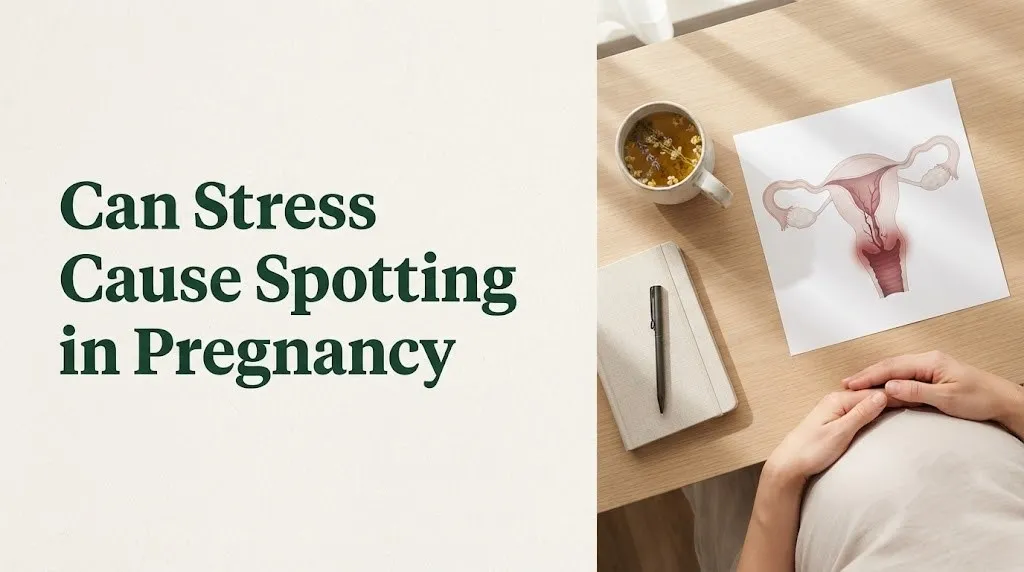
Stress can contribute to spotting in pregnancy by increasing maternal cortisol and CRH, which affect uterine blood flow and cervical vascular fragility, though stress is almost always an amplifier of underlying anatomical or physiological vulnerabilities rather than the sole, isolated cause of pregnancy spotting.
The placenta itself is a neuroendocrine organ that produces CRH, the same stress-initiating hormone produced by the brain’s hypothalamus. During pregnancy, placental CRH levels rise exponentially, reaching concentrations hundreds of times higher than non-pregnant levels by the third trimester. Maternal psychological stress further elevates both placental and hypothalamic CRH, as well as cortisol. These stress hormones have direct effects on the uterine and cervical vasculature. Cortisol can increase blood pressure and alter the responsiveness of blood vessels. CRH acts as a vasodilator in some vascular beds, potentially increasing blood flow to already-fragile cervical vessels. The cervix during pregnancy is engorged with blood, softer, and far more likely to bleed from minimal contact than a non-pregnant cervix.
A 2023 study published in the Journal of Maternal-Fetal and Neonatal Medicine found that pregnant women with high scores on the Perceived Stress Scale were more likely to report episodes of spotting and light bleeding compared to low-stress women, even after controlling for known risk factors. The researchers noted that the stress-bleeding association was strongest in women who also had identifiable anatomical factors like subchorionic hematoma or cervical ectropion, supporting the amplifier model where stress increases bleeding from an existing vulnerability.
| Spotting Cause | Role of Stress | Mechanism |
|---|---|---|
| Subchorionic hematoma | Stress amplifies bleeding | Blood pressure elevation stresses fragile vessels at hematoma margin |
| Cervical ectropion | Stress amplifies bleeding | Increased cervical blood flow and vascular fragility |
| Implantation bleeding | Minimal stress role | Hormonal, not stress-driven |
| Low-lying placenta | Stress amplifies bleeding | Blood pressure effects on thin placental margin vessels |
| Placental abruption | Stress is a minor risk factor | Severe acute stress can trigger catecholamine surge |
How Stress Affects Pregnancy and the Developing Baby
Stress affects pregnancy through the maternal HPA axis and sympathetic nervous system, which release cortisol and norepinephrine that cross the placenta in small amounts, alter uterine blood flow, and create a intrauterine environment that can influence fetal development, placental function, and pregnancy maintenance.
The placenta partially protects the fetus from maternal cortisol through the enzyme 11-beta-hydroxysteroid dehydrogenase type 2, which converts active cortisol to inactive cortisone. However, this enzyme barrier is not complete, and approximately 10 to 20% of maternal cortisol reaches the fetal circulation. During periods of high maternal stress, the enzyme can become saturated, allowing more cortisol to cross. Fetal exposure to elevated cortisol has been associated in research with altered fetal heart rate patterns, changes in fetal movement, and in some studies, effects on birth weight and gestational length.
Beyond direct hormone transfer, stress affects pregnancy through altered uterine blood flow. The sympathetic nervous system, when activated by stress, releases norepinephrine, which constricts blood vessels throughout the body. Uterine blood vessels express adrenergic receptors and respond to sympathetic activation with vasoconstriction. Reduced uterine blood flow can transiently decrease oxygen and nutrient delivery to the placenta and fetus. The American Psychological Association notes that while the fetus has compensatory mechanisms, sustained or severe maternal stress can produce measurable changes in the intrauterine environment.
Maternal stress effects on pregnancy physiology:
- Elevated cortisol partially crosses the placenta despite 11-beta-HSD2 enzyme protection
- Sympathetic activation reduces uterine blood flow through vasoconstriction
- CRH from placenta and maternal hypothalamus alters local vascular tone
- Stress-induced immune changes may affect the maternal-fetal interface
- Elevated norepinephrine can increase uterine irritability and contractility
- Chronic stress is associated with slightly increased risks of preterm birth and low birth weight in epidemiological studies
Key Takeaway: Stress does affect pregnancy at a physiological level, not just a psychological one. But the effects are generally modest and modifiable. Most pregnant women experiencing stress have healthy pregnancies and healthy babies. Stress management protects both you and your developing baby.
Pregnancy Hormones and the Stress Response
Pregnancy fundamentally alters the stress response system: the placenta produces CRH, progesterone and estrogen modify HPA axis sensitivity, and the maternal stress system undergoes a gradual recalibration across gestation that changes how stress hormones affect the body, including the reproductive organs.
In non-pregnant women, CRH is produced exclusively by the hypothalamus. In pregnancy, the placenta becomes the dominant source of CRH, releasing it into both the maternal and fetal circulations. Placental CRH production increases exponentially, particularly in the third trimester. Unlike hypothalamic CRH, which is suppressed by cortisol through negative feedback, placental CRH is stimulated by cortisol, creating a positive feedback loop unique to pregnancy. This means that maternal stress, which raises cortisol, further increases placental CRH production, which in turn raises cortisol further. This amplified stress signal is one reason stress can have more pronounced physical effects during pregnancy.
Progesterone and estrogen also modify the stress response. Progesterone has calming, anxiolytic effects through its metabolites, which act on GABA receptors in the brain. This is why some women feel emotionally more stable during pregnancy. Estrogen, particularly estriol produced by the placenta, can enhance the HPA axis response to stress. The balance between these hormones varies by trimester and by individual, meaning stress sensitivity changes across pregnancy and differs between women.
| Hormone | Source During Pregnancy | Effect on Stress Response |
|---|---|---|
| CRH | Placenta (syncytiotrophoblast), maternal hypothalamus | Amplified by cortisol positive feedback, alters vascular tone |
| Cortisol | Maternal adrenal cortex | Rises across pregnancy, partially crosses placenta |
| Progesterone | Corpus luteum, then placenta | Calming via GABA metabolites, reduces HPA reactivity |
| Estrogen (estriol) | Placenta | May enhance HPA axis sensitivity |
| Norepinephrine | Maternal sympathetic nerves | Vasoconstriction, increased blood pressure |
| hCG | Placenta | Supports corpus luteum, indirect effects on stress hormones |
CRH, Cortisol, and Placental Function During Stress
CRH and cortisol form a unique positive feedback loop during pregnancy: maternal stress increases cortisol, which stimulates placental CRH production, which further increases cortisol, creating an amplified stress signal that can affect placental blood flow, vascular integrity, and the intrauterine environment in ways relevant to spotting.
The placental CRH system evolved as a biological clock for parturition. Rising placental CRH in the third trimester helps initiate labor through effects on prostaglandin synthesis and myometrial contractility. When maternal psychological stress adds additional CRH and cortisol to this system, the effects can be amplified beyond what evolution anticipated for chronic, non-physical stressors. Research published in the American Journal of Obstetrics and Gynecology has demonstrated that women with high stress levels have higher circulating CRH at each gestational week compared to low-stress women, suggesting that psychological stress shifts the entire CRH trajectory upward.
This amplified CRH and cortisol signal has specific effects relevant to spotting. CRH is a vasodilator in certain vascular beds, including uterine and cervical vessels. Increased blood flow to already fragile, pregnancy-hormone-sensitized tissues increases the likelihood of small vessel rupture. Cortisol alters prostaglandin synthesis, increasing the production of PGE2 and PGF2α, which promote cervical ripening and uterine contractility. A cervix that is ripening under the influence of stress-amplified prostaglandins is more friable and more likely to bleed. These mechanisms do not typically cause spotting on their own, but they lower the threshold for bleeding from any additional trigger, whether it is a cervical exam, intercourse, or simply a spike in blood pressure from acute stress.
The CRH-cortisol positive feedback loop in pregnancy:
- Maternal stress activates hypothalamic CRH release
- Hypothalamic CRH triggers pituitary ACTH and adrenal cortisol
- Cortisol reaches the placenta and stimulates placental CRH production
- Placental CRH enters maternal circulation and further stimulates cortisol
- Elevated CRH and cortisol alter uterine and cervical vascular dynamics
- Amplified stress signal increases cervical friability and vascular fragility
Key Takeaway: Your pregnancy has its own CRH production system that amplifies, rather than dampens, the stress response. This is evolutionarily designed to help initiate labor at the right time, but it means that psychological stress has a larger biological impact during pregnancy than at any other time in your life.
How Stress Hormones Affect Uterine Blood Flow
Stress hormones affect uterine blood flow primarily through norepinephrine released from sympathetic nerves, which binds to alpha-adrenergic receptors on uterine blood vessels and causes vasoconstriction, transiently reducing blood flow to the uterus and placenta while simultaneously increasing systemic blood pressure.
The uterus receives blood through the uterine arteries, which branch into smaller vessels that supply the myometrium, decidua, and placenta. These vessels express alpha-1 adrenergic receptors that respond to norepinephrine with contraction of the smooth muscle in the vessel walls. During acute stress, sympathetic nerve activation releases norepinephrine throughout the body, including in the uterine vasculature. The vessels constrict, blood flow decreases, and the pressure within the remaining open vessels increases. For vessels that are already fragile, such as those in the pregnant cervix or at the margins of a subchorionic hematoma, this increased pressure can cause leakage of blood into the vaginal canal.
The effect is usually transient. Once the acute stressor passes and sympathetic activation decreases, blood flow normalizes. However, repeated stress episodes can produce repeated blood pressure and blood flow fluctuations. The American College of Obstetricians and Gynecologists notes that while the fetus has protective mechanisms including the ability to extract oxygen efficiently even from reduced blood flow, sustained or severe reductions in uterine blood flow are a concern. For spotting, the mechanism is more mechanical: fragile vessels break under pressure fluctuations, produce a small amount of blood, and then reseal when pressure normalizes.
| Stress Hormone | Effect on Uterine Vasculature | Relevance to Spotting |
|---|---|---|
| Norepinephrine | Vasoconstriction, increased pressure in remaining vessels | Fragile vessels may leak under pressure |
| Epinephrine | Systemic vasoconstriction, increased heart rate and blood pressure | Amplifies pressure effects |
| Cortisol | Sensitizes vessels to norepinephrine over time | Chronic stress increases vessel reactivity |
| CRH | Vasodilation in some vascular beds | Increased blood flow to already-fragile cervical vessels |
Cervical Changes in Pregnancy and Stress-Related Spotting
The cervix undergoes dramatic changes during pregnancy that make it more susceptible to stress-related spotting: increased blood flow, glandular hyperplasia, and the development of cervical ectropion create a highly vascular, fragile tissue that bleeds easily when blood pressure rises or when minimal mechanical contact occurs.
Cervical ectropion, also called cervical erosion or eversion, is a normal pregnancy change where the delicate glandular cells that normally line the inside of the cervical canal extend outward onto the visible surface of the cervix. These glandular cells are thinner, more vascular, and more fragile than the squamous epithelial cells that normally cover the outer cervix. Estrogen stimulates this change, and nearly all pregnant women develop some degree of cervical ectropion. The ectropion tissue bleeds on contact, sometimes called “contact bleeding,” from intercourse, a pelvic exam, a transvaginal ultrasound, or even straining during a bowel movement.
Stress contributes to bleeding from cervical ectropion through blood pressure effects. When stress raises your blood pressure, the already-engorged cervical vessels experience increased internal pressure. The thin-walled vessels in the ectropion tissue have less structural support than normal cervical vessels and are more likely to leak under pressure. The blood appears as spotting, typically light pink or brown, and is usually self-limiting. Research published in Obstetrics and Gynecology has documented that cervical ectropion is one of the most common benign causes of spotting in pregnancy, and while stress does not cause the ectropion, it can trigger bleeding from it.
Cervical changes that increase bleeding risk during stress:
- Cervical ectropion: glandular cells on the outer cervix are fragile and vascular
- Increased cervical blood flow: estrogen-mediated vasodilation throughout pregnancy
- Cervical gland hyperplasia: increased number and size of mucus-producing glands
- Softening and friability: progesterone effects on cervical connective tissue
- Congestion: venous engorgement from increased pelvic blood volume
- All of these normal changes make the cervix more likely to bleed when stress increases blood pressure
Key Takeaway: Your cervix is not the same organ during pregnancy that it was before. It is softer, more vascular, more fragile, and designed to bleed more easily. Stress does not cause this transformation. Pregnancy hormones do. But stress can trigger bleeding from these pregnancy-sensitized tissues.
What Does Stress-Related Spotting Look Like
Stress-related spotting typically appears as light pink, brown, or light red spotting that is minimal in volume, often noticed on toilet paper after wiping rather than on a pad, and may occur during or shortly after a stressful event with no other concerning symptoms.
The color of stress-related spotting provides information about its source and timing. Brown blood is older blood that has taken time to travel from the source to the vaginal opening, oxidizing and darkening along the way. Brown spotting is generally the least concerning color and often reflects old blood from a small vessel that bled hours or a day earlier. Pink blood is fresher, diluted with cervical mucus or normal vaginal discharge, and suggests a small amount of recent bleeding. Bright red blood is the freshest and indicates active bleeding at the time it is seen. Bright red blood that is more than a few drops warrants prompt communication with your healthcare provider.
The volume of stress-related spotting is typically scant, a few drops, streaks, or a light smear on toilet paper. It should not soak a pad, panty liner, or underwear. If you are using a panty liner and it has a small stain but is not saturated, that is more consistent with spotting. If you need a pad and it becomes wet with blood, that is bleeding, not spotting, and requires medical evaluation. The absence of pain, cramping, fever, or passage of tissue is reassuring but does not eliminate the need to inform your provider about any spotting episode.
| Spotting Characteristic | Stress-Related | Concerning Pattern |
|---|---|---|
| Color | Brown, light pink, light red | Bright red, dark red with clots |
| Volume | Few drops, streaks, stain on toilet paper | Soaking a pad or panty liner |
| Duration | Brief, often single episode | Persists for hours or days |
| Associated symptoms | None, or mild stress symptoms | Pain, cramping, backache, fever, dizziness |
| Timing | During or after identifiable stressor | Random, progressive, or continuous |
| Tissue passage | None | Clots, grayish or pinkish tissue |
Quick Tip:
When you notice spotting, take a photo of what you see on the toilet paper (no need for anything graphic; just enough to show color and amount). This provides objective information for your healthcare provider rather than trying to describe it from memory. Note the date, time, color, and what you were doing when you noticed it.
Stress Spotting in the First Trimester
First trimester stress spotting is most commonly related to cervical ectropion contact bleeding or small vessel fragility at the implantation site, amplified by stress-induced blood pressure changes, and while any first trimester spotting warrants communication with your obstetrician or midwife, light spotting that is brown or pink and resolves within a day is often benign.
The first trimester is the most common time for spotting in pregnancy, with approximately 15 to 25% of pregnant women experiencing some vaginal bleeding before 13 weeks. The implantation process, where the embryo burrows into the uterine lining, involves the invasion of trophoblast cells into maternal blood vessels. This creates a site of vascular remodeling that can have fragile vessels at its margins. A subchorionic hematoma, a collection of blood between the chorion and the uterine wall, is a common finding on first trimester ultrasound and can produce spotting or bleeding as the blood slowly drains or is reabsorbed. Stress does not cause subchorionic hematomas, but stress-induced blood pressure elevations can trigger bleeding from the hematoma margin.
The first trimester is also when anxiety about miscarriage is highest, and noticing spotting can create a spiral of fear that amplifies the stress response and potentially worsens the spotting. It is important to know that light spotting, particularly when brown or pink, without pain or cramping, is not a strong predictor of miscarriage. A 2022 study in Obstetrics and Gynecology found that first trimester spotting alone, without pain or heavy bleeding, did not increase miscarriage risk compared to women with no bleeding. Heavy bleeding and bleeding with pain were associated with increased risk. Communicating with your provider is essential, but spotting alone is not an emergency.
First trimester spotting causes and stress interaction:
- Implantation site vessel fragility: stress blood pressure effects may trigger minor bleeding
- Subchorionic hematoma: stress amplifies bleeding from existing hematoma
- Cervical ectropion: stress blood flow changes increase contact bleeding
- Vaginal infection: stress may alter immune function but is not a primary cause of infection
- Ectopic pregnancy: stress does not cause ectopic pregnancy; this is a medical emergency requiring immediate evaluation
- Miscarriage: stress does not cause miscarriage in chromosomally normal pregnancies
Second Trimester Spotting and Stress
Second trimester spotting related to stress is less common than in the first trimester and warrants more careful evaluation because the causes of bleeding shift from implantation-related to placental and cervical structural factors, though stress can still amplify bleeding from existing vulnerabilities.
The second trimester, weeks 14 to 27, is typically the most stable period of pregnancy. The placenta is fully formed and functioning. The risk of miscarriage drops significantly after the first trimester. When spotting occurs during this period, it is more likely to be from identifiable anatomical causes: a low-lying placenta or placenta previa where the placenta covers or is near the cervical opening, cervical insufficiency where the cervix begins to shorten and open prematurely, or continued cervical ectropion contact bleeding. Stress does not cause these conditions, but stress-induced blood pressure changes and increased uterine tone can trigger spotting from them.
Placenta previa and low-lying placenta deserve special attention. The placenta develops wherever the embryo implants, and if that location is in the lower uterine segment, the growing placenta may cover or partially cover the cervix. As the uterus grows and stretches in the second trimester, the placental margin can pull slightly away from the uterine wall, causing painless bright red bleeding. Stress-related blood pressure elevations can increase the likelihood of these marginal separations. ACOG recommends that any second trimester bleeding be evaluated by an obstetrician, and placenta previa requires pelvic rest, meaning nothing in the vagina, and careful monitoring.
| Second Trimester Cause | Stress Role | Clinical Significance |
|---|---|---|
| Low-lying placenta/placenta previa | Stress may amplify marginal bleeding | Requires diagnosis via ultrasound, pelvic rest |
| Cervical insufficiency | Stress not a primary cause but may increase uterine tone | Requires cervical length monitoring, possible cerclage |
| Cervical ectropion | Stress amplifies contact bleeding | Benign but should be confirmed by exam |
| Subchorionic hematoma (persistent) | Stress amplifies bleeding | Usually resolves; monitoring for growth |
| Placental abruption (rare in second trimester) | Severe acute stress is a minor risk factor | Emergency requiring immediate care |
Third Trimester Spotting, Stress, and Uterine Irritability
Third trimester spotting related to stress involves the added factor of uterine irritability: elevated CRH and prostaglandins from stress can increase Braxton Hicks contractions and cervical ripening, and spotting at this stage must be evaluated to rule out preterm labor, placental abruption, or placenta previa.
The third trimester is when placental CRH production peaks dramatically, driving the countdown to labor. Stress adds additional CRH and cortisol to this already-elevated system. The uterus becomes increasingly sensitive to these hormones, and stress can trigger more frequent or intense Braxton Hicks contractions. While Braxton Hicks are normal and do not indicate labor, they can be uncomfortable and anxiety-provoking. In some women, stress-induced uterine irritability can produce small amounts of spotting from the cervix, particularly if the cervix has begun to soften and efface in preparation for labor.
The “bloody show,” the passage of the mucus plug tinged with blood, is a normal late pregnancy sign that labor is approaching. It can occur hours to weeks before labor begins. Stress does not cause the bloody show but may be a coincidence if it occurs during a stressful period. However, any third trimester bleeding that is more than spotting, is bright red, or is accompanied by contractions, pain, or decreased fetal movement requires immediate evaluation. Placental abruption, where the placenta separates from the uterine wall before delivery, is a rare but serious cause of third trimester bleeding. Severe acute stress is a minor risk factor for abruption through catecholamine surges and blood pressure spikes.
Third trimester spotting evaluation:
- Any third trimester spotting or bleeding warrants prompt communication with your obstetrician or midwife
- Light spotting after a cervical exam or intercourse is common and usually benign
- Spotting with contractions before 37 weeks could indicate preterm labor
- Bright red bleeding with pain could indicate placental abruption; this is an emergency
- Decreased fetal movement with any bleeding requires immediate evaluation
- Stress may amplify bleeding from existing conditions but is not the primary cause
Key Takeaway: Third trimester spotting has a broader range of potential causes than earlier trimesters, and the clinical urgency is higher. Any third trimester bleeding should be reported to your provider immediately. Stress management remains important but does not replace medical evaluation.
How to Tell If Spotting Is From Stress or Something Serious
You can begin to assess whether spotting is stress-related by evaluating the color, volume, associated symptoms, and timing, but the most important principle is that all spotting in pregnancy should be reported to your healthcare provider, and certain features require immediate evaluation regardless of what you think the cause might be.
Stress-related spotting is typically light, brown or pink, minimal in volume, painless, and temporally linked to a stressful event. It usually resolves on its own within hours to a day. Spotting that is bright red, heavy enough to require a pad, accompanied by pain or cramping, associated with fever or chills, involves the passage of clots or tissue, or is accompanied by decreased fetal movement or dizziness is concerning and requires prompt or emergency evaluation regardless of whether you also experienced recent stress.
The timing relative to a stressful event provides useful but not definitive information. If you noticed spotting within hours of an acute stressor and it was light, brown, and self-limited, stress amplification of cervical or implantation site vessel fragility is a plausible explanation. If spotting occurs without any identifiable stress trigger, is persistent, or is worsening, other causes become more likely and require investigation. Never assume that spotting is “just stress” without discussing it with your provider. Stress may be a contributing factor, but other causes must be ruled out, especially as pregnancy progresses.
Assessment checklist for spotting episode:
- Note the color: brown, pink, bright red, or mixed
- Estimate the volume: drops, streaks, spotting on a panty liner, or soaking a pad
- Check for associated symptoms: pain, cramping, backache, fever, dizziness
- Consider timing: recent intercourse, pelvic exam, heavy lifting, or emotional stress
- Assess fetal movement: normal, reduced, or absent (for pregnancies after 16-20 weeks)
- Document duration: single episode or ongoing
- Call your provider with this information; they will tell you the next steps
Stress Spotting vs Miscarriage Bleeding
Stress spotting and miscarriage bleeding differ in volume, color, associated symptoms, and progression: stress spotting is typically scant, brown or pink, painless, and stable or resolving, while miscarriage bleeding is typically heavier, bright red, accompanied by cramping or pain, and progressive over hours.
Miscarriage, or early pregnancy loss, most commonly occurs in the first trimester and is most often caused by chromosomal abnormalities in the embryo that are incompatible with continued development. Stress does not cause these chromosomal abnormalities, and research consistently shows that routine daily stress does not cause miscarriage in chromosomally normal pregnancies. The American College of Obstetricians and Gynecologists states that there is no evidence that stress, fright, or emotional upset causes early pregnancy loss.
The bleeding pattern of miscarriage is typically different from stress spotting. Miscarriage bleeding tends to be heavier, similar to or heavier than a menstrual period. It often starts as spotting that progresses to heavier bleeding over hours or days. Cramping, back pain, and the passage of clots or grayish tissue are common. Stress spotting, by contrast, stays light, does not progress, and is not accompanied by significant pain or tissue passage. However, because miscarriage can begin with spotting, any spotting that progresses in volume or is accompanied by pain should be evaluated.
| Feature | Stress Spotting | Miscarriage Bleeding |
|---|---|---|
| Color | Brown, pink, light red | Bright red, dark red |
| Volume | Scant, drops or streaks | Moderate to heavy, like a period or heavier |
| Progression | Stable or resolving | Progressively heavier |
| Pain | None or minimal | Cramping, backache, pelvic pressure |
| Tissue passage | None | Clots, grayish tissue possible |
| Duration | Hours, resolves within a day | Continues and worsens |
| Associated symptoms | None, or stress symptoms | Nausea, loss of pregnancy symptoms sometimes |
If you are in crisis or experiencing thoughts of self-harm, contact the 988 Suicide and Crisis Lifeline by calling or texting 988 at any time. This service is free, confidential, and available 24 hours a day.
Immediate Steps When You Notice Spotting During Stress
When you notice spotting during a stressful period, the immediate steps are to pause and assess the color and volume, lie down on your left side if possible to optimize uterine blood flow, avoid inserting anything into the vagina, document the spotting with a photo or description, and contact your obstetrician or midwife for guidance.
Lying on your left side is recommended because it takes pressure off the inferior vena cava, the large vein that returns blood from the lower body to the heart. When you lie on your back, the weight of the pregnant uterus can compress this vein, reducing blood return and potentially increasing pelvic venous pressure. Left lateral positioning optimizes blood flow and may reduce pressure in the pelvic and uterine vessels. This is not a treatment for spotting but a supportive measure while you assess the situation and contact your provider.
Do not insert a tampon, douche, or anything else into the vagina. Use a pad or panty liner to monitor the amount of bleeding. Avoid intercourse, heavy lifting, and strenuous activity until you have spoken with your provider. Take slow, deep breaths to manage the anxiety that naturally accompanies spotting in pregnancy. The spotting you see may be stress-amplified but benign. Your provider can help you determine the next steps, which may include an office visit, an ultrasound, or reassurance and monitoring at home.
Immediate steps when spotting occurs:
- Lie down on your left side to optimize uterine and pelvic blood flow
- Use a pad or panty liner to monitor the amount; do not use a tampon
- Take a photo of the spotting for your provider if possible
- Note the time, color, volume, and any associated symptoms
- Avoid intercourse, tampons, douching, or anything in the vagina
- Practice slow diaphragmatic breathing to manage anxiety
- Call your obstetrician or midwife’s office with the information you have gathered
- Do not panic; most spotting in pregnancy is benign, even when stress is a contributing factor
Individual variation note: If you are Rh-negative, any vaginal bleeding in pregnancy may require RhoGAM (Rh immunoglobulin) to prevent Rh sensitization. Inform your provider that you are Rh-negative when you call about spotting.
Safe Stress Relief Techniques During Pregnancy
Safe stress relief techniques during pregnancy include diaphragmatic breathing, prenatal yoga modified for each trimester, progressive muscle relaxation with modifications to avoid lying flat on the back after the first trimester, guided meditation, and gentle walking, all of which reduce cortisol and sympathetic nervous system activation without risk to the pregnancy.
Diaphragmatic breathing is the safest and most accessible stress reduction technique during pregnancy. Sitting comfortably or lying on your left side, inhale slowly through your nose for a count of four, feeling your belly expand, and exhale through your mouth for a count of six to eight. This breathing pattern activates the vagus nerve, shifts the autonomic nervous system toward parasympathetic dominance, and reduces circulating norepinephrine within minutes. It can be done anywhere, anytime, and has no contraindications in pregnancy. Ten minutes of slow breathing twice daily can meaningfully reduce baseline stress levels within two to three weeks.
Prenatal yoga is well-studied for stress reduction in pregnancy. A 2023 meta-analysis in Obstetrics and Gynecology found that prenatal yoga significantly reduced perceived stress and anxiety scores compared to standard prenatal care. Choose classes specifically designed for pregnancy, avoid hot yoga, avoid positions that compress the abdomen or involve lying flat on the back after the first trimester, and inform the instructor of your gestational age. If attending a general yoga class, look for instructors with prenatal training.
| Technique | Safety in Pregnancy | Modifications Needed |
|---|---|---|
| Diaphragmatic breathing | Safe in all trimesters | Practice seated or left side lying after first trimester |
| Prenatal yoga | Safe when modified | Avoid back-lying, deep twists, hot yoga, abdominal compression |
| Progressive muscle relaxation | Safe with modifications | Avoid lying flat on back after first trimester; use side-lying or seated |
| Guided meditation | Safe in all trimesters | Any comfortable position; apps like Expectful or mindful pregnancy programs |
| Walking | Safe in all trimesters | Moderate pace; avoid overheating; stay hydrated |
| Warm bath (not hot) | Safe with temperature control | Water below 100 degrees Fahrenheit; avoid hot tubs and saunas |
Individual variation note: Women with pregnancy complications including placenta previa, cervical insufficiency, preterm labor risk, or bleeding of unknown cause may be placed on pelvic rest or activity restriction by their provider. Follow your provider’s specific guidance. Stress reduction techniques that do not involve physical activity, such as breathing and meditation, are usually still safe and recommended.
When Spotting Requires Your Obstetrician or Midwife
All spotting in pregnancy should be reported to your obstetrician or midwife, but the urgency of the call depends on the characteristics of the spotting: light, brown, painless spotting can be reported during office hours, while bright red bleeding, heavy bleeding, or bleeding with pain requires immediate or emergency contact.
Your provider will ask specific questions to triage the situation: how much blood you saw, what color it was, whether it was accompanied by pain or cramping, when it started, whether it is ongoing, whether you have had recent intercourse or a pelvic exam, and whether you have any other symptoms. Have this information ready when you call. Your provider may recommend coming in for an evaluation, which could include a speculum exam to visualize the cervix, an ultrasound to check fetal well-being and placental location, and possibly blood work.
Do not minimize your spotting or assume it is nothing. Providers would rather receive a call about benign spotting than have a patient delay reporting concerning bleeding. The threshold for calling is low because the differential diagnosis includes conditions that require timely intervention. A quick phone call can provide either reassurance or prompt evaluation, and either outcome is better than worrying alone.
When to call your provider:
- Any spotting, even light and brown: call during office hours or through the patient portal
- Bright red spotting: call promptly, same day
- Spotting that persists for more than 24 hours: call for evaluation
- Spotting with any pain, cramping, or backache: call promptly
- Spotting after a fall, accident, or abdominal trauma: call immediately
- Any bleeding in the second or third trimester: call promptly
Red Flag Symptoms That Need Emergency Evaluation
Red flag symptoms that require emergency evaluation include heavy bleeding soaking a pad, passage of clots or tissue, severe abdominal or pelvic pain, shoulder tip pain, dizziness or fainting, fever with bleeding, and decreased or absent fetal movement after 20 weeks.
Heavy bleeding is defined as bleeding that soaks through a pad in an hour or less, or the passage of large clots. This volume of bleeding can indicate placental abruption, placenta previa with hemorrhage, or an incomplete miscarriage, all of which require emergency care. Go to the emergency department or call emergency services. Do not drive yourself if you are bleeding heavily or feel dizzy.
Shoulder tip pain, pain at the top of the shoulder where it meets the neck, can be a referred pain sign of intra-abdominal bleeding, including from a ruptured ectopic pregnancy. This is a surgical emergency. The combination of shoulder tip pain with vaginal bleeding and abdominal pain requires immediate emergency evaluation. Ectopic pregnancy cannot continue safely and requires urgent treatment to prevent life-threatening hemorrhage.
Emergency red flag symptoms:
- Heavy bleeding soaking a pad in an hour or less
- Passage of clots larger than a golf ball or any grayish tissue
- Severe abdominal or pelvic pain, especially if one-sided
- Shoulder tip pain with bleeding or abdominal pain
- Dizziness, lightheadedness, or fainting with bleeding
- Fever over 100.4 degrees Fahrenheit with bleeding
- Decreased or absent fetal movement after 20 weeks with bleeding
- Any bleeding after a fall, car accident, or abdominal trauma
How to Reduce Stress and Protect Your Pregnancy
Reducing stress during pregnancy requires a combination of physiological stress regulation practices, practical support systems, realistic expectations about what you can control, and professional mental health support when needed, all aimed at lowering cortisol and sympathetic activation to protect both maternal well-being and the intrauterine environment.
The most effective stress reduction approach is proactive, not reactive. Build stress management into your daily routine rather than waiting until stress peaks. Morning diaphragmatic breathing for five to ten minutes before checking your phone sets parasympathetic tone for the day. Brief midday check-ins where you notice jaw, shoulder, and pelvic tension help prevent stress accumulation. An evening wind-down without screens protects sleep, which is when cortisol levels naturally decrease. These small, consistent practices are more effective than occasional longer sessions.
Practical support is equally important. Pregnancy is physically and emotionally demanding. Identify specific ways your partner, family, or friends can help, and accept help when offered. If you are experiencing significant stress about the pregnancy itself, your relationship, finances, or other life circumstances, a therapist specializing in perinatal mental health can provide evidence-based support. The American Psychological Association offers a psychologist locator tool. Maternal mental health is an essential component of prenatal care, not a luxury.
Daily pregnancy stress reduction practices:
- Morning: 5-10 minutes diaphragmatic breathing before starting the day
- Midday: brief body scan noticing tension in jaw, shoulders, and pelvic floor; release tension with slow exhale
- Afternoon: short walk if cleared for activity; hydration; nourishing snack
- Evening: no screens 60 minutes before bed; gentle prenatal yoga or stretching; gratitude journal
- Throughout: accept help; communicate concerns with your partner or support system
- If stress is overwhelming: contact a perinatal mental health therapist for evaluation and support
Key Takeaway: Protecting your pregnancy from stress is not about eliminating all stress, which is impossible. It is about building daily practices that process stress efficiently so it does not accumulate into the chronic, elevated cortisol state that can affect pregnancy physiology.
Building a Calm Daily Routine for a Healthy Pregnancy
A calm daily routine for pregnancy integrates predictable meal timing, gentle movement, stress regulation practices, adequate rest, and social connection into a pattern that stabilizes the autonomic nervous system and supports healthy pregnancy physiology, including reduced stress hormone levels.
Predictable meal timing supports stable blood sugar, which directly affects stress reactivity. Skipping meals or going long periods without eating causes blood sugar drops that trigger cortisol and epinephrine release, compounding any psychological stress. Three meals and two to three snacks at roughly consistent times provide the metabolic stability that buffers the stress response. Include protein with each meal and snack to sustain blood sugar. Hydration is equally important. Dehydration increases cortisol, and pregnancy increases fluid requirements.
Gentle movement appropriate to your trimester and any pregnancy complications provides both stress reduction and physiological benefits. Walking, swimming, and prenatal yoga improve mood, reduce anxiety, and support cardiovascular health. Movement also helps with the common pregnancy discomforts, back pain, constipation, and sleep disturbance, that can themselves become sources of stress. Rest is not optional. Pregnancy increases metabolic demands, and adequate sleep is when the body repairs tissues, regulates hormones, and processes the day’s stress. Prioritize sleep and rest, and do not feel guilty about it.
Calm pregnancy daily framework:
- Wake gently: no immediate phone; 5 minutes breathing; small protein-containing breakfast
- Mid-morning: hydrating beverage; brief movement or stretch break
- Lunch: unhurried, away from work if possible; short walk after eating
- Afternoon: protein-containing snack; check in with body tension; hydrate
- Evening: dinner several hours before bed; relaxing activity (reading, gentle yoga, conversation)
- Bedtime: consistent sleep and wake times; cool, dark, quiet bedroom; left-side sleeping after 20 weeks
- Social connection: daily check-in with partner, friend, or family member
- Self-compassion: pregnancy is demanding; you are doing enough
The spotting you noticed during a stressful moment has a plausible physiological explanation. Stress hormones increased your blood pressure and altered blood flow to your cervix, which pregnancy has made more vascular and fragile than at any other time in your life. A small vessel leaked. The blood appeared on the toilet paper. This mechanism is real, it is documented, and in most cases, it is self-limiting and benign.
But spotting in pregnancy always warrants communication with your healthcare provider. The stress mechanism may explain why you spotted, but it does not rule out other causes that require medical attention. Call your obstetrician or midwife. Describe the color, amount, and timing. Let them tell you whether you need to come in or can monitor at home. The phone call provides either reassurance or appropriate evaluation, and both outcomes are better than worrying alone and wondering if stress caused your spotting or if something more serious is happening. You and your pregnancy deserve that clarity.