Can Dogs Throw Up From Stress? The 2026 Vet Science Guide to Canine Stress Colitis
Yes, dogs can throw up from stress. This is not an old wives’ tale but a well-documented physiological response known in veterinary medicine as stress colitis, where the brain-gut axis directly triggers nausea and vomiting. The mechanism involves a cascade of stress hormones that physically alter your dog’s digestive motility in real time.
According to the American College of Veterinary Behaviorists, gastrointestinal upset is one of the most common physical manifestations of acute anxiety in canines, often mimicking the human experience of feeling sick to the stomach before a public speech. A growing body of research in Psychoneuroendocrinology has mapped the precise pathway by which the brain’s perception of a threat translates into intestinal inflammation and vomiting reflexes. For dog owners, mistaking this for a viral infection often leads to unnecessary panic and an expensive emergency vet visit for a condition that typically resolves with environmental management.
This guide walks you through the exact biological mechanism behind stress vomiting, how to visually separate it from a dangerous medical obstruction or toxin ingestion, and the practical steps veterinary science recommends in 2026 for settling your dog’s stomach. You will learn why a herding breed might be more susceptible to this than a retriever, why white foam often means an empty stomach in a stressed dog, and the precise red flags that signal it is time to drive to the clinic.
can dogs throw up from stress
Yes, the physiological connection between the canine brain and the gastrointestinal tract makes vomiting a common and immediate response to acute stress. When a dog perceives a sudden threat or anxiety spike, their brain triggers a neurochemical cascade that directly disrupts normal digestive function. This is not a conscious choice or a behavioral act of protest. It is a reflexive physical evacuation mediated by the autonomic nervous system.
The vomiting reflex originates in the amygdala, the brain structure responsible for emotional processing and fear memory. When the amygdala detects a stressor, it signals the hypothalamus to release corticotropin-releasing hormone, or CRH. This peptide hormone acts as a master switch for the stress response, simultaneously telling the pituitary gland to release ACTH and directly signaling the vomiting center in the brainstem. This dual signal means a dog can begin to feel nauseous and vomit within minutes of a sudden fright.
Unlike bacterial or viral gastroenteritis, stress vomiting in dogs usually occurs on an empty stomach or shortly after a stressor. The vomit is often clear liquid, white foam, or partially digested food. Once the stressor is removed and the parasympathetic nervous system reactivates, the vomiting typically ceases. This self-limiting nature is a key differentiator from a medical illness that progressively worsens.
It is critical to understand that vomiting is an energetically expensive process that evolved as a survival mechanism. In the wild, a sudden threat might require a canine to eject stomach contents to become lighter and faster. Domestic dogs retain this ancient programming. A 2023 review in the Journal of Veterinary Internal Medicine highlights that urban dogs living in high-stimulation environments show a higher frequency of this “survival vomiting” despite having no actual predator threat.
Key Takeaway: Stress vomiting in dogs is a reflexive, brain-to-gut response that acts as a physical safety valve during a panic spike, not a sign of illness.
can stress cause vomiting in dogs
Stress can cause vomiting in dogs because the HPA axis activation directly alters the rhythmic contractions of the stomach and intestines, a condition veterinary science calls stress-induced dysmotility. The fight-or-flight response diverts blood flow away from the splanchnic vascular bed, the network of vessels supplying the digestive organs, and shunts it toward the skeletal muscles and heart. This rapid blood flow shift causes the stomach lining to become pale and ischemic, triggering a nausea signal to the brainstem.
The sympathetic nervous system further complicates digestion by suspending peristalsis. Peristalsis is the wave-like muscular propulsion that moves food downward through the digestive tract. When this motion abruptly stops or becomes uncoordinated, the body’s defense mechanism is to retro-peristalse, ejecting the contents upward. This is the classic mechanism behind a dog vomiting bile shortly after a fireworks display begins or during a car ride.
The American Veterinary Medical Association notes that psychosomatic vomiting is frequently documented in dogs with separation anxiety or noise phobia. In these cases, the stressor is not a physical pathogen but a cognitive interpretation of being alone or overwhelmed by sound. The body, however, reacts as if it has ingested a toxin because the neural pathways for fear and poison detection overlap significantly in the primitive brainstem.
A common misconception is that the stressor must be massive to trigger vomiting. A subtle change like a shift in the owner’s work schedule, a new houseplant, or a mild disagreement among family members can trigger a sensitive dog’s limbic system enough to initiate the CRH cascade. This threshold varies dramatically based on early life socialization and genetic temperament.
| Stress Vomiting Trigger | Physiological Mechanism | Typical Onset |
|---|---|---|
| Acute Fear (Fireworks) | Amygdala activation, CRH release, vagus nerve stimulation | 5 to 20 minutes |
| Separation Anxiety | Chronic CRH elevation, gastric hypermotility, mucosal irritation | 30 to 90 minutes after departure |
| Environmental Change | Mild HPA activation, appetite suppression, bile reflux | 24 to 48 hours after change |
how does stress cause vomiting in dogs mechanism
The mechanism that causes stress vomiting in dogs is the brain-gut axis, a bidirectional communication superhighway linking the central nervous system directly to the enteric nervous system via the vagus nerve. The vagus nerve is the primary parasympathetic conduit, but under stress, it transmits chaotic, high-intensity signals that destabilize gastric pacemaker cells. These interstitial cells of Cajal normally set the electrical rhythm for smooth digestion. When scrambled by a stress signal, they trigger retrograde giant contractions that force contents back into the esophagus.
Corticotropin-releasing hormone, or CRH, is the most underappreciated molecule in this process. While cortisol gets the popular blame, CRH acts within the gut itself. Mast cells in the canine intestinal lining have receptors for CRH. When CRH binds to these cells, they degranulate, releasing histamine and proteases directly into the bowel wall. This degranulation physically increases intestinal permeability, a condition colloquially known as leaky gut, causing rapid inflammation and a distress signal that the brain interprets as an urgent need to void the stomach.
Simultaneously, epinephrine from the adrenal medulla relaxes the fundus of the stomach while tightening the pylorus, the exit valve. The stomach becomes a relaxed, closed bag. If bile from the duodenum refluxes backward into this relaxed bag due to the altered pressure gradient, the resulting irritation guarantees a vomiting episode. This is why a stressed dog often vomits yellow bile or white foam rather than solid food.
The gut microbiome also plays a role in this mechanism. A 2025 study in Applied Animal Behaviour Science demonstrated that stress-induced cortisol secretion significantly decreases the population of beneficial Lactobacillus species within 24 hours. A depleted microbiome reduces the production of short-chain fatty acids, which are crucial for colonocyte health. This leaves the colon vulnerable to inflammation, setting the stage for the diarrhea often paired with stress vomiting.
The entire mechanism is designed for short-term survival. The biological flaw for the modern dog is that the system does not differentiate between a life-threatening predator and a vacuum cleaner.
signs of stress vomiting in dogs
Stress vomiting in dogs is typically accompanied by a specific constellation of behavioral stress signals that precede and accompany the physical act. Before the dog vomits, you will often observe a sequence of displacement behaviors. These include excessive lip licking, repetitive yawning that is not related to fatigue, and hypersalivation, where the dog begins to drool or form stringy saliva due to nausea-activated cholinergic pathways.
The posture of a dog about to vomit from stress is subtly different from a medical vomit. A stressed dog often paces, tucks its tail, and shows whale eye, where the white sclera of the eye is visible, indicating high anxiety. They may whine, pant heavily without being hot, or attempt to hide or escape. The actual vomiting action is often preceded by intense, anxious licking of surfaces, floors, or the air, a sign of gastrointestinal reflux and nausea.
The vomitus itself provides critical diagnostic clues. Stress vomit is rarely projectile in the way that a foreign body obstruction might cause. It is usually a small volume of liquid, foam, or partially digested food that the dog expels while moving anxiously. A dog with a bacterial infection like parvovirus will vomit regardless of what they do, but a stressed dog often vomits specifically when the anxiety peaks, such as right as the owner picks up car keys.
Another hallmark sign is the immediate rebound after emptying the stomach. A dog with a medical blockage remains depressed, painful, and continues retching. A dog who vomits from stress often seems visibly relieved after the event, relaxing their body posture and breathing rate as the intense vagal stimulation passes. This rapid recovery does not happen with toxin ingestion or organ failure.
Veterinary consensus published by the Merck Veterinary Manual confirms that context is the most reliable diagnostic tool. If vomiting reliably occurs only during storms, boarding, or departures and resolves within minutes of removing the stressor, the behavioral link is highly probable.
Key Takeaway: The behavioral “anxiety reel” that plays out before the vomit is just as important for diagnosis as the vomit itself.
stress vomiting vs sick dog symptoms
Distinguishing between a stress vomit and a medical vomit requires evaluating the dog’s systemic health before and after the event. The most critical differentiator is the presence or absence of a fever. Stress alone does not cause a fever. If your dog’s rectal temperature exceeds 102.5 degrees Fahrenheit, you are dealing with an infectious or inflammatory process, not anxiety. Lethargy is also a powerful separator; a truly sick dog will remain depressed and disinterested in food or water, while a stressed dog will often drink water and accept a high-value treat once the stressor is removed.
The vomitus color and consistency offer hard clues. Yellow or white foam indicates an empty stomach and bile reflux, which commonly aligns with acute stress and bilious vomiting syndrome. Thick, digested blood that looks like coffee grounds or fresh red blood points directly to gastric ulcers, clotting disorders, or toxin ingestion. Green vomit can indicate an intestinal obstruction where bile is being forcefully ejected from the small intestine. A dog vomiting partially digested food hours after a meal with no other symptoms might be experiencing delayed gastric emptying from chronic anxiety.
A physical exam you can perform at home involves checking the gums and skin. A dog with dehydration from severe medical vomiting will have tacky, dry gums and a loss of skin elasticity, where the skin tents up when gently pinched instead of snapping back. A stressed dog may have pale gums during the panic episode due to vasoconstriction, but this quickly resolves. Another differentiator is abdominal splinting; a dog with pancreatitis, a foreign body, or bloat will often have a rigid, painfully distended abdomen and will cry when you touch their belly.
Vomiting that is stress-related follows a pattern of exposure to a trigger. Vomiting that occurs randomly at 3 AM with no trigger, or persists continuously for more than 12 hours, is a medical problem until proven otherwise. In 2026, veterinary telehealth triage platforms often advise the “24-hour rule” for otherwise healthy adult dogs: stress symptoms should completely resolve within a day of removing the trigger.
| Symptom | Stress-Related Vomit | Medical Emergency Vomit |
|---|---|---|
| Fever (Temp > 102.5F) | Absent | Often Present |
| Gum Color / Moisture | Pale but moist, quickly returns to pink | Brick red, pale white, or dry/tacky |
| Abdominal Pain (Splinting) | Absent or minimal gas discomfort | Present, rigid, painful to touch |
| Post-Vomit Behavior | Relief, relaxed, may seek food | Depressed, continues retching, hides |
| Vomitus Appearance | Foam, bile, undigested kibble | Blood, coffee grounds, fecal odor |
dog throwing up white foam from stress
A dog throwing up white foam from stress indicates that the stomach is empty and the act of vomiting is churning swallowed saliva and gastric mucus with air into a frothy consistency. The technical term for this is a “gastric reflux event.” When a dog pants excessively due to stress, they swallow a large amount of air. This aerophagia distends the stomach, and combined with the stress-induced closure of the pylorus, creates a whipped, foamy substance that is easily regurgitated.
The white foam is primarily composed of mucopolysaccharides from the stomach lining mixed with saliva. The sympathetic nervous system reduces saliva production initially, but the nausea of an activated stress response often triggers a secondary wave of thick, ropey saliva. The dog swallows this repeatedly, building up a mass of indigestible foam. It looks alarming because the volume of foam can appear much larger than it actually is in terms of fluid content.
This specific presentation is frequently misdiagnosed by owners as a respiratory problem or toxin ingestion. The foam does not come from the lungs. It is a gastric artifact. To be certain, observe your dog’s breathing before and after. A dog who vomits white foam and immediately stops panting was dealing with gastric distension. A dog who continues to cough, gag, or struggle to breathe may have kennel cough, a collapsing trachea, or a cardiac issue.
Dogs with bilious vomiting syndrome, a condition where bile leaks back into an empty stomach during fasting, are more prone to this when stress is layered on top. A 2022 clinical guide from Cornell University College of Veterinary Medicine suggests that small, frequent meals can prevent the empty-stomach accumulation of bile that makes stress foam vomiting more likely. Offering a small, high-protein snack before a known stressful event can sometimes prevent this specific symptom.
If the white foam has a yellow tint, bile is present and the pylorus was relaxed enough to allow duodenal backflow. This is still consistent with an empty-stomach stress vomit, provided the dog is acting normally otherwise. The presence of food particles in the foam suggests a motility problem rather than simple gastric reflux.
Key Takeaway: White foam vomit is the physical result of an empty, air-filled, anxious stomach churning mucus and saliva, not a lung problem.
acute vs chronic stress vomiting dogs
Acute stress vomiting in dogs is an episodic, high-intensity reaction to a discrete trigger, while chronic stress vomiting results from sustained allostatic load where the digestive system is constantly bathed in low levels of cortisol and inflammatory cytokines. Acute stress vomiting happens during a thunderstorm or a grooming session. The HPA axis spikes, the dog vomits, the cortisol level drops back to baseline, and the gut recovers within hours. There is typically no lasting tissue damage.
Chronic stress vomiting is a more insidious condition. When a dog lives in a state of constant anxiety, due to an unstable home environment or persistent resource guarding conflicts with another pet, the HPA axis never fully resets. Cortisol remains moderately elevated around the clock. In this state, cortisol acts as an immunosuppressant on the intestinal mucosa. The secretory immunoglobulin A, or sIgA, which acts as the gut’s chemical border patrol, drops significantly. This allows commensal bacteria to attach to the gut lining, triggering low-grade inflammation.
This chronic, low-grade inflammation manifests as intermittent vomiting, often with a thick, mucus-covered stool. The dog may not vomit daily, but weekly episodes are common. A 2023 meta-analysis in Psychoneuroendocrinology confirmed that chronically stressed mammals exhibit a blunted HPA axis response to new acute stressors, meaning the regulatory system is broken. These dogs often stop reacting to minor triggers but become unpredictably reactive to moderate ones.
The gut microbiome shifts are also distinctly different. Acute stress causes a transient drop in diversity that rebounds in about 48 hours. Chronic stress allows pathogenic bacteria populations, such as specific Clostridium species, to establish a stronger foothold, leading to a condition called dysbiosis. This dysbiosis further exacerbates the vomiting by producing gas and toxins that irritate the stomach lining.
Breaking a chronic stress vomiting cycle requires resetting the dog’s allostatic load through environmental restructuring, not just treating the stomach. A dog living in a chronically stressful environment will not stop vomiting solely from a bland diet or probiotics.
dog breeds susceptible to stress vomiting
Certain dog breeds are genetically predisposed to stress vomiting due to selective breeding for high environmental sensitivity, neoteny, or a low threshold for fight-or-flight activation. Herding breeds, particularly Border Collies, Australian Shepherds, and German Shepherds, sit at the top of this list. These dogs were selectively bred to notice minor changes in their environment and respond instantly. Their limbic systems are essentially on high alert constantly. When a change is perceived as negative, their CRH release is often disproportionately large.
Toy and miniature breeds, including Chihuahuas, Italian Greyhounds, and Cavalier King Charles Spaniels, are also heavily represented in veterinary stress colitis cases. This is partly due to their small body size, which makes them feel physically vulnerable in a world built for larger creatures. The massive epinephrine surge in a 5-pound dog can have profound effects on their gastric motility. A giant breed dog may register a stressor without a physical reaction, while a tiny dog’s smaller blood volume and faster metabolism make them crash into a vomiting reflex quickly.
Brachycephalic breeds, such as French Bulldogs, Pugs, and Boston Terriers, have an added anatomical complication. They already struggle with aerophagia, swallowing excessive air, due to their airway conformation. When stressed, their frantic panting to regulate body temperature and anxiety forces extreme amounts of air into the stomach, mechanically inducing vomiting. This is not a pure neurological stress response but a physical stress response amplified by anatomy.
The American College of Veterinary Behaviorists notes that working-line dogs who lack a “job” are high-risk candidates. A Belgian Malinois kept in a sedentary apartment environment often exhibits gastrointestinal signs as a displacement behavior for their genetic drive. In these cases, the vomiting is a symptom of an unmet psychological need, not a disease. Exercise and cognitive tasking become the medical prescription rather than anti-emetics.
| Breed Group | Reason for Susceptibility | Primary Stress Vomiting Trigger |
|---|---|---|
| Herding (Border Collie, Aussie) | High environmental sensitivity, intense CRH response | Unpredictable noise, conflict, lack of routine |
| Toy (Chihuahua, Mini Pinscher) | Small body mass, fast metabolism, physical vulnerability | Being handled, larger dogs, sudden movements |
| Brachycephalic (French Bulldog, Pug) | Anatomical aerophagia, airway obstruction | Overheating, excitement, car rides |
| Working-Line (Malinois, GSD) | Genetic drive frustration, behavioral displacement | Confinement, boredom, lack of mental work |
Key Takeaway: The smarter and more sensitive the breed, the more likely their genetic hardware can trigger a stress vomit from a software glitch in their environment.
separation anxiety vomiting in dogs
Separation anxiety is one of the most potent triggers for stress vomiting, because it combines acute panic with the prolonged expectation of social isolation. Dogs are social mammals, and for a dog with separation anxiety, the departure cues of their human create a neurochemical storm that peaks roughly 20 to 40 minutes after the owner leaves. This is when the cortisol level hits its stride, and the gastrointestinal tract receives a sustained CRH signal to empty. Vomiting that occurs shortly after departure, often captured on a pet camera, is a hallmark sign of this condition.
The vomit associated with separation anxiety is distinctive. It often contains food or treats given as a departure distraction, which were never properly digested due to the shutdown of gastric motility. Alternatively, it is a pool of bile and foam from stress-induced bilious vomiting. A critical clue is that the vomit is often found near exit points like doors or windows, or in the owner’s scent-heavy areas like the bed or couch, indicating the dog was in a high-anxiety pacing loop when the vomiting occurred.
Treating separation anxiety vomiting requires addressing the panic disorder, not just the stomach. Graduated desensitization, where departure cues are systematically untethered from the actual act of leaving, is the gold standard per the American College of Veterinary Behaviorists. This is combined with cognitive enrichment that lowers baseline anxiety. A dog who is mentally exhausted from a long, scent-based walk is less likely to tip into a panic spiral than an under-stimulated dog.
In 2026, veterinary behaviorists also utilize pre-departure pharmacology for severe cases. Long-acting selective serotonin reuptake inhibitors, or SSRIs, like fluoxetine, manage the underlying condition over weeks, while short-acting situational medications like clonidine or trazodone can suppress the sympathetic response for the immediate departure window. These medications blunt the HPA axis reactivity, preventing the CRH signal from reaching the stomach lining. This must be prescribed by a veterinarian; human anxiety medications are often toxic or dosed incorrectly for dogs.
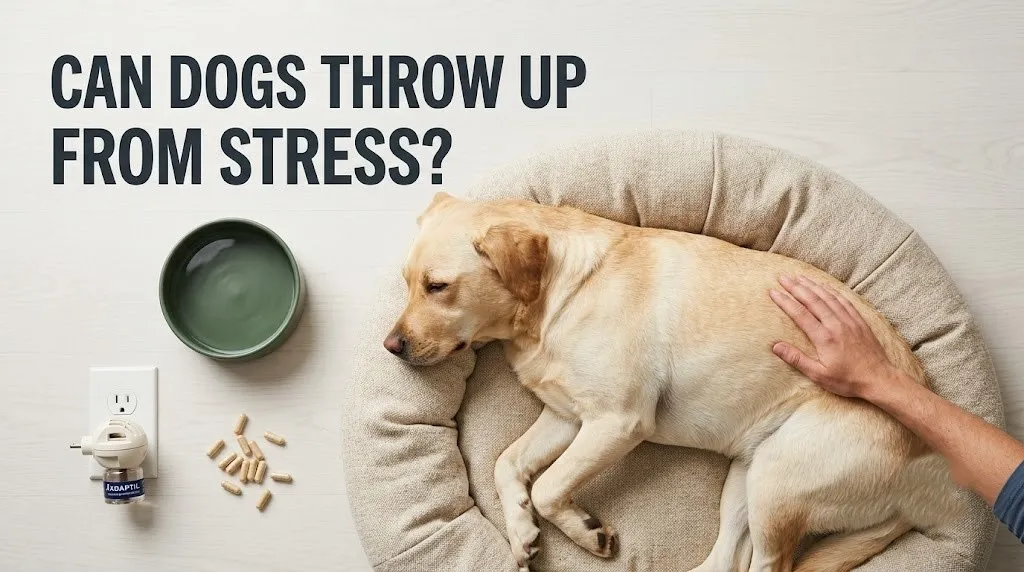
Adjunct tools like the Adaptil pheromone diffuser, which emits a synthetic version of the dog-appeasing pheromone produced by nursing mothers, can reduce the baseline anxiety in the home environment. The evidence for pheromones is not as robust as for prescription medications, but a 2024 systematic review in Applied Animal Behaviour Science found a statistically significant reduction in separation-related distress vocalizations and pacing, indirectly reducing vomiting events.
canine stress colitis explained
Canine stress colitis is the inflammatory response of the large intestine driven by stress hormones, manifesting as a combination of vomiting, diarrhea with mucus, and abdominal cramping. While vomiting is the upper gastrointestinal response, the colon is often simultaneously inflamed. The pathophysiology involves the mast cell degranulation triggered by CRH, leading to a localized increase in histamine, prostaglandins, and inflammatory cytokines like interleukin-6 within the colonic mucosa.
The classic presentation of stress colitis is a dog who vomits once or twice, then urgently needs to defecate, producing a small volume of semi-formed stool coated in shiny, jelly-like mucus with possible flecks of bright red blood. The blood is not a sign of a bleeding ulcer but of superficial capillary rupture from straining and mucosal inflammation. The colon’s normal function is to absorb water, but when inflamed, it secretes water and mucus, leading to the characteristic “squirts.”
This condition is typically self-limiting. Once the stressor ends, the cortisol and epinephrine levels drop, and the colon stops actively secreting fluid. The mucosal barrier begins to repair itself within 24 to 48 hours. Because the inflammation is neurogenic, it does not respond to antibiotics. The standard veterinary protocol for uncomplicated stress colitis includes gastrointestinal rest, a highly digestible, low-residue diet, and a probiotic like Enterococcus faecium SF68, which has the strongest evidence base for reducing stress-related diarrhea in shelter dogs.
It is critical to understand that stress colitis is a non-infectious inflammation. Taking a dog with stress colitis to a dog park results in spreading mucus and inflammation, not a virus. However, the disruption to the gut barrier can make a secondary infection more likely if the dog is exposed to a pathogen while the mucosal defenses are down. Therefore, a stressed dog with colitis should rest at home, not socialize.
A 2025 clinical paper from the Journal of Veterinary Internal Medicine highlighted a correlation between chronic episodic stress colitis and eventual behavioral sensitization, where the dog becomes anxious about their own physical discomfort, creating a feedback loop of anxiety and gut pain that requires dual behavioral and gastroenterological intervention.
Key Takeaway: Stress colitis is a neurogenic inflammatory storm in the colon that produces mucus and blood but is not an infection requiring antibiotics.
environmental causes of stress vomiting dogs
Environmental causes of stress vomiting in dogs are any stimuli in a dog’s living space that create sensory overload, unpredictability, or a perceived inability to escape. In 2026, urban environmental noise pollution is a leading factor. Construction noise, traffic, loud HVAC systems, and even ultrasonic devices used for pest control can trigger a dog’s acute stress response. The canine hearing range is far wider than a human’s, meaning a dog can be under constant auditory assault from electronic devices that a human cannot perceive.
Visual chaos in the home is also a documented trigger. Constant exposure to rapid movement outside a floor-to-ceiling window, chaotic mealtimes where children run around, or a multi-dog household with unresolved resource guarding issues keeps the limbic system in a state of threat assessment. A dog needs a den-like space where they feel visually hidden. Without a covered crate or a quiet room to decompress, the chronic low-level stress can tip into vomiting.
Lack of predictability in routine is a major trigger for the canine stress response. Dogs are creatures of rhythm. A 2024 study published in Applied Animal Behaviour Science found that dogs living in households with inconsistent daily routines had significantly higher salivary cortisol levels than dogs with fixed feeding and walking times. Vomiting often occurs when the dog anticipates a meal or a walk that does not come, creating a frustration-based neuroendocrine spike that mimics an anxiety spike.
Over-handling by visitors or young children is another frequent cause. A dog who is forced to endure unwanted petting, hugging, or disturbance during sleep cannot mentally escape. When the behavioral escape routes of avoidance, walking away, or hiding are blocked, the body defaults to a physiological escape. Vomiting, in this context, is the physical manifestation of the dog saying “I cannot cope with this physical pressure.”
Environmental modification is the first line of defense. This includes creating a sound-buffered safe zone, using white noise machines to mask jarring outdoor sounds, and building a consistent schedule that the dog can predict. Making the environment feel safe eliminates the source of the CRH surge far more effectively than any supplement.
how to help a dog stop throwing up from stress
To help a dog stop throwing up from stress, you must immediately de-escalate the dog’s sympathetic nervous system activation and remove the sensory input that is triggering the fight-or-flight response. The first action is physical containment and quiet. Do not scold or panic over the vomit. If you make a high-pitched, anxious fuss, you confirm to the dog that something is terribly wrong. Place the dog in a darkened, quiet room or a covered crate with a comfortable bed. The reduction in visual and auditory stimulation allows the amygdala to stop firing panic signals.
The second step is to offer small amounts of cool water, but only after the dog has stopped actively retching and is showing signs of settling. Gulping a large amount of water onto an inflamed, hyper-peristaltic stomach will simply trigger another vomit. Ice cubes are an excellent alternative. The cold sensation stimulates oral receptors and provides hydration slowly enough that the stomach does not distend.
Once the dog is calm and hydrated, a short, gentle session of tactile grounding can help. Slow, firm strokes along the dog’s back from neck to tail, avoiding the belly, can stimulate vagal tone and help shift the nervous system from sympathetic drive back to parasympathetic rest. A 2023 veterinary review noted that deliberate, slow touch reduces heart rate variability in dogs within 10 to 15 minutes. This is not a fluffy pet. It is applying sustained, gentle pressure that mechanically activates pressure receptors linked to the vagus nerve.
It is a mistake to immediately offer food. Even if the dog seems hungry, the gastric lining needs at least 6 to 8 hours of rest for the mast cell inflammation to subside. Introducing food too soon interrupts the mucosal repair process and often restarts the vomiting cycle. The exception is a hypoglycemic-prone small breed puppy, where withholding food for too long can cause a dangerous drop in blood sugar. For these dogs, a tiny amount of honey on the gums can stabilize blood glucose without filling the stomach.
Key Takeaway: The priority is deactivating the brain’s panic loop through silence and safety, not immediately replacing what was lost through food or water.
how to settle a stressed dogs stomach
Settling a stressed dog’s stomach requires resting the mucosal lining and supporting the enteric nervous system’s return to a resting state. The gold standard approach is a 12-hour gastrointestinal rest, where you fast the dog from solid food. Water should be offered in small, frequent sips to prevent gastric distension. This period of rest allows the stomach’s migrating motor complex to sweep any remaining bile and irritants into the lower bowel and for mast cell degranulation triggered by CRH to naturally subside.
After the rest period, reintroduce food using a highly digestible, low-fat prescription bland diet, or a homemade option of boiled white rice and poached skinless chicken breast in a 2:1 ratio. Fat is the primary enemy here, as stressed gastric motility struggles to emulsify fats, leading to delayed gastric emptying and further nausea. Small portions are critical. A meal that is one-quarter of the dog’s normal volume, given every 4 hours, is ideal.
A gastric coating agent like kaolin-pectin can provide physical relief. This over-the-counter veterinary product coats the irritated stomach lining and binds toxins and bile acids that are causing mechanical irritation. According to the Merck Veterinary Manual, kaolin-pectin acts as a demulcent, meaning it forms a soothing film over the mucosa. The dose is weight-dependent, and it must be given at least 2 hours apart from any other oral medication to avoid blocking absorption.
For dogs with a documented history of stress-induced acidity, the use of an H2 receptor antagonist like famotidine (Pepcid) can provide a chemical barrier. Famotidine reduces gastric acid secretion, which spikes during an acute stress episode. This is a prescription or veterinary-directed medication. The safety margin is wide, but long-term use can alter the gut microbiome, so it should be reserved for episodic use during known stressful events like travel or vet visits.
Temperature of the food also matters. A slightly warmed meal is more palatable and stimulates the parasympathetic “rest and digest” signals more effectively than cold food from the refrigerator, which can shock the stomach into a cramping spasm.
what to give a dog for stress vomiting
What to give a dog for stress vomiting depends on the severity of the episode, but the safest over-the-counter options are probiotic supplements with specific strains validated for canine stress colitis and gastric coating agents. The probiotic strain Bifidobacterium animalis has demonstrated efficacy in reducing stress-related gastrointestinal inflammation in shelter dogs, as published in a 2025 Journal of Veterinary Internal Medicine clinical trial. Administering this probiotic daily during periods of known stress, such as boarding or moving, proactively fortifies the intestinal barrier against the permeability caused by CRH.
For active vomiting, a vet-recommended gastric protectant is the go-to intervention. Sucralfate is a prescription medication that forms a thick, sticky paste when it contacts stomach acid, essentially creating a protective bandage over any areas of mucosal erosion. It is not an anti-emetic; it does not stop the vomiting reflex. It protects the stomach from the damage caused by repeated vomiting. This is often used in conjunction with an anti-emetic for more severe cases.
The primary veterinary anti-emetic is maropitant, a selective neurokinin-1 receptor antagonist. Maropitant blocks the binding of substance P, a neurotransmitter involved in the vomiting reflex, in both the brainstem vomiting center and the gut itself. This drug is highly effective at stopping the physical act of vomiting from any cause, including stress. It is available as an injection or tablet. Maropitant also has mild anti-anxiety effects for some dogs because substance P is involved in fear signaling, creating a dual benefit for stress vomiting.
Bismuth subsalicylate is sometimes used in human medicine but is not a first-line recommendation in 2026 veterinary medicine due to the narrow toxicological safety margin for salicylates in cats, and the risk of masking gastric bleeding. A DVM should always guide its use. Never give a dog ibuprofen, naproxen, or acetaminophen for abdominal pain, as these are rapidly lethal to canines even in tiny doses.
A calming supplement like L-theanine can be given concurrently to address the brain component while the other agents address the stomach. L-theanine increases GABA, serotonin, and dopamine levels in the brain without sedation. A veterinary formulation of L-theanine can be given an hour before a known stress trigger to elevate the threshold for panic activation, reducing the likelihood of CRH release.
Key Takeaway: The ideal veterinary protocol for stress vomiting combines a gut protectant with a brain relaxant, treating the physical organ and the psychological trigger simultaneously.
long term effects of stress on dogs digestion
The long-term effects of chronic stress on a dog’s digestive system include persistent dysbiosis, impaired nutrient absorption leading to weight loss, and the development of a hypersensitive enteric nervous system that reacts violently to minor stimuli. When the gut is chronically exposed to elevated cortisol, the integrity of tight junctions between intestinal cells degrades. This allows partially digested food proteins to cross the gut barrier, triggering an inappropriate immune response. This mechanism is the suspected driver behind many cases of food-responsive enteropathy.
Chronic stress fundamentally alters the canine gut microbiome, suppressing the phyla Firmicutes and Bacteroidetes and favoring Proteobacteria, a bacterial profile associated with inflammation. A landmark longitudinal study published in Psychoneuroendocrinology in 2024 showed that dogs living with severe, untreated separation anxiety developed a stable, pro-inflammatory microbiome that remained altered even when stress levels temporarily reduced. This suggests the gut ecosystem reaches a tipping point where it sustains itself independently of the original stressor.
The repeated mast cell degranulation events cause a thickening of the intestinal wall and fibrosis over years. This leads to a condition known as chronic protein-losing enteropathy in some predisposed breeds. The dog’s ability to absorb essential amino acids is compromised. Owners may notice a dull coat, muscle wasting despite a normal appetite, and intermittent vomiting that no longer correlates directly with an obvious trigger. The digestive system has become autonomously dysfunctional.
The behavioral impact of this long-term digestive pain is also significant. A dog who feels nauseous every day becomes behaviorally reactive, exhibiting touch sensitivity or sudden aggression when their abdomen is brushed. This chronic pain-anxiety cycle is a core concept in veterinary behavioral medicine. Breaking it requires a simultaneous prescription of a gut-healing hydrolyzed protein diet, daily probiotics, and an anxiolytic medication protocol. Treating only the gut or only the brain at this stage yields poor results.
The American College of Veterinary Behaviorists advocates for early intervention for stress colitis specifically to prevent this neurogenic-somatic feedback loop from becoming permanent. A dog who vomits from stress a few times a year is not at risk, but a dog vomiting weekly for months is on a trajectory toward permanent bowel pathology.
when to take dog to vet for vomiting
You should take your dog to the veterinarian for vomiting when the episode deviates from the self-limiting, trigger-linked pattern of classic stress vomiting and displays signs of a systemic illness or obstruction. The non-negotiable criteria for an immediate trip are bloody vomit that resembles coffee grounds, a distended and painful abdomen that sounds hollow like a drum when tapped, unproductive retching where the dog tries to vomit but nothing comes up, and a rapid progression to collapse or pale gums. These symptoms point to gastric dilatation-volvulus, or bloat, and require emergency surgery within hours.
Vomiting that is accompanied by severe watery diarrhea with a foul, metallic smell is a red flag for hemorrhagic gastroenteritis or parvovirus, particularly in an unvaccinated puppy. Stress does not cause a total systemic shutdown. A dog who is too weak to stand, has a temperature above 103 degrees Fahrenheit, or is vomiting repeatedly every 15 to 30 minutes for more than 4 hours is not experiencing simple stress colitis. They are likely severely dehydrated and need intravenous fluid therapy.
The ingestion of a foreign body or toxin is a medical emergency that stress vomiting can mimic. If there is any chance the dog has swallowed a sock, toy, string, or a household chemical, do not wait for stress management to work. An obstruction will cause a pattern of vomiting every time the dog eats or drinks, while stress vomiting usually ceases once the stomach is empty. According to the American Animal Hospital Association, a linear foreign body like string or thread is a particularly deceptive risk, as it can saw through the intestinal wall while the dog shows only mild intermittent vomiting.
A veterinarian should also examine a dog who has lost more than 5% of their body weight over a month due to chronic vomiting. This indicates a malabsorptive or metabolic disease. The vet will likely recommend a baseline blood chemistry panel, a complete blood count, and a fecal analysis. In 2026, advanced veterinary clinics also use point-of-care fecal calprotectin testing to rapidly distinguish between inflammatory bowel disease and neurogenic stress colitis, guiding the need for immunosuppressive therapy versus behavioral management.
Key Takeaway: Emergency vet care is mandatory if vomiting involves blood, a rigid painful belly, unproductive retching, or a toxic ingestion, no matter how stressed the dog also seems.
how do vets treat stress colitis in dogs
Veterinarians treat stress colitis in dogs using a multi-modal approach that combines short-term pharmacological intervention to break the acute inflammatory cycle with a long-term behavioral and dietary strategy to prevent recurrence. For the acute presentation, a vet will administer a subcutaneous fluid bolus if the dog is dehydrated, providing immediate circulatory support. A potent anti-emetic injection, typically maropitant, is given to stop the vomiting reflex, allowing the gut to rest. A single dose of a corticosteroid, like dexamethasone, may be used to rapidly suppress the colonic inflammation if the diarrhea is severe and hemorrhagic.
For the at-home recovery plan, the vet will dispense a prescription highly digestible diet, such as Hill’s i/d or Royal Canin Gastrointestinal, and a daily probiotic. Metronidazole is a common antibiotic used for its immunomodulatory and anti-inflammatory effects on the colon, not necessarily for an infection. In cases of true stress colitis, the vet is often treating the neurogenic inflammation with metronidazole’s action on cell-mediated immunity, reducing the flood of cytokines into the bowel wall. This is a short, 5-day course.
Fiber supplementation is a cornerstone of treatment that owners can maintain long-term. Psyllium husk fiber acts as a bulking agent that normalizes colonic water absorption and provides a substrate for beneficial bacteria to produce the short-chain fatty acid butyrate. Butyrate is the primary fuel for colonocytes and directly heals the inflamed mucosal barrier. Adding a teaspoon of unflavored psyllium husk powder to a dog’s meals can strengthen colon health against future stress episodes.
The critical veterinary intervention is the behavioral assessment. A good vet will not just hand over a bland diet and send the dog home. They will take a detailed history of triggers. If the stress is environmental and modifiable, the vet will provide guidance on enrichment and safety cues. If the anxiety is a generalized disorder, the vet will discuss referral to a veterinary behaviorist or the use of daily anxiolytic medication like fluoxetine, which has significant evidence for reducing stress-related gastrointestinal signs by keeping the HPA axis from overshooting.
The treatment protocol always loops back to owner education. Vets emphasize that a stress colitis “flare” is a barometer of the dog’s mental state. Managing the environment is the ultimate cure, and the medications are simply a bridge back to stability.
Frequently Asked Questions About Dogs and Stress Vomiting
What does stress vomit look like in dogs?
Stress vomit typically looks like a small pool of white or yellow foam, clear liquid, or undigested food with no signs of blood.
It usually occurs in the context of a known trigger and is often accompanied by anxiety behaviors like panting and pacing.
Unlike the chunky, digested “coffee ground” appearance of a gastric ulcer, stress vomit is primarily gastric juice and saliva.
Can anxiety cause a dog to throw up bile?
Yes, anxiety can directly cause a dog to throw up yellow bile by triggering a sympathetic nervous system response that relaxes the stomach and forces bile to reflux from the small intestine.
The resulting vomit is a bright yellow, frothy liquid, signifying the stomach was empty at the time of the anxiety spike.
Managing the underlying anxiety through environmental changes or veterinary-prescribed anxiolytics is the only way to prevent this specific response.
How long does stress vomiting last in dogs?
A stress vomiting episode in an otherwise healthy dog should self-resolve completely within 6 to 12 hours of removing the stressor.
The dog should not continue to vomit every hour; one or two evacuations of stomach contents followed by a desire to rest and drink water is the typical pattern.
If vomiting persists beyond 24 hours or occurs every few hours, a non-stress-related medical condition is likely the cause.
Should I feed my dog after stress vomiting?
No, you should not feed your dog immediately after a stress vomiting episode; you need to fast the dog for at least 6 to 12 hours to allow the gastric mucosa to settle.
After the rest period, reintroduce food using a small portion of a bland, low-fat diet like boiled rice and chicken.
Offering food too soon can re-stimulate mast cell degranulation and restart the nausea cycle.
Can probiotics help with stress colitis in dogs?
Yes, specific probiotic strains like Bifidobacterium animalis and Enterococcus faecium SF68 can reduce the severity of stress colitis by reinforcing the intestinal barrier and stabilizing the gut microbiome.
They work by producing short-chain fatty acids that directly heal the colon lining damaged by CRH-induced inflammation.
Veterinary-specific probiotics with guaranteed colony-forming units are preferred over generic human brands to ensure efficacy for canine pathogens.
Is stress colitis in dogs a medical emergency?
Stress colitis is not usually a medical emergency if the vomit is foam or bile, the dog remains mentally bright, and there are no signs of a rigid, painful abdomen or blood loss.
It becomes an emergency situation requiring immediate veterinary care if the vomit contains fresh blood or dark coffee-ground material, or if the dog collapses.
A dog with a simple stress colitis flare should not have a fever or be too weak to stand.
Removing the stressor and providing a quiet, safe environment is the most effective and immediate cure for acute canine stress colitis. Your dog is not sick with a virus. Their brain is simply running survival software that temporarily overrides their digestive hardware. Watching them panic and vomit is distressing for you, but your calm reaction is the most powerful tool you have to re-regulate their nervous system.
Veterinary science continues to clarify that the chronic, unmanaged cycle of weekly vomiting is what causes lasting damage, not a single isolated incident. The next step is to honestly audit your dog’s environment and routine. Look for the patterns. If you cannot identify the trigger, or if the episodes cluster together, your veterinarian is waiting to help you with diagnostics and a tailored anxiety management plan. Trust your observation of your dog’s behavior. You know their normal, and you know when the vomiting is out of character.
Give your dog the space to decompress, and give yourself permission to see this for what it usually is: a messy, temporary, physiological hiccup in a sensitive animal.