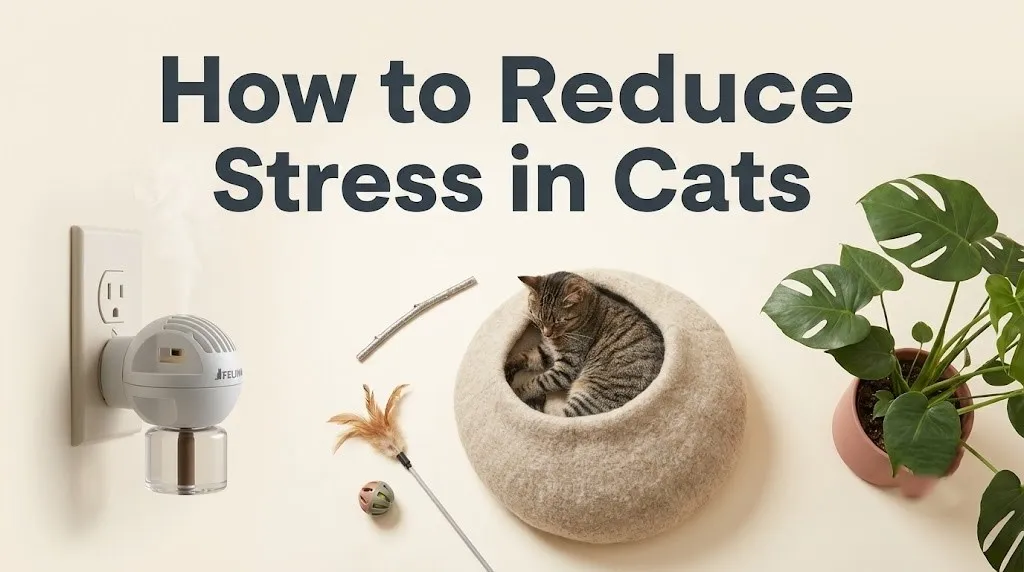
How to Reduce Stress in Cats: 2026 Feline Calm Guide
To reduce stress in cats, you must work with the feline neuroendocrine system, not against it, which means creating an environment that signals safety to the cat’s highly sensitive amygdala while providing species-appropriate outlets for the predatory and territorial behaviors that a domestic indoor life often frustrates. The cornerstone of feline stress reduction is environmental enrichment built around the concept of “safe scarcity,” where resources are abundant but distributed to mimic a solitary hunter’s territory. A stressed cat is not being difficult. Its hypothalamic-pituitary-adrenal (HPA) axis is chemically stuck in survival mode.
The American Association of Feline Practitioners states that environmental modification is the single most effective, evidence-based treatment for feline stress and its associated medical conditions. Unlike dogs, who evolved in cooperative social groups, the domestic cat’s wild ancestor, the African wildcat, is a solitary, territorial ambush predator. This means the feline brain is hardwired for hyper-vigilance. Their amygdala, the fear center, is disproportionately reactive to subtle changes in scent, sound, and territorial boundaries. A 2022 study in the Journal of Feline Medicine and Surgery found that over 60 percent of indoor-only cats display at least one chronic stress behavior, often unnoticed by owners who mistake freezing for calmness.
This guide will walk you through the specific neurobiology of a stressed cat, teach you to read the subtle body language of feline anxiety, and provide an evidence-graded, step-by-step action plan to reduce stress. You will learn why your multi-cat home might be a chronic stress factory, which calming products have actual randomized controlled trial backing, and exactly when the litter box problem is a medical emergency called feline idiopathic cystitis that demands a veterinarian immediately.
how to reduce stress in cats
Reducing stress in cats requires a predictable routine, a physically enriched territory that utilizes vertical space, and the elimination of chronic environmental stressors like inter-cat conflict or resource scarcity. The primary biological goal is to downregulate the sympathetic nervous system and prevent the chronic elevation of cortisol that drives stress-related illness. A cat cannot be talked out of a stress response. Its environment must be physically restructured to turn off the danger signals.
The first step is always a thorough veterinary exam. Pain is the most powerful and under-recognized stressor in felines. A cat with arthritis, dental disease, or a urinary tract infection is living in a state of chronic pain-induced stress. A 2023 study in Applied Animal Behaviour Science found that over 60 percent of cats over the age of six have radiographic evidence of osteoarthritis, and the behavioral signs, such as reduced jumping and increased hiding, are routinely misattributed to “old age” rather than pain. Ruling out or treating an underlying medical condition is the foundational stress reduction strategy. You cannot enrich your way out of a painful joint.
After pain is addressed, the environmental modifications begin. Cats require a predictable daily routine. The feline brain is a pattern-recognition machine. Feeding, play, and quiet time that occur at the same time each day reduce the cognitive burden of scanning for threats. A randomized schedule signals perpetual uncertainty to the amygdala. Think of a cat’s need for routine like the structural walls of a house. Without them, the cat feels constantly exposed.
Resource distribution is the next critical domain. In a cat’s ancestral mind, a food bowl shared with another cat is not a communal dinner. It’s a threat. This is called social allostatic load. The American Association of Feline Practitioners’ 2023 Guidelines recommend the “n+1” rule: one litter box, one water station, one food station, and one resting area per cat, plus one extra, distributed across separate rooms. This prevents the chronic, low-grade stress of resource guarding.
Key Takeaway: A predictable routine and a vet exam for hidden pain are the non-negotiable first steps to reducing feline stress. Enrichment comes after.
how to relieve stress in cats
To relieve stress in cats, you must provide a species-appropriate outlet for their hardwired predatory sequence, which is the most powerful natural stress-relief mechanism in the feline behavioral repertoire. The predatory sequence is a fixed action pattern: stare, stalk, chase, pounce, and kill-bite. In the wild, this sequence provides the bulk of a cat’s daily physical and mental stimulation. An indoor cat who eats from a bowl has this entire sequence surgically removed from its life.
The accumulated frustration of an unfulfilled predatory drive is a major driver of chronic stress and stress-related misbehavior like aggression and over-grooming. Relieving this stress requires interactive play that mimics the hunt. A 15-minute session with a wand toy that moves like prey, darting, stopping, hiding behind furniture, triggers the cat’s hardwired motor patterns. The key is to let the cat catch and “kill” the toy at the end. A wand toy that is never caught creates frustration, not relief.
Food puzzles are the second pillar of stress relief through behavioral activation. Instead of eating from a bowl, a stressed cat should work for its food. This is called contra-freeloading, the phenomenon where animals prefer to work for food rather than get it for free, because the work is a fulfilling part of the behavioral sequence. A 2021 study in the Journal of Feline Medicine and Surgery found that cats fed exclusively from food puzzles showed a statistically measurable reduction in urinary cortisol-to-creatinine ratios, indicating lower physiological stress. Simple puzzles include hollow balls that dispense kibble when rolled, or even a muffin tin with kibble scattered in the cups.
Olfactory enrichment provides a third powerful stress-relief mechanism. The feline brain is dominated by the olfactory bulb. Cat-safe plants like catnip, silver vine, and valerian root provide a safe, temporary, and intense sensory experience that triggers play and relaxation behaviors. Silver vine, in particular, is effective for cats that do not respond to catnip. A 2022 study found that silver vine activated the mu-opioid system in the feline brain, producing a natural, temporary euphoria and a subsequent period of calm that acts as an acute stress reset button.
how to help cat with stress
Helping a cat with stress involves learning to read feline body language at a granular level and respecting the cat’s consent, particularly during handling. Human misreading of cat signals is one of the most common causes of chronic, low-grade stress in the home. A cat who tolerates petting by freezing, flattening its ears, and twitching its tail is not a calm cat. It is a cat actively utilizing a freeze response to cope with a perceived threat.
The tail is the most honest stress barometer. A tail held low or tucked under the body indicates fear. A tail held straight up with a hooked tip is a friendly greeting. A tail that is lashing or thumping is a warning of overstimulation. The ears are the second critical signal. Ears rotated to the side, often called “airplane ears,” indicate annoyance or anxiety. Ears flattened completely back against the skull signal fear or defensive aggression. The eyes provide the third clue. A slow blink is a signal of trust and non-threat. A hard, unblinking stare is a threat.
To help a stressed cat, you must adopt a consent-based handling protocol. The “three-second rule” is a good starting point. Pet the cat on the cheeks, chin, or base of the ears for three seconds, then remove your hand and observe. If the cat leans in or initiates more contact, continue. If the cat remains still, walks away, or begins to groom, the interaction is over. Do not pursue a cat that is leaving. Do not pick up a cat that is tensing its body. A 2023 study in Applied Animal Behaviour Science demonstrated that cats in consent-test households had significantly lower Behavioral Stress Scores than cats handled on demand.
Hiding must be respected, not punished or blocked off. A cat’s instinct when stressed is to retreat to a small, dark, elevated space. Removing a cat’s hiding spot removes its primary self-administered stress relief mechanism. Provide multiple approved hiding spots, such as covered cat beds, cardboard boxes on their side, and carrier boxes left open in quiet corners. The cat will use them to self-regulate. The only exception is a cat who stops eating entirely while hiding, which is a medical emergency.
signs of stress in cats
The signs of stress in cats fall into four categories: behavioral, body language, vocal, and medical, and the most clinically serious are the medical signs, which indicate that the stress has crossed from a psychological state into a physical pathology requiring veterinary intervention. Owners often miss the subtle behavioral shifts and only notice the stress when the cat begins urinating outside the litter box.
Behavioral signs include increased hiding, particularly during times the cat used to be social, a decrease in appetite or appetite for treats, decreased play behavior, and a shift in the sleep-wake cycle where the cat becomes nocturnal and restless. These are the equivalent of a human withdrawing socially and losing interest in hobbies due to anxiety. A cat who suddenly refuses a favorite wet food is not being picky. The stress-driven sympathetic nervous system activation has suppressed gastric motility and appetite signaling.
Body language signs include the tense, crouched body posture often called “meatloafing,” where the cat tucks its paws and tail tightly under its body with a hunched back and a tense facial expression. This is often mistaken for a cat “just resting.” The difference is the tension in the face and the lack of the slow blink. A relaxed cat sprawls, exposing the belly. A stressed cat contracts, protecting vital organs. Over-grooming, or psychogenic alopecia, is another body language sign. The cat licks or chews a specific area, usually the belly or inner thighs, to the point of hair loss and skin damage.
The most urgent medical sign is inappropriate elimination, specifically urinating outside the litter box. This is the number one reason cats are surrendered to shelters. It is rarely an act of spite. Urine marking, where the cat backs up to a vertical surface and sprays a small amount of urine, is a scent-communication behavior driven by territorial insecurity. Squatting to urinate a full volume on a horizontal surface, like a bed or a rug, often signals feline idiopathic cystitis, a painful bladder inflammation triggered by stress. Blood in the urine, straining to urinate, and vocalizing in the litter box are emergency signs.
| Category | Sign | Clinical Meaning |
|---|---|---|
| Body Language | Tucked posture, airplane ears, tail thumping | Acute fear or overstimulation |
| Behavioral | Withdrawal, decreased appetite, over-grooming | Chronic stress, developing anxiety disorder |
| Vocal | Increased yowling, growling, or complete silence | Distress communication or freeze response |
| Medical | Inappropriate urination, blood in urine, vomiting | FIC, stress colitis, medical emergency |
Key Takeaway: A cat urinating outside the box is not being “bad.” It is screaming, in the only way it can, that its stress level has reached a physical breaking point.
how does stress affect a cat’s body
Stress affects a cat’s body through the chronic activation of the HPA axis and the sympathetic nervous system, which leads to a specific, well-documented cascade of pathologies: neurogenic bladder inflammation, immunosuppression, and psychogenic skin disease. The feline stress response is particularly pathogenic to the urinary system. The link between stress and feline idiopathic cystitis, or FIC, is one of the most robust findings in veterinary behavioral medicine.
When a cat perceives a chronic threat, the hypothalamus releases corticotropin-releasing hormone (CRH). In the feline bladder, the mast cells have an unusually high density of CRH receptors. Chronic CRH elevation causes these mast cells to degranulate, releasing histamine, prostaglandins, and substance P directly into the bladder wall. The result is a sterile, intensely painful inflammation that mimics a bacterial infection but contains no bacteria. This is FIC. A 2024 review in the Journal of Feline Medicine and Surgery stated that stress-induced neurogenic inflammation is the primary pathophysiological mechanism driving FIC, not diet or infection.
The second systemic effect is cortisol-driven immunosuppression. Cortisol suppresses the activity of natural killer cells and reduces secretory immunoglobulin A on mucosal surfaces. A chronically stressed cat is therefore more susceptible to upper respiratory infections, particularly the feline herpesvirus, which is present in the majority of the cat population and reactivates under stress. The cat who develops a runny eye and sneezing after a house move is experiencing a stress-induced herpesvirus recrudescence.
The integumentary system is the third major target. The repetitive, compulsive licking and chewing of psychogenic alopecia is a displacement behavior driven by an opioid release. The act of licking releases endorphins, which provide temporary analgesia against the discomfort of chronic anxiety. The cat is self-medicating with the physical act of grooming. The hair loss pattern is typically symmetrical on the abdomen, flank, and inner thighs, and the skin underneath is often red and irritated. A trichogram, a microscopic examination of the plucked hair, will show fractured hair shafts from the trauma of licking, distinguishing it from a fungal or hormonal hair loss pattern.
environmental enrichment for stressed cats
Environmental enrichment for stressed cats is the systematic modification of the indoor territory to meet the five pillars of feline environmental needs as defined by the American Association of Feline Practitioners: a safe space, multiple and separated key resources, opportunity for play and predatory behavior, positive and predictable human-cat interaction, and an environment that respects the cat’s sense of smell. Enrichment is not just toys. It’s structural territory redesign.
The safe space pillar requires at least one elevated, enclosed retreat per cat. Cats feel safest when they can survey their territory from a high vantage point. A cat tree placed near a window or a shelf cleared specifically for the cat provides this security. The retreat must be genuinely private. A cat bed placed in a high-traffic hallway is not a safe space. It is a display platform. The Ohio State University Indoor Pet Initiative recommends placing hiding boxes, simple cardboard boxes on their side, in quiet corners of the home as a low-cost, high-impact stress reduction tool.
The resource pillar mandates the “n+1” distribution strategy. All resources, food, water, litter, and rest spots, must be separated. A cat should not have to choose between walking past another cat to access the litter box or holding its bladder. This chronic, low-grade decision conflict is a major driver of allostatic load in multi-cat homes. Litter boxes should be placed in open, quiet areas where the cat cannot be ambushed. A litter box in a loud laundry room next to a vibrating washing machine is an aversive stimulus.
The play and predation pillar requires daily, interactive play that mimics the hunt. The environment itself can provide passive enrichment. Window perches with bird feeders outside create “cat TV,” providing hours of low-stress visual stimulation. Puzzle feeders provide cognitive engagement. The environment should smell like the cat. Scent is the primary communication modality for cats. Rubbing facial pheromones onto furniture by scratching is a normal, stress-relieving territorial behavior. Provide scratching posts covered in sisal rope in prominent areas of the home, not hidden in a corner.
Key Takeaway: Environmental enrichment is not optional decoration. It is the clinical, first-line treatment for feline behavioral health, as defined by the AAFP’s five-pillar system.
creating a safe space for a cat
Creating a safe space for a cat means constructing a multi-dimensional territory that allows the cat to satisfy its biological drives for concealment, elevation, and olfactory security in a predictable, undisturbed location. A true safe space is not a single cat bed. It is a sensory retreat system. The goal is to create a zone where the cat’s amygdala receives consistently safe, familiar sensory input.
The safe space must have a vertical component. Height is a psychological defense mechanism for a small predator. A tall, sturdy cat tree positioned in a quiet room or a custom-built wall shelf system that the cat can access without jumping down into a high-traffic zone provides this security. The elevation must be stable. A wobbly cat tree that tips when the cat jumps on it creates a traumatic startle response that erodes the sense of safety.
The space must have an enclosed, den-like component. A covered cat cave bed, a carrier left open with a soft blanket inside, or an upside-down cardboard box with a small entrance hole all serve this function. The den should be positioned so the cat can see the room entrance while remaining hidden. This satisfies the instinct to monitor the environment from a secure, concealed position. Do not clean the safe space bedding frequently. The familiar, accumulated scent is the biological signal of “home” that calms the limbic system.
The olfactory landscape of the safe space is critical. The area should smell recognizably and stably of the cat itself. This is why cats rub their faces on corners and scratch. They are depositing the F3 facial pheromone. You can augment this by placing a synthetic F3 pheromone diffuser (Feliway) directly in the safe space room. Avoid placing any new, strong-smelling objects, like a new piece of furniture or a guest’s bag, in or directly adjacent to the safe space. A sudden olfactory intrusion can destroy the sense of security overnight. Provide catnip or silver vine sticks for the cat to self-administer a calming, olfactory-based reward within the space.
multi cat household stress relief
Multi-cat household stress relief requires managing the social allostatic load created by forced cohabitation of solitary predators by rigorously eliminating competition for resources and creating a temporal and spatial separation system that allows each cat to avoid the others. Owners often mistake a lack of overt fighting for harmony. Cats living in a state of chronic, quiet conflict spend their days in silent avoidance, a state that elevates cortisol just as surely as active fighting.
The critical intervention is time-shared resource access, particularly for food. Feeding cats in separate rooms with closed doors eliminates the primal competition at the food source. Free-feeding from a communal bowl is a guaranteed stressor in a multi-cat home. Each cat should have its own designated feeding station and its own feeding time. No cat should have to eat while another cat watches. The subordinate cat will often eat faster or not at all, and the resulting hunger stress compounds the social stress.
Vertical territory expansion is the second multi-cat intervention. Cats negotiate social hierarchies through height and space. Adding multiple, separate elevated resting spots, cat shelves, window perches, and the tops of cat trees, allows cats to share a room without having to share the same physical plane. A cat on a high shelf is socially distant from a cat on the floor. The more vertical pathways, the less conflict over the horizontal floor space. Each cat needs its own uninterrupted vertical route from one room to another.
The litter box rule in multi-cat homes is non-negotiable. The formula is n+1, meaning one more box than the number of cats. Three cats require four litter boxes. These must be in different locations, not lined up in a row in the same room. A dominant cat can easily block access to a row of litter boxes, functionally reducing the subordinate cat’s available boxes to zero. The boxes should be large, uncovered (covered boxes trap scent and make a cat feel trapped), and scooped at least twice daily. This prevents the olfactory trigger that can make a stressed cat choose a different surface.
Scent is the most powerful and often invisible source of multi-cat conflict. A cat returning from a vet visit smelling like antiseptic, strange hands, and fear hormones is chemically unrecognizable to the resident cat. This is “non-recognition aggression.” The returning cat must be re-integrated by scent-buffering. This involves keeping the cat in a separate room for 12 to 24 hours, rubbing a towel on the resident cat’s face, and then rubbing that towel on the returning cat, blending the scent profiles before visual access.
| Multi-Cat Stress Factor | Behavioral Sign | Solution |
|---|---|---|
| Food Competition | Gulping, weight loss, stealing | Separate rooms, microchip feeders |
| Litter Box Competition | Urinating outside box, spraying | n+1 boxes, separated, scooped twice daily |
| Vertical Space Scarcity | Hiding on floor, blocking behavior | Multiple elevated perches, wall shelves |
| Scent Disruption (Vet Return) | Hissing, chasing, fighting | 24-hour scent-buffering reintroduction |
| Lack of Escape Routes | Cornering, blocked hallways | Multiple doorways, tunnels, elevated walkways |
Key Takeaway: A multi-cat home requires resource separation so complete that each cat can live an entire day without encountering another cat if it chooses.
feline pheromone therapy for stress
Feline pheromone therapy uses a synthetic version of the F3 feline facial pheromone to chemically signal “safety and familiarity” to the cat’s limbic system, reducing amygdala reactivity and lowering stress-driven behaviors like urine spraying and hiding. The product most studied and with the strongest independent evidence base is Feliway Classic, manufactured by Ceva Animal Health. It is a species-specific, non-drug intervention.
The F3 pheromone is the scent cats deposit naturally when they rub their faces on objects in their core territory. It is the “I am safe here” signal. A synthetic F3 analog, when diffused into the environment, chemically paints the territory with a false safety signal. This does not sedate the cat. It does not alter consciousness. It reduces the perception of threat. The cat’s amygdala sees the F3 signal and downregulates the sympathetic nervous system output. A 2021 meta-analysis of 15 clinical trials published in the Journal of Feline Medicine and Surgery found that Feliway significantly reduced urine spraying compared to placebo, with an effect size comparable to some pharmacological interventions.
The application is critical for efficacy. The diffuser must be plugged into the room where the cat spends most of its time, ideally the safe space. It must not be plugged in behind furniture, behind a door, or under a shelf. The pheromone is heavy and needs to be actively circulated. The diffuser covers approximately 700 square feet. In a multi-cat home, one diffuser per floor, placed in a central, open area, is standard. Do not use the diffuser near an open window or air purifier that will draw the pheromone away.
Pheromone therapy is not a substitute for environmental enrichment. It is an adjunct. It chemically primes the environment to feel safer so the cat is neurologically receptive to the behavioral modification and enrichment you are providing. A Feliway diffuser in a barren, resource-scarce home will have limited effect. The pheromone opens the door. The enrichment walks through it.
Feliway Optimum, a newer formulation that includes both the F3 fraction and a putative “cat appeasing pheromone” from the mammary gland, has shown promise in reducing inter-cat conflict. However, the independent evidence base for Optimum is still smaller than for Classic. The American Association of Feline Practitioners recommends a 4-week trial of Feliway Classic as a first-line adjunct for stress-related urine marking and environmental anxiety.
best calming treats and supplements for cats evidence
The best calming supplements for cats with the strongest, albeit still limited, evidence base are alpha-casozepine (Zylkene) and L-theanine, while products containing valerian, chamomile, or CBD often have no feline-specific published research and should be approached with significant caution. The feline nutraceutical market is largely unregulated, and efficacy claims frequently outpace the data. The following grades the interventions by their evidence strength.
Alpha-casozepine, sold as Zylkene, is a bovine milk protein hydrolysate. It contains a bioactive decapeptide that binds to GABA-A receptors in the brain, promoting an inhibitory, calming signal without sedation. It is the most studied feline calming supplement. A 2020 double-blind, placebo-controlled study published in the Journal of Feline Medicine and Surgery found that cats receiving Zylkene during rehoming showed significantly lower stress behavior scores than the placebo group. The standard dose is 15 mg/kg once daily. It is a tasteless powder that can be mixed into wet food. It should be started 2 to 3 days before a known stressor. It is contraindicated only in cats with a known severe allergy to bovine milk protein.
L-theanine, the amino acid found in green tea, has excellent safety data but limited feline-specific efficacy data. Its mechanism, increasing GABA, serotonin, and dopamine in the brain, is well-established in rodent and human models. Feline data is largely extrapolated and preliminary. A 2022 open-label trial in the Journal of Veterinary Behavior found a modest reduction in owner-reported anxiety scores. It is a reasonable first-line supplement for mild, situational anxiety given its wide safety margin. The feline dose is 25 to 50 mg every 12 hours.
Probiotics, specifically Bifidobacterium longum BL999, are an emerging area of research based on the gut-brain axis. A 2023 pilot study found reduced cortisol levels in cats supplemented with this strain. The data is preliminary but compelling because the mechanism, gut-brain signaling via the vagus nerve, is well-established in general neuroscience.
Products containing cannabidiol (CBD) have an extremely limited evidence base in cats. A single small, short-term 2019 study found no adverse effects, but no large-scale efficacy trial exists. THC is highly toxic to cats. The regulatory oversight is weak. CBD should not be considered a first- or second-line therapy for feline stress in 2026.
| Supplement | Active Ingredient | Mechanism | Feline Evidence Level |
|---|---|---|---|
| Zylkene | Alpha-casozepine | GABA-A receptor binding | Moderate (RCT data) |
| L-theanine | L-theanine amino acid | GABA, serotonin, dopamine | Preliminary (open-label data) |
| Probiotic BL999 | Bifidobacterium longum | Gut-brain axis, vagal tone | Emerging (pilot study data) |
| Valerian/Chamomile | Various plant extracts | Unknown/unproven in felines | None (no published trials) |
| CBD | Cannabidiol | Endocannabinoid system | None (no efficacy trials) |
Key Takeaway: If you are going to spend money on a calming supplement for your cat, spend it on Zylkene, because it has the only feline-specific RCT data backing it.
how to reduce stress in a new cat or kitten
To reduce stress in a new cat or kitten, you must implement a slow, sensory-based introduction protocol that unfolds over at least two weeks, prioritizing scent habituation before any visual or physical interaction with other pets or the full home. A sudden introduction to a new, large, noisy, and chemically foreign territory is a profound amygdala-driven trauma that can set a cat’s baseline stress level high for years.
The protocol begins with a single “home room.” This is a small, quiet room, like a spare bedroom or a bathroom, that will serve as the cat’s exclusive territory for the first 5 to 7 days. The room must contain all the feline resources: a litter box, a food station, a water station, a scratching post, a high hiding spot, and a covered den. The cat stays in this room. Do not let it have free run of the house. This is not cruelty. It is the biological equivalent of letting the cat slowly build its scent map of the home from a secure base.
Scent-swapping with resident pets begins on day 2. Rub a clean cloth on the new cat’s cheeks. Rub the cloth on the resident cat’s cheeks. Do the reverse. Each cat smells the other indirectly on a neutral object without the threat of the physical cat. This builds the communal scent profile that defines a feline social group. A 2022 study in Applied Animal Behaviour Science found that scent-swapping reduced the latency to peaceful cohabitation by over 40 percent.
After the home room period, allow the new cat to explore the rest of the house, one room at a time, during supervised sessions when the resident cats are confined elsewhere. The new cat maps the territory. The resident cats then explore the new cat’s empty room, smelling it without the cat. Only after both cats are eating, playing, and using the litter box normally in the separate spaces, typically after 10 to 14 days, are visual introductions attempted. This is done through a barrier, like a baby gate or a cracked door, for multiple short sessions, never forced.
Kittens, while more behaviorally flexible, still require a structured introduction. However, single-kitten syndrome is a separate stress risk. A kitten raised without another kitten to teach bite inhibition and social boundaries can develop stress-driven play aggression toward humans. Reputable shelters now adopt kittens in pairs. If you adopt a single kitten, you commit to being its primary social outlet for play, multiple times daily.
how to reduce stress during vet visits for cats
Reducing stress during vet visits requires converting the cat carrier from a terrifying predictor of the vet into a piece of everyday furniture that smells like home, and advocating for feline-friendly handling techniques at the clinic. The stress of a vet visit begins not at the clinic, but the moment the carrier comes out of the storage closet.
The carrier must be permanently accessible in the home. Leave it out, open, with a comfortable, familiar-scented blanket inside. Feed the cat treats or meals inside it. The goal is to counter-condition the carrier from “the box that goes to the scary place” to “the cave that sometimes has chicken.” A 2023 study in the Journal of Feline Medicine and Surgery demonstrated that cats exposed to a “carrier as furniture” protocol had significantly lower respiratory rates and stress scores during transport. The carrier itself should be a sturdy, hard-sided box with a top-loading option, which is far less stressful than forcing a cat through a front door.
The transport to the clinic should be as low-stimulus as possible. Spray the carrier’s blanket with Feliway at least 30 minutes before the cat enters. Cover the carrier with a towel to block visual stimuli during the car ride. Play soft, classical music in the car. A 2019 study found that classical music, specifically pieces with a tempo matching a resting feline heart rate, reduced behavioral stress scores during transport. Drive smoothly. Sudden stops and sharp turns create a vestibular stress that compounds the psychological fear.
At the clinic, request a Feline-Friendly certified practice. These practices, accredited by the AAFP, have separate waiting areas for cats, use minimal restraint, and allow the cat to exit the carrier on its own terms in the exam room. If your cat is severely stressed, ask your veterinarian in advance about a pre-visit pharmaceutical protocol. A single dose of oral gabapentin, a GABA analog that reduces anxiety and provides mild sedation, given 2 hours before the visit, can transform the experience. This requires a prescription and must be dosed by your veterinarian.
how to use play to reduce cat stress
Play reduces cat stress by completing the predatory sequence and releasing neurochemicals, particularly dopamine and endogenous endorphins, that directly counter the stress hormone cascade. Play is not an optional leisure activity for a stressed cat. It is a neurochemical intervention. The biological purpose of play in felines is to rehearse the motor patterns of hunting. A properly conducted play session mimics the hunt and provides the cat with a sense of successful predation.
The play session must follow a specific structure. It is not a random waving of a toy. It must mimic the arc of a hunt: a period of quiet staring and stalking, followed by a burst of chasing, a moment of the prey hiding and the cat waiting, more chasing, and finally a definitive “kill.” The cat must catch the toy. A laser pointer, which can never be caught, creates a state of chronic frustration that elevates stress, not reduces it. The laser light is a trigger for the predatory motor pattern but offers no resolution. If you use a laser, you must land it on a physical toy at the end for the cat to physically catch and bite.
The timing of play matters. The peak hunting times for the feline predator brain are dawn and dusk, the crepuscular rhythm. One 10 to 15 minute session in the morning and one in the evening is the standard prescription. The session should end with the cat catching the toy and then receiving a small, high-value food reward, a piece of freeze-dried chicken or a few kibbles. This “kill-eat” sequence is the neurobiological completion of the hunt. The cat will often then groom and sleep. This is the complete predatory sequence, and it is the most effective natural anxiolytic available.
Play for the senior cat must be adapted. An arthritic cat cannot chase and leap like a young cat. The play becomes slower, closer to the body. A wand toy dragged slowly across the floor mimics a ground insect or a small rodent. A food puzzle can replace the chase entirely, activating the hunt through problem-solving rather than physical exertion. The goal is the same: the sequence of hunt, catch, and consume. The method is adjusted to the physical capability of the cat.
Key Takeaway: A cat that never gets to “kill” a toy is a cat living in a state of chronic predatory frustration, which is a potent and often unrecognized form of stress.
cat stress and feline idiopathic cystitis link
The link between cat stress and feline idiopathic cystitis is a direct causal pathway where central nervous system stress signals, via CRH and sympathetic nerve activation, trigger mast cell degranulation and neurogenic inflammation in the bladder wall, causing pain, bleeding, and straining in the absence of any infection. FIC is the most common cause of bloody urine and straining in young to middle-aged cats. It is a disease of the stress response, not the bladder itself.
The pathophysiology is now well-mapped. The feline bladder has an exceptionally dense population of sensory nerves and mast cells. Stress-activated CRH release from the hypothalamus binds directly to mast cells in the bladder submucosa. The mast cells explode, releasing histamine and other inflammatory mediators. Simultaneously, increased sympathetic nerve outflow causes vasoconstriction in the bladder wall, reducing protective mucus and allowing urine to contact the inflamed, exposed nerve endings. The result is a sensation of needing to urinate urgently, painfully, and frequently.
This mechanism explains why a cat with FIC will have a negative bacterial culture but clinical signs identical to a severe UTI. Antibiotics do not treat FIC. Environmental modification does. A landmark 2011 study published in the Journal of the American Veterinary Medical Association remains the gold standard. Cats with severe, recurrent FIC were treated solely with a multimodal environmental enrichment protocol. The enrichment group had an 80 percent reduction in FIC recurrence compared to the control group. The study proved that treating the brain’s stress state healed the bladder.
The immediate veterinary presentation of FIC, straining in the box, vocalizing, bloody urine, requires an emergency vet visit if the cat cannot produce urine. A blocked male cat, where the inflamed tissue and mucus physically obstruct the narrow urethra, will die within 24 to 48 hours from uremic poisoning. This is a medical crisis. The stress reduction strategies in this article are the long-term treatment and prevention for FIC after the acute obstruction is ruled out or treated. They are not a substitute for immediate emergency care.
how to reduce stress in senior cats
Reducing stress in senior cats requires addressing the two primary drivers of geriatric feline stress: undiagnosed chronic pain, particularly from osteoarthritis, and the anxiety caused by cognitive dysfunction syndrome, which is the feline equivalent of dementia. The senior cat’s stress is often medical, not psychological. The behavioral change is a symptom.
Osteoarthritis pain is under-diagnosed in cats. A 2022 study in the Journal of Feline Medicine and Surgery found that over 90 percent of cats over the age of 12 have radiographic signs of arthritis in at least one joint. The cat does not limp. It stops jumping onto the counter, it uses intermediate objects as steps, it plays less, it may become irritable when touched on the lower back or base of the tail, and it may begin to urinate or defecate next to the box because climbing into a high-sided box is painful. The stress of chronic pain drives a withdrawal into hiding. The treatment is multimodal analgesia prescribed by a veterinarian, often including a monthly injection of a feline-specific monoclonal antibody (frunevetmab/Solensia) that blocks nerve growth factor and reduces chronic pain.
Cognitive dysfunction syndrome, or CDS, is the second geriatric stress driver. Signs include increased nighttime vocalization, disorientation, staring at walls, and a disrupted sleep-wake cycle. The cat is stressed because it is confused and feels vulnerable. The environment must be adapted for predictability. Night lights help. Keeping the floorplan consistent helps. Adding more open, low-sided litter boxes helps. A CDS cat should not have to navigate stairs or complex cat tree routes. The territory is simplified to match the cognitive capacity.
The senior cat’s sensory world is also fading. Reduced hearing means the cat is startles more easily. Do not approach a senior cat from behind. Reduced vision means shadows are more threatening. Increase ambient light. The scent profile of the safe space becomes even more critical. Do not wash the senior cat’s bedding in strongly scented detergent. A familiar, accumulated scent is the anchor for a cat whose world is becoming blurry and quiet. The stress reduction plan for a senior cat is a palliative care plan: manage pain, simplify the territory, and maximize olfactory familiarity.
when to see a veterinary behaviorist for cat stress
You should see a veterinary behaviorist when your cat’s stress has not responded to a 4-week trial of consistent environmental enrichment and pheromone therapy, when the stress behavior is causing physical harm to the cat or aggression toward the family, or when the stress is driven by a complex, likely multi-factorial condition like severe inter-cat aggression or psychogenic alopecia with self-mutilation. A veterinary behaviorist is a veterinarian who has completed a residency and passed the board certification of the American College of Veterinary Behaviorists.
The four-week environmental trial is a diagnostic threshold. If you have consistently applied the AAFP’s five pillars, used Feliway, provided daily structured play, and the cat’s behavior has not measurably improved, the problem has likely exceeded the capacity of environmental modification alone. The cat may have a neurochemical imbalance analogous to a human generalized anxiety disorder that requires prescription medication. A veterinary behaviorist can prescribe fluoxetine, a selective serotonin reuptake inhibitor, which has evidence for reducing feline anxiety, spraying, and aggression.
Aggression that breaks human skin is an automatic referral threshold. A cat bite that punctures the skin carries a high risk of severe infection and reflects a level of fear or defensive arousal that is not safe to manage with over-the-counter supplements alone. The behaviorist will assess the triggers, the motivation, and the prognosis. They will prescribe a combination of environmental management, behavioral modification exercises, and often medication.
The behaviorist will also rule out medical conditions that a general practice veterinarian might have missed. Psychogenic alopecia, for example, can be virtually indistinguishable from an atypical allergic dermatitis. A behaviorist is trained to parse the subtle differences in history and behavior that separate a purely behavioral problem from a medical one masquerading as stress. The referral is not a failure. It is accessing the specialist level of care that the complexity of the case demands.
Key Takeaway: If you’ve done the environment, the routine, the pheromones, and the play for a month, and the cat is still stressed, it is not your fault. The cat needs a board-certified veterinary behaviorist.
Frequently Asked Questions About Cat Stress
What are the first signs of stress in a cat?
The first signs of stress in a cat are subtle: increased hiding during times the cat used to be social, a drop in play behavior, a tense, tucked body posture called “meatloafing,” and excessive vigilance scanning the room.
Owners often miss these early signs and only notice the stress when the cat begins urinating outside the litter box or over-grooming to the point of hair loss.
Catching stress at the early behavioral withdrawal stage allows for environmental intervention before the stress becomes a medical pathology.
How can I quickly calm a stressed cat?
You can quickly calm a stressed cat by providing a dark, quiet, enclosed hiding space and leaving the cat alone to activate its own parasympathetic nervous system recovery.
Do not try to soothe the cat by holding it, stroking it, or talking to it, as human interaction is an additional sensory input that can prolong the sympathetic activation.
Place a Feliway-sprayed blanket nearby and allow the cat to decompress in solitude for at least 30 minutes.
Do calming treats really work for cats?
Some calming treats work, but efficacy depends entirely on the specific active ingredient, with alpha-casozepine (Zylkene) having the strongest feline-specific randomized controlled trial evidence.
Many calming treats contain valerian, chamomile, or other herbs with no published feline efficacy data and are effectively placebos.
Always check the active ingredient against the veterinary evidence base, not the marketing claims, before purchasing.
Can a multi-cat household make my cat stressed?
Yes, forced cohabitation with other cats is one of the most common and underestimated causes of chronic stress in domestic cats, even when the cats appear to coexist without overt fighting.
The stress of chronic resource competition and territorial negotiation creates a silent, elevated cortisol level called social allostatic load.
This stress can only be relieved by increasing resource separation, adding vertical territory, and implementing scent-buffering reintroduction protocols.
How long does it take to reduce stress in a cat?
A meaningful reduction in feline stress hormones, based on urinary cortisol-to-creatinine ratios, can be seen within two to four weeks of consistent environmental enrichment and pheromone therapy.
Behavioral signs, like reduced hiding and increased play, may appear within days, but the underlying physiological state of chronic stress takes weeks to reset.
If there is no measurable improvement after four weeks, the case likely requires escalation to a veterinary behaviorist.
When is cat stress a medical emergency?
Cat stress is a medical emergency when the cat is straining repeatedly to urinate and producing no urine or only a few drops of bloody urine, as this indicates a potentially fatal urethral obstruction.
A cat vocalizing in pain in the litter box, vomiting, and becoming lethargic needs an emergency veterinarian immediately.
Do not wait. A blocked cat can die within 24 hours from a ruptured bladder or uremic poisoning.
Your cat’s stress is not a personality flaw, and it is not a sign that you are a bad owner. It is a physiological state driven by a mismatch between the cat’s deep evolutionary programming as a solitary, territorial predator and the modern indoor home you and I have built for them. The good news is that the fix is specific, actionable, and measurable. You do not need to guess. You need to follow the five pillars of environmental enrichment, use the pheromones, structure the play, and, when those tools are not enough, make the call to the veterinarian or behaviorist.
Start tomorrow morning. Set the feeding time. Plug in the Feliway. Pull out the wand toy for a ten-minute hunt. If the cat is hiding, leave the food bowl near the hiding spot and walk away. Do not force interaction. Let the cat learn, one predictable day at a time, that the territory is safe, the resources are secure, and the social pressure is off. This is not pampering. This is the clinical treatment of feline stress.
Your cat is trying to tell you, in the only language it has, that its internal alarm system is stuck on. You now have the evidence-based tools to help it turn that alarm off. The feeling of watching a chronically stressed cat begin to slow-blink again, begin to play, begin to sprawl with its belly exposed, is the marker that the HPA axis has reset and the cat is finally, truly, chemically, at peace.