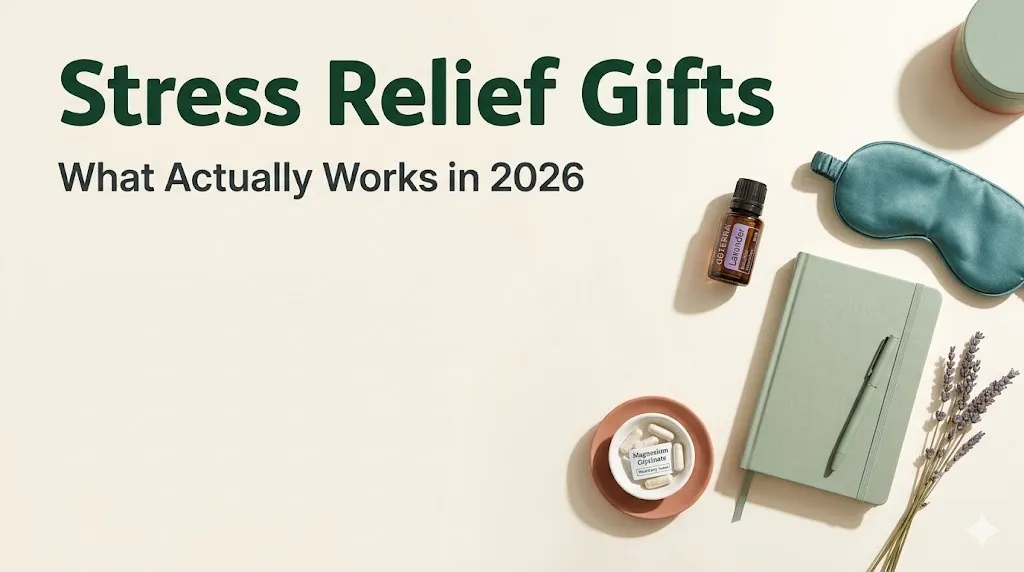
Best Stress Relief Gifts That Actually Work in 2026
Stress relief gifts range from deeply evidence-backed tools to products with nothing behind them except appealing packaging, and knowing which is which makes the difference between a genuinely helpful gift and a well-intentioned waste of money. The best stress relief gifts work by targeting specific physiological pathways, including parasympathetic nervous system activation, HPA axis cortisol modulation, and GABA-A receptor activity, rather than simply creating a pleasant sensory experience.
According to the American Psychological Association’s 2024 Stress in America survey, 77% of adults report experiencing physical symptoms caused by stress, and 73% report psychological symptoms. That makes thoughtful stress relief one of the most genuinely useful gifts a person can give in 2026, provided the products chosen have actual physiological rationale behind them.
This guide evaluates every major stress relief gift category by mechanism of action, evidence quality, safety profile, and population fit. It names the specific compounds, pathways, and research behind each category so you can shop with real information rather than marketing copy.
Stress Relief Gifts: What the Research Actually Says
Stress relief gifts work when they activate a named physiological pathway that reduces the body’s stress response, and they don’t work when they are based only on sensory appeal or marketing claims.
The stress response is driven primarily by two overlapping systems. The sympathetic-adrenal-medullary (SAM) axis triggers rapid release of epinephrine and norepinephrine from the adrenal medulla, producing the immediate fight-or-flight response: elevated heart rate, increased blood pressure, and heightened alertness. Alongside this, the HPA axis drives the hypothalamus to release corticotropin-releasing hormone (CRH), which signals the anterior pituitary to release adrenocorticotropic hormone (ACTH), which then signals the adrenal cortex to release cortisol. Together, these systems prepare the body to respond to threat.
The problem with chronic stress is that these systems never fully deactivate. Chronically elevated cortisol suppresses immune function, impairs hippocampal neurogenesis, and disrupts sleep architecture. Research published in Psychoneuroendocrinology has consistently linked sustained HPA axis hyperactivity to elevated inflammatory markers including interleukin-6 (IL-6) and C-reactive protein (CRP).
Products that genuinely help stress do so by stimulating the parasympathetic nervous system (the calming counterpart to the sympathetic system), by modulating cortisol production through specific biochemical mechanisms, or by altering neurotransmitter activity at identified receptors. Products that provide pleasant sensory experiences without touching any of these pathways may feel nice but do not meaningfully reduce the physiological stress burden.
The distinction matters when choosing a gift for someone dealing with real, ongoing stress. Choosing based on mechanism rather than aesthetics is the single most important principle in this guide.
Key Takeaway after sections 1-3 (will insert after section 3)
The Best Stress Relief Gift Ideas by Evidence Strength
The most useful framework for choosing stress relief gift ideas is a clear ranking of evidence strength across product categories.
Not all stress relief products are backed by the same quality of research. Some have multiple published randomized controlled trials (RCTs) in humans. Others have only animal model data or anecdotal reports dressed up as testimonials. The table below maps major gift categories to their current evidence standing.
| Gift Category | Evidence Level | Named Mechanism |
|---|---|---|
| Expressive writing/journal with CBT prompts | Strong (human RCTs) | Reduces rumination; prefrontal cortex reengagement |
| Weighted blanket (deep pressure stimulation) | Moderate (human studies) | Parasympathetic activation via vagus nerve |
| Ashwagandha (standardized Withania somnifera) | Moderate (multiple human RCTs) | HPA axis cortisol reduction; NF-kB inhibition |
| L-theanine from Camellia sinensis | Moderate (small human trials) | Alpha brain wave promotion; GABA and cortisol modulation |
| Magnesium glycinate | Moderate (deficiency states) | NMDA receptor modulation; HPA axis normalization |
| Lavender aromatherapy | Limited to moderate (small trials) | Linalool-GABA-A receptor interaction |
| Acupressure mat | Limited (small pilot studies) | Endorphin release; parasympathetic stimulation |
| Heat therapy/warming pads | Limited (observational) | Muscle relaxation; parasympathetic nervous system activation |
| Bath bombs, crystals, decorative items | No clinical evidence | No named physiological mechanism |
| Generic spa sets without active ingredients | No clinical evidence | Sensory comfort only |
Choosing from the top half of this table gives the recipient genuine tools for stress physiology. Choosing from the bottom half gives them something that looks nice.
For people with diagnosed anxiety disorders, generalized anxiety disorder, or stress-related conditions requiring treatment, these products are supportive self-care, not clinical interventions. A licensed clinical psychologist or a board-certified psychiatrist remains the appropriate source of evidence-based treatment.
Gifts for Relaxation and Stress Relief: Understanding the Science
Gifts for relaxation and stress relief are most effective when they activate the parasympathetic nervous system, which directly counters the sympathetic overdrive responsible for the physical experience of stress.
Think of the autonomic nervous system like a car with two pedals: the sympathetic system is the accelerator, the parasympathetic is the brake. Chronic stress keeps the accelerator pressed down. True relaxation is not just the absence of acceleration but active engagement of the brake, specifically via the vagus nerve (cranial nerve X), which carries parasympathetic signals from the brainstem to the heart, lungs, and digestive organs.
Relaxation gifts that genuinely engage this pathway include tools that produce slow, rhythmic sensory input to the body. Deep pressure, slow breathing practice tools (like a breathing pacer device), and certain herbal compounds all have documented parasympathetic effects. When the vagus nerve is adequately stimulated, heart rate variability (HRV) increases, cortisol production slows, and the subjective sense of tension decreases within minutes.
According to research published in the Journal of Behavioral Medicine, practices that stimulate the vagus nerve and promote parasympathetic activation, including diaphragmatic breathing, progressive muscle relaxation, and certain forms of guided body awareness, consistently lower salivary cortisol levels and reduce Perceived Stress Scale scores over 4 to 8 week intervention periods.
For older adults, it is worth knowing that vagal tone (the baseline activity of the vagus nerve’s parasympathetic branch) naturally decreases with age. Gifts that directly support vagal tone, including breathing training tools and deep pressure devices, may be particularly relevant for adults over 65 managing cardiovascular or metabolic stress effects.
Key Takeaway: The most physiologically effective relaxation gifts engage the vagus nerve or modulate cortisol through a named biochemical pathway, not merely through sensory pleasantness.
Stress Relief Gifts for Her: What to Choose and What to Skip
Stress relief gifts for her should account for sex-based hormonal variation in the stress response, particularly the interaction between cortisol and the reproductive hormones estrogen and progesterone.
Research published in Biological Psychiatry has found that estrogen modulates HPA axis reactivity, making the stress response more sensitive to social and relational stressors in women compared to men. This means women experiencing stress are often dealing with a slightly different hormonal cascade than the standard male-centered stress physiology models describe. Progesterone has a direct GABA-A agonist effect, which is why many women report heightened anxiety during the luteal phase of the menstrual cycle when progesterone drops sharply before menstruation.
This has practical implications for gift selection. Herbal compounds that support GABA-A receptor activity (lemon balm/Melissa officinalis, passionflower/Passiflora incarnata) may be particularly relevant for women experiencing premenstrual or perimenopausal stress surges. However, both Passiflora incarnata and Melissa officinalis are contraindicated in pregnancy and have insufficient safety data for breastfeeding.
For women in perimenopause or menopause, where HPA axis dysregulation is common alongside declining estrogen, gifts supporting sleep quality and HPA normalization (magnesium glycinate, standardized ashwagandha/Withania somnifera, or a weighted blanket) are mechanistically grounded choices. Ashwagandha is also contraindicated in pregnancy and should not be included in a gift for a pregnant woman without explicit confirmation that her obstetrician has approved supplementation.
The safest universally appropriate gifts for women across reproductive life stages include journals with evidence-based prompts, weighted blankets, breathing training devices, and aromatherapy diffusers (with confirmed absence of skin sensitivities or respiratory conditions).
What Makes a Stress Relief Gift Actually Effective
An effective stress relief gift is one that targets a named physiological pathway involved in the stress response at a dose or intensity sufficient to produce a measurable change.
Three criteria define genuine effectiveness. First, the gift must have a plausible biological mechanism connecting its action to the HPA axis, the autonomic nervous system, or a specific neurotransmitter system. Second, that mechanism must be supported by at least observational evidence in humans, not just marketing copy or in vitro cell studies. Third, the gift must be usable consistently, because stress physiology responds to repeated, sustained input rather than single-use novelty.
A journal used once does not reduce cortisol. A weighted blanket used nightly for three weeks does. A diffuser that sits on a shelf provides no benefit at all. Research on behavioral interventions consistently shows that dose-response relationships govern stress management outcomes: the effect scales with regularity of use, not with the purchase price.
The Natural Medicines Database uses a tiered evidence rating system that applies equally well to gift assessment: Level 1 evidence means well-designed human RCTs support the claim. Level 2 means smaller trials or observational studies support it. Level 3 or below means animal, in vitro, or anecdotal evidence only. Gifts from categories rated Level 1 or 2 give the recipient a genuinely useful tool. Gifts from Level 3 categories may still provide comfort through sensory experience but should not be described or marketed as physiological stress reducers.
For adolescents experiencing stress, it is worth noting that the developing prefrontal cortex (which is not fully mature until approximately age 25) means regulatory capacity over the amygdala-driven stress response is naturally limited. Gifts supporting structured practice (breathing tools, guided journals) are more mechanistically appropriate than passive sensory gifts for this age group.
Aromatherapy Gifts for Stress Relief
Aromatherapy gifts for stress relief have moderate clinical support for anxiety and mood, with the most evidence centered on lavender (Lavandula angustifolia) and its primary active constituent linalool.
Linalool is a monoterpenoid alcohol that crosses the blood-brain barrier and interacts with the GABA-A receptor in a manner similar to benzodiazepine drugs but with a much weaker and non-addictive effect. A 2014 systematic review in Phytomedicine examined 15 clinical trials of Lavandula angustifolia aromatherapy and found consistent reductions in anxiety ratings and cortisol levels compared to placebo. A standardized oral lavender preparation (Silexan, 80 mg/day) has EMA approval as a traditional herbal medicine for anxiety in adults, which is a higher regulatory threshold than aromatherapy diffusers sold as room fragrance.
For aromatherapy diffuser gifts, the evidence is less strong than for oral preparations because inhalation delivers lower concentrations of linalool to the central nervous system. That said, a 2022 study in Frontiers in Behavioral Neuroscience demonstrated that ambient linalool inhalation activated the parasympathetic nervous system and reduced corticosterone levels in a controlled mouse model. Human observational data broadly supports lavender inhalation for short-term mood and anxiety modulation.
| Aromatherapy Compound | Plant Source | Proposed Mechanism | Evidence Level |
|---|---|---|---|
| Linalool | Lavandula angustifolia | GABA-A receptor modulation | Moderate (human trials, oral > inhaled) |
| Bergapten-free bergamot | Citrus bergamia | Cortisol attenuation | Preliminary (small human studies) |
| Clary sage | Salvia sclarea | Serotonin pathway interaction | In vitro and animal model only |
| Eucalyptol | Eucalyptus globulus | Parasympathetic stimulation | Very preliminary |
Safety note: lavender essential oil applied directly to skin without dilution commonly causes contact dermatitis, particularly in people with atopic dermatitis or sensitive skin. Any aromatherapy gift for someone with known skin sensitivities should be a diffuser-based option, not a massage oil or undiluted topical product. Lavender aromatherapy is generally considered safe during aromatherapy diffusion in pregnancy, but oral lavender preparations are not established as safe in pregnancy.
Key Takeaway: Lavender aromatherapy gifts have the best evidence base in this category because linalool targets the GABA-A receptor, the same receptor class as prescription anxiolytics, at a much lower and non-habit-forming concentration.
Weighted Blankets as Stress Relief Gifts
A weighted blanket is one of the most physiologically grounded stress relief gift options available because it applies deep pressure stimulation (DPS), a form of tactile input that activates the parasympathetic nervous system through mechanoreceptor signaling in the skin.
Deep pressure stimulation triggers activity in cutaneous mechanoreceptors, which send signals via the spinal cord to the brainstem, where the vagus nerve is activated. Vagal activation increases heart rate variability and stimulates the release of serotonin and oxytocin while reducing cortisol and norepinephrine levels. The result is a measurable shift toward parasympathetic dominance that most users describe as a physical calming or grounding sensation.
Research published in Occupational Therapy in Mental Health has found that deep pressure stimulation reduces anxiety scores and autonomic stress markers in both clinical and nonclinical populations. A 2020 randomized crossover study published in the Journal of Clinical Sleep Medicine found that adults using a weighted blanket (approximately 12% of body weight) reported significantly lower insomnia severity and anxiety compared to those using a light blanket, with salivary cortisol reduction confirmed in the morning measurement window.
| Weight Guideline | Body Weight Range | Notes |
|---|---|---|
| 5 to 8 lbs | Under 60 lbs | For children only with adult supervision |
| 10 lbs | 80 to 100 lbs | Starting recommendation for smaller adults |
| 15 lbs | 100 to 150 lbs | Most common recommendation for adult women |
| 20 lbs | 150 to 200 lbs | Common recommendation for adult men |
| 25 lbs | Over 200 lbs | Upper range; not for independent use by children |
Weighted blankets are not appropriate for people with claustrophobia, respiratory conditions such as severe asthma or COPD, or those who cannot independently remove the blanket if needed. They should not be used unsupervised with children under 2 years old. For people with severe fibromyalgia, deep pressure may paradoxically increase pain sensitivity, and a trial period is advisable before gifting.
Herbal and Adaptogen Stress Relief Gifts
Herbal and adaptogen stress relief gifts represent the most evidence-variable category available, ranging from ingredients with multiple published human RCTs to those with only traditional use records and no clinical data.
Adaptogens are a functional category of plant compounds defined by their proposed ability to help the body resist physical and psychological stress by normalizing HPA axis activity rather than simply sedating the stress response. The most studied adaptogen for cortisol modulation is ashwagandha (Withania somnifera), which contains withanolides (steroidal lactones) as its primary active constituents. A double-blind RCT published in Medicine (Baltimore) in 2019 found that 600 mg/day of standardized Withania somnifera root extract reduced serum cortisol by 27.9% over 8 weeks compared to placebo, alongside reductions in Perceived Stress Scale scores. A 2012 RCT in the Indian Journal of Psychological Medicine found similar results with 300 mg twice daily.
Rhodiola rosea has rosavins and salidroside as its active constituents and works partly through monoamine oxidase inhibition and upregulation of heat shock protein 70 (HSP70), which is involved in cellular stress adaptation. European clinical trials have found Rhodiola to reduce mental fatigue and stress-related burnout scores, but large-scale replication trials remain limited. The Natural Medicines Database rates it “possibly effective” for mental fatigue.
Lemon balm (Melissa officinalis) contains rosmarinic acid, which inhibits the enzyme GABA transaminase, thereby slowing the breakdown of GABA in the brain and producing mild anxiolytic effects. Small human trials support its use for mild anxiety and restlessness.
Herbal gift safety checklist:
- Confirm the recipient is not pregnant (ashwagandha, Passiflora incarnata, and Valeriana officinalis are all contraindicated in pregnancy)
- Confirm the recipient does not have thyroid disease (ashwagandha and Melissa officinalis may alter thyroid hormone levels)
- Confirm the recipient does not take CNS depressants, benzodiazepines, or sedatives (most of these herbs have additive sedative effects)
- Choose products with third-party testing verification: USP, NSF International, or Informed Sport seals confirm label accuracy
- Avoid products with proprietary blends that do not disclose individual ingredient doses
Key Takeaway: Ashwagandha (Withania somnifera) standardized to 5% withanolides is the single most RCT-supported adaptogen gift for cortisol reduction, but it is contraindicated in pregnancy, thyroid disease, and autoimmune conditions, meaning you must know the recipient’s health status before including it.
Magnesium and Supplement-Based Stress Relief Gifts
Magnesium is the most physiologically grounded supplement gift for stress because its role in HPA axis regulation is directly tied to a known biochemical mechanism, not an adaptive or speculative one.
Magnesium glycinate (magnesium chelated to the amino acid glycine) regulates the NMDA receptor (N-methyl-D-aspartate receptor), a glutamate receptor that when overactivated contributes to the hyperarousal, anxiety, and sleep disruption associated with chronic stress. Magnesium acts as a natural NMDA receptor antagonist: when magnesium is sufficient, NMDA receptor activation is appropriately gated, reducing excitatory overactivity in the central nervous system. Chronic stress depletes magnesium through cortisol-driven renal excretion, and magnesium deficiency in turn elevates baseline cortisol, creating a self-reinforcing cycle.
A 2017 systematic review published in Nutrients examined 18 studies on magnesium supplementation and subjective anxiety, finding consistent improvements in anxiety and stress scores in mildly deficient or subclinically deficient adults. The evidence is strongest for people whose magnesium intake falls below the National Institutes of Health recommended dietary allowance of 310 to 420 mg/day for adults.
Phosphatidylserine is a phospholipid found in neural cell membranes with evidence from human RCTs for reducing cortisol and ACTH responses to physical stress. A study published in the Journal of the International Society of Sports Nutrition found that 400 mg/day of phosphatidylserine attenuated post-exercise cortisol and ACTH elevations. Its application to psychological stress is supported but more limited.
| Supplement | Active Form | Primary Stress Mechanism | Evidence Level | Key Caution |
|---|---|---|---|---|
| Magnesium glycinate | Mg2+ chelated to glycine | NMDA receptor modulation; cortisol reduction | Moderate (strongest in deficiency) | Renal impairment (avoid high doses) |
| Phosphatidylserine | Phospholipid | ACTH and cortisol attenuation | Moderate (exercise stress RCTs) | Anticoagulant interaction possible |
| L-theanine | Gamma-glutamylethylamide | Alpha brain wave promotion; GABA modulation | Moderate (small human trials) | Antihypertensive additive effect |
For people with kidney disease, high-dose magnesium supplementation is genuinely risky because impaired kidneys cannot excrete excess magnesium efficiently. Magnesium toxicity (hypermagnesemia) can cause cardiac arrhythmia at serum levels above 5 mEq/L. Anyone with known kidney disease should discuss magnesium supplementation with their primary care physician before beginning it.
Mindfulness and Journaling Gifts for Stress
Mindfulness-based gifts and expressive writing journals have some of the strongest evidence available in the consumer stress relief category, because both practices have been tested in controlled human trials with salivary cortisol and validated psychological measures as outcomes.
Mindfulness-based stress reduction (MBSR), developed by Jon Kabat-Zinn at the University of Massachusetts Medical School, has an evidence base spanning over 200 published studies. Meta-analyses published in Health Psychology Review have found MBSR to produce reliable reductions in psychological stress, cortisol reactivity, and inflammatory markers including IL-6 over 8-week program periods. Gifts that support MBSR practice, including guided meditation applications with a subscription gift card, MBSR workbooks, or formal 8-week program enrollments, are evidence-backed at a level that few other gift categories match.
Expressive writing interventions, pioneered by James Pennebaker at the University of Texas, have been studied in over 200 RCTs. A meta-analysis in Psychological Science confirmed that writing about emotionally significant experiences for 15 to 20 minutes over 3 to 4 sessions produces measurable reductions in self-reported stress, rumination, and intrusive thoughts, as well as improvements in immune function measured by natural killer cell activity. A well-designed journal, particularly one structured with evidence-based cognitive behavioral therapy (CBT) prompts rather than blank pages, gives these benefits a practical format.
Quick Tip for journaling gifts:
- Look for journals that include specific prompts for cognitive reappraisal, gratitude recording, and behavioral activation rather than generic blank pages
- Guided journals based on CBT or MBSR frameworks provide structure that blank journaling does not
- For adolescents, journals with short prompts and drawing space are more consistently used than text-heavy formats
- Audio meditation devices or app subscriptions require no writing skill and suit people who struggle with written expression
For people with post-traumatic stress disorder (PTSD), unstructured expressive writing about traumatic events may worsen symptoms rather than helping. If you are considering a journaling gift for someone with known trauma history, a guided MBSR-based audio program supervised by a licensed clinical psychologist is a safer starting point.
Key Takeaway: A journaling gift built on CBT or expressive writing research has a stronger evidence base than almost any herbal supplement gift, and it carries no contraindications or drug interactions.
Acupressure and Heat Therapy Stress Relief Gifts
Acupressure mats and heat therapy gifts have limited but growing clinical support for stress reduction, operating through distinct physiological pathways.
Acupressure mats work by applying distributed pressure from thousands of small plastic points to large areas of skin, typically the back and neck. This activates cutaneous mechanoreceptors and triggers endorphin release, the same mu-opioid receptor pathway that produces pain relief during vigorous exercise. Some pilot studies, including a small 2019 Swedish study published in Evidence-Based Complementary and Alternative Medicine, found that 20 minutes of daily acupressure mat use over 4 weeks reduced self-reported stress and improved sleep quality compared to baseline. However, these studies are small, lack active controls, and cannot confirm whether the effect is due to specific acupoint stimulation or simply from the deep pressure mechanism similar to what weighted blankets produce.
Heat therapy, applied through microwaveable herbal packs, far-infrared heating pads, or spa warming devices, promotes muscular relaxation through direct tissue warming and increases skin blood flow. Muscle relaxation reduces afferent signaling from the musculoskeletal system that feeds the stress response, and warmth applied to the back and neck activates parasympathetic pathways through the same brainstem regions stimulated by vagal afferents.
A 2016 study in Health Psychology found that warming physical sensations (heat packs applied to the neck and shoulders) reduced cortisol reactivity to a standardized social stress task compared to a neutral temperature condition. The effect was modest but statistically present, supporting heat therapy’s inclusion as a complementary rather than standalone stress tool.
Acupressure mat cautions:
- Not appropriate for people with inflammatory skin conditions, open wounds, or severe osteoporosis
- People with neuropathy may not perceive pain from excessive pressure; supervised use recommended
- Not a substitute for physiotherapy or medical evaluation of musculoskeletal pain
- Pregnant women should not use acupressure mats on the lower back or abdomen
Stress Relief Gift Baskets and Kits
Stress relief gift baskets earn their value or lose it entirely based on the mechanism quality of the products they contain, not on how they look.
A well-assembled stress relief gift basket combines products from multiple evidence tiers that work through different pathways simultaneously, creating a complementary toolkit rather than a single-mechanism intervention. The most effective baskets pair something for the autonomic nervous system (lavender aromatherapy or a breathing pacer device), something for the HPA axis (standardized magnesium glycinate or ashwagandha), something for behavioral activation (a CBT-based journal or MBSR guide), and something for sensory grounding (a heated eye mask or weighted neck wrap).
The least effective baskets are those filled with products from only the sensory comfort category: bath bombs, fizzing tablets, scented candles without active pharmacological compounds, and decorative items labeled “for relaxation.” These are pleasant gifts. They are not stress physiology tools.
When assembling or purchasing a basket as a stress relief gift, apply these criteria:
- Identify the mechanisms represented. A good basket covers at least two distinct physiological pathways.
- Check for herbal ingredients. If included, verify third-party testing certification and confirm the recipient’s health status, medications, and pregnancy status.
- Avoid baskets with proprietary supplement blends. Without individual ingredient doses disclosed, safety and efficacy cannot be assessed.
- Include something consumable and something durable. A one-time use bath product provides sensory comfort. A journal or breathing tool provides ongoing benefit.
- Match the basket to the recipient’s current stress type. Acute situational stress (a difficult work period) responds differently than chronic stress (years of caregiver burden), and the toolkit should reflect that.
- Include a brief note explaining how each item works. A recipient who understands that lavender linalool targets GABA-A receptors is more likely to use the diffuser consistently than one who received it as decoration.
For coworkers or acquaintances whose full health history you don’t know, build the basket from the low-interaction-risk tier: a magnesium glycinate supplement from a third-party verified brand, a lavender diffuser and essential oil, and a guided CBT journal are all low-risk for most healthy adults and high in evidence quality.
Key Takeaway: The best stress relief gift basket is one that covers at least two named physiological pathways with products from the moderate evidence tier or above, rather than a collection of aesthetically cohesive but mechanistically empty items.
Stress Relief Gifts for Men
Stress relief gifts for men should account for documented sex-based differences in both the stress response and willingness to engage with self-care tools, without defaulting to stereotyped assumptions.
Research published in Psychoneuroendocrinology has found that men’s HPA axis response to social and evaluative stressors is generally more pronounced than women’s when testosterone levels are high, because testosterone upregulates corticotrophin-releasing hormone (CRH) sensitivity in certain contexts. Men also tend to exhibit stronger SAM axis activation (more epinephrine and norepinephrine release) in response to competitive or performance-related stressors, contributing to higher baseline cardiovascular stress markers in occupational contexts.
Practically, this means gifts targeting cardiovascular stress response and sleep quality are particularly relevant for men experiencing chronic occupational stress. Magnesium glycinate, which reduces NMDA receptor hyperactivity and supports sleep architecture, is a well-tolerated and broadly applicable option. Weighted blankets are equally effective for men as for women and have strong data for sleep and anxiety reduction.
Format and framing matter. Research on gender and health behavior (including a 2020 study in the American Journal of Men’s Health) found that men are more likely to adopt stress management tools when framed in terms of performance, recovery, and physical function than when framed as emotional self-care. A breathing training device marketed as “HRV optimization for recovery” and a weighted blanket described in terms of sleep quality improvement are likely to see more consistent use than the same items presented in a spa context.
Safe, universally appropriate options for men regardless of health status include:
- Magnesium glycinate from a USP or NSF-certified brand
- Weighted blanket (sized at approximately 10% to 12% of body weight)
- Guided breathing pacer device (shown to improve HRV in 10-minute daily sessions)
- MBSR audio subscription for structured mindfulness practice without requiring journaling
Herbal adaptogens are appropriate only when the recipient’s health status, medications, and any thyroid or autoimmune conditions are confirmed.
Stress Relief Gifts for Coworkers
Stress relief gifts for coworkers require a more conservative approach because you typically have less information about their health history, medications, and specific stress physiology than you would for a close friend or partner.
The appropriate guiding principle is to choose products with the broadest safety profile and the lowest drug and health-condition interaction risk while maintaining evidence quality. This generally means favoring non-ingestible interventions over supplement products and choosing items the recipient can use without any health-specific knowledge.
The American Psychological Association’s Stress in America data consistently identifies workplace stress as among the most common sources of chronic stress reported by adults. A 2024 Gallup Global Emotions Report found that 44% of employed adults worldwide reported experiencing significant daily stress related to work. Gifts that directly address the occupational stress context are more relevant than generic relaxation items.
Practical and low-risk stress relief gifts appropriate for coworkers include:
- A guided breathing pacer device (no health interaction risk; activates parasympathetic nervous system in 5-minute sessions)
- A subscription to a meditation application with MBSR-based content (evidence-backed, no interaction risk, usable at any time)
- A high-quality loose-leaf lemon balm (Melissa officinalis) tea from a reputable herbal brand (mild GABA-transaminase inhibition; low interaction risk at standard tea concentrations; suitable for most adults)
- A CBT-based stress journal with cognitive reappraisal prompts (no contraindications; strong evidence base)
- A weighted eye mask for midday rest or sleep preparation (deep pressure stimulation; no health interaction risk)
Avoid gifting supplement capsules or adaptogen products to coworkers unless you have specific knowledge of their health status. Supplement gifts carry the highest risk of inadvertent contraindication in a professional gifting context where personal health details are appropriately private.
For coworkers managing clinical-level work stress, the most genuinely helpful gift may be a resource card. If persistent work-related stress is interfering with daily function, wellbeing, or physical health, referral to a licensed professional counselor or a licensed clinical psychologist specializing in occupational stress is the appropriate step. Many workplaces offer employee assistance programs (EAPs) that provide confidential access to mental health professionals at no cost.
How to Choose a Stress Relief Gift That Is Safe and Evidence-Based
Choosing a stress relief gift that is both safe and scientifically grounded requires applying a consistent evaluation framework to every product before purchasing.
Use this step-by-step checklist when evaluating any stress relief gift:
- Identify the claimed mechanism. Does the product description name a specific hormone, receptor, neurotransmitter, or physiological pathway? If it says only “promotes relaxation” with no named mechanism, treat it as unverified.
- Check the evidence tier. Has this product type or active ingredient been tested in human RCTs? Small human trials? Animal or in vitro models only? Use the evidence table in this article as a reference.
- Review the active ingredients. For any supplement or herbal product, verify the Latin binomial name of every herb, confirm the standardization level (e.g., 5% withanolides for Withania somnifera), and look for third-party certification such as USP or NSF International.
- Assess the recipient’s health context. Confirm pregnancy status, thyroid condition, autoimmune condition, kidney disease, or current medication use. These are the primary contraindication categories for the most common herbal and supplement gift options.
- Verify the regulatory status. In the United States, dietary supplements are regulated under DSHEA, meaning they are not FDA-approved for treating any condition. Products making disease claims rather than structure-function claims are in regulatory violation, which is itself a red flag for product quality.
- Match the product to the stress type. Acute situational stress responds to immediate calming interventions (L-theanine, lavender aromatherapy, breathing tools). Chronic stress accumulated over months or years may benefit more from HPA-axis-targeting adaptogens and structured behavioral programs, but also warrants evaluation by a licensed clinical psychologist.
- Consider consistency of use. The most evidence-backed product used once is less effective than a moderately evidence-backed product used daily. Choose gifts the recipient is realistically likely to use regularly.
If you are considering a gift for someone whose stress level appears severe, persistent, or is interfering substantially with their daily life, the most meaningful thing you can offer alongside any product is specific encouragement to seek professional support. A licensed clinical psychologist can provide cognitive behavioral therapy (CBT) or mindfulness-based stress reduction (MBSR), both of which have substantially stronger evidence than any consumer product for managing chronic or clinical-level stress.
If you are concerned that someone you care about may be experiencing a mental health crisis, the 988 Suicide and Crisis Lifeline is available by calling or texting 988 at any time. This service is free, confidential, and available 24 hours a day.
Key Takeaway: The single most useful question to ask before buying any stress relief gift is: does this product name a specific physiological mechanism, and has that mechanism been tested in human beings? If the answer to either part is no, you are buying comfort rather than a stress physiology tool, which may still be appropriate but should be understood clearly for what it is.
Frequently Asked Questions About Stress Relief Gifts
Do stress relief gifts actually help reduce stress?
Stress relief gifts that target named physiological pathways, such as cortisol modulation through Withania somnifera withanolides or parasympathetic activation through deep pressure stimulation, can produce measurable reductions in cortisol and anxiety scores when used consistently.
Gifts with no named mechanism beyond sensory pleasantness, including most bath bombs, crystals, and generic spa items, may feel pleasant but do not meaningfully alter the HPA axis or autonomic nervous system stress response.
For anyone experiencing stress at a clinical level, gifts are supportive tools only: cognitive behavioral therapy and mindfulness-based stress reduction have substantially more evidence than any consumer product for managing persistent or severe stress.
What is the best stress relief gift for someone with anxiety?
The best stress relief gift for someone with generalized anxiety is one that activates the parasympathetic nervous system or modulates GABA pathways without carrying significant contraindication risk, such as a weighted blanket, a guided breathing device, or a CBT-based journal.
For herbal options, L-theanine from Camellia sinensis has a low interaction risk profile and moderate evidence for cortisol and anxiety reduction, making it a safer choice than adaptogens that require health history confirmation.
Anyone experiencing anxiety that interferes with daily function for more than two weeks should be encouraged to see a licensed clinical psychologist for evaluation rather than relying on self-care products alone.
Are weighted blankets good stress relief gifts?
Weighted blankets are among the most physiologically grounded stress relief gift options available, because deep pressure stimulation activates the vagus nerve, increases serotonin and oxytocin, and reduces cortisol through a well-documented parasympathetic mechanism.
A 2020 study in the Journal of Clinical Sleep Medicine confirmed reductions in insomnia severity, salivary cortisol, and anxiety scores in adults using a weighted blanket compared to a light blanket control condition.
They are not appropriate for people with claustrophobia, severe respiratory conditions, or those who cannot independently remove the blanket, and weight should be approximately 10% to 12% of the recipient’s body weight for optimal effect.
Is ashwagandha safe to give as a gift to anyone?
Ashwagandha (Withania somnifera) is not universally safe and should not be given as a gift without confirming the recipient’s health history because it is contraindicated in pregnancy, autoimmune thyroid conditions, and hemochromatosis.
It also has documented interaction potential with thyroid medications (levothyroxine), immunosuppressants, and CNS depressants, meaning people on these medications need physician guidance before use.
When ashwagandha is appropriate for the recipient, choose a standardized extract providing 5% withanolides with USP or NSF International third-party certification, which confirms label accuracy and absence of contamination.
What stress relief gifts are safe during pregnancy?
Safe stress relief gifts during pregnancy include weighted blankets, lavender aromatherapy via diffuser (not topical or oral preparations), CBT-based journals, guided breathing devices, and MBSR audio subscriptions, none of which carry pharmacological interaction risks at typical use levels.
Herbal supplements including ashwagandha, passionflower, valerian, and lemon balm are all contraindicated or have insufficient safety data during pregnancy and should not be included in any gift for a pregnant person.
The recipient’s obstetrics provider (obstetrician or certified nurse midwife) is the appropriate professional to consult regarding any supplement use during pregnancy.
How do I know if a stress relief supplement gift is high quality?
A high-quality stress relief supplement gift will display third-party verification from USP (United States Pharmacopeia), NSF International, or Informed Sport on its label, confirming that the product contains what it claims at the stated dose and is free of identified contaminants.
The label should list the Latin binomial name of any herbal ingredient (Withania somnifera rather than just “ashwagandha”), the standardization percentage for active constituents (such as 5% withanolides), and the exact milligram dose per serving.
Avoid products with proprietary blends that do not disclose individual ingredient amounts, as it is impossible to assess dose adequacy or safety without knowing what you are actually taking.
Closing
Stress relief gifts work best when they are chosen the same way a stress researcher would approach any intervention: with a specific mechanism in mind, a realistic evidence expectation, and an honest assessment of who the product is and is not right for. A weighted blanket with verified deep pressure efficacy, a magnesium glycinate from a third-party certified brand, or an MBSR subscription all do something real to the physiology of stress. A bath bomb, a crystal, and a generic spa set do not.
The person you are buying for deserves the version of this gift that actually helps. Start with the evidence table, confirm the recipient’s health context before choosing any supplement, and prioritize products they will use daily rather than products that photograph well.
Stress relief is not a single product. It is a practice that requires consistency, and the best gift you can give is one that makes that practice easier to maintain.