Can Stress Cause Shoulder Pain? The 2026 Muscle Tension Guide
Yes, stress can directly cause genuine, physical shoulder pain. The mechanism is not psychological weakness or “all in your head.” It is a predictable neuromuscular cascade. Your stress response system triggers sustained, low-level contractions in your trapezius and levator scapulae muscles that cut off their own blood supply, create a toxic metabolic buildup, and fire constant pain signals into your brain.
The American Psychological Association’s annual Stress in America survey consistently finds that muscle tension, particularly in the shoulders and neck, is one of the most commonly reported physical symptoms of stress. This is not just about feeling “tight.” Over time, this physiological pattern physically remodels the muscle tissue, creating taut bands of contracted fibers called myofascial trigger points that can refer pain to your head, down your arm, or deep into your shoulder blade.
This article walks you through the exact sequence, from your amygdala perceiving a threat to your trapezius locking up and screaming in pain. I will break down the difference between a stress knot and a heart attack warning sign, what the research on central sensitization means for your pain threshold, and which five techniques have the clinical evidence to actually release the tension, not just distract you from it.
can stress cause shoulder pain
Yes, stress causes shoulder pain through a neurochemical process where your sympathetic nervous system orders your muscles to contract and then restricts their blood supply. The pain you feel is a direct physical consequence of epinephrine and norepinephrine being released from your adrenal glands and sympathetic nerve endings. These hormones bind to receptors on your muscle fibers and tell them to prepare for action.
When the threat you are facing is a work deadline or a tense family situation, you do not physically fight or run. Your muscles stay in a state of semi-contraction for hours. This sustained tension physically compresses the small blood vessels, or capillaries, that run through the muscle belly. The compression creates a state of localized ischemia. Your muscle cells are starved of oxygen and cannot clear their metabolic waste. Lactic acid, bradykinin, and prostaglandins accumulate in the tissue. These chemicals are potent irritants. They directly stimulate the nociceptors, your pain-sensing nerve endings, and you feel a deep, aching, or burning pain in your shoulder.
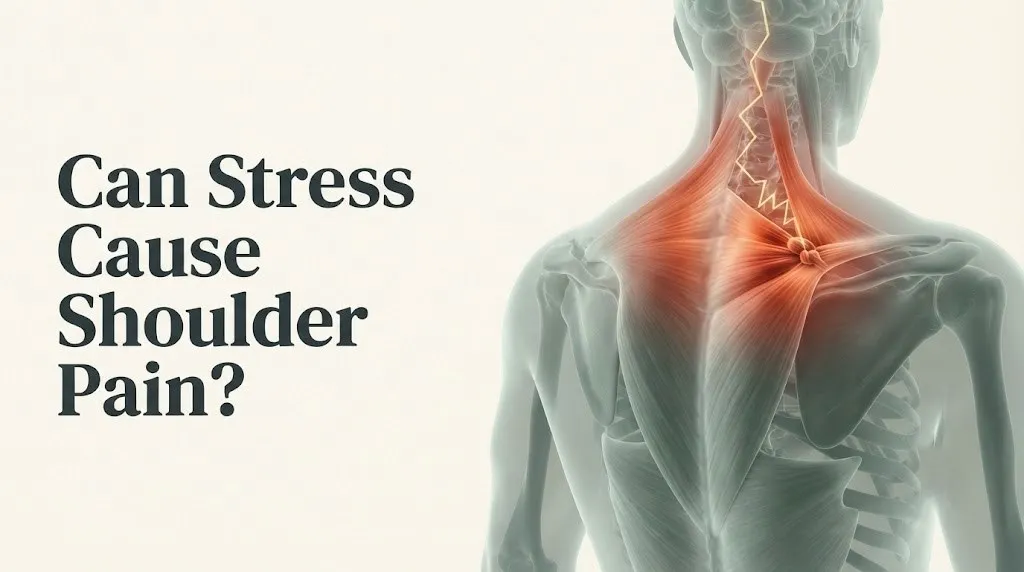
The upper trapezius, the large kite-shaped muscle covering the top of your shoulder, is particularly vulnerable. It has a dense population of sympathetic nerve receptors. A 2023 study published in the Journal of Pain demonstrated that experimentally induced mental stress immediately and significantly increased EMG-measured activity in the trapezius. This heightened activity did not return to baseline quickly after the stressor ended. This physical data confirms that a stressful Zoom call is a measurable physical event in your shoulder muscles.
how does stress cause shoulder and neck tension
Stress causes shoulder and neck tension by altering the output of gamma motor neurons, specialized nerve cells that control the sensitivity of your muscle spindles. Your muscles have internal sensors called muscle spindles that detect stretch and set the tone. Gamma motor neurons act like a thermostat dial for muscle tightness. When your sympathetic nervous system fires up, it increases gamma motor neuron activity, which causes the muscle spindle to pull taut. This creates a baseline of high muscle tone, even if you are sitting perfectly still.
Think of your shoulder muscles as a car engine. The sympathetic nervous system is a foot resting heavier and heavier on the gas pedal, even while the car is in park. The muscle is revving, burning energy, and generating tension, but doing no useful mechanical work. Over minutes and hours, this high idle leads to micro-tearing of the muscle fibers and their connective tissue sheaths. The body lays down a low-grade inflammatory response to repair these micro-tears, contributing further to the sensation of stiffness and soreness.
The specific muscles most affected by this neural drive are the upper trapezius, which elevates your shoulders, and the levator scapulae, which connects your shoulder blade to the top of your neck. When you are stressed, you often unconsciously perform a slight shrug, a leftover evolutionary posture of protecting the neck. This is not a conscious decision. It is a subcortical motor program. Your brainstem is directing your body into a defensive posture in response to a psychological threat. This constant micro-shrugging, driven by the gamma loop, is the engine of stress-induced neck and shoulder pain.
A further complication is a phenomenon called co-contraction. Under stress, the brain increases the activation of both the agonist and antagonist muscle pairs around a joint. At your shoulder, the muscles that lift the arm and the muscles that pull it down contract simultaneously. This stabilizes the joint but creates a rigid, splinted state. This co-contraction prevents normal fluid movement, reduces blood flow even more than a simple contraction, and is a hallmark of the movement patterns observed in highly anxious individuals.
Key Takeaway: Stress does not just “make you tense.” It physically turns up the sensitivity dial on your muscle stretch sensors through gamma motor neurons, locking your shoulders in a high-energy, blood-starved idle state without you ever taking a physical action.
sympathetic nervous system and muscle tension explained
The sympathetic nervous system is one half of your autonomic nervous system, and its job is to mobilize the body for a threat. When your amygdala, the brain’s fear center, sounds an alarm, it activates the SAM axis. This sympathetic-adrenal-medullary axis sends a lightning-fast signal down your spinal cord to the adrenal medulla. The adrenal medulla releases a flood of epinephrine into your bloodstream. Simultaneously, sympathetic nerve endings release norepinephrine directly onto your muscle fibers.
These catecholamines bind to beta-adrenergic receptors on the surface of your muscle cells. This binding triggers a cascade inside the cell that releases calcium ions. Calcium is the chemical key that unlocks the sliding of the contractile proteins, actin and myosin, past each other. When the muscle contracts, the myosin heads pull on the actin filaments. The critical problem with stress is that, in the absence of actual physical movement to burn off the energy, the chemical signal to contract outlasts the cell’s ability to fully relax. The calcium ions are not efficiently pumped back into their storage containers, and the muscle fiber remains partially locked.
This prolonged sub-maximal contraction is metabolically expensive. It consumes adenosine triphosphate (ATP), the cell’s energy currency. To make more ATP, the muscle switches to a less efficient anaerobic metabolism, which produces lactic acid. The lactic acid lowers the local tissue pH, making the area more acidic. This acidic environment is a direct chemical activator of acid-sensing ion channels (ASICs) on your nociceptive nerve fibers. The nerve sends a pain signal. This is the point where a physiological process becomes a conscious experience of shoulder pain.
Your parasympathetic nervous system, largely mediated by the vagus nerve, is the brake pedal. It releases acetylcholine, which slows heart rate and reduces the sympathetic output to muscles. Under chronic stress, the vagal brake is underactive. The sympathetic signal to contract is constant, and the parasympathetic signal to relax is weak. This autonomic imbalance is measurable through heart rate variability (HRV). Low HRV, a sign of chronic stress, is strongly correlated with increased reports of musculoskeletal pain, according to a 2022 meta-analysis in Pain Medicine.
what does stress shoulder pain feel like
Stress shoulder pain typically feels like a deep, dull ache, a persistent burning sensation, or a heavy weight pressing down on the trapezius and the inner border of the shoulder blade. It is almost always bilateral, affecting both shoulders simultaneously, though one side may feel more intense. The pain is diffuse. You feel a patch of aching, not a sharp point you can pinpoint with one finger.
The pain quality changes throughout the day. It is often absent upon waking, if you slept in a neutral position. It builds progressively through the morning as email stress accumulates. By late afternoon, it can feel like your shoulders are being pulled up toward your ears. Many people unconsciously check their posture and realize their shoulders are elevated by several inches. The upper trapezius feels like a dense, ropey cable under the skin.
Stress shoulder pain lacks the mechanical features of a rotator cuff tear. It will not have a specific painful arc of motion where lifting your arm to exactly 60 degrees causes a sudden sharp pinch. It aches during all movements. It also does not wake you up at night if you lie on the opposite side, while a calcific tendonitis often produces intense, relentless nighttime pain that disturbs sleep regardless of position.
There is also a strong emotional component to the pain quality. Patients often describe a sensation of restriction, as if they are wearing a tight yoke. There is an urge to roll the shoulders, crack the neck, or dig a thumb under the shoulder blade. These movements provide a fleeting, seconds-long relief, which is a hallmark of myofascial pain. The pain is not a relentless signal of tissue destruction; it is a dysfunctional loop of muscle spasm and chemical irritation that momentarily releases when you mechanically break up the contracted fibers with pressure or movement.
trapezius muscle pain from stress
The trapezius muscle is the primary target for stress-induced pain because its primary function is to shrug and stabilize the shoulder girdle, a direct postural expression of the fight-or-flight response. The upper fibers of the trapezius originate at the base of your skull and the nuchal ligament of your neck and insert onto the outer third of your collarbone. When these fibers chronically contract, they pull the head forward and the shoulders up.
This forward head posture creates a biomechanical cascade. For every inch your head moves forward, the weight of your head on your cervical spine effectively doubles. The upper trapezius and the suboccipital muscles at the base of your skull have to work exponentially harder to keep your head from falling forward. This creates a feedback loop. A stressful thought triggers a trapezius contraction. The forward pull strains the neck. The neck strain signals the trapezius to tighten further to stabilize the load. The initial stressor might disappear, but the biomechanical compensation remains.
Within the upper trapezius, specific spots become exquisitely tender. These are myofascial trigger points. The most clinically relevant one for stress pain is Trigger Point 2, located in the belly of the upper trapezius, just lateral to the midpoint of the muscle. When this trigger point is compressed, it reliably refers a sharp, toothache-like pain up the side of the neck to the mastoid process behind the ear and into the temple. This is why stress-induced trapezius tightness is a common cause of tension headaches. The pain in your head originates from a knot in your shoulder.
The lower trapezius often weakens in this postural pattern. The upper and middle fibers overwork, and the lower fibers, which are responsible for pulling the shoulder blades down and back, become inhibited through a process called reciprocal inhibition. The brain essentially turns them off because their relaxing action opposes the contracted, shrugged posture. Re-training the lower trapezius with specific exercises is a standard physical therapy intervention that addresses not just the symptom of tightness, but the underlying muscle imbalance created by chronic stress.
Key Takeaway: Your trapezius is not just a random sore muscle. It is the body’s physical representation of your stress state. It shrugs to protect you, and when the threat is chronic, it stays shrugged, starving itself of blood and referring pain directly into your skull.
can stress cause left shoulder pain
Yes, stress can cause left shoulder pain, but left-sided pain requires a higher index of suspicion and careful self-assessment because of its overlap with cardiac referred pain. Stress-induced myofascial pain does not discriminate by side. You can develop trigger points in your left trapezius, left levator scapulae, or left rhomboids purely from sympathetic nervous system activation, just as you can on the right. A tense, aching left shoulder that feels identical to a tense right shoulder is likely stress-related.
The left side bias sometimes develops due to occupational ergonomics, such as cradling a phone between the left ear and shoulder, or because of a habitual protective posture. Some people guard one side of their body when stressed, creating an asymmetrical tension pattern. A 2021 observational study in the Journal of Behavioral Medicine noted that individuals with high job strain were more likely to report left-sided neck and shoulder pain, though the mechanism for lateralization was unclear and likely multi-factorial.
The critical issue is that cardiac ischemia, a heart attack, can present not as crushing chest pain, but as an isolated ache or pressure in the left shoulder, left arm, jaw, or upper back. The nerves that supply the heart, the cardiac sympathetic afferents, converge onto the same spinal cord segments in the upper thoracic spine, specifically T1 to T5, as the sensory nerves from the left shoulder and inner arm. Your brain receives a distress signal from the heart but interprets the location as the shoulder. This is called referred pain.
Never dismiss a sudden onset of left shoulder pain as “just stress” if it is accompanied by any other symptom: a squeezing pressure under the breastbone, shortness of breath, a cold sweat (diaphoresis), nausea, or a feeling of impending doom. The pain of a heart attack is often diffuse, not a pinpoint trigger point you can press. It is not affected by changing your shoulder position. If you suspect a cardiac cause, call emergency services immediately. If the pain resolves completely with a hot shower, massage, and postural change, the likelihood of a stress-related or musculoskeletal origin is much higher.
stress shoulder pain vs heart attack symptoms
Distinguishing stress shoulder pain from a heart attack involves analyzing the quality, triggers, and associated symptoms. Stress-related muscle pain is positional, reproducible with touch, and feels like a dull ache or burning. Cardiac ischemic pain is independent of your body position, often described as a crushing pressure, squeezing, or an intense heaviness, and it is frequently accompanied by systemic symptoms that a muscle knot simply cannot produce.
The following table compares the symptom profiles of stress-related shoulder pain, cardiac referred pain, and cervical radiculopathy for differential self-assessment:
| Symptom Feature | Stress-Related Myofascial Pain | Cardiac Referred Pain (Emergency) | Cervical Radiculopathy (Nerve) |
|---|---|---|---|
| Pain Quality | Dull, aching, burning, tight band | Crushing, squeezing, heavy pressure | Sharp, electric, shooting, burning |
| Location | Diffuse patch over trapezius, inner shoulder blade | Left shoulder, left arm (ulnar side), jaw, upper back | Follows a stripe down the arm to specific fingers |
| Trigger | Emotional stress, prolonged desk work, poor posture | Physical exertion, emotional stress, or occurs at rest | Specific neck movements (looking up, tilting head) |
| Relief Factor | Massage, heat, shoulder rolls, changing position | Does not change with position or shoulder palpation | Resting the arm overhead may relieve it |
| Associated Symptoms | Tension headache, jaw clenching, fatigue | Shortness of breath, diaphoresis, nausea, lightheadedness | Numbness, tingling, weakness in biceps or triceps |
Cardiac pain does not have a tender spot you can press to reproduce the exact pain. You cannot press on a heart attack. With stress pain, you can almost always find a taut band in the trapezius or a spot under the shoulder blade that, when pressed, replicates your deep ache. The pain of a heart attack is often diffuse and non-specific to palpation of the shoulder muscles. It also does not improve or worsen with a deep breath, a stretch, or a shoulder roll.
Cervical radiculopathy, a pinched nerve in your neck, produces a very different quality of pain. It is neuropathic: sharp, lancinating, electric, and follows a dermatomal pattern down the arm. A C5 radiculopathy will cause pain over the deltoid. A C6 radiculopathy shoots pain down the lateral arm to the thumb. It is often accompanied by objective numbness and muscle weakness, like difficulty with a bicep curl. If your shoulder pain feels like an electric wire running down your arm, a disc herniation or foraminal stenosis in your cervical spine is a far more likely explanation than stress.
Key Takeaway: The single most powerful self-triage question is: “If I press on a specific spot in my shoulder, does it exactly reproduce the pain?” If the answer is yes, it is musculoskeletal and likely stress-related. If the pain is unaffected by touch and accompanied by a sense of doom or systemic symptoms, seek emergency cardiac care.
chronic stress and myofascial pain syndrome
Chronic stress is a primary driver of myofascial pain syndrome (MPS), a condition where multiple sensitive trigger points develop in the muscle and connective tissue. A trigger point is a hyperirritable spot within a taut band of skeletal muscle. It is not just a tight muscle. It is a localized area of sarcomeres, the basic contractile units, that are pathologically shortened and locked in a state of energy crisis.
Under a microscope, a trigger point shows what researchers call a “contraction knot.” Individual muscle fibers are maximally contracted while adjacent fibers are stretched. The sustained contraction compresses the local microcirculation. This creates a vicious cycle: the ischemia leads to a drop in ATP, the energy needed for muscle relaxation. Without ATP, the myosin heads cannot detach from the actin filaments, perpetuating the contraction. The ongoing contraction further compresses the blood vessels, worsening the energy crisis. A 2023 review in Current Pain and Headache Reports described this as the Integrated Trigger Point Hypothesis, a cycle of contraction, ischemia, and sensitizing substance release.
Chronic stress feeds this cycle by ensuring a constant low-level sympathetic drive. Norepinephrine dripping onto the muscle cells at the trigger point site sensitizes the nociceptors, lowering their firing threshold. The local tissue becomes a soup of inflammatory mediators. Bradykinin, calcitonin gene-related peptide (CGRP), substance P, and serotonin are released from the irritated nerve endings. These chemicals further depolarize the nerve, creating a peripheral sensitization. The trigger point becomes a constant, self-sustaining source of nociceptive input, a pain generator, even if the original psychological stressor has passed.
MPS is distinct from fibromyalgia, though they often coexist. Fibromyalgia is a widespread central nervous system disorder of pain amplification. MPS is a regional problem with palpable, taut bands in specific, predictable muscles like the trapezius, rhomboids, and infraspinatus. In a person with chronic stress, MPS often develops first, and the constant bombardment of pain signals from these peripheral trigger points can, over time, drive the central nervous system into a sensitized state, blurring the lines between a local muscle problem and a systemic pain amplification disorder.
stress-induced hyperalgesia and pain sensitivity
Stress-induced hyperalgesia means that high levels of cortisol and norepinephrine directly change how your brain and spinal cord process pain signals, making you feel more pain from a stimulus that should only be mildly uncomfortable. A tight muscle that would normally register as an awareness of tension is instead perceived as painful. Your volume knob for pain has been turned up by your own neurochemistry.
The periaqueductal gray (PAG), a structure in your midbrain, is a critical hub for descending pain modulation. Normally, the PAG sends inhibitory signals down the spinal cord that act as a gate, blocking incoming pain signals. Cortisol, under conditions of chronic stress, impairs this descending inhibitory pathway. It reduces the effectiveness of your body’s own pain-relieving opioids, the endorphins. The gate stays open. A 2022 experimental study in Pain used functional MRI to show that participants with higher hair cortisol levels, a marker of chronic stress, had reduced functional connectivity between the PAG and the prefrontal cortex. Their pain control network was demonstrably weaker.
Simultaneously, stress amplifies the incoming signal. The amygdala, which is hyperactive in stress, has a direct role in pain processing. It projects to and activates the “on” cells in the rostral ventromedial medulla (RVM), a brainstem nucleus. The RVM “on” cells facilitate and amplify the pain signals traveling up from the shoulder into the brain. You have a dual dysfunction. The brain’s pain brake is weak, and its pain accelerator is stuck to the floor.
This is a critical concept to internalize. Your shoulder pain is not faked, and it is not a sign of tissue destruction on par with a fracture. It is a neurobiological reality in which a mildly ischemic trigger point generates a normal signal, but your sensitized brain amplifies that signal into a distressing, aching pain. This is not your fault. It is a predictable consequence of an HPA axis running in overdrive. Treatments that target this central sensitization, like low-dose tricyclic antidepressants or cognitive behavioral therapy, work by restoring the inhibitory function of the descending pain pathway, not by treating a muscle injury.
research linking stress to musculoskeletal pain
The research linking stress to musculoskeletal pain is established and multi-dimensional, drawing from prospective cohort studies, experimental stress-induction trials, and neuroimaging. A foundational 2019 systematic review in Psychosomatic Medicine, analyzing data from over 50,000 participants, found that high job strain and perceived life stress were consistently associated with a 25 to 40 percent increased risk of developing chronic neck and shoulder pain over a two- to five-year follow-up period.
The mechanism has been validated in controlled laboratory settings. A landmark study published in the European Journal of Pain used the Trier Social Stress Test, a validated protocol where participants perform mental arithmetic and public speaking in front of an impassive panel. The researchers measured surface EMG activity of the upper trapezius and subjective pain ratings. During the stress task, trapezius muscle activity increased significantly. The pain ratings rose in lockstep. Crucially, the EMG and pain response was disproportionately larger in participants who reported high levels of daily life stress. Their muscles were primed to over-respond.
Research on work-related stress has identified specific ergonomic and psychosocial co-factors. A 2021 study in Occupational and Environmental Medicine found the combination of high psychological job demands and low job control (the “job strain” model) was more predictive of shoulder pain than physical load factors like lifting alone. The study demonstrated that the perception of constant pressure while having no autonomy creates a state of helplessness that translates into sustained, unconscious muscle tension, particularly in the trapezius.
Perhaps the most compelling evidence for the stress-pain connection comes from intervention research targeting the brain, not the shoulder. A randomized controlled trial published in the Journal of Pain assigned patients with chronic neck and shoulder pain to either an eight-week course of cognitive behavioral therapy or standard physical therapy. The CBT group, which worked on stress perception and cognitive restructuring but did not touch the shoulder muscles, had equal reductions in pain intensity compared to the physical therapy group and better outcomes in reducing pain-related anxiety. Treating the brain’s interpretation of the stress directly reduced the sensation of pain in the shoulder.
Key Takeaway: The evidence is not just that stressed people report more pain. Lab studies show stressed muscles literally contract more, and clinical trials show that psychological interventions, which treat the brain’s threat response, are as effective as physical treatments at reducing shoulder pain.
is stress shoulder pain psychosomatic
Stress shoulder pain is real, physical pain, but its origin lies in a psychologically driven physiological process. The term “psychosomatic” is accurate in its true clinical definition: an interaction between the mind (psyche) and the body (soma). It does not mean the pain is imaginary. The muscle ischemia, the acidic chemical environment activating the nociceptors, and the inflammatory mediators are objectively present. The process is initiated and sustained by psychological stress, but the tissue damage is biological.
Dr. John Sarno, a rehabilitation physician, popularized the concept of Tension Myositis Syndrome (TMS), proposing that the brain creates pain as a distraction from unconscious emotional rage. While the specific psychoanalytic framework of repressed rage is debated, the core neuroscientific insight was correct and decades ahead of its time. The brain, specifically the amygdala and hypothalamus, can direct the autonomic nervous system to create a state of mild oxygen deprivation in peripheral muscles, and it can amplify the resulting signals into a pain experience. Modern neuroscience validates that the brain has the neural architecture, through the descending pain modulatory pathways, to “create” pain in the absence of any structural pathology.
This is not to dismiss the pain. The pain is genuine. The trap is when a patient with TMS undergoes shoulder surgery for a minor labral fraying found on an MRI, a finding present in a high percentage of pain-free individuals, and the surgery does not resolve the pain because the pain generator was the central nervous system, not the labrum. Studies on asymptomatic populations show high rates of rotator cuff tears, labral tears, and disc bulges on MRI in people with zero pain. The presence of a structural finding on a scan does not mean it is the cause of the pain, especially in the context of high psychosocial stress.
The most productive, evidence-based approach is to accept that the pain is biopsychosocial. It is a problem of tissue, nerve signaling, and emotional state. The way out is not to debate whether it is “real.” It is to use techniques that calm the nervous system and restore normal blood flow to the muscle, while simultaneously addressing the cognitive patterns that keep the amygdala firing danger signals. This dual approach, treating the muscle and the stress, is far more effective than treating either in isolation.
stretches for stress-related shoulder tension
Targeted stretching of the trapezius and pectoral muscles provides mechanical relief by physically elongating contracted sarcomeres and temporarily restoring microvascular blood flow. The most effective stretch for stress-related shoulder tension is the Upper Trapezius Stretch. Sit on your right hand to anchor the shoulder down. Gently tilt your left ear toward your left shoulder. You should feel a strong pulling sensation in the right side of your neck and the top of the right trapezius. Hold for a minimum of 30 seconds.
Static stretching for 30 seconds or longer is required to overcome the stretch reflex. The muscle spindle detects the rapid lengthening and initially signals the muscle to contract to protect itself. You have to hold the stretch through the initial resistance, which you will feel as a mild burning or pulling. After about 20 to 30 seconds, the Golgi tendon organ, a sensor in the tendon that monitors tension, overrides the muscle spindle signal. It tells the muscle to relax. This is called autogenic inhibition. You will feel a distinct softening and release in the muscle belly as the Golgi tendon organ finally forces the muscle to relax.
The Doorway Pectoral Stretch is the second essential movement because tight pectoral muscles pull the shoulders forward into a rounded posture. This forces the upper trapezius and rhomboids to work against constant mechanical strain. Stand in an open doorway. Place your forearms on the doorframe with your elbows bent at 90 degrees and level with your shoulders. Gently lean your body forward through the doorway until you feel a stretch across the front of your chest and shoulders. Keep your head up and do not arch your low back. Hold for 30 seconds.
The frequency of stretching matters more than the intensity. You should perform these stretches not just when you are in pain, but proactively. A research protocol from the International Journal of Sports Physical Therapy showed that intermittent, short-duration stretching performed every hour was more effective at reducing perceived neck and shoulder pain in office workers than a single, long stretching session at the end of the day. Set a timer. Every 60 minutes, do a 30-second trapezius stretch and a 30-second doorway stretch. This prevents the tension from accumulating to a point of pain, breaking the ischemic cycle before it crosses the threshold into nociceptor activation.
progressive muscle relaxation for shoulder pain relief
Progressive muscle relaxation (PMR) is a technique where you intentionally contract a muscle group to about 70 percent of its maximum, hold for five seconds, and then suddenly release. The release phase is the therapeutic agent. By deliberately creating a contraction, you force the muscle to fire its gamma motor neurons fully, and the sudden stop in neural drive produces a deeper, more complete relaxation than trying to will a tense muscle to relax.
PMR for shoulder pain works on several levels. Mechanically, the contraction and release cycle acts as a pump, flushing stagnant, metabolite-filled blood out of the trigger point and allowing fresh, oxygenated blood to rush in during the relaxation. This breaks the ischemic energy crisis in the taut band. Neurochemically, the process shifts the autonomic balance. The deep exhale that accompanies the release stimulates the vagus nerve, providing a brief but powerful burst of parasympathetic activity that counters the sympathetic drive holding the muscle tight.
Here is the specific protocol for stress-related shoulder pain:
- Sit in a chair with your feet flat on the floor and your hands resting on your thighs.
- Inhale deeply. As you inhale, slowly and deliberately shrug your shoulders as high as they will go, pulling them straight up toward your ears. Squeeze them hard. Hold the shrug and your breath for five full seconds.
- Pay attention to the sensation of tension, the slight burning in the trapezius, the feeling of tightness radiating up your neck. Mentally label this sensation as “tension.”
- Exhale suddenly and fully through your mouth. Simultaneously, drop your shoulders completely, like cutting the strings on a marionette.
- Focus intensely on the sensation of release for 15 seconds. Feel the blood rushing back into the shoulders, the softening, the sudden heaviness. Label this “release.”
- Repeat this cycle three times, then move to the neck by gently pressing your head back into the chair for five seconds and releasing.
This practice has a strong evidence base. A 2020 trial published in Applied Psychophysiology and Biofeedback found that a six-week PMR program significantly reduced self-reported stress and cortisol awakening response, and specifically reduced myofascial trigger point sensitivity in the upper trapezius in patients with chronic neck pain. PMR works because it directly trains your interoceptive awareness, your ability to feel the internal state of your body, allowing you to catch tension at a 10 percent level and release it before it escalates into a pain signal.
Key Takeaway: You cannot consciously “tell” a stressed shoulder muscle to relax. You have to trick it. PMR uses a hard contraction to exhaust the muscle spindle’s reflex, creating a neurological void that the vagus nerve then fills with a deep parasympathetic relaxation.
massage and trigger point release for stress tension
Massage therapy and self-applied trigger point release directly address the myofascial component of stress shoulder pain by mechanically breaking up adhesions and causing a neurophysiological relaxation response. When a therapist or you apply deep, sustained pressure to a taut band in the trapezius, the direct compression physically separates the overlapped sarcomeres in the contraction knot. This restores local blood flow, washing out the accumulated bradykinin and lactic acid.
The release is not entirely mechanical. Sustained pressure on a trigger point also stimulates mechanoreceptors, the pressure-sensitive nerve endings. These mechanoreceptors send a signal to the spinal cord that can inhibit the transmission of pain signals at the dorsal horn, a concept known as gate control theory. Essentially, the pressure sensation enters the spinal cord and physically closes a gate, blocking some of the pain signals from the trigger point from reaching your brain. This is why pressing on a painful knot provides pain relief after an initial burst of tenderness.
Self-myofascial release using a lacrosse ball or a tennis ball is a practical, daily intervention. Place the ball between the wall and your upper trapezius, just medial to the top of your shoulder. Lean into the ball with your body weight until you find a spot that reproduces your deep, familiar ache. Maintain the pressure on this spot for 30 to 60 seconds. You should feel the pain intensity slowly reduce. This is the trigger point releasing. Roll the ball slowly along the muscle fibers from the base of your skull down to the outer tip of your shoulder.
A critical caution is to avoid applying pressure to the anterior triangle of the neck, the area between the windpipe and the sternocleidomastoid muscle where the carotid artery and vagus nerve sit superficially. Massage over the carotid sinus can cause a reflex drop in heart rate and blood pressure. For self-treatment, stay on the back and sides of the neck and shoulders. If you feel a sharp, electric shock-like sensation radiating down your arm during self-massage, you are pressing on a nerve, likely the brachial plexus, and you should stop immediately and reposition.
can anxiety cause shoulder blade pain
Yes, anxiety can cause pain directly under or around the shoulder blade, typically from sustained rhomboid and middle trapezius tension. The rhomboid muscles connect the inner edge of your shoulder blade to your thoracic spine. Their job is to retract the scapula, pulling the shoulder blades together. Under stress, people often hold a posture of slight tension in the rhomboids, a subtle bracing of the upper back that feels like a constant, dull ache between the shoulder blades.
This interscapular pain from anxiety is often described as a nagging, irritating discomfort that creates a constant urge to twist, crack the back, or lean back over a chair to get a release. The pain is particularly responsive to emotional state. It will spike during a tense phone call and may virtually disappear on a relaxing weekend vacation. This variability is a strong diagnostic clue that the pain generator is neuromuscular and driven by the autonomic nervous system, not a fixed structural lesion like a disc herniation.
Anxiety also changes breathing mechanics in a way that directly stresses the shoulder blade muscles. When you are anxious, your breathing becomes shallow and apical. You breathe into your upper chest using your accessory muscles of respiration, the sternocleidomastoid, scalenes, and upper trapezius, rather than using your diaphragm. This overworks the muscles that attach to the top of your rib cage and the cervical spine, altering the mechanics of the entire shoulder girdle. The rhomboids and levator scapulae become overworked in their attempt to stabilize the scapula against the constant, shallow heaving of the chest.
Finally, anxiety is associated with hypervigilance, a state of heightened sensitivity to bodily sensations. A normal, low-level myofascial irritation that a non-anxious brain would filter out as irrelevant background noise is caught by the anxious brain’s attentional spotlight. The brain interprets the signal as a threat. Is this a new symptom? Is something seriously wrong? This catastrophic interpretation feeds back to the amygdala, increases sympathetic output, tightens the muscle further, and the minor irritation becomes a debilitating pain. Cognitive behavioral therapy specifically targets this misinterpretation of bodily signals to break the cycle.
when to see an orthopedist for shoulder pain
Schedule an appointment with a board-certified orthopedist or a sports medicine physician if your shoulder pain has persisted for six weeks despite consistent self-management with stretching, stress reduction, and ergonomic modification. A specialist can perform a structured physical examination, including Neer’s, Hawkins-Kennedy, and empty can tests, to rule out a concurrent rotator cuff tear or impingement syndrome. Stress can cause pain, but it can also cause you to ignore a mechanical injury that needs targeted rehabilitation.
Certain red flag symptoms require a more urgent evaluation, potentially with a neurologist if they are not clearly cardiac. Pain that radiates past the elbow into the hand, especially if accompanied by specific finger numbness or objective weakness, suggests a cervical radiculopathy. You may notice you are dropping objects, like a coffee cup, or your tricep or bicep visibly shakes or fails under a load it normally handles. This is not a stress knot. This is a pinched nerve, likely a C6 or C7 disc herniation, and it requires an MRI of the cervical spine and a neurological consultation, not just a shoulder X-ray.
Constant, severe nighttime pain that wakes you from sleep and does not ease with position changes is another red flag. While stress can cause insomnia, stress-related myofascial pain usually eases when you lie down and take the weight of the arm off the shoulder. Unrelenting night pain is a hallmark of adhesive capsulitis (frozen shoulder), calcific tendonitis, or, much more rarely, a Pancoast tumor at the apex of the lung. These diagnoses require specific diagnostic ultrasound, X-ray, or advanced imaging.
When you go to the appointment, bring a concise history. Tell your orthopedist the pain pattern, that you have high life stress, what you have tried, and that you want to know if there is a structural injury in addition to the muscle tension. A good clinical workup will assess the passive and active range of motion, strength, and impingement signs. If the physical exam does not reproduce your pain and your X-ray or ultrasound is clean, the orthopedist may confirm that your chronic stress pattern is the primary pain generator. This is validating. It rules out structural damage and allows you to confidently focus on stress neurobiology and physical therapy without fear that you are ignoring a tear.
Frequently Asked Questions About Stress and Shoulder Pain
How do I know if my shoulder pain is from stress?
Stress shoulder pain is diffuse, aching, and bilateral, and you can usually press on a tender spot in your trapezius that reproduces the exact pain.
It fluctuates with your emotional state, easing on relaxed weekends and spiking with work pressure, and improves with massage, heat, and stretching.
Can stress cause left shoulder blade pain?
Yes, stress can cause pain under the left shoulder blade from sustained rhomboid and trapezius muscle tension, identical to the right side.
Sudden, crushing left shoulder blade pain with shortness of breath or sweating requires immediate emergency cardiac evaluation to rule out a heart attack.
What emotion is stored in the shoulders?
The concept of emotions being “stored” in the body is metaphorical. Fear and anxiety activate the sympathetic nervous system, which creates a sustained physical contraction in the shoulder muscles through gamma motor neuron activation.
This creates a physical feeling of carrying a heavy weight or being braced for impact, which is often interpreted emotionally as the weight of responsibility or suppressed fear.
How do you release emotional tension from your shoulders?
Progressive muscle relaxation releases tension by having you deliberately shrug your shoulders up hard for five seconds and then suddenly drop them on a full exhale.
This mechanically pumps out metabolic waste and stimulates the vagus nerve, and pairing the physical release with a conscious mental reframe of letting go makes the relaxation deeper.
Can stress cause shoulder and arm pain on one side?
Yes, stress can cause unilateral shoulder and arm pain, particularly if you habitually hold stress on one side or have an asymmetric work setup, like cradling a phone.
Unilateral pain that is sharp, electric, and shoots down the arm to specific fingers suggests a pinched cervical nerve, not a stress knot.
How long does stress shoulder pain last?
Stress shoulder pain can last for hours during an acute stressor, or it can be a daily, chronic issue lasting months or years if the underlying stress pattern and postural habits are not changed.
The pain from a specific trigger point will persist as long as the muscle remains in a state of contracted ischemia; it resolves when blood flow is restored through stretching, massage, or relaxation.
Your shoulder pain is a physical translation of your nervous system’s threat level. The tight, burning knot in your trapezius is the end result of a cascade that started with a perception of danger in your amygdala and ended with a localized oxygen-starved muscle fiber locked in contraction. Understanding this pathway does not make the pain vanish, but it removes the fear that you have a mysterious, progressive injury. This is a physiological state, not a structural breakdown.
The single most effective action you can take today is not to stretch for an hour. It is to break the accumulation cycle. Every time you feel that familiar tension building, do one single, slow, full-exhale shoulder shrug release. Drop your shoulders on an audible sigh. This is not a relaxation technique in the way a scented candle is. It is a physiological vagus nerve maneuver that briefly intercepts the sympathetic drive to your gamma motor neurons. It buys your trapezius a few minutes of blood flow and a break from the constant chemical irritation.
Your shoulders are not broken. They are a barometer of your internal state. Listen to them, release them, and then address the stressors that keep them lifted. When you learn to do this consistently, you stop being a passive victim of stress-induced pain and become an active regulator of your own neuromuscular system.