Stress Itching No Rash: Causes and Relief in 2026
Yes, stress can cause itching without a rash, and the mechanism is specific: psychological stress activates your HPA axis and sympathetic nervous system, releasing cortisol, norepinephrine, and corticotropin-releasing hormone (CRH) that directly stimulate mast cells in your skin to release histamine and other itch-producing compounds, while stress neuropeptides like substance P sensitize your itch-sensing nerve fibers.
The American Academy of Dermatology recognizes that stress is a common trigger for pruritus, the medical term for itching, even in the absence of visible skin changes like rash, hives, or redness. Your skin contains an extensive network of mast cells, sensory nerve endings, and immune cells that all respond to stress hormones with increased activity, creating the sensation of itch without the need for a visible allergic or inflammatory skin reaction.
This article explains the exact neuroimmunological pathway that turns a stressful thought into the urge to scratch, gives you a clear framework for distinguishing stress-induced itch from systemic diseases that also cause itching without rash, and provides specific techniques to interrupt the itch-scratch cycle. You will learn what stress itching typically feels like, which cooling and topical treatments actually work, and exactly when a dermatologist needs to evaluate your symptoms.
Can Stress Cause Itching Without Rash
Stress can cause itching without a visible rash by activating the hypothalamic-pituitary-adrenal axis and sympathetic nervous system, which release hormones and neuropeptides that directly stimulate itch-sensing nerve fibers in the skin and trigger mast cells to release histamine and other pruritogens into the surrounding tissue.
This is not a rare or imagined symptom. The International Forum for the Study of Itch recognizes psychogenic itch as a distinct diagnostic category, defined as itch where psychological factors play a primary role in the initiation, intensity, or maintenance of the pruritus. Research published in Acta Dermato-Venereologica has found that up to 30% of people with chronic pruritus of unknown origin report stress as a primary trigger for their symptoms, and many have no visible skin pathology on examination.
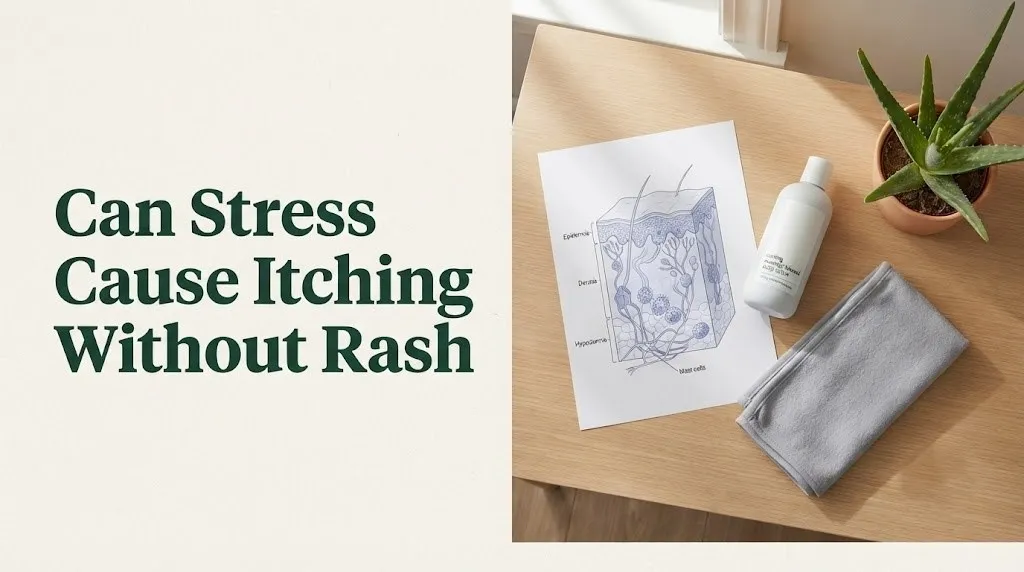
The itching you experience during stress is real and physiologically generated. Your skin is not simply a passive barrier. It is an active neuroimmunological organ densely populated with mast cells, sensory nerve endings, and immune cells that all express receptors for stress hormones. When CRH and cortisol bind to these receptors, they trigger cellular events that produce itch at the level of the skin itself. The absence of a rash does not mean the absence of a physical process. It means the process is occurring at a microscopic, cellular level that does not produce visible inflammation but does activate the nerves that signal itch to your brain.
Key research finding: A 2022 study in the Journal of Investigative Dermatology demonstrated that intradermal injection of CRH in human volunteers produced localized itching without visible wheal or flare, confirming that stress hormones can directly induce pruritus independent of allergic-type skin reactions.
How Stress Affects Your Skin
Stress affects your skin through multiple converging pathways: it activates cutaneous mast cells to release pruritogens, triggers sensory nerve endings to release itch-amplifying neuropeptides, impairs the skin barrier function, alters the skin microbiome, and changes how your brain processes itch signals from the periphery.
Your skin has its own functional equivalent of the HPA axis. Keratinocytes, the main cells of the epidermis, produce CRH and express CRH receptors. Dermal mast cells express CRH-R1 receptors. Sensory nerve endings in the skin express receptors for cortisol and norepinephrine. This means the skin can both generate and respond to stress signals locally, independent of systemic stress hormone levels. When psychological stress activates the central HPA axis, it also activates this peripheral skin stress system, producing a coordinated response that includes mast cell degranulation, neuropeptide release, and altered barrier function.
The skin barrier, specifically the stratum corneum, is also affected by stress. Cortisol reduces the production of ceramides, key lipids that maintain barrier integrity and prevent water loss. Research in Experimental Dermatology has shown that examination stress in students produces measurable increases in transepidermal water loss and decreases in skin surface hydration within days. A compromised barrier allows irritants and allergens to penetrate more easily and increases the firing rate of sensory nerves in the epidermis, both of which contribute to itch perception.
Think of your skin during stress like a security system that has been set to maximum sensitivity. Normally, minor stimuli are filtered out. Under stress, the system’s threshold drops. A light touch, a change in temperature, or the presence of normally harmless substances can trigger an alarm. That alarm is the sensation of itch, and it fires even when there is no visible intruder.
Key Takeaway: Stress does not just make you feel like you itch. It physically changes your skin’s immune cells, nerve endings, and barrier function in ways that generate real itch signals. Your skin is not imagining it.
The Stress-Itch Connection Explained
The stress-itch connection operates through a bidirectional neuroimmunological circuit where stress hormones activate skin cells to produce itch, and the resulting itch and scratching create additional stress that further amplifies the itch signal, forming a self-perpetuating cycle.
The forward pathway from stress to itch begins in the brain. The amygdala perceives a stressor and signals the hypothalamus to release CRH. CRH travels through the bloodstream to the skin, where it binds to CRH-R1 receptors on mast cells located around blood vessels in the dermis. This binding triggers mast cell degranulation, releasing pre-formed histamine, tryptase, and other mediators. These compounds bind to receptors on nearby unmyelinated C-fibers, the nerve fibers that carry itch signals to the spinal cord and brain. Simultaneously, sympathetic nerves in the skin release norepinephrine, which sensitizes these same C-fibers and lowers their activation threshold.
The reverse pathway from itch to stress is equally important. Persistent itching is inherently stressful. It disrupts sleep, impairs concentration, and creates social embarrassment. This stress activates the HPA axis again, releasing more CRH and cortisol, which triggers more mast cell degranulation. The scratching that itch provokes damages the skin barrier, releasing damage-associated molecular patterns that activate additional immune cells and sensory nerves. A 2023 review in Brain, Behavior, and Immunity described this as a “feed-forward loop” where stress, itch, and scratching each amplify the others.
| Pathway Component | What Happens | Effect on Itch |
|---|---|---|
| Brain perceives stress | Amygdala activates HPA axis | Initiates stress-itch cascade |
| CRH release | Binds to mast cell CRH-R1 receptors | Triggers histamine and tryptase release |
| Mast cell degranulation | Histamine, tryptase, IL-31 released | Directly activates itch C-fibers |
| Sympathetic activation | Norepinephrine in skin | Sensitizes nerve endings, lowers itch threshold |
| Neuropeptide release | Substance P, CGRP from C-fibers | Stimulates more mast cells, amplifies itch |
| Scratching | Damages skin barrier | Releases more inflammatory signals, worsens itch |
| Increased stress | Itch disrupts sleep and mood | Re-activates HPA axis, perpetuating cycle |
How Cortisol and Stress Hormones Trigger Itching
Cortisol triggers itching through a complex mechanism that involves both direct effects on skin cells and indirect effects through its circadian rhythm: at normal daytime levels, cortisol actually suppresses inflammation, but at the low nighttime nadir, this suppression is removed, allowing mast cell activity to increase, which is why stress itching often worsens at night.
This seems paradoxical. Cortisol is anti-inflammatory, which is why synthetic corticosteroids are used to treat inflammatory skin conditions. Why would the body’s natural cortisol cause itching? The answer lies in timing and receptor dynamics. During acute stress, the rapid surge of CRH and norepinephrine drives mast cell degranulation before cortisol’s anti-inflammatory effects fully develop. During chronic stress, the HPA axis becomes dysregulated. Cortisol’s normal circadian rhythm flattens, and tissues can become resistant to cortisol’s anti-inflammatory effects while remaining sensitive to CRH’s pro-inflammatory, mast-cell-activating effects.
The cortisol circadian rhythm is central to understanding stress itch timing. In a healthy stress system, cortisol peaks in the early morning, around 8 a.m., and reaches its lowest point around midnight. This nighttime dip removes a natural anti-inflammatory signal from the skin. Mast cells, freed from cortisol’s suppressive effect, become more reactive. Histamine release increases. Combined with the lack of daytime distractions and the warmth of bedding, the nighttime environment is ideal for itch perception. This is why many people with stress-induced itching report that it is worst when they are trying to fall asleep.
Cortisol effects on skin relevant to itching:
- High acute cortisol: transient anti-inflammatory effect, but CRH surge overrides for mast cell activation
- Low nighttime cortisol: removal of anti-inflammatory suppression, mast cells more reactive
- Chronic stress cortisol pattern: flattened rhythm, persistent low-grade inflammation, tissue cortisol resistance
- Cortisol effect on barrier: reduces ceramide production, impairs stratum corneum integrity
- Cortisol effect on nerves: sensitizes peripheral nerve endings through altered ion channel expression
Individual variation note: People who take systemic corticosteroids such as prednisone for autoimmune conditions may experience a different pattern. Tapering or withdrawing corticosteroids can produce rebound itching as the body’s own HPA axis recovers and the skin’s inflammatory pathways are temporarily unregulated. Any changes in itching related to corticosteroid use should be discussed with the prescribing physician.
Mast Cells and Histamine Release During Stress
Mast cells are the primary immune cells responsible for stress-induced itching because they express CRH receptors that directly trigger degranulation when stress hormones are present, releasing histamine, tryptase, and interleukin-31 (IL-31) into the surrounding skin where these compounds activate itch-sensing nerve fibers.
Cutaneous mast cells are strategically positioned in the dermis, concentrated around blood vessels and in close proximity to sensory nerve endings. This anatomical arrangement is not accidental. Mast cells and nerves form functional units where signals can travel in both directions: mast cell mediators activate nerves, and nerve-derived neuropeptides activate mast cells. During stress, this bidirectional communication becomes hyperactive. CRH from the bloodstream and local skin production binds to mast cell CRH-R1 receptors. Norepinephrine from sympathetic nerve endings binds to adrenergic receptors on mast cells. Both signals converge to trigger degranulation.
Histamine is the best-known mast cell product, and it is a potent itch inducer. It binds to H1 and H4 receptors on unmyelinated C-fibers, opening ion channels that generate action potentials traveling to the spinal cord and brain. This is the same histamine pathway involved in allergic reactions, which is why antihistamines can partially relieve stress-induced itching. However, stress itch involves more than histamine. Tryptase activates protease-activated receptor 2 (PAR2) on C-fibers, producing histamine-independent itch. IL-31 is a cytokine that directly stimulates itch nerves and is increasingly recognized as a major pruritogen in stress-related and chronic itch conditions.
| Mast Cell Product | Receptor Target on Nerves | Effect on Itch |
|---|---|---|
| Histamine | H1, H4 receptors | Direct activation of itch C-fibers |
| Tryptase | PAR2 receptor | Histamine-independent itch activation |
| IL-31 | IL-31 receptor A | Potent pruritogenic cytokine, chronic itch |
| Prostaglandin E2 | EP receptors | Sensitizes nerve endings, enhances histamine effect |
| Leukotrienes | CysLT receptors | Inflammatory amplification, vascular permeability |
| Serotonin | 5-HT receptors | Modulates itch signaling in skin and spinal cord |
Key Takeaway: Mast cells are the cellular link between a stressful thought and the urge to scratch. Stress hormones tell mast cells to dump their contents, and those contents directly activate the nerves that signal itch to your brain. This is why treatments that stabilize mast cells or block their products can reduce stress-related itching.
Substance P, CGRP, and Stress-Induced Nerve Sensitivity
Substance P and calcitonin gene-related peptide (CGRP) are neuropeptides released from sensory nerve endings in the skin during stress that directly stimulate itch-sensing C-fibers, activate mast cells to release more pruritogens, and increase blood flow and vascular permeability, creating a neurogenic inflammation that amplifies itch without producing visible rash.
Substance P is one of the most potent itch-inducing neuropeptides in human skin. It is released from the peripheral terminals of unmyelinated C-fibers when these nerves are activated by stress signals, tissue damage, or mast cell products. Once released, substance P binds to neurokinin-1 (NK1) receptors on mast cells, triggering further degranulation. It also binds to NK1 receptors on adjacent C-fibers, creating a spreading wave of neuropeptide release and itch amplification. This is why stress itching can feel like it moves or spreads across the skin; the neuropeptide cascade propagates through the dermal nerve network.
CGRP is co-released with substance P and has complementary effects. CGRP is the most potent vasodilator in the human body. When released in the skin, it increases blood flow and makes blood vessels leaky, contributing to the sensation of warmth and the subtle swelling that can accompany stress itching even without visible hives. CGRP also stimulates mast cells and enhances the effects of other pruritogens. Research in the Journal of Investigative Dermatology has shown that CGRP levels in the skin increase measurably during psychological stress and correlate with itch intensity in patients with chronic pruritus.
The neuropeptide amplification loop:
- Stress activates sympathetic nerves, releasing norepinephrine
- Norepinephrine triggers substance P and CGRP release from sensory C-fibers
- Substance P activates mast cells, releasing histamine and tryptase
- Histamine and tryptase activate more C-fibers, releasing more substance P
- CGRP dilates blood vessels, increasing delivery of stress hormones and immune cells to the area
- The cycle continues until actively interrupted by cooling, antihistamines, or stress reduction
Individual variation note: People with a history of atopic dermatitis or other chronic inflammatory skin conditions may have higher baseline levels of substance P and CGRP in their skin and a lower threshold for neuropeptide release. If you have eczema that flares with stress, your skin’s neuropeptide system is likely primed for exaggerated responses even between visible flares.
What Does Stress Itching Feel Like
Stress itching typically feels like a diffuse, crawling, or prickling sensation that can occur anywhere on the body, shifts location unpredictably, and is often described as feeling like something is moving on or under the skin rather than the localized, intense itch of an insect bite or allergic reaction.
The quality of stress-induced itch is distinct from other types of pruritus. People often describe it using words like tingling, prickling, crawling, or burning rather than simply itching. The sensation may feel like tiny pinpricks, like a hair touching the skin, or like a generalized uncomfortable tickle that prompts scratching but does not localize to a specific spot. Some people experience formication, the sensation that insects are crawling on or under the skin, which can be distressing and is classically associated with psychogenic itch.
The itch often moves. You might feel it on your upper back, then your scalp, then your forearm, without any pattern. This migratory quality reflects the diffuse nature of stress-induced neuropeptide and mast cell activation rather than the localized allergic reaction that produces a single itchy mosquito bite. The intensity typically fluctuates with stress levels, worsening during periods of high anxiety, work pressure, or emotional distress, and improving, sometimes dramatically, during relaxation, vacation, or after a good night’s sleep.
| Itch Quality | Stress-Related Itch | Allergic Itch (Urticaria) | Neuropathic Itch |
|---|---|---|---|
| Sensation | Crawling, prickling, tingling, diffuse | Intense, localized, burning | Burning, stabbing, electric |
| Location | Migratory, shifts unpredictably | Fixed to wheals or hives | Follows nerve distribution |
| Visible skin changes | None, or mild redness from scratching | Wheals, hives, visible swelling | None, or scratch marks |
| Timing | Worse with stress, evenings, at night | Minutes to hours after trigger | Continuous or paroxysmal |
| Relief from scratching | Temporary, itch often moves | Temporary, then returns to same spot | Little to no relief |
| Response to antihistamines | Partial or none | Usually good | Poor or none |
Stress Itch Patterns and Locations on the Body
Stress itching can occur anywhere on the body but most commonly affects the scalp, face, neck, upper back, shoulders, and arms, with many people also reporting involvement of the legs and trunk, though the pattern is typically symmetrical and migratory rather than fixed to one location.
The scalp is a particularly common site for stress itching. The scalp has a high density of mast cells, sensory nerve endings, and hair follicles, all of which are innervated by stress-responsive nerve fibers. Scalp itching without dandruff or visible skin changes is a classic presentation of stress-related pruritus. The face, especially the cheeks and forehead, is also frequently affected, possibly because facial skin has a rich blood supply and high sensory innervation density that makes it more responsive to circulating stress hormones and neuropeptides.
The upper back and shoulders are common sites because these areas accumulate muscle tension during stress, and the same sympathetic activation that tightens muscles also triggers mast cell degranulation and neuropeptide release in the overlying skin. Some people notice that itching concentrates in areas where clothing touches the skin, such as waistbands, bra straps, or collars. This is because stress lowers the threshold for tactile stimuli to trigger itch, a phenomenon called alloknesis, where normally non-itchy touch is perceived as itchy.
Common stress itch locations and why:
- Scalp: high mast cell and sensory nerve density, stress-related muscle tension in occipital and temporal regions
- Face and neck: rich blood supply, high sensory innervation, visible and socially anxiety-provoking
- Upper back and shoulders: muscle tension accumulation, clothing contact, difficult to reach and scratch creates frustration
- Forearms and hands: visible, accessible for scratching, often the site of stress-related picking or rubbing
- Lower legs: may be worse at night with warmth of bedding, distal location with variable blood flow
- Generalized migratory pattern: reflects systemic stress mediator release rather than local trigger
Key Takeaway: If your itching moves around your body, involves your scalp and upper back, worsens with stress and at night, and produces no visible rash, the pattern strongly supports stress as the primary driver rather than an allergic, infectious, or systemic disease process.
How to Tell If Your Itching Is From Stress
You can determine if your itching is likely from stress by tracking the correlation between stress level and itch intensity over two to three weeks, noting the pattern of itch timing and location, and confirming the absence of visible skin changes, systemic symptoms, and other triggers like new medications, foods, or environmental exposures.
The strongest evidence for stress-related itch is a consistent temporal relationship. If your itching reliably worsens during high-stress periods and improves or resolves during low-stress periods such as weekends or vacations, stress is the likely driver. Keep a simple log rating your stress level from 1 to 10 and your itch intensity from 1 to 10 each day. After two weeks, if the two numbers track together on at least 70% of days, the correlation supports a stress-itch connection.
The absence of other explanations strengthens the case. If you have tried antihistamines with minimal relief, if you have no history of allergies or atopic conditions, if no new medications, soaps, detergents, or foods have been introduced, and if your skin appears normal on examination, stress becomes more probable. A primary care physician or dermatologist can help rule out other causes through history, physical examination, and basic laboratory testing if indicated.
Self-assessment checklist for stress itch:
- Itching worsens during stress and improves during relaxation
- No visible rash, hives, or skin lesions other than scratch marks
- Sensation is crawling, prickling, or tingling rather than intensely localized
- Itch location shifts and migrates rather than staying fixed
- Worse in the evening and at night when trying to sleep
- Scratching provides only temporary relief and itch often moves
- Antihistamines provide minimal or no benefit
- No new medications, supplements, foods, or skin products introduced
- No systemic symptoms: weight loss, fever, night sweats, jaundice
- No family history of autoimmune or chronic inflammatory conditions
Stress Itching at Night and Sleep Disruption
Stress itching worsens at night due to the natural circadian drop in cortisol that removes its anti-inflammatory effect on mast cells, the lack of daytime distractions that allows itch signals to dominate attention, and the warmth of bedding that increases skin temperature and histamine release.
Cortisol follows a diurnal rhythm controlled by the suprachiasmatic nucleus in the brain. Levels peak in the early morning and decline throughout the day, reaching their lowest point, the nadir, around midnight. This nighttime cortisol dip is normal and healthy. However, for someone with stress-activated mast cells, this dip removes a brake on mast cell activity. Histamine and other pruritogens are released with less opposition, and itch perception increases precisely when the person is trying to fall asleep.
Bedding and body temperature compound the problem. Skin temperature rises slightly when you get into bed under covers. This warming activates TRPV1 and TRPV4 ion channels on itch-sensing C-fibers, making them more excitable. Warmth also increases blood flow to the skin, delivering more stress hormones and immune mediators. The absence of daytime sensory input, conversations, work tasks, and other distractions means the brain has less competing information to process. The itch signal, which was present but ignored during the day, suddenly becomes the dominant sensation.
Strategies specifically for nighttime stress itching:
- Keep the bedroom cool, between 60 and 67 degrees Fahrenheit, to reduce skin warming
- Take a lukewarm or cool shower before bed rather than a hot one
- Apply a menthol-containing lotion or cooling moisturizer immediately before sleep
- Use breathable cotton or moisture-wicking bedding and sleepwear
- Practice 10 minutes of diaphragmatic breathing or progressive muscle relaxation in bed
- If you wake itching, apply a cold compress or ice pack wrapped in cloth for 5 minutes
- Keep fingernails short and consider wearing cotton gloves to sleep if scratching is disruptive
Key Takeaway: Nighttime stress itching is not a sign that your stress is worse at night. It reflects the normal biology of cortisol rhythms and the loss of daytime sensory distraction. Adjusting your sleep environment and pre-bed routine can reduce nighttime itch even before the underlying stress is fully addressed.
The Itch-Scratch Cycle and How Stress Drives It
The itch-scratch cycle is a self-perpetuating feedback loop where itching triggers scratching, scratching temporarily relieves itch through pain-gating mechanisms but damages the skin barrier and releases more inflammatory mediators, which causes more itching, and stress amplifies every step of this cycle.
Scratching provides temporary relief because the pain signals from scratching travel to the spinal cord and temporarily inhibit itch signal transmission. This is called the gate control theory of itch. Pain and itch share overlapping neural pathways, and a painful stimulus can briefly close the gate to itch signals. However, this relief lasts only seconds to minutes. Scratching damages the epidermis, releasing ATP, proteases, and other damage-associated molecules that activate mast cells and sensory nerves. The skin becomes more inflamed, not less, and the itch returns more intensely.
Stress amplifies this cycle at multiple points. Stress lowers the threshold for itch perception, so scratching is triggered more easily. Stress impairs skin barrier repair, so scratch damage heals more slowly. Stress increases the release of nerve growth factor from damaged keratinocytes, which sensitizes nerve endings and makes future itch more intense. The frustration and distress of uncontrollable itching creates more stress, which re-activates the entire pathway.
How stress fuels the itch-scratch cycle:
- Lowered itch threshold: less stimulus needed to trigger scratching
- Increased mast cell reactivity: more histamine release with each scratch
- Impaired barrier repair: damaged skin stays permeable and inflamed longer
- Elevated nerve growth factor: nerve endings become hyper-sensitized
- Emotional distress: frustration and anxiety about itching create more stress
- Sleep disruption: poor sleep impairs skin repair and increases next-day stress
Breaking the cycle requires simultaneous intervention at multiple points: reducing stress to lower the drive for mast cell activation, using cooling and topical treatments to directly reduce itch sensation, and using behavioral techniques to substitute scratching with non-damaging alternatives like applying cold, pressing on the area, or distracting the hands.
Immediate Relief for Stress-Induced Itching
The fastest immediate relief for stress-induced itching comes from cooling the skin to constrict blood vessels and reduce histamine release, applying menthol-containing products that activate cold-sensing nerves and override itch signals, and simultaneously engaging in slow diaphragmatic breathing to reduce sympathetic nervous system activation.
Cooling works through several mechanisms. Cold constricts blood vessels in the skin, reducing the delivery of stress hormones and immune mediators to the area. Cold also directly inhibits the firing of itch-sensing C-fibers, as these nerves are temperature-sensitive and reduce their activity below certain temperature thresholds. A cold compress, ice pack wrapped in a thin cloth, or cool shower can reduce itch intensity within minutes. The effect is temporary but often lasts long enough to break an acute itch episode and allow other interventions to take effect.
Menthol provides chemical cooling without actual temperature change. Menthol activates TRPM8 ion channels on sensory nerves, which are the same receptors that detect cold temperatures. This creates a cooling sensation that is processed in the spinal cord as competing sensory information, reducing itch signal transmission. Menthol concentrations of 1 to 3% in lotions or creams are effective for itch relief and widely available in over-the-counter products.
Immediate itch relief sequence:
- Apply a cold compress or ice pack wrapped in a thin cloth to the itchiest area for 5 to 10 minutes
- Alternatively, take a lukewarm or cool shower, never hot, which worsens itch
- After cooling, apply a menthol-containing lotion or calamine lotion to damp skin
- Sit or lie in a comfortable position and begin slow diaphragmatic breathing
- Inhale through your nose for a count of four, exhale through your mouth for a count of six
- Continue breathing for 5 to 10 minutes while the cooling products take effect
- If itching persists in one area, try firm pressure with the palm rather than scratching with nails
Quick Tip:
Keep a menthol lotion or cooling gel in the refrigerator. The combined effect of chemical cooling from menthol and physical cooling from refrigeration is more effective than either alone for rapid stress itch relief.
Cooling and Topical Treatments for Stress Itch
Cooling and topical treatments reduce stress itching by directly counteracting the peripheral mechanisms that generate itch: cold constricts blood vessels and reduces mast cell degranulation, menthol activates cold receptors that compete with itch signals, and barrier-supporting moisturizers repair the skin damage that scratching creates.
Menthol is the most evidence-supported topical counter-irritant for pruritus. At concentrations of 1 to 3%, menthol stimulates TRPM8 cold receptors on sensory nerves in the skin. The cold sensation travels to the spinal cord and brain, where it partially suppresses itch signal transmission. Menthol does not treat the underlying cause of stress itch, but it provides rapid symptomatic relief that is particularly useful for breaking acute itch episodes and for nighttime application before sleep.
Calamine lotion has been used for itch relief for decades, and its mechanism is primarily physical. As calamine dries on the skin, the evaporation produces a cooling effect. The zinc oxide component has mild anti-inflammatory properties and forms a protective film over the skin that reduces contact with irritants. Calamine is particularly useful for widespread itching because it can be applied to large areas easily. Pramoxine is a topical anesthetic available over the counter that blocks sodium channels on sensory nerves, directly preventing them from firing. Pramoxine 1% cream or lotion provides temporary numbing that can interrupt the itch-scratch cycle.
| Topical Treatment | Mechanism | Best For | Application |
|---|---|---|---|
| Menthol 1-3% | TRPM8 cold receptor activation | Rapid relief, nighttime use | Apply to itchy areas up to 3-4 times daily |
| Calamine lotion | Evaporative cooling, protective film | Widespread itching, large areas | Apply as needed, allow to dry |
| Pramoxine 1% | Sodium channel blocker, local anesthetic | Localized intense itch, spot treatment | Apply up to 3-4 times daily |
| Colloidal oatmeal | Anti-inflammatory, barrier support | Generalized itch, bathing | Add to cool bath, soak 15-20 minutes |
| Ceramide moisturizer | Barrier repair, hydration | Prevention, skin healing | Apply twice daily, especially after bathing |
| Cold compress | Vasoconstriction, nerve cooling | Immediate acute relief | Apply 5-10 minutes to affected areas |
Individual variation note: People with sensitive skin or a history of allergic contact dermatitis should patch test any new topical product on a small area of skin before widespread application. Products with multiple botanical ingredients or fragrances are more likely to cause irritation. Choose fragrance-free formulations whenever possible.
Stress Management Techniques for Skin Symptoms
Stress management techniques reduce skin symptoms by lowering circulating cortisol and norepinephrine, decreasing mast cell reactivity, reducing neuropeptide release from sensory nerves, and improving the brain’s ability to filter out non-threatening itch signals rather than amplifying them.
Cognitive behavioral therapy (CBT) has the strongest evidence base for reducing stress-related itching. A 2023 randomized controlled trial published in the Journal of Investigative Dermatology found that an eight-week CBT program specifically designed for chronic itch significantly reduced itch intensity and scratching behavior compared to standard care. CBT works by addressing the catastrophic thoughts that amplify itch perception (“this will never stop,” “something must be seriously wrong”) and replacing scratching with competing responses. For stress itch specifically, CBT also addresses the stress-itch cognitions that drive the cycle.
Mindfulness-based stress reduction (MBSR) improves itch through a different mechanism. Rather than challenging thoughts about itch, MBSR teaches non-judgmental awareness of the itch sensation without automatically responding with scratching or distress. A 2022 study in Acta Dermato-Venereologica found that an eight-week MBSR program reduced itch intensity and improved quality of life in patients with chronic pruritus. Brain imaging studies show that mindfulness practice reduces activity in the anterior cingulate cortex and insula, brain regions involved in the emotional unpleasantness of itch, even when the sensory intensity of itch remains unchanged.
Progressive muscle relaxation (PMR) addresses the sympathetic nervous system activation that drives mast cell degranulation and neuropeptide release. By systematically tensing and releasing muscle groups, PMR reduces overall sympathetic tone and teaches the body what relaxation feels like. A 15-minute PMR session can measurably reduce circulating norepinephrine within 20 minutes.
| Technique | Mechanism for Skin Symptoms | Evidence Strength | Time Investment |
|---|---|---|---|
| CBT for itch | Reduces catastrophic thoughts, breaks scratch habit | Strong (RCT evidence) | 8-12 sessions with therapist |
| MBSR | Reduces emotional reactivity to itch sensation | Moderate to strong | 8 weeks, 30-45 min daily |
| PMR | Reduces sympathetic tone, lowers norepinephrine | Moderate | 15-20 min daily |
| Diaphragmatic breathing | Increases vagal tone, reduces stress hormone release | Moderate | 10-20 min daily |
| Habit reversal training | Replaces scratching with competing response | Moderate (behavioral therapy component) | Brief training, ongoing practice |
Key Takeaway: Stress management for itching is not a vague suggestion to relax. Specific techniques have specific evidence for reducing itch through named physiological mechanisms. The technique that works best is the one you will practice consistently, not the one with the most clinical trials.
Breaking the Stress-Itch-Scratch Cycle
Breaking the stress-itch-scratch cycle requires simultaneous intervention on three fronts: reducing the stress that drives mast cell activation and neuropeptide release, directly treating the itch sensation to reduce the urge to scratch, and replacing scratching behavior with non-damaging alternatives that do not further injure the skin.
The behavioral component is as important as the physiological one. Scratching is partly a conditioned response. The brain learns that scratching provides temporary relief through pain-gating, and this relief reinforces the scratching behavior even when the scratching ultimately worsens the itch. Habit reversal training, a behavioral technique originally developed for tics and repetitive behaviors, has been adapted for chronic itch. It involves becoming aware of when and where you scratch, identifying the triggers and situations that prompt scratching, and developing a competing response that is physically incompatible with scratching.
A competing response for scratching might be making a fist and pressing it firmly against the itchy area, applying a cold compress, or squeezing a stress ball. The key is that the competing response uses the same muscle groups as scratching, preventing the scratch motion while providing an alternative sensory input. With consistent practice over several weeks, the brain’s automatic scratch response to itch can be weakened and the competing response strengthened.
Steps to break the itch-scratch cycle:
- Become aware of your scratching patterns: note when, where, and in what situations you scratch most
- Identify triggers: stress, boredom, specific times of day, certain activities, or emotional states
- Develop a competing response: clench fists, press palms firmly on itchy area, apply cold, use a fidget object
- Modify your environment: keep fingernails short and filed smooth, wear long sleeves or gloves if nighttime scratching is automatic
- Apply cooling or topical treatment immediately when itch is noticed, before scratching begins
- Practice stress management daily to reduce the baseline stress that drives the cycle
- Track your progress: note days with less scratching and what strategies worked
Individual variation note: People with body-focused repetitive behaviors such as dermatillomania (skin picking) or trichotillomania (hair pulling) may find that stress itching triggers these behaviors in addition to scratching. If you have difficulty controlling picking or pulling, a licensed clinical psychologist with expertise in habit reversal training or comprehensive behavioral intervention for tics (CBIT) can provide structured treatment.
When Stress Itching Requires a Dermatologist
You should see a dermatologist for stress itching when the itching persists for more than six to eight weeks despite consistent stress management and skin care, is accompanied by visible skin changes, disrupts sleep for more than two weeks, or is associated with systemic symptoms such as weight loss, fever, or fatigue that could indicate an underlying disease.
A dermatologist will perform a thorough skin examination to rule out primary dermatological causes of itching that may not be immediately obvious to a non-specialist. Conditions like scabies, dermatographism, mild atopic dermatitis, and cutaneous mastocytosis can present with itching and minimal or subtle skin changes. The dermatologist may perform a skin biopsy if there is any visible lesion or if cutaneous mastocytosis or other infiltrative conditions are suspected.
If the skin examination is normal and stress-related psychogenic itch is suspected, the dermatologist may recommend laboratory testing to rule out systemic causes of pruritus without rash. This typically includes a complete blood count, comprehensive metabolic panel including liver and kidney function, thyroid function tests, and possibly iron studies, as iron deficiency can cause itching. In some cases, chest imaging or lymph node examination may be warranted to rule out lymphoma, which can present with unexplained itching.
What to bring to your dermatology appointment:
- A two-week itch and stress diary tracking itch intensity, stress level, timing, and location
- A list of all medications, supplements, and topical products you use
- Photographs of any skin changes that appear and disappear
- Notes on what makes the itching better or worse
- Your family history of skin conditions, autoimmune disease, or malignancy
- Questions about whether additional testing is indicated for your specific presentation
Red Flags That Distinguish Stress Itch From Systemic Disease
Red flags that distinguish systemic disease-related itching from stress itch include unexplained weight loss, fever, night sweats, fatigue, jaundice, excessive thirst or urination, and itching that is persistent and progressive rather than fluctuating with stress levels.
Weight loss is a particularly important red flag. Stress can cause temporary appetite changes, but unintentional weight loss of more than 5% of body weight over six months without dietary changes warrants investigation. Lymphoma, particularly Hodgkin lymphoma, can present with unexplained pruritus as an early symptom, and weight loss, night sweats, and lymph node enlargement are associated findings.
The pattern of itching also provides clues. Systemic disease itch tends to be more persistent and progressive. It does not fluctuate as closely with stress levels and does not reliably improve during low-stress periods. Itching from chronic kidney disease is often worse on the back and legs. Itching from liver disease with cholestasis often affects the palms and soles. Itching from iron deficiency may be generalized and accompanied by other signs of anemia including fatigue, pallor, and shortness of breath.
| Symptom | Suggests Stress Itch | Suggests Systemic Disease | Recommended Evaluation |
|---|---|---|---|
| Weight loss | Absent | Present, unintentional | Primary care, possible imaging |
| Fever, night sweats | Absent | Present | Primary care, hematology if indicated |
| Jaundice | Absent | Present (skin or eyes yellow) | Primary care, hepatology |
| Fatigue | Mild, stress-related | Severe, progressive | Primary care, iron studies, thyroid |
| Excessive thirst/urination | Absent | Present | Primary care, diabetes screening |
| Itch pattern | Fluctuates with stress, migratory | Persistent, progressive, may have specific distribution | Dermatology for pattern assessment |
| Lymph node enlargement | Absent | Present | Primary care, possible biopsy |
| Response to stress reduction | Improves significantly | Minimal or no improvement | Supports stress cause but does not rule out concurrent disease |
Key Takeaway: The presence of stress does not rule out systemic disease, and the presence of a systemic disease does not mean stress is not also contributing to itch. If you have any red-flag symptoms, get evaluated. A dermatologist or primary care physician can determine whether your itching is purely stress-related or whether further investigation is needed.
Building a Daily Routine for Stress and Skin Health
A daily routine for stress and skin health integrates regular stress regulation practices, skin barrier support, and behavioral strategies to prevent the stress-itch-scratch cycle from initiating, with specific morning, daytime, and evening practices that address the circadian pattern of stress and itch.
The morning routine should focus on setting parasympathetic tone for the day before stress accumulates. Morning cortisol is naturally high, peaking within 30 to 45 minutes of waking. Adding stress management during this window helps prevent the exaggerated cortisol responses to subsequent stressors. A brief breathing practice, moisturizer application to support the skin barrier, and a cool or lukewarm shower rather than a hot one set the stage for lower itch reactivity throughout the day.
The daytime routine addresses the accumulation of stress and the temptation to scratch. Brief stress check-ins every few hours, reapplication of moisturizer if skin feels dry, and having a cooling product readily available for acute itch episodes can prevent minor itching from escalating. The evening routine targets the nighttime itch peak. Cooling the skin, practicing progressive muscle relaxation or meditation, and preparing a cool sleep environment directly address the circadian drivers of nighttime pruritus.
Daily stress and skin health routine:
- Morning: 5 minutes diaphragmatic breathing after waking; apply fragrance-free moisturizer to damp skin after shower; use lukewarm water, not hot
- Midday: 2-minute breathing break; reapply moisturizer if skin feels dry; brief body scan to notice and release muscle tension
- Afternoon: Check stress level 1 to 10; if above 6, take a 5-minute break with PMR or a short walk; hydrate with water
- Evening: Cool or lukewarm shower; apply menthol lotion or cooling moisturizer to damp skin; 10 minutes PMR or guided meditation before sleep
- Throughout: Keep fingernails short; have cooling product accessible for acute itch; track itch and stress in simple log
- As needed: Cold compress for acute itch episodes; substitute fist-clenching or palm pressure for scratching
Individual variation note: People with demanding schedules, caregiving responsibilities, or unpredictable work hours may not be able to follow a rigid routine. Prioritize the two interventions with the highest impact: morning breathing and evening cooling before sleep. Even these two practices, done consistently, can meaningfully reduce stress itch over several weeks.
The itching you feel is real. Stress hormones activate mast cells in your skin, those mast cells release histamine and other itch compounds, and those compounds directly stimulate the nerves that carry itch signals to your brain. There is no rash because the process occurs at a microscopic level, below the threshold of visible inflammation, but above the threshold for nerve activation. This is not in your head. It is in your skin, and it responds to treatment that addresses both the stress and the peripheral itch mechanisms.
Start tonight with a cool shower, a menthol lotion applied to damp skin, and ten minutes of slow breathing before sleep. Keep a simple log for two weeks tracking your stress level and itch intensity. If the pattern confirms a stress-itch connection, you have your answer. Add the stress management techniques and barrier-supporting skin care described in this article, and give yourself four to six weeks of consistent practice before evaluating the results.
If your itching is accompanied by weight loss, fever, night sweats, or jaundice, or if it persists and progresses despite stress management, the right next step is a dermatologist. You do not need to live with unexplained itching, and you do not need to guess whether stress is the cause. A thorough skin examination and appropriate laboratory testing can distinguish stress-related pruritus from systemic disease, and that clarity will let you treat the actual problem rather than worrying about what it might be.