Stress Relief Coloring Pages: Science and Tips for 2026
Stress relief coloring pages are a research-supported behavioral tool that can reduce state anxiety by engaging the prefrontal cortex’s attentional networks and shifting the autonomic nervous system toward parasympathetic dominance. This is not a wellness trend invented by stationery brands. It is a practice with a genuine, if still developing, evidence base in clinical art therapy and stress physiology research.
The American Psychological Association’s 2024 Stress in America survey found that more than 76 percent of American adults report at least one significant stress symptom in a given month, and behavioral self-regulation tools remain among the most accessible first-line stress management strategies. Focused creative activities like structured coloring occupy a specific, underappreciated niche: they require enough attentional engagement to interrupt ruminative thinking, without demanding the cognitive load of a skill-based task.
This article covers how stress relief coloring pages work at the level of the nervous system, what the clinical research actually says about their effectiveness, how to choose the right printable or PDF format, which design types produce the strongest stress response, who benefits most (and who should modify the approach), and when coloring is a useful tool versus when it is time to talk to a licensed clinical psychologist.
If you are in crisis or experiencing thoughts of self-harm, contact the 988 Suicide and Crisis Lifeline by calling or texting 988 at any time. This service is free, confidential, and available 24 hours a day.
Stress Relief Coloring Pages
Stress relief coloring pages are structured line-art designs, printed or digital, that provide a focused creative task specifically intended to reduce psychological stress and situational anxiety. The term covers a wide range of formats: intricate mandala patterns, botanical illustrations, geometric abstracts, nature scenes, and simplified designs for beginners or people with fine motor limitations.
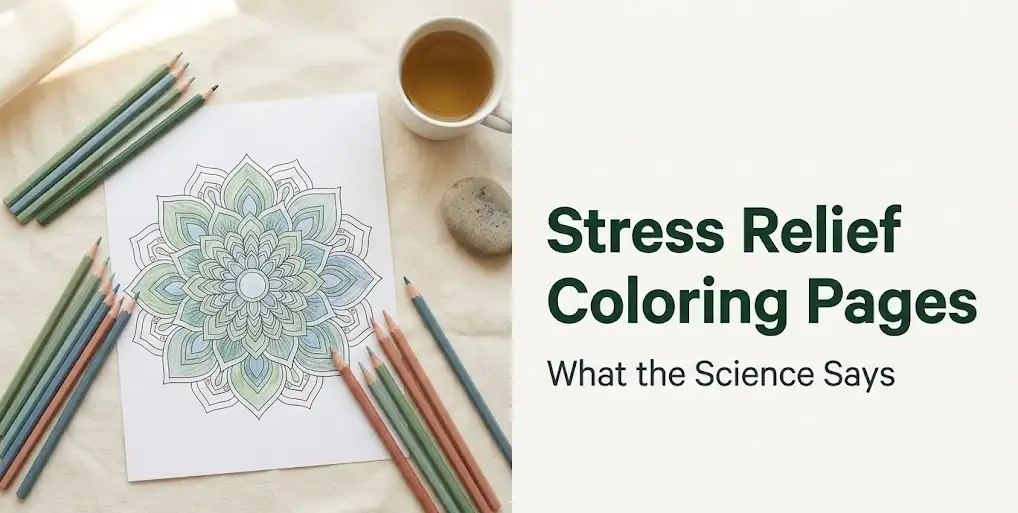
What separates stress relief coloring pages from general adult coloring is intention and design structure. Stress relief designs typically feature repetitive patterns, enclosed shapes, and predictable spatial logic. These qualities matter physiologically because they guide attentional focus without generating cognitive frustration, which is the critical distinction between a calming activity and a stressful one.
The practice has moved meaningfully beyond hobbyist territory. Research published in Art Therapy: Journal of the American Art Therapy Association has examined structured coloring as a distinct intervention for anxiety reduction, with findings suggesting that design structure is a key variable in effectiveness. Unstructured free-form drawing does not produce the same measurable reduction in anxiety scores.
From a practical standpoint, stress relief coloring pages require no artistic skill, no special equipment beyond a printer or a screen, and no ongoing financial commitment. This accessibility is part of what makes them a realistic daily or weekly self-regulation strategy for a broad population.
People with arthritis, tremor, or other fine motor conditions may find that extra-large format printables with bold outlines offer a more accessible experience. Standard 8.5 x 11 inch printable pages work for most adults, but A3 or legal-size full-page versions reduce the precision requirement per inch of the design.
How Coloring Pages Reduce Stress
Coloring pages reduce stress primarily by capturing focused attention, which prevents the prefrontal cortex from defaulting to ruminative thought patterns associated with stress amplification. When your attention is occupied by a specific, low-stakes visual task, the brain’s default mode network (DMN), the neural system active during mind-wandering and self-referential rumination, is suppressed.
Rumination is not a benign mental background process. Research published in Health Psychology has consistently linked prolonged rumination to elevated cortisol levels, increased activity in the amygdala (the brain’s primary threat-detection structure), and heightened sympathetic nervous system tone. Interrupting rumination through attentional redirection is a mechanism shared by both coloring and formal mindfulness practice.
Coloring also introduces a mild element of reward. Completing a section of a design activates dopaminergic pathways associated with task completion and visual satisfaction. This is not a dramatic neurochemical event. It is a modest, repeated signal that the brain associates with low-threat, low-demand success, which helps rebalance the stress-reward ratio during high-stress periods.
The bilateral hand engagement involved in coloring, using both hands to hold materials and guide a pen or pencil, may contribute additional calming effects through cross-hemispheric neural coordination. This is still a preliminary area of research. The attentional focus mechanism is better established.
| Stress Reduction Mechanism | Brain Structure or System Involved | Evidence Quality |
|---|---|---|
| Attentional focus and DMN suppression | Prefrontal cortex, default mode network | Supported by neuroimaging studies |
| Reduction in ruminative thinking | Amygdala, prefrontal cortex | Clinical observation and RCT support |
| Task completion reward signal | Dopaminergic reward pathways | Preliminary/observational |
| Bilateral fine motor engagement | Cross-hemispheric neural coordination | Preliminary |
| Parasympathetic activation | Autonomic nervous system | Supported by HRV and self-report studies |
The Neuroscience of Coloring and the Stress Response
The stress response begins in the hypothalamus, which releases corticotropin-releasing hormone (CRH) upon perceiving a threat. CRH signals the anterior pituitary to release adrenocorticotropic hormone (ACTH), which then triggers the adrenal cortex to produce cortisol. This is the hypothalamic-pituitary-adrenal (HPA) axis, the body’s primary hormonal stress cascade. Simultaneously, the sympathetic-adrenal-medullary (SAM) axis drives epinephrine and norepinephrine release from the adrenal medulla, producing the familiar physical sensations of a stress response: elevated heart rate, muscle tension, and heightened alertness.
Behavioral interventions that reduce perceived threat or engage attentional focus can attenuate HPA axis activation. The key brain structure is the prefrontal cortex, which exerts top-down inhibitory control over the amygdala. When the prefrontal cortex is engaged in a focused task, it can reduce amygdala firing, which in turn reduces the threat signal sent to the hypothalamus. Less threat signal means less CRH, less ACTH, and ultimately less cortisol production.
Focused coloring engages the prefrontal cortex. The visual-spatial processing required to select colors, stay within lines, and maintain design symmetry recruits executive function systems in the lateral prefrontal cortex. This is the same general mechanism by which mindfulness meditation reduces amygdala reactivity, though the magnitude of effect in coloring studies is smaller than in established mindfulness interventions like mindfulness-based stress reduction (MBSR).
The hippocampus is also relevant here. Chronic cortisol elevation damages hippocampal neurons, impairing memory and cortisol feedback regulation. Behavioral practices that reduce cortisol chronically may support hippocampal function, though the evidence for coloring specifically at this level is preliminary. The acute cortisol and anxiety effects are better established.
For people with PTSD or complex trauma, the amygdala may be in a state of chronic hyperactivation. Coloring may offer a low-demand attentional anchor that does not require verbal processing of distressing content. A licensed clinical psychologist or registered art therapist (ATR-BC credential) can advise on how to integrate this safely within a trauma-informed framework.
Stress Relief Coloring Pages Printable
Stress relief coloring pages printable formats are the most accessible entry point to using coloring as a self-regulation tool. A good printable is designed for a standard home printer, fits on standard 8.5 x 11 inch paper, uses clean line weights that do not bleed through the page, and features a design complexity appropriate to the intended stress level and coloring experience.
From a physiological standpoint, the medium matters less than the design structure and the consistency of practice. Printed pages have one practical advantage over screen-based coloring: they remove the device from the coloring experience. Screens carry associated stress cues, notification sounds, and social media proximity. Printing a page and sitting away from your device for 20 minutes removes those ambient stressors from the environment.
When evaluating printable stress relief coloring pages, look for these qualities:
- Line weight: Lines should be bold enough to see clearly without glasses correction strain, typically 1.5 to 2 point weight at printed scale
- Enclosed shapes: Designs with fully enclosed sections are easier to fill without precision coloring skill, reducing frustration
- Moderate complexity: Too simple produces boredom; too complex produces frustration. The ideal complexity for stress relief sits in the middle range: more than 20 sections, fewer than 150 for a beginner
- Bleed margin: A white margin of at least 0.25 inches prevents ink from going to the edge, which preserves printer life and simplifies cutting
- PDF format: PDF files print at consistent resolution across different operating systems and printer drivers, unlike JPEG files, which can pixelate at print scale
People with dyslexia or visual processing differences may find designs with asymmetry or irregular patterns more engaging than perfectly symmetrical mandalas. Asymmetric botanical illustrations or flowing abstract patterns often work better for this group.
Full Page Stress Relief Coloring Pages
Full page stress relief coloring pages fill the entire printable surface with design, leaving no large white areas. This format has a specific psychological advantage: it creates a complete, immersive visual field that occupies peripheral vision as well as focal attention.
Research published in Frontiers in Psychology examining immersive creative tasks found that visual tasks that fill the entire field of view are more effective at suppressing DMN activity than tasks confined to a small central area. A full-page design keeps your eyes moving across the entire surface, which sustains attentional engagement longer than a small central image surrounded by white space.
From a practical standpoint, full-page designs offer more coloring time per session. A single full-page mandala or botanical scene can occupy 25 to 45 minutes of focused coloring, which aligns with the session lengths associated with measurable anxiety reduction in the Curry and Kasser research framework.
To get the most from a full-page format:
- Print on slightly heavier paper (24 lb bond or higher) to prevent colored pencil or marker bleed-through
- Set your printer to “fit to page” rather than actual size to ensure the design reaches all margins
- Begin coloring from the center outward (for mandalas) or from a focal anchor point (for botanical scenes) to maintain visual balance
- Use the border sections last, as they often contain the most repetitive elements and can serve as a meditative closing phase of the session
- Avoid erasing and restarting during a stress relief session. The goal is process, not product perfection
Children and teenagers using full-page formats may find the time commitment challenging. For adolescents, half-page or quarter-page designs within a full page (four smaller designs on one sheet) offer natural break points and are better suited to shorter attentional windows.
Stress Relief Coloring Pages PDF
Stress relief coloring pages in PDF format preserve design quality at any print size and can be used across devices without format corruption. PDF is the standard that professional art therapists and mental health organizations use when distributing printable therapeutic art materials.
The PDF format matters for stress relief purposes because resolution inconsistency causes visual frustration. A JPEG or PNG coloring page that pixelates during printing creates jagged lines that register visually as imprecision. This is a minor but real friction point that can shift attention from the coloring task to the imperfection of the lines, undermining the attentional focus mechanism.
Quick Tip:
- Download PDF stress relief coloring pages from the original source file rather than screenshots, which compress image data
- Print at 100 percent scale unless deliberately scaling up for a full-page bleed effect
- Use “print on both sides” only if the paper is 32 lb or heavier. Thinner paper allows color to bleed through, visible on the reverse side and distracting during subsequent pages
- For people with low vision or age-related macular degeneration, scaling a PDF to 120 to 140 percent of its original size during printing increases line visibility without distorting design proportions
Storing a folder of downloaded stress relief PDF pages on your desktop or a dedicated tablet folder creates an instant-access library. The American Psychological Association recommends having self-regulation tools immediately available before a stressful event rather than searching for them during peak distress, because decision-making under stress is impaired by elevated cortisol’s effects on prefrontal cortex function.
Key Takeaway: Structured coloring engages the prefrontal cortex’s attentional networks to reduce amygdala hyperactivation and suppress ruminative thinking via default mode network interruption. This is the same fundamental mechanism used by formal mindfulness practice, just in a more accessible, less technique-dependent format.
Mandala Coloring Pages for Stress Relief
Mandala coloring pages are the most researched design category for stress relief, and the evidence supporting their use over other designs is specific enough to matter when choosing what to print. A mandala is a geometric, symmetrical design originating in Hindu and Buddhist contemplative traditions, characterized by radiating symmetry from a central point.
The key study in this space is the Curry and Kasser (2005) randomized controlled trial published in Art Therapy: Journal of the American Art Therapy Association. Participants were randomly assigned to color either a structured mandala, a structured plaid pattern, or an unstructured blank page. Researchers measured anxiety using the State-Trait Anxiety Inventory (STAI) before and after the task. Both the mandala and the plaid pattern groups showed statistically significant reductions in state anxiety. The unstructured blank-page group did not. This finding points clearly to design structure, not the mandala specifically, as the active therapeutic ingredient.
That said, mandalas offer a specific additional quality: their radial symmetry creates natural sub-zones of repetitive pattern. This allows the colorist to enter a rhythm of repetitive decision-making (choosing colors, filling sections) that may facilitate a flow-like attentional state without requiring the complex decision-making of an asymmetric design.
Mihaly Csikszentmihalyi’s flow state research, originally published in Psychological Review, describes flow as a state of complete absorption in a moderately challenging task, associated with reduced self-referential thought and positive affect. Mandala coloring can approximate the attentional profile of mild flow: engaged enough to suppress DMN activity, not so difficult as to generate performance anxiety.
For people with obsessive-compulsive disorder (OCD), highly symmetrical mandala coloring may reinforce compulsive perfectionism. A licensed clinical psychologist treating OCD should advise whether mandala coloring is appropriate for this individual, given the risk of it becoming a compulsive checking behavior rather than a relaxation tool.
Coloring and Cortisol: What the Research Shows
The direct relationship between coloring and measurable cortisol reduction is the most frequently overstated claim in this space, and understanding what the evidence actually says matters. The honest picture is nuanced.
Salivary cortisol measurement is the standard for assessing HPA axis activity in behavioral intervention research. Studies measuring salivary cortisol before and after coloring sessions are limited in number and variable in quality. A small study published in Art Therapy found reductions in self-reported anxiety following structured coloring sessions. However, direct cortisol measurement in these studies is rare, and the samples are typically small. What the research shows more reliably is a reduction in self-reported state anxiety scores on validated instruments like the STAI.
Self-reported anxiety reduction is a meaningful outcome. The STAI is a validated, widely used psychometric instrument. A reduction in STAI scores reflects a genuine change in subjective stress experience, even if concurrent salivary cortisol data is not available. The mechanism connecting that subjective change to HPA axis modulation is physiologically plausible, as described in the neuroscience section above, but the direct cortisol evidence from coloring-specific studies is preliminary.
| Outcome Measure | Evidence Strength for Coloring | Source Context |
|---|---|---|
| State anxiety (STAI scores) | Supported by RCT and controlled studies | Curry and Kasser 2005, replicated in subsequent trials |
| Salivary cortisol reduction | Preliminary; limited direct studies | Small-sample research; replication needed |
| Heart rate variability improvement | Preliminary/observational | Self-report and small physiological studies |
| Subjective relaxation and calm | Consistently reported across designs | Multiple observational and RCT contexts |
| Reduction in chronic stress markers | Not established for coloring specifically | General behavioral self-regulation literature |
For anyone told by a wellness source that coloring “lowers your cortisol,” the accurate version is: coloring has been shown to reduce state anxiety in controlled conditions, and the physiological mechanism by which that reduction occurs plausibly involves reduced HPA axis activation, but direct cortisol measurement studies in this specific context remain limited.
Mindfulness Coloring and the Parasympathetic Nervous System
Mindfulness coloring describes the practice of engaging with stress relief coloring pages while maintaining moment-to-moment non-judgmental attention on the sensory experience: the texture of the paper, the color as it goes down, the sound of the pencil, the rhythm of the strokes. This is an informal application of mindfulness principles to the coloring task.
The parasympathetic nervous system is the branch of the autonomic nervous system responsible for rest, recovery, and downregulation of the stress response. It acts in opposition to the sympathetic nervous system, which drives the fight-or-flight state. Vagal tone, a measure of how effectively the vagus nerve activates parasympathetic responses, is associated with heart rate variability (HRV): higher HRV indicates better parasympathetic regulation.
Mindfulness practice, including mindfulness-based stress reduction (MBSR) developed by Jon Kabat-Zinn, has been shown in multiple RCTs to increase HRV and reduce sympathetic nervous system tone. A 2013 meta-analysis published in Psychosomatic Medicine found that MBSR produced reliable reductions in psychological stress and improvements in HRV across a range of clinical and non-clinical populations.
Mindfulness coloring borrows this mechanism informally. When you bring deliberate sensory attention to the coloring task rather than using coloring as a passive distraction, you activate the same attentional regulation pathways that formal mindfulness practice engages. The parasympathetic shift is less reliably produced than in formal seated meditation, but the attentional mechanism is similar enough to produce measurable state anxiety reduction in controlled settings.
People practicing mindfulness coloring for the first time often report that their mind wanders repeatedly. This is expected. The practice involves noticing the mind has wandered and returning attention to the colors and marks on the page. Each return is the exercise, not a failure of it.
Key Takeaway: The stress relief benefit of coloring comes most reliably from design structure, not design aesthetics. A structured geometric pattern or mandala reduces state anxiety in controlled settings. An unstructured blank page does not. Choose designs with repetitive enclosed sections, not open landscapes or freeform abstract shapes.
How Long to Color for Stress Relief
The minimum coloring session length associated with measurable anxiety reduction in controlled research is approximately 15 to 20 minutes of continuous focused coloring. Below this threshold, the attentional shift needed to suppress default mode network activity and engage the prefrontal cortex may not fully develop.
The Curry and Kasser (2005) study used approximately 20-minute coloring sessions. Subsequent research in art therapy contexts has used sessions ranging from 15 to 45 minutes. Longer sessions, up to about 45 minutes, are associated with deeper subjective relaxation in self-report measures, but the anxiety reduction effect on STAI scores plateaus for most adults after 30 to 40 minutes of continuous coloring.
Here is a practical session structure based on the available research:
- Settle before starting (2 minutes): Sit comfortably. Set your materials out. Take 3 to 5 slow diaphragmatic breaths before picking up your coloring tool. This primes the parasympathetic nervous system before the coloring begins, amplifying the transition from stressed to calm.
- Initial focused coloring (5 to 10 minutes): Color steadily without pausing to evaluate your color choices. The goal is continuity of engagement, not aesthetics.
- Mid-session anchor (optional at 10 to 15 minutes): Notice where your attention is. If it has drifted to worrying thoughts, gently return it to the page. This is the mindfulness component.
- Sustained session (15 to 30 minutes total): This is the range most consistently associated with STAI score improvements in research settings.
- Closing (1 to 2 minutes): Set down your materials. Take another slow breath. Notice how you feel without evaluating the artistic result.
Frequency matters as much as session length. Using stress relief coloring pages three to four times per week appears to produce more lasting perceived stress reduction than sporadic single sessions, consistent with the dose-response relationship observed in other behavioral stress management interventions.
For children under 12, session lengths of 10 to 15 minutes are more appropriate. Forcing longer coloring sessions may generate frustration and defeat the physiological purpose.
Best Designs for Stress Relief Coloring Pages
The design structure of a stress relief coloring page is not just an aesthetic preference. It is a functional variable that influences how effectively the page engages attentional systems and suppresses ruminative thinking.
Research evidence places structured repetitive designs above unstructured or open-format designs for anxiety reduction. Within the structured category, several design types have distinct functional characteristics:
| Design Type | Attentional Demand | Best Suited For | Stress Level Target |
|---|---|---|---|
| Classic mandala (symmetrical radial) | Moderate | Adults, moderate anxiety, general stress | Moderate daily stress |
| Geometric abstract (repeating tessellations) | Low to moderate | Beginners, high anxiety states, children | High acute stress |
| Botanical illustration (flowers, leaves) | Moderate to high | Adults who dislike mathematical patterns | Moderate stress |
| Zentangle-style (freeform repetitive marks) | High | Experienced colorists, creative engagement goal | Mild to moderate stress |
| Simple patterns (large enclosed shapes) | Low | Older adults, fine motor limitations, beginners | High acute stress |
| Detailed fine-line (complex city scenes) | Very high | Adults with high need for cognitive absorption | Mild stress or boredom relief |
High-detail fine-line designs may actually increase anxiety in people whose stress is already elevated. If you are in an acute stress state (heart rate elevated, muscles tense, racing thoughts), a highly complex design demands precision that competes with your current physiological state. Start with a simple geometric or large-section design during acute stress. Reserve high-complexity designs for maintenance or mild stress sessions.
A 2022 study published in Frontiers in Psychology examining color choice during stress found that participants under higher stress conditions gravitated toward blue and green hues and reported greater calming effects from these colors than from red or orange hues. This aligns with established chromotherapy literature and parasympathetic response patterns, though causation is not established and individual color preferences are a real variable.
Stress Relief Coloring for Anxiety Disorders and ADHD
Stress relief coloring pages can be a useful adjunct tool for people with generalized anxiety disorder (GAD), attention-deficit/hyperactivity disorder (ADHD), and social anxiety disorder, but the approach needs to be modified based on the specific condition.
For GAD, the primary concern is that open-ended or unstructured coloring tasks may allow ruminative thought to continue during the session, because unstructured tasks do not adequately occupy the prefrontal cortex. People with GAD benefit most from highly structured, moderately complex mandala or geometric designs that require enough active color-selection decision-making to prevent worry chains from re-establishing. A 2018 study referenced in the Journal of Behavior Therapy and Experimental Psychiatry found that structured creative tasks reduced worry significantly more than passive relaxation for individuals with high trait anxiety.
For ADHD, the attentional capture mechanism of coloring works differently. People with ADHD may find that:
- Sessions longer than 15 to 20 minutes produce diminishing returns as attention fatigue sets in
- High-contrast designs with bold black outlines are easier to track than fine-line designs
- Using colored markers rather than pencils increases sensory stimulation and may sustain engagement longer
- Breaking a full-page design into timed 10-minute segments with planned short breaks can maintain coloring as a regulation tool rather than letting it become another unfinished task
Coloring is not a treatment for ADHD or GAD. The National Institute of Mental Health states that evidence-based treatment for GAD includes cognitive behavioral therapy, and for ADHD includes behavioral therapy and, where clinically indicated, medication. Coloring functions as a supplementary self-regulation tool within a broader treatment framework, not as a primary intervention.
Anyone whose anxiety symptoms consistently interfere with sleep, work, relationships, or daily functioning should discuss their experience with a licensed clinical psychologist or board-certified psychiatrist, who can evaluate whether a formal anxiety disorder diagnosis and corresponding treatment plan is appropriate.
Key Takeaway: Twenty minutes of continuous structured coloring three to four times per week is the session frequency and duration pattern most consistent with measurable state anxiety reduction in the clinical art therapy literature. Shorter or less frequent sessions produce smaller and less reliable effects.
Coloring Pages for Stress Relief in Older Adults
Older adults represent a population where stress relief coloring pages offer specific physiological benefits, and where the guidance needs meaningful modification from the general adult approach.
The HPA axis changes with age. Research published in Psychoneuroendocrinology has found that older adults often show blunted cortisol awakening responses but prolonged cortisol recovery following stressors, meaning the stress hormone stays elevated longer after a triggering event than it does in younger adults. This altered cortisol regulation pattern makes behavioral stress reduction tools particularly relevant for older populations.
Fine motor considerations are significant. Age-related changes including arthritis, essential tremor, reduced grip strength, and decreased hand-eye coordination precision affect how older adults interact with coloring page designs. Specific modifications:
- Larger line weight designs (2 to 3 point outline weight at print scale) reduce the precision requirement
- A3 or oversized format printing enlarges the design by 40 to 50 percent, making sections easier to fill
- Felt-tip markers or broad-tipped colored pencils reduce the pressure required compared to standard pencils
- Anti-fatigue wrist supports can be used on the table surface to reduce hand strain during longer sessions
Vision changes are also relevant. Age-related macular degeneration and reduced contrast sensitivity may make fine-line designs difficult to see clearly. High-contrast black-on-white printables on bright white paper (92 brightness or higher) are preferable. Printing at 120 percent of original size further improves visibility.
From a social perspective, group coloring sessions in older adult communities and assisted living facilities have been reported in occupational therapy literature to combine the stress relief benefits of the coloring activity with social engagement, which independently reduces cortisol and addresses loneliness-associated inflammatory markers. A licensed occupational therapist can help design structured group creative activity programs appropriate to the mobility and cognitive capacity of a specific older adult population.
Acute vs. Chronic Stress and the Role of Coloring
Stress relief coloring pages serve different functions in acute stress versus chronic stress, and understanding this distinction changes how to use them.
Acute stress is the immediate physiological response to a specific stressor: an argument, a deadline, a frightening piece of news. During acute stress, the SAM axis fires rapidly, driving epinephrine and norepinephrine into the bloodstream within seconds. Heart rate climbs. Muscles tense. Attention narrows. This is the body’s emergency response system doing exactly what it evolved to do.
In acute stress, coloring can help by providing an immediate attentional anchor that competes with the sympathetic arousal state. The key is to begin coloring during or immediately after the stressor, not an hour later once the sympathetic surge has already subsided on its own. Starting coloring while still physically tense and mentally activated gives the attentional redirection mechanism something to work against.
Chronic stress is a different physiological state entirely. Prolonged HPA axis activation leads to cortisol dysregulation, altered immune function (with associated increases in pro-inflammatory cytokines including interleukin-6 and tumor necrosis factor-alpha), impaired hippocampal neurogenesis, and dysregulated heart rate variability. These are not short-term effects. They accumulate over months or years of sustained stress exposure.
| Stress Type | Primary Hormone | Timeline | Role of Coloring |
|---|---|---|---|
| Acute stress | Epinephrine, norepinephrine (SAM axis) | Seconds to minutes | Immediate attentional anchor; may shorten sympathetic recovery time |
| Sub-acute stress | Cortisol (HPA axis) | Hours to days | Session-based calm and perceived stress reduction |
| Chronic stress | Sustained cortisol elevation, IL-6, TNF-alpha | Weeks to months | Consistent behavioral tool within a broader stress management plan |
Coloring alone is not sufficient to manage chronic stress at the physiological level. It does not address the root stressor, does not repair cortisol feedback dysregulation through behavioral self-care alone, and does not substitute for treatment of stress-related conditions including adjustment disorder, burnout, or GAD. It is one component of a broader strategy.
Combining Stress Relief Coloring Pages with Other Evidence-Based Techniques
Stress relief coloring pages work best when treated as one element of a structured stress management approach rather than as a standalone solution. Pairing coloring with other evidence-based tools amplifies the physiological benefit through complementary mechanisms.
Diaphragmatic breathing practiced before a coloring session primes the parasympathetic nervous system before attentional engagement begins. This is practical: spending two minutes on slow, belly-expanding breaths before picking up a colored pencil measurably increases vagal tone, as documented in biofeedback research published in Applied Psychophysiology and Biofeedback. The calming state you begin the coloring session in determines how deep the relaxation effect can go.
Progressive muscle relaxation (PMR), developed by Edmund Jacobson and examined in numerous randomized controlled trials, involves systematically tensing and releasing muscle groups to reduce somatic tension. A 5-minute PMR sequence before coloring addresses the physical dimension of stress (muscle tension, postural tightness) that coloring alone does not directly target.
Cognitive behavioral therapy (CBT) for stress and anxiety can incorporate coloring as a scheduled behavioral activation tool. Within a CBT framework, coloring is not just pleasant. It is a structured activity scheduled to interrupt stress-maintaining thought patterns and provide scheduled positive experience. A licensed clinical psychologist or licensed professional counselor using CBT may specifically recommend structured creative activities as behavioral activation components.
Here are practical evidence-based pairings:
- Before bed: 10 minutes of progressive muscle relaxation followed by 20 minutes of full-page mandala coloring. This sequence addresses both somatic tension and cognitive activation, two of the most common sleep-disrupting effects of chronic stress.
- During a work break: 15 minutes of stress relief coloring with 3 to 5 minutes of diaphragmatic breathing at the start. This interrupts workplace stress cycles and uses the parasympathetic priming effect.
- As part of an MBSR-informed routine: Approach coloring as a formal mindfulness practice by bringing explicit moment-to-moment attention to sensory experience during the session.
Key Takeaway: Coloring is physiologically distinct from passive distraction. It engages the prefrontal cortex’s attentional systems actively, which means pairing it with diaphragmatic breathing beforehand produces a meaningfully stronger stress response reduction than coloring alone.
When Coloring Pages Are Not Enough for Stress Relief
Stress relief coloring pages are a self-regulation tool, not a clinical intervention. Recognizing where that boundary lies is genuinely important.
Coloring is not a treatment for generalized anxiety disorder (GAD), post-traumatic stress disorder (PTSD), clinical depression, adjustment disorder, burnout classified under the ICD-11, or any other diagnosable mental health condition. Using coloring as a primary coping strategy for these conditions may reduce acute distress temporarily but does not address the underlying dysregulation that defines these disorders.
Signs that stress has moved beyond the territory where self-care tools like coloring are sufficient:
- Stress symptoms have persisted for more than four consecutive weeks without improvement
- Sleep is consistently impaired (difficulty falling asleep, staying asleep, or waking unrefreshed) on more than three nights per week
- Stress is affecting work performance, relationships, or daily responsibilities in a concrete way
- Physical symptoms without a clear medical explanation are present (persistent headaches, gastrointestinal disturbances, unexplained fatigue)
- Coloring or other self-care activities provide only brief or diminishing relief despite consistent use
- Feelings of hopelessness, worthlessness, or inability to feel pleasure are present
- Thoughts of self-harm or suicide are present
If any of these apply, the appropriate next step is an evaluation by a licensed clinical psychologist or primary care physician, who can assess whether a diagnosable condition is present and recommend evidence-based treatment. A primary care physician can also rule out physical causes for stress-related symptoms, such as thyroid dysfunction, which can present with anxiety and fatigue.
For individuals in crisis or experiencing thoughts of self-harm, contact the 988 Suicide and Crisis Lifeline by calling or texting 988. This service is free, confidential, and available 24 hours a day, seven days a week.
The Anxiety and Depression Association of America (ADAA) maintains a therapist-finder resource and condition-specific guidance that can help individuals identify the appropriate level of clinical support for their specific situation.
Frequently Asked Questions About Stress Relief Coloring Pages
Do stress relief coloring pages actually work for anxiety?
Structured stress relief coloring pages have been shown to reduce state anxiety in controlled research settings, most notably in the Curry and Kasser (2005) randomized controlled trial published in Art Therapy: Journal of the American Art Therapy Association.
The key variable is design structure: structured mandala and geometric designs reduced State-Trait Anxiety Inventory scores, while unstructured blank pages did not.
Coloring is an adjunct self-regulation tool for everyday anxiety and stress, not a treatment for generalized anxiety disorder or other clinical conditions.
How long should I color to feel less stressed?
A session of 15 to 20 minutes of continuous focused coloring is the minimum associated with measurable state anxiety reduction in the clinical art therapy research.
Sessions between 20 and 40 minutes are most consistently associated with STAI score improvements across research contexts.
Practicing three to four times per week produces more sustained perceived stress reduction than occasional single sessions.
Are mandala coloring pages better for stress relief than other designs?
Mandala coloring pages are among the best-studied design types for stress relief, but the critical factor is structured repetitive design, not the mandala specifically.
Both mandala patterns and structured plaid designs reduced anxiety significantly in the Curry and Kasser RCT, while unstructured pages did not.
Any design with repetitive enclosed sections and predictable spatial logic can produce the same attentional focus and anxiety-reducing effect as a mandala.
Can I use stress relief coloring pages as a substitute for therapy?
Stress relief coloring pages cannot substitute for evidence-based clinical treatment for generalized anxiety disorder, PTSD, clinical depression, or other diagnosable conditions.
The National Institute of Mental Health identifies cognitive behavioral therapy (CBT) as a primary evidence-based treatment for anxiety disorders, and coloring does not replicate the mechanisms CBT targets.
If stress or anxiety symptoms are persistent, interfere with daily function, or include feelings of hopelessness or thoughts of self-harm, contact a licensed clinical psychologist or primary care physician for an evaluation.
What is the best time of day to use stress relief coloring pages?
Evening coloring sessions (30 to 60 minutes before bed) are particularly well-suited for stress relief because they provide a screen-free transition from the demands of the day and support parasympathetic nervous system activation before sleep.
Morning sessions can serve a preventive function by reducing cortisol awakening response anxiety, particularly for people whose stress levels peak early in the day.
Mid-day sessions during work breaks interrupt stress cycles at their point of accumulation, which may prevent the late-day cortisol elevation associated with prolonged occupational stress.
Are stress relief coloring pages helpful for kids and teenagers?
Coloring is appropriate for children and teenagers as a stress regulation activity, with design complexity and session length adjusted to developmental stage.
Children under 12 benefit from simple designs with large enclosed sections and sessions of 10 to 15 minutes, while teenagers can use moderately complex designs for up to 20 to 25 minutes.
For adolescents experiencing significant anxiety or persistent emotional distress, a licensed clinical psychologist specializing in adolescent mental health should be consulted rather than relying on coloring as a primary coping strategy.
Closing
Stress relief coloring pages occupy a specific and underappreciated position in the toolkit of evidence-based stress management: they are accessible enough to use tonight without training, inexpensive enough to print from any home printer, and mechanistically grounded enough in attentional neuroscience to produce real, measurable reductions in state anxiety. The evidence is not spectacular. It is honest. Structured designs reduce anxiety scores in controlled conditions. The physiological pathway is the prefrontal cortex engaging attentional systems, suppressing the default mode network, and reducing amygdala-driven HPA axis activation.
The practical takeaway is this: choose a structured design (mandala or geometric), print it on heavier paper, spend two minutes breathing slowly before you start, and color for 20 minutes without evaluating your artistic output. Do this three to four times a week. That is the version of this practice that the research actually supports.
If your stress feels larger than a coloring page can reasonably address, that is useful information. Bring it to a licensed clinical psychologist or your primary care physician, and describe what has been happening. You deserve support that matches the scale of what you are experiencing.