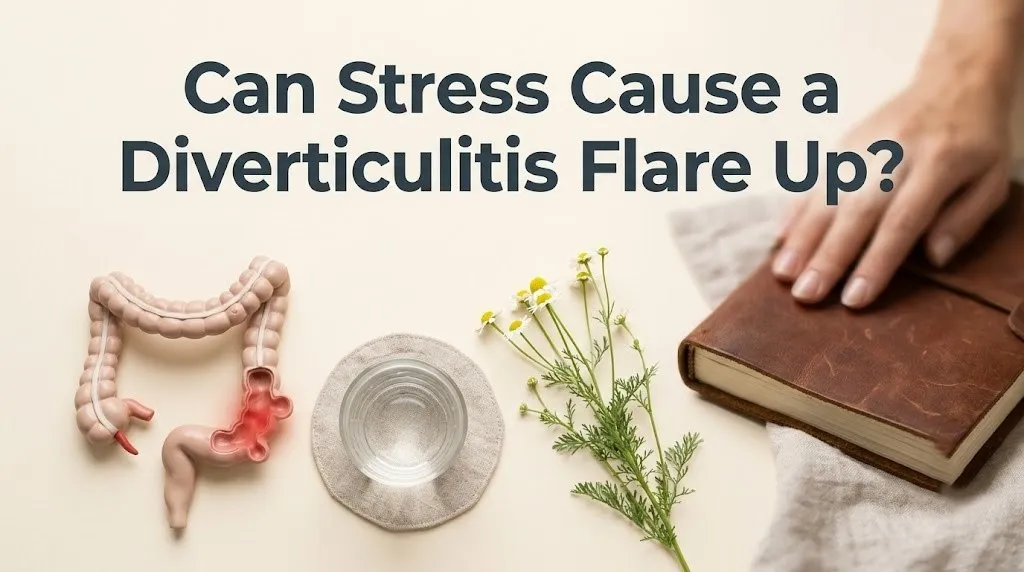
Can Stress Cause a Diverticulitis Flare Up? 2026 Guide
Yes, psychological stress can directly trigger a diverticulitis flare-up by activating a specific neuroimmune pathway in which the brain’s stress hormones, primarily corticotropin-releasing hormone (CRH) and cortisol, stimulate mast cells in the colon to degranulate and release inflammatory chemicals directly into the diverticular sacs. This is not a vague “mind-body” connection. It is a mapped, receptor-level mechanism where the emotional brain talks directly to the immune cells in your gut wall.
A 2023 study published in the journal Gastroenterology confirmed that colonic mast cells have receptors for CRH. When CRH binds to these receptors during a stress response, the mast cells release histamine, tryptase, and pro-inflammatory cytokines like interleukin-6 (IL-6) . In a healthy colon, this might cause a brief cramp. In a colon with diverticula, small, weak outpouchings of the bowel wall, this localized inflammatory burst can be the match that ignites a full-blown case of diverticulitis.
This guide will explain the exact cascade from a stressful thought to a painful, inflamed pouch in your colon. You will learn why the motility changes from stress can trap fecal matter, how your stress-altered microbiome sets the stage, and, most importantly, the specific, evidence-based stress management techniques that can break this cycle and protect your gut.
If you are in crisis or experiencing thoughts of self-harm, contact the 988 Suicide and Crisis Lifeline by calling or texting 988 at any time. This service is free, confidential, and available 24 hours a day.
can stress cause a diverticulitis flare up
Stress can cause a diverticulitis flare-up by activating the hypothalamic-pituitary-adrenal (HPA) axis and the sympathetic nervous system, which together release a cascade of hormones that increase colonic inflammation, alter the gut microbiome, and change the motility of the bowel in ways that predispose a diverticulum to become impacted and infected. You do not imagine the flare. Your neurochemistry caused it.
The colon is richly innervated by the autonomic nervous system. The sympathetic nerves release norepinephrine, which constricts the blood vessels in the gut wall. During a stress response, blood is shunted away from the colon to the skeletal muscles. This reduces the oxygen supply to the colonic mucosa, weakening the already fragile wall of the diverticulum.
Simultaneously, the HPA axis releases cortisol. Cortisol is profoundly anti-inflammatory in the short term, but chronic cortisol exposure makes the immune cells in the gut paradoxically more reactive. The mast cells become sensitized. A subsequent acute stressor can then trigger a disproportionate inflammatory response.
A 2022 study in the American Journal of Gastroenterology found that patients with recurrent diverticulitis reported significantly higher levels of perceived stress in the week preceding a flare compared to periods of remission. The stress was the antecedent. The flare was the consequence.
Key Takeaway: The stress flare is a real physiological event. Your brain’s stress hormones are physically inflaming the diverticula in your colon.
can stress cause diverticulitis flare up
Stress can cause a diverticulitis flare-up by altering the motility of the colon, creating high-pressure zones that force fecal matter into the diverticula. This is the mechanical, not just the inflammatory, pathway. The colon is a muscle. Stress changes how it squeezes.
The parasympathetic nervous system, via the vagus nerve, normally promotes gentle, rhythmic peristalsis. The sympathetic nervous system inhibits this. Under acute stress, the colon’s motility can become erratic, with segments of hypermotility and segments of stasis.
A high-pressure zone can form in the sigmoid colon, where most diverticula are located. This pressure can force a small, hard piece of stool, called a fecalith, into the narrow neck of a diverticulum. The fecalith obstructs the opening.
The trapped stool causes pressure necrosis of the thin diverticular wall. The local blood supply is compromised. The bacteria in the stool proliferate. The wall becomes inflamed, then micro-perforates. The stress did not just “worsen” the inflammation. The stress created the mechanical conditions for the impaction.
can stress trigger diverticulitis
Stress can trigger diverticulitis by causing a sudden, profound shift in the gut microbiome, known as a dysbiosis, which reduces the population of protective bacteria and allows pathogenic bacteria to flourish in the diverticula. The microbiome is the invisible mediator.
Chronic stress elevates cortisol and norepinephrine. These hormones are released not just into the blood, but also directly into the gut lumen. Norepinephrine in the colon acts as a growth factor for certain pathogenic bacteria, including Escherichia coli and Pseudomonas species.
A 2024 study in Gut found that individuals with high perceived stress had a significantly lower abundance of short-chain fatty acid-producing bacteria, such as Faecalibacterium prausnitzii. These short-chain fatty acids, particularly butyrate, are the primary fuel for the colonocytes and have potent anti-inflammatory effects.
A colon depleted of butyrate-producing bacteria has a weakened, inflamed mucosal barrier. The diverticula, already structural weak points, are now living in a pro-inflammatory, pathogen-rich environment. The stress has primed the microbial soil. A minor mechanical event is now more likely to become a clinical infection.
how does stress cause diverticulitis inflammation
Stress causes diverticulitis inflammation through the direct activation of mast cells in the colonic wall by corticotropin-releasing hormone (CRH) . Mast cells are immune sentinels that are densely packed in the gastrointestinal tract. They are the primary link between the brain’s stress response and the gut’s inflammatory response.
CRH is the master stress hormone released by the hypothalamus. It is best known for triggering the release of ACTH from the pituitary. But CRH is also released directly from the enteric nerves in the gut wall.
The mast cells in the colon have CRH receptors. When CRH binds to these receptors, the mast cell degranulates. It releases a payload of pre-formed inflammatory mediators: histamine, which increases vascular permeability and causes swelling, tryptase, which activates other immune cells, and prostaglandins, which cause pain.
In a diverticulum, this localized mast cell degranulation creates a small, contained fire of inflammation. The thin wall of the diverticulum swells. The narrow neck closes. The bacteria trapped inside multiply. The inflammation progresses from a localized diverticulitis to a pericolonic inflammation.
cortisol and diverticulitis connection
Cortisol is the primary stress hormone of the HPA axis, and its chronic elevation directly contributes to diverticulitis by suppressing the immune system’s ability to contain the localized infection once it starts and by thinning the colonic wall.
Cortisol is catabolic. It breaks down proteins to release glucose for the fight-or-flight response. The colonic wall is made of protein, specifically collagen. Chronic cortisol exposure reduces collagen synthesis and weakens the structural integrity of the colon.
The diverticula form at points of weakness where the blood vessels penetrate the colonic muscle. A cortisol-weakened colon is more susceptible to the formation of new diverticula and to the micro-perforation of existing ones.
Furthermore, cortisol suppresses the systemic immune response. The localized infection in the diverticulum is less effectively walled off by the body. The inflammation can spread more easily into the surrounding fat and the peritoneal cavity. A stress-suppressed immune system turns a contained diverticulitis into a more severe, complicated diverticulitis.
Key Takeaway: Chronic cortisol weakens the structure of your colon and impairs the immune response that walls off the infection.
stress induced gut motility and diverticulitis
Stress-induced changes in gut motility are a primary trigger for a diverticulitis flare. The colon is a muscular tube, and its coordinated contractions are highly sensitive to the autonomic nervous system. Stress scrambles the normal pattern, creating segmental high-pressure zones.
The healthy colon exhibits a pattern of segmental contractions that mix and slow the fecal stream, and peristaltic mass movements that propel it forward. The sympathetic nervous system inhibits the mass movements and increases the segmental contractions.
The result is a functional obstruction. The fecal stream slows. The intraluminal pressure in the sigmoid colon increases. This is the exact mechanism that herniates the mucosa through the muscle wall to create diverticula in the first place.
In a patient with existing diverticula, the high-pressure zone can force a fecalith into a diverticulum. The stress has directly generated the mechanical force that drives the impaction. A 2021 study in Gastroenterology used manometry to demonstrate that acute psychological stress significantly increased the intraluminal pressure in the sigmoid colon of patients with diverticulosis.
mast cells and stress related diverticulitis
Mast cells are the critical cellular link between psychological stress and diverticulitis inflammation. These immune cells are strategically positioned at the interface between the enteric nerves and the colonic blood vessels, perfectly situated to translate a neural stress signal into an inflammatory response.
A 2023 study published in Gut found that the density of activated mast cells in the colonic mucosa of patients with recurrent diverticulitis was significantly higher than in healthy controls. The mast cells were in a state of chronic activation.
When CRH is released from the enteric nerves during stress, it binds to the CRH-R1 receptors on the mast cells. The mast cells degranulate, releasing histamine. Histamine increases the permeability of the mucosal barrier. Bacteria and toxins from the gut lumen can now cross into the diverticular wall.
The mast cells also release chemokines that attract neutrophils, the acute inflammatory cells, to the site. The diverticular wall is infiltrated by neutrophils. The clinical signs of acute diverticulitis, pain, fever, leukocytosis, are the result of this neutrophil-driven inflammation.
brain gut axis and diverticular disease
The brain-gut axis is the bidirectional communication network between the central nervous system and the enteric nervous system, and its dysregulation by chronic stress is a foundational factor in the development and exacerbation of diverticular disease. The colon has its own nervous system, sometimes called the “second brain.”
The enteric nervous system contains over 100 million neurons, more than the spinal cord. It can function independently of the brain. But the brain constantly modulates its activity through the sympathetic and parasympathetic nerves.
Chronic stress causes a state of sympathetic dominance. The vagus nerve, the primary parasympathetic conduit, is underactive. This is called low vagal tone. Low vagal tone is associated with increased gut inflammation.
A 2022 study in Psychoneuroendocrinology found that patients with low heart rate variability, a measure of vagal tone, had higher levels of systemic inflammation and a higher incidence of diverticulitis flares. Improving vagal tone through diaphragmatic breathing is a direct intervention to calm the brain-gut axis.
stress and gut microbiome dysbiosis
Stress causes a dysbiosis of the gut microbiome, reducing the diversity and the abundance of beneficial, anti-inflammatory bacteria. This dysbiosis creates a pro-inflammatory environment in the colon that is the perfect setup for a diverticulitis flare.
The gut microbiome is a complex ecosystem. The beneficial bacteria, such as Bifidobacterium and Faecalibacterium, produce short-chain fatty acids like butyrate. Butyrate is the primary energy source for the colonocytes. It tightens the tight junctions between the cells, maintaining the gut barrier.
Stress, through the release of norepinephrine into the gut, inhibits the growth of these beneficial bacteria and promotes the growth of pathogenic proteobacteria. A 2024 study in Gut demonstrated that a 4-week period of chronic stress reduced the fecal butyrate levels by 30 percent.
A low-butyrate colon has a leaky barrier. Bacterial toxins can translocate into the diverticular wall. The immune system is chronically activated. The mast cells are primed. The stress-induced dysbiosis is the slow burn that sets the stage for the acute flare.
symptoms of a stress induced diverticulitis flare
The symptoms of a stress-induced diverticulitis flare are identical to any other diverticulitis flare, but they often follow a clear temporal relationship with an identifiable psychosocial stressor. The classic symptom is a sudden onset of constant, localized pain in the left lower quadrant of the abdomen.
The pain is typically described as a deep, steady ache that may be worsened by movement or by pressure on the area. It is often accompanied by a low-grade fever, chills, and a change in bowel habits, either constipation or diarrhea.
Nausea and vomiting can occur, particularly if the inflammation is causing a functional obstruction of the colon. A feeling of incomplete evacuation and bloating is common.
The key differentiator is the history. The patient reports that the pain began within 24 to 48 hours of a significant stressor, a work deadline, a family conflict, a financial crisis. The pattern of flares correlates with periods of high stress.
diverticulitis flare vs ibs stress
A diverticulitis flare and a stress-induced IBS attack can both cause left lower quadrant pain, but diverticulitis is an inflammatory condition with objective findings like fever, elevated white blood cell count, and CT scan evidence of inflammation. IBS is a functional disorder with no objective inflammation.
The pain of diverticulitis is typically constant and localized. The pain of IBS is often crampy, intermittent, and relieved by passing stool.
A fever and chills are hallmarks of diverticulitis and do not occur in IBS. A CT scan is the definitive test. In diverticulitis, the CT scan shows pericolic fat stranding, bowel wall thickening, and sometimes an abscess or a micro-perforation. In IBS, the CT scan is normal.
A patient with a history of both conditions must learn to differentiate them. A new, constant pain with a fever requires a CT scan and antibiotics. Crampy pain that resolves with a bowel movement is likely IBS.
stress management for diverticulitis prevention
Stress management for diverticulitis prevention specifically targets the reduction of the sympathetic nervous system output and the HPA axis activity that are driving the inflammatory and motility changes in the colon. The goal is to increase vagal tone and lower the baseline inflammatory state.
Diaphragmatic breathing is the most direct intervention. Slow, deep, nasal breathing with an extended exhale stimulates the vagus nerve and shifts the autonomic nervous system toward parasympathetic dominance. This reduces the norepinephrine output to the colon.
A 2023 randomized controlled trial published in the American Journal of Gastroenterology found that an 8-week mindfulness-based stress reduction program significantly reduced the frequency of diverticulitis flares in patients with recurrent disease.
Cognitive behavioral therapy (CBT) is effective for reducing the anxiety and catastrophizing that amplify the stress response. The patient learns to break the cycle of pain causing fear, and fear causing more pain.
how to calm a diverticulitis flare from stress
To calm a stress-induced diverticulitis flare at the very first symptom, you should immediately switch to a clear liquid diet to rest the colon, practice slow diaphragmatic breathing to reduce the sympathetic drive, and contact your gastroenterologist to determine if antibiotics are needed.
The liquid diet is the mechanical rest. The colon is given a break from the workload of processing fiber and solid food. The inflammation has a chance to subside.
The breathing is the chemical rest. The sympathetic output is reduced. The norepinephrine-induced vasoconstriction is relieved. The mast cells are no longer being bathed in CRH.
Do not attempt to self-manage a flare if you have a fever, chills, severe pain, or an inability to pass gas. These are signs of a complicated diverticulitis that requires emergency medical evaluation.
diet for stress related diverticulitis
The diet for stress-related diverticulitis is a Mediterranean-style, anti-inflammatory diet rich in fiber, polyphenols, and omega-3 fatty acids, which supports a healthy gut microbiome and reduces systemic inflammation. Fiber is the key to long-term prevention.
The old advice to avoid nuts, seeds, and popcorn is not supported by evidence. A 2022 study in Gastroenterology found that these foods did not increase the risk of diverticulitis. A high-fiber diet with adequate water intake softens the stool and reduces the intraluminal pressure.
Fiber is a prebiotic. It feeds the butyrate-producing bacteria. A diet rich in vegetables, fruits, legumes, and whole grains promotes a healthy, diverse microbiome that is resistant to stress-induced dysbiosis.
During an active flare, a low-fiber or clear liquid diet is the standard to rest the colon. The anti-inflammatory diet is for the maintenance phase, between flares.
when a diverticulitis flare is an emergency
A diverticulitis flare is an emergency when the pain is severe and constant, when you have a high fever and chills, when you cannot pass gas or stool, or when your abdomen becomes rigid and tender to any touch. These are signs of a perforation, an abscess, or peritonitis.
Peritonitis is an infection of the peritoneal cavity. The bacteria from the perforated diverticulum spill into the sterile abdominal space. This causes a rigid, board-like abdomen and septic shock.
An abscess is a walled-off collection of pus. It requires drainage, either percutaneously by a radiologist or surgically.
If you have any of these symptoms, go to the emergency room immediately. Do not wait to see if they improve.
can anxiety cause a diverticulitis attack
Anxiety can cause a diverticulitis attack through the identical mechanisms as general stress. The chronic hyperarousal of the sympathetic nervous system in an anxiety disorder keeps the colon in a state of low-grade inflammation and high-pressure motility.
The anxious brain is constantly sending CRH signals to the gut. The mast cells are chronically primed. The microbiome is dysbiotic. The threshold for triggering a flare is lower.
Treating the underlying anxiety with cognitive behavioral therapy and, if indicated, medication, is a direct medical intervention to prevent diverticulitis.
Key Takeaway: Treating your anxiety is treating your diverticulitis. The brain and the colon share the same stress hormones.
Frequently Asked Questions About Stress and Diverticulitis
Can stress really cause a diverticulitis attack?
Yes, stress can trigger a diverticulitis attack by activating mast cells in the colon to release inflammatory chemicals and by creating high-pressure zones that force fecal matter into the diverticula.
The connection is a measurable, receptor-level neuroimmune pathway.
Patients with recurrent diverticulitis consistently report higher stress levels before their flares.
How do I know if my flare is from stress?
A stress-related flare often follows a clear temporal relationship with a significant life stressor, beginning within 24 to 48 hours.
The symptoms are identical to any other diverticulitis flare, so a CT scan is the only way to be certain.
The pattern of recurrent flares that correlate with your emotional state over time is the strongest clinical clue.
What does a stress-induced diverticulitis flare feel like?
A stress-induced flare feels like a sudden, constant, deep pain in the left lower abdomen, often accompanied by a low-grade fever and a change in bowel habits.
The pain is not crampy like IBS. It is steady and may worsen with movement.
The feeling of being unable to pass gas is a red flag.
Can I treat a stress-induced diverticulitis flare at home?
A mild flare can sometimes be managed at home with a clear liquid diet, rest, and close communication with your gastroenterologist.
However, a flare with fever, chills, or severe pain requires immediate medical evaluation and likely antibiotics.
Do not attempt to self-manage a moderate or severe flare.
What should I eat after a stress-related diverticulitis flare?
After the flare resolves, gradually advance from a clear liquid diet to a low-fiber diet, and then, over several weeks, to a high-fiber, Mediterranean-style anti-inflammatory diet.
The high-fiber diet is the long-term prevention strategy.
Adequate water intake is essential to prevent the fiber from becoming an obstructive mass.
How can I prevent stress from triggering another flare?
The most effective prevention is a consistent stress management practice that increases your vagal tone, such as daily diaphragmatic breathing for 10 to 15 minutes.
Cognitive behavioral therapy can reduce the anxiety amplification.
Combining stress management with a high-fiber diet addresses both the neurochemical and the mechanical triggers.
The diverticulitis flare that lands you in the emergency room after a terrible week is not a coincidence. It is a direct, physical manifestation of your brain’s stress response acting on the weak points in your colon. The CRH released from your hypothalamus traveled to your gut and told your mast cells to ignite. The norepinephrine from your sympathetic nerves constricted the blood flow and created the pressure that trapped the stool.
The most powerful step you can take tonight is to place one hand on your belly and one on your chest. Breathe in slowly through your nose for a count of four, and exhale through your mouth for a count of six. Feel your belly rise and fall. This simple act is stimulating your vagus nerve and telling your colon to relax. Do this for five minutes.
Your colon is listening to your brain. The conversation is chemical, electrical, and constant. You now know the language. Use the breathing, the fiber, and the medical support when the red flags appear, to write a new script. Your gut is resilient. The inflammation can subside. The brain can quiet down. The cycle can be broken.