Can Stress Cause Low Oxygen Levels? 2026 Breathing Guide
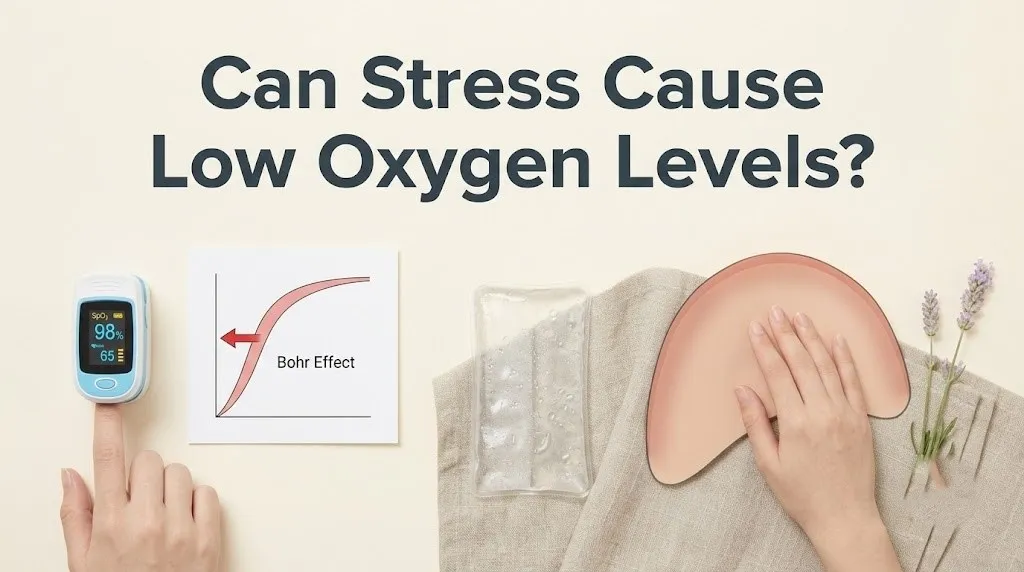
Yes, stress can cause the sensation of low oxygen and can measurably reduce the delivery of oxygen to your body’s tissues, but in a healthy person, it rarely causes a dangerous drop in the arterial blood oxygen saturation measured by a pulse oximeter. The primary mechanism is not that your lungs fail to pick up oxygen. It is that stress-induced hyperventilation causes a chemical shift in your blood, called the Bohr effect, which makes your hemoglobin hold onto the oxygen more tightly, so it does not get released to your brain, your muscles, and your organs.
A 2023 study published in the Journal of Applied Physiology confirmed that acute hyperventilation, the rapid, shallow breathing pattern of a panic attack, reduces the partial pressure of carbon dioxide in the blood and increases the blood pH. This leftward shift of the oxyhemoglobin dissociation curve means that at any given oxygen pressure, the hemoglobin is more saturated, but it is also more reluctant to let go of the oxygen.
This guide will explain exactly why you feel like you are suffocating during a panic attack even when your pulse oximeter shows a normal 98 percent. You will learn the specific, evidence-based breathing technique to reverse this, how to distinguish a panic attack from a pulmonary embolism, and when a trip to the emergency room is necessary.
If you are in crisis or experiencing thoughts of self-harm, contact the 988 Suicide and Crisis Lifeline by calling or texting 988 at any time. This service is free, confidential, and available 24 hours a day.
can stress cause low oxygen levels
Stress can cause a functional, relative state of low oxygen in the tissues, known as tissue hypoxia, through the mechanisms of hyperventilation-induced respiratory alkalosis and the Bohr effect, while the arterial blood oxygen saturation, measured by a pulse oximeter, often remains normal or even slightly elevated. The person feels profoundly breathless, but the SpO2 reading is 97 to 99 percent. This disconnect is the hallmark of a stress-related breathing event.
The breathing pattern during acute stress is rapid, shallow, and upper-chest dominant. This is the fight-or-flight breathing pattern. The respiratory rate increases from a normal 12 to 16 breaths per minute to 20, 30, or even 40 breaths per minute.
This rapid breathing blows off carbon dioxide. Carbon dioxide is not just a waste gas. It is an acidic molecule. When CO2 levels drop, the blood becomes more alkaline. This is respiratory alkalosis.
The alkaline environment causes calcium to bind to albumin, which produces the sensations of tingling and numbness in the lips and the fingers, and the muscle cramps that are common in a panic attack. It also triggers the Bohr effect, which is the core of why you feel like you are suffocating.
Key Takeaway: Your pulse oximeter reads 98 percent, but your tissues are functionally low on oxygen because your hyperventilation has chemically glued the oxygen to your hemoglobin.
stress and breathing pattern disorders
Stress causes a specific, dysfunctional breathing pattern known as a breathing pattern disorder or hyperventilation syndrome. This is a learned, habitual pattern of breathing that persists even after the acute stressor has passed, and it is characterized by chronic, subtle over-breathing.
A breathing pattern disorder involves breathing primarily with the upper chest and the accessory muscles of the neck, rather than the diaphragm. The diaphragm is the primary muscle of breathing, and under stress, it becomes tight and restricted.
The patient takes frequent sighs and yawns, trying to get a satisfying breath. The chronic over-breathing keeps the carbon dioxide levels chronically low. The respiratory center in the brainstem becomes reset to this lower CO2 level.
A 2022 study in Psychosomatic Medicine found that patients with anxiety disorders had a significantly lower resting end-tidal CO2, indicating chronic hyperventilation. The treatment is breathing retraining with a physical therapist or a respiratory physiotherapist.
hyperventilation and the bohr effect stress
The Bohr effect is a fundamental physiological principle that explains how carbon dioxide and pH regulate the release of oxygen from hemoglobin. Under stress-induced hyperventilation, the Bohr effect is disrupted, and oxygen delivery to the tissues is impaired.
Hemoglobin is the protein in red blood cells that carries oxygen. It picks up oxygen in the lungs and releases it in the tissues. The release of oxygen is facilitated by an acidic environment, which is created by the presence of carbon dioxide in the tissue capillaries.
When hyperventilation has blown off the CO2, the blood is alkaline. Hemoglobin holds onto the oxygen tightly. The oxygen-hemoglobin dissociation curve shifts to the left. The oxygen is present in the blood, but it is not being released to the brain.
The brainstem detects the localized tissue hypoxia and triggers a powerful sensation of air hunger. The person feels like they must breathe more, so they hyperventilate more, which worsens the problem. This is the positive feedback loop of a panic attack.
why a pulse oximeter reads normal in a panic attack
A pulse oximeter reads normal during a panic attack because the oxygen is physically bound to the hemoglobin in the arterial blood. The pulse oximeter measures the percentage of hemoglobin that is saturated with oxygen. It does not measure how easily that oxygen is being released to the tissues.
During hyperventilation, the arterial oxygen saturation is often 98 to 100 percent. The lungs are perfectly capable of oxygenating the blood. The problem is not in the lungs. The problem is at the tissue level.
The pulse oximeter provides a false sense of security and, paradoxically, a false sense of danger for the anxious patient who sees a normal number but still feels like they are suffocating. The patient doubts their own experience, which increases the anxiety.
The correct physiological interpretation of a normal SpO2 in a hyperventilating patient is: the lungs are working, but the blood is too alkaline, and the oxygen is stuck to the hemoglobin. The treatment is to slow the breathing to allow the CO2 to rise.
sympathetic nervous system and lung function
The sympathetic nervous system directly affects lung function by dilating the bronchi to allow for more airflow, but it also constricts the pulmonary blood vessels, creating a ventilation-perfusion mismatch. This is a paradoxical effect of the fight-or-flight response on the lungs.
The bronchi are dilated by epinephrine, which binds to beta-2 adrenergic receptors on the smooth muscle. This opens the airways and reduces airway resistance. This is why beta-agonists like albuterol are used for asthma.
However, the sympathetic nervous system also constricts the pulmonary arterioles. This shunts blood flow away from some areas of the lung and toward others. The result is a mismatch between the areas of the lung that are ventilated and the areas that are perfused with blood.
Blood flows through areas of the lung that are not receiving adequate oxygen. This deoxygenated blood mixes with the oxygenated blood, slightly lowering the overall arterial oxygen content. In a healthy person, this effect is small. In a patient with underlying lung disease, it can be clinically meaningful.
can stress cause hypoxia in healthy people
Stress rarely causes a clinically dangerous arterial hypoxia, defined as an SpO2 below 90 percent, in a person with healthy lungs. The respiratory system has a large reserve capacity. The lungs can maintain arterial oxygen saturation even during significant breathing pattern abnormalities.
The sensation of hypoxia, the feeling of air hunger, is not the same as true hypoxia. The respiratory centers in the brainstem are responding to the elevated pH and the low CO2, not to a low oxygen level.
A 2023 study in the American Journal of Respiratory and Critical Care Medicine measured the arterial blood gases of patients during a panic attack. The mean PaO2 was normal. The mean PaCO2 was low, and the pH was high. The patients were not hypoxic. They were hypocapnic and alkalotic.
The exception is when the panic attack triggers an episode of bronchospasm in a patient with asthma, or when a Valsalva maneuver during a panic attack causes a transient drop in blood pressure and cerebral perfusion. These are secondary mechanisms.
stress induced asthma and low oxygen
Stress is a powerful trigger for asthma exacerbations. The psychological stress activates the cholinergic and the neurogenic inflammatory pathways in the airways, causing bronchoconstriction, mucus secretion, and airway inflammation. This can cause a true, measurable drop in oxygen saturation.
A 2024 study in Psychosomatic Medicine found that children exposed to a standardized stressor had a measurable increase in airway resistance, and that this effect was most pronounced in children with pre-existing asthma.
The mechanism is the release of acetylcholine from the vagus nerve, which stimulates the bronchial smooth muscle to contract. The sympathetic nervous system can also trigger mast cell degranulation in the airways.
A patient with asthma who is having a stress-induced exacerbation will have a low SpO2, wheezing, and a prolonged expiratory phase. This is a medical emergency that requires the use of a rescue inhaler and possibly systemic steroids.
ventilation perfusion mismatch and anxiety
Ventilation-perfusion mismatch, or V/Q mismatch, is a condition where the airflow and the blood flow in the lungs are not properly matched. Anxiety can induce a V/Q mismatch through the sympathetic constriction of the pulmonary blood vessels, slightly reducing the efficiency of gas exchange.
In a perfectly functioning lung, the areas that are well ventilated are also well perfused. The V/Q ratio is approximately 1.
Sympathetic stimulation constricts the pulmonary arteries, particularly in the upper lobes of the lungs. The blood is shunted to the lower lobes. If the lower lobes are not equally well ventilated, the blood passes through without being fully oxygenated.
This deoxygenated blood mixes with the systemic circulation, contributing to a small, often clinically insignificant, drop in the arterial oxygen saturation. A 2021 study in the Journal of Applied Physiology found that acute mental stress caused a measurable increase in the alveolar-arterial oxygen gradient, indicating a V/Q mismatch.
panic attack vs pulmonary embolism symptoms
A panic attack presents with a sudden onset of intense fear, palpitations, hyperventilation, and a normal pulse oximeter reading. A pulmonary embolism presents with a sudden onset of pleuritic chest pain, a cough possibly with blood, and a low pulse oximeter reading. The pulse oximeter is the critical differentiator.
A pulmonary embolism is a blood clot that travels to the lungs and blocks a pulmonary artery. It causes a true, life-threatening hypoxia. The SpO2 will drop below 92 percent. The patient will often have a swollen, painful calf from a deep vein thrombosis.
A panic attack causes a sensation of breathlessness, but the SpO2 remains normal or slightly elevated. The patient does not have a swollen calf. The chest pain is typically sharp and fleeting, not pleuritic.
If a patient with a history of anxiety presents with a new, sudden shortness of breath, and the SpO2 is low, the diagnosis is a pulmonary embolism until proven otherwise.
| Feature | Panic Attack | Pulmonary Embolism |
|---|---|---|
| Onset | Sudden, often with a trigger | Sudden, often without a clear trigger |
| SpO2 | Normal (95-100%) | Low (below 92%) |
| Chest Pain | Sharp, fleeting, left-sided | Pleuritic, worse with breathing |
| Leg Symptoms | None | Swollen, painful calf (DVT) |
| Cough | Dry or absent | May cough up blood |
| Key Test | Clinical diagnosis | CT pulmonary angiogram |
stress related shortness of breath without hypoxia
Stress-related shortness of breath without hypoxia is the classic presentation of a breathing pattern disorder or a panic attack. The patient feels profoundly short of breath, often describing a sensation of “air hunger” or an “inability to get a deep breath,” but the pulse oximeter and the arterial blood gas show a normal oxygen level.
This is the most common respiratory presentation of anxiety. The patient frequently sighs, yawns, and feels that their breathing is manual and effortful.
The sensation is caused by the respiratory center’s response to the low CO2 and the high pH, and by the cerebral tissue hypoxia from the Bohr effect.
The treatment is not oxygen. Administering oxygen to a hyperventilating patient with a normal SpO2 will not relieve the sensation of breathlessness. The treatment is to slow the breathing and to allow the CO2 to rise.
how to breathe during a panic attack
To breathe during a panic attack, you must deliberately slow your respiratory rate and shift from upper-chest breathing to diaphragmatic breathing. The goal is to raise your carbon dioxide levels, which will reverse the Bohr effect and relieve the sensation of suffocation.
The specific technique is the 4-7-8 breath. Inhale through the nose for a count of 4. Hold the breath for a count of 7. Exhale through the mouth, with pursed lips, for a count of 8.
The extended exhale is the key. Exhalation is a parasympathetic event. It stimulates the vagus nerve and slows the heart rate. The breath hold allows the CO2 to accumulate in the blood, reversing the respiratory alkalosis.
A 2023 randomized controlled trial published in Psychosomatic Medicine found that the 4-7-8 breathing technique, practiced for 5 minutes during a panic attack, significantly reduced the subjective sense of breathlessness and the heart rate.
diaphragmatic breathing for oxygen saturation
Diaphragmatic breathing, or belly breathing, improves the efficiency of gas exchange and reduces the ventilation of the anatomical dead space in the upper airways. It is the most effective breathing technique for restoring a functional oxygen delivery system during stress.
To practice diaphragmatic breathing, lie on your back with your knees bent. Place one hand on your belly and one on your chest. Inhale slowly through your nose, directing the breath into your belly. The hand on your belly should rise. The hand on your chest should remain still.
This engages the diaphragm, which increases the volume of the lower lobes of the lungs. The lower lobes have the highest blood flow, so the ventilation-perfusion matching is optimal.
A 2022 study in the Journal of Applied Physiology found that diaphragmatic breathing increased the arterial oxygen saturation by an average of 1 to 2 percent in patients with shallow, apical breathing patterns.
can stress cause low oxygen in the body
Stress can cause a functional, relative state of low oxygen in the tissues, particularly in the brain and the muscles, through the Bohr effect, the sympathetic vasoconstriction, and the ventilation-perfusion mismatch. This is not a global, systemic hypoxia, but a localized, functional deficit.
The brain is the most sensitive organ to the Bohr effect. The reduced cerebral oxygen delivery causes the dizziness, the confusion, and the derealization that are common during a panic attack.
The muscles also experience a functional hypoxia. The sympathetic vasoconstriction shunts blood away from the periphery, and the alkaline blood does not release its oxygen.
The sensation of weakness and fatigue during a panic attack is real. The muscles are not receiving the oxygen they need.
stress management for respiratory health
Stress management is a direct, physiological intervention for respiratory health. By reducing the baseline sympathetic tone and the frequency of hyperventilation episodes, the breathing pattern can be retrained.
Cognitive behavioral therapy is the most effective long-term treatment for panic disorder and the associated breathing pattern disorder.
Regular aerobic exercise improves the body’s ability to buffer carbon dioxide and reduces the ventilatory response to stress.
Avoiding caffeine and other stimulants reduces the baseline sympathetic activation.
when to go to the er for breathing problems
Go to the emergency room immediately if your shortness of breath is accompanied by a low pulse oximeter reading below 92 percent, chest pain that is worse with breathing, coughing up blood, a new, severe wheeze, or a swollen, painful calf.
These are the red flags for a pulmonary embolism, a severe asthma exacerbation, a pneumothorax, or another life-threatening condition.
A panic attack, while intensely distressing, will not cause a sustained drop in the SpO2. If the number on the monitor is dropping, you need an emergency evaluation by a pulmonologist or an emergency physician.
can anxiety cause low oxygen saturation
Anxiety does not typically cause a clinically significant, sustained low oxygen saturation reading on a pulse oximeter in a person with healthy lungs. The SpO2 will remain above 95 percent, even during a severe panic attack.
If a patient with anxiety has a low SpO2, the anxiety is not the primary cause. The patient must be evaluated for a pulmonary embolism, an asthma exacerbation, a pneumonia, or another lung condition.
The anxious patient who obsessively checks their pulse oximeter must understand that the number is not the problem. The sensation of breathlessness is caused by the chemical imbalance, not the oxygen level.
Key Takeaway: Trust the pulse oximeter, but understand its limits. A normal SpO2 of 98 percent during a panic attack means your lungs are working. The problem is the oxygen’s release, not its pickup.
Frequently Asked Questions About Stress and Oxygen Levels
Can a panic attack cause low oxygen saturation?
A panic attack rarely causes a dangerously low oxygen saturation in a healthy person.
The SpO2 on a pulse oximeter typically remains at 95 percent or higher.
The sensation of suffocation is caused by the Bohr effect and the respiratory alkalosis, not by a true lack of oxygen in the blood.
Why do I feel like I can’t breathe when I’m stressed?
You feel like you cannot breathe because the respiratory center in your brain is responding to the low carbon dioxide levels caused by hyperventilation.
The alkaline blood prevents the release of oxygen to your brain tissue, creating a powerful sensation of air hunger.
The feeling is real, but the oxygen in your blood is normal.
Is my pulse oximeter accurate during a panic attack?
Your pulse oximeter is accurately measuring the oxygen saturation of your arterial blood.
The reading is normal because the oxygen is bound to the hemoglobin.
The pulse oximeter cannot detect the functional tissue hypoxia caused by the Bohr effect.
Can stress make my asthma worse?
Yes, stress is a major trigger for asthma exacerbations.
The stress response causes bronchoconstriction and airway inflammation.
A stress-induced asthma attack will cause a true, measurable drop in the SpO2.
How do I know if my shortness of breath is from anxiety or my heart?
Anxiety breathlessness is associated with a normal SpO2, a rapid pulse, and a sense of panic.
Cardiac breathlessness is often associated with an irregular heartbeat, swelling in the ankles, and is worse when lying flat.
A low SpO2, chest pain, and a swollen leg suggest a pulmonary embolism.
What is the best breathing technique for stress-related breathlessness?
The 4-7-8 breathing technique is the most effective for acute stress-related breathlessness.
Inhale for 4, hold for 7, exhale for 8.
The extended exhale and the breath hold allow the carbon dioxide to rise, reversing the Bohr effect.
The feeling that you cannot get a deep enough breath, that the air is thin, and that you are suffocating, is one of the most terrifying experiences a human can have. But in a panic attack, with healthy lungs, your body is not running out of oxygen. It is running low on carbon dioxide. The hyperventilation has made your blood too alkaline, and the oxygen is chemically stuck to your red blood cells. The pulse oximeter on your finger, reading 98 percent, is telling you the truth. Your lungs are fine. Your breathing pattern is the problem.
The antidote is counterintuitive but physiologically precise: slow down your breathing. Breathe in for four, hold for seven, and out for eight. The breath hold allows the CO2 to rise. The extended exhale stimulates the vagus nerve and calms the heart. The oxygen will then release from your hemoglobin and enter your brain. The suffocating feeling will lift.
Your breath is the bridge between your mind and your body. Stress can corrupt it, but you can also use it to recalibrate your entire nervous system. The next time you feel the wave of panic and the hunger for air, trust the science. Slow down the exhale. Let the CO2 build. The oxygen is there. You just need to teach your blood to let it go.