Can Stress Cause Cavities? 2026 Stress-Oral Health Guide
Yes, stress can cause cavities, but not by magically boring holes in your enamel from a distance. It causes them through a four-pronged assault on your oral environment: it chemically weakens your saliva’s antimicrobial defense, it physically dries out your mouth, it drives you to consume more sugar, and it makes you grind your teeth. The cavity is the endpoint of a cascade that starts with your brain’s perception of a threat and ends with acid-eating bacteria dissolving your enamel.
The American Dental Association recognizes stress as a significant risk factor for dental caries, primarily through the pathways of xerostomia (dry mouth) and dietary changes. A 2023 study published in the Journal of Dental Research found that individuals with high Perceived Stress Scale scores had a 2.5 times higher incidence of new carious lesions over a two-year period, independent of their brushing habits. The stress was an independent predictor of decay.
This guide will walk you through each specific mechanism, from the depletion of the protective antibodies in your spit to the way your stress hormones literally feed the bacteria that rot your teeth. You will learn how to recognize the specific pattern of stress-related decay, and you will get an evidence-based plan to protect your teeth while you get your stress under control.
can stress cause cavities
Stress can cause cavities by creating a perfect storm of reduced salivary protection, increased sugar consumption, neglected oral hygiene, and physical enamel damage from grinding. The cavity is a biological endpoint. The stress is the environmental trigger that shifts the oral ecosystem from health to disease.
The oral cavity is a battleground. On one side, you have the demineralizing forces: the acid produced by bacteria, the dry mouth that fails to buffer the acid, and the dietary sugar that feeds the bacteria. On the other side, you have the remineralizing forces: the saliva that washes away food, buffers the acid, and provides the calcium and phosphate to rebuild the enamel.
Stress tips the balance decisively toward demineralization. The sympathetic nervous system reduces salivary flow. The cortisol and catecholamines alter the composition of the remaining saliva, depleting the antimicrobial proteins. The stressed brain craves quick energy, driving the consumption of sugary, carbohydrate-rich snacks. The stressed person falls into bed without brushing. The stressed jaw clenches and grinds, cracking the enamel and creating new places for bacteria to hide.
A 2022 systematic review in Caries Research concluded that chronic psychological stress is an independent risk factor for dental caries, acting through both biological and behavioral pathways. The evidence is sufficient that a dentist asking about your stress levels is not making small talk. It is a relevant diagnostic question.
Key Takeaway: A cavity during a stressful period is not a moral failing of your brushing technique. It is a predictable biological response to a chemically altered oral environment.
does stress cause cavities
Stress does cause cavities, and the evidence is particularly strong for the indirect, multifactorial pathway where stress changes your behavior and your saliva chemistry simultaneously. The question is often phrased skeptically, as if the idea that “worry rots your teeth” is folk medicine. It is not. It is a well-documented psychoneuroimmunological phenomenon.
The direct evidence comes from longitudinal studies. Dental students, a population that experiences predictable, intense, episodic stress during exam periods, have been studied extensively. A 2021 study published in Psychoneuroendocrinology tracked dental students over their academic year. During exam weeks, their salivary flow rate dropped, their salivary cortisol levels spiked, and the concentration of salivary immunoglobulin A (sIgA) , the primary antibody defense in the mouth, plummeted. The oral pH became more acidic. The bacterial load of Streptococcus mutans, the primary cavity-causing bacterium, increased.
The students did not suddenly forget how to brush their teeth during exams. The change was in their saliva. The stress had chemically disarmed their mouth. This is the clearest demonstration that stress causes cavities through a physiological, not just behavioral, mechanism.
The behavioral pathway is also real and powerful. Stress increases the craving for high-sugar, high-fat foods. The prefrontal cortex, which governs impulse control and long-term planning, is functionally inhibited by cortisol. The stressed person reaches for the candy bar. The stressed person stays up late, sleeps poorly, and wakes up dehydrated. The morning toothbrushing is rushed or skipped. The combination of the biological and behavioral hits is what produces the cavity.
can stress cause tooth decay
Stress can cause tooth decay through the identical mechanisms that cause cavities, and the terms are often used interchangeably, but tooth decay specifically emphasizes the progressive, chronic destruction of the tooth structure. A stress-induced cavity is a stress-induced decay process that has reached the point of a visible lesion.
Tooth decay is a dynamic process, not a static hole. The enamel is constantly losing and gaining minerals. A white spot lesion is an early, reversible stage of decay where the enamel surface is intact but demineralized underneath. This is the stage where the stress intervention is most effective. Reducing stress, restoring salivary flow, and applying fluoride can remineralize the white spot.
If the stress continues and the oral environment remains acidic and dry, the white spot progresses to a frank cavity. The enamel surface collapses. The decay enters the dentin. At this point, the cavity is irreversible and requires a filling.
Stress accelerates this progression. A cavity that might have taken two years to form in a healthy, well-buffered mouth can form in six months in a stressed, dry, acidic mouth. The rate of decay is what changes. The patient is often shocked at a dental check-up because they have multiple new cavities in a short period. The dentist’s explanation that “you must not be brushing” is often incomplete. The more accurate explanation is that the stress has changed the chemistry of your mouth so drastically that normal brushing is no longer sufficient.
how does stress cause cavities
Stress causes cavities through four distinct, interacting pathways: the biochemical depletion of salivary defenses, the behavioral disruption of diet and hygiene, the mechanical destruction of enamel from bruxism, and the direct microbiological stimulation of pathogenic bacteria by stress hormones. Each pathway is necessary but not sufficient alone. The cavity is the result of all four converging.
The biochemical pathway is the core. Cortisol and norepinephrine from the hypothalamic-pituitary-adrenal (HPA) axis and the sympathetic nervous system reduce the volume and alter the composition of saliva. Saliva is 99 percent water, but the remaining 1 percent is a complex mixture of proteins that are the mouth’s innate immune system. The most important of these is salivary immunoglobulin A (sIgA) .
sIgA is an antibody that coats the teeth and the oral mucosa. It agglutinates bacteria, preventing them from attaching to the tooth surface. It neutralizes bacterial toxins. A stressed person has measurably lower sIgA. The bacteria that cause cavities, primarily Streptococcus mutans and Lactobacillus species, are no longer effectively cleared from the tooth surface.
The behavioral pathway is the diet. The stressed brain craves sugar. Sugar is the substrate that the bacteria ferment into acid. A stressed person eating a high-sugar snack and having a low-sIgA, low-volume saliva is the perfect recipe for an acid attack on the enamel. The acid demineralizes the enamel crystals. The calcium and phosphate leach out.
The mechanical pathway is bruxism. Stress causes people to clench and grind their teeth, often during sleep. The powerful lateral forces create microfractures in the enamel, particularly at the neck of the tooth near the gum line. These lesions, called abfraction cavities, are wedge-shaped and highly susceptible to decay. The cracked enamel provides a sheltered niche for bacteria to colonize.
The fourth pathway is direct bacterial stimulation. A 2023 study in the Journal of Dental Research found that norepinephrine, released from the sympathetic nerves into the saliva during stress, directly stimulates the growth and biofilm formation of Streptococcus mutans. The stress hormone is a growth factor for the cavity-causing bacteria.
| Pathway | Mechanism | Effect on Teeth |
|---|---|---|
| Biochemical | Cortisol depletes salivary IgA and reduces salivary flow (xerostomia). | Reduced bacterial clearance, acidic pH. |
| Behavioral | Cortisol drives sugar cravings and impairs prefrontal impulse control. | Increased dietary sugar, neglected oral hygiene. |
| Mechanical | Stress-induced nocturnal bruxism. | Enamel microfractures, abfraction lesions at gum line. |
| Microbiological | Norepinephrine in saliva stimulates S. mutans growth. | Increased bacterial load and acid production. |
Key Takeaway: Stress rots your teeth by drying your mouth, depleting your spit’s antibiotics, making you eat sugar, and feeding the bacteria directly with your stress hormones.
stress and dry mouth tooth decay
Stress-induced dry mouth, or xerostomia, is one of the most direct links between psychological stress and tooth decay because saliva is the body’s natural cavity-fighting fluid. A dry mouth is an acidic, bacterially overgrown mouth. The decay is almost inevitable if the dry mouth is chronic.
The sympathetic nervous system directly innervates the salivary glands. During acute stress, the sympathetic fibers release norepinephrine, which reduces the secretion of the watery, serous saliva from the parotid gland. The mouth becomes dry and sticky. The saliva that is produced is thick and mucinous, a poor lubricant and a poor buffer.
Saliva normally buffers the acid produced by bacteria after a meal. The bicarbonate in saliva neutralizes the acid, raising the oral pH back to a safe, neutral level. A dry mouth has no buffering capacity. The pH remains acidic for extended periods. Enamel begins to dissolve at a pH of 5.5. A stressed, dry mouth can remain below this critical pH for hours.
A 2024 study in Caries Research measured the salivary flow rate and oral pH of patients with generalized anxiety disorder compared to healthy controls. The anxious patients had a significantly lower unstimulated salivary flow rate and a significantly lower resting oral pH. The dry mouth was not just a subjective sensation. It was an objective, measurable chemical change in the oral environment.
The treatment for stress-induced dry mouth is not just drinking more water. Water does not replace the lost proteins and buffering capacity. The treatment involves stimulating the salivary glands with xylitol, using artificial saliva substitutes, and, most importantly, managing the stress to reduce the sympathetic tone.
cortisol and salivary iga depletion
Cortisol directly depletes salivary immunoglobulin A (sIgA), the primary antibody defense of the oral cavity, leaving the teeth vulnerable to bacterial colonization and acid attack. This is the single most important biochemical mechanism linking stress to cavities.
sIgA is produced by plasma cells in the salivary glands and secreted into the saliva. It is the first line of immune defense. It binds to the surface of bacteria, particularly Streptococcus mutans, and prevents them from adhering to the tooth surface. It is the mouth’s Teflon coating.
A 2023 meta-analysis in Psychoneuroendocrinology confirmed that chronic psychological stress is associated with a significant reduction in salivary sIgA concentration. The mechanism is the suppression of the plasma cells by cortisol. Cortisol binds to glucocorticoid receptors on the immune cells and inhibits their production of the antibody.
The clinical consequence is that the tooth surface becomes sticky. The acquired pellicle, the thin film of proteins that forms on the enamel, is normally a protective barrier. In a low-sIgA environment, the pellicle is colonized by pathogenic bacteria. The biofilm thickens. The acid production begins.
A patient with chronically depleted sIgA will have a higher rate of smooth surface decay, cavities on the flat surfaces of the teeth, rather than just the deep grooves. This is a specific clinical pattern that a dentist can recognize.
stress, sugar cravings, and oral hygiene neglect
Stress directly increases the craving for high-sugar, high-fat foods through the action of cortisol on the brain’s reward centers, and it simultaneously impairs the prefrontal cortex’s capacity for long-term planning and impulse control, leading to neglected oral hygiene. The stressed person eats more sugar and is less likely to brush it off.
Cortisol increases the sensitivity of the brain’s nucleus accumbens to the rewarding properties of sugar. Sugar consumption, in turn, briefly lowers the cortisol response, creating a negative reinforcement loop. The stressed person learns that eating sugar makes them feel momentarily better.
A 2022 study in the American Journal of Clinical Nutrition found that individuals with high cortisol levels consumed over 200 additional calories per day from high-sugar snacks compared to those with low cortisol. The food choices were specifically for sweet, energy-dense foods.
Simultaneously, the prefrontal cortex, the part of the brain responsible for “I will brush my teeth before bed,” is functionally disconnected from the limbic system under chronic stress. The stressed person falls asleep on the couch, wakes up at 2 a.m., and stumbles to bed without brushing. The sugar sits on the teeth all night, feeding the bacteria. The acid attack is continuous.
bruxism and abfraction cavities from stress
Stress-induced bruxism, the grinding and clenching of the teeth, causes a specific type of cavity called an abfraction lesion, which is a wedge-shaped notch at the gum line of the tooth. These lesions are not caused by bacteria alone. They are caused by the physical flexing of the tooth under the immense forces of grinding.
The forces generated during nocturnal bruxism can exceed 250 pounds per square inch, far greater than the forces of normal chewing. These lateral forces cause the tooth to flex microscopically at the fulcrum point, which is the neck of the tooth at the gum line. The enamel crystals at this point are placed under tension and begin to shear apart.
The enamel cracks and flakes away, creating a clean, wedge-shaped defect. This defect is now a plaque trap. Bacteria colonize the rough surface. The underlying dentin, which is softer than enamel, is exposed and rapidly decays. The patient has a cavity at the gum line on the cheek side of a molar.
A dentist can identify these abfraction lesions and will ask about stress and grinding. The treatment is a night guard to protect the teeth from the grinding forces and a filling to restore the lost tooth structure. The night guard addresses the mechanical cause. Stress management addresses the neurological driver of the bruxism.
Key Takeaway: If you are grinding your teeth at night from stress, you are physically cracking your enamel and creating new places for cavities to form at the gum line.
stress and the oral microbiome
Stress directly alters the oral microbiome by increasing the levels of stress hormones in the saliva, which act as growth factors for pathogenic bacteria and shift the microbial community from a healthy, diverse ecosystem to a cavity-promoting, acidogenic one. The mouth is not a passive victim of stress. The bacteria are actively fed by it.
Norepinephrine, released from the sympathetic nerves that innervate the salivary glands, is present in measurable concentrations in the saliva of stressed individuals. A 2023 study in the Journal of Dental Research demonstrated that physiological concentrations of norepinephrine directly stimulated the growth of Streptococcus mutans in a laboratory setting. The bacteria have receptors for the stress hormone. The norepinephrine enhances their ability to form biofilms and produce acid.
The salivary cortisol also alters the immune environment of the mouth. The reduction in sIgA allows the pathogenic bacteria to proliferate unchecked. The overall diversity of the oral microbiome decreases. The healthy, commensal bacteria that normally compete with S. mutans are suppressed. The mouth becomes a monoculture of acid-producing, cavity-causing bacteria.
This dysbiosis is not immediately reversible. Once the microbiome has shifted, simply reducing the stress does not instantly restore the healthy bacterial community. The pathogenic biofilm must be mechanically removed by a dental hygienist and then chemically managed with fluoride, xylitol, and antimicrobial mouthwashes. The stress reduction creates the conditions for a healthy microbiome to re-establish itself.
can stress cause cavities in toddlers and children
Stress can cause cavities in children through the transfer of stress physiology from the parent to the child, particularly through the vertical transmission of cavity-causing bacteria via saliva, combined with the behavioral effects of a stressed household on the child’s diet and oral hygiene. Parental stress is a risk factor for childhood caries.
The primary route of transmission of Streptococcus mutans is from mother to child, usually through saliva contact. A stressed parent with active decay and a poor oral microbiome will transfer a high bacterial load to the child.
The stressed household is characterized by disrupted routines. Mealtimes are erratic. Sugary snacks are used as pacifiers. Bedtime brushing is skipped. The child’s oral environment is a product of the family’s stress level. Early childhood caries, previously called “baby bottle tooth decay,” is strongly associated with socioeconomic stress.
Cortisol in the breast milk of stressed mothers is measurable. A child’s HPA axis is calibrated by the early environment. A stressed child will have a higher baseline cortisol and altered salivary immunity. The mechanism is intergenerational.
stress related tooth decay patterns
Stress-related tooth decay has a characteristic pattern that a dentist can recognize: multiple new lesions on the smooth surfaces of the teeth, abfraction lesions at the gum line on the cheek side, and decay around the margins of existing fillings. The decay is widespread and appears rapidly.
The smooth surface lesion is the classic stress cavity. It appears on the flat side of the tooth, often near the gum line where the salivary flow is most reduced. It is a white, chalky lesion that progresses to a brown, soft crater.
The abfraction lesion is a wedge-shaped notch on the cheek side of the tooth at the gum line. It is caused by bruxism. It is often sensitive to cold and touch.
Decay around existing fillings is a sign of a globally acidic oral environment. The margins of the filling are the weak point where bacteria can penetrate. The stressed, dry mouth provides the acidic conditions for this marginal breakdown.
how to prevent stress related cavities
To prevent stress-related cavities, you must simultaneously restore the protective functions of the saliva, mechanically remove the biofilm, and apply fluoride to remineralize the early lesions. The prevention is a multi-modal intervention.
The first step is to increase the salivary flow. Sip water throughout the day. Chew xylitol-sweetened gum. Xylitol stimulates salivary flow and has the added benefit of inhibiting the growth of Streptococcus mutans.
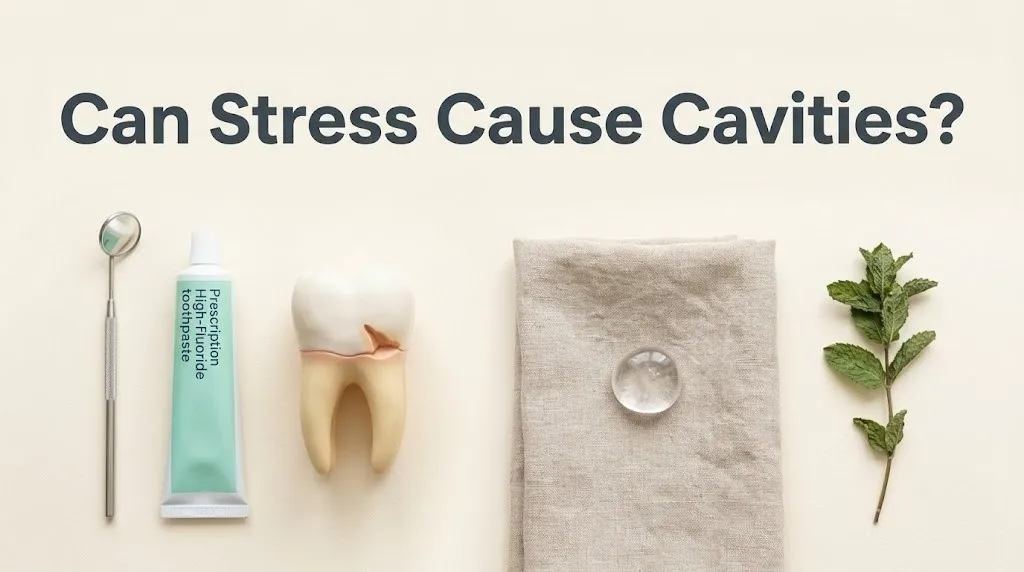
The second step is to apply fluoride more intensively. A prescription-strength fluoride toothpaste (5000 ppm) used at night without rinsing provides a high-concentration remineralization treatment. A fluoride mouthwash used during the day provides additional protection.
The third step is to manage the diet. The frequency of sugar intake is more important than the amount. Each sugar exposure triggers a 20-minute acid attack. Reduce the snacking. If you do eat sugar, do it at mealtimes when the salivary flow is highest.
The fourth step is to address the bruxism. A custom-fabricated night guard from a dentist protects the teeth from the grinding forces.
best oral care products for stress induced dry mouth
The best oral care products for stress-induced dry mouth are those that stimulate saliva, replace the missing salivary proteins, and provide a high concentration of fluoride. The products are different from standard toothpaste and mouthwash.
A high-fluoride prescription toothpaste is the cornerstone. Prevident 5000 is the standard brand. It is applied at night and not rinsed off.
A saliva substitute spray or gel, such as Biotene Oral Balance, provides lubrication and contains enzymes that mimic the functions of natural saliva.
Xylitol gum or mints, such as Ice Breakers or PUR, stimulate the natural flow of saliva and inhibit bacterial growth. Use at least 5 grams of xylitol per day, spread across multiple doses.
Avoid alcohol-based mouthwashes, which dry out the oral mucosa.
stress management for dental health
Stress management for dental health specifically targets the reduction of the sympathetic nervous system output that is causing the dry mouth and the cortisol that is depleting the salivary IgA. The mouth is a window into the autonomic nervous system.
Diaphragmatic breathing is the most direct intervention. Slow, deep breathing activates the vagus nerve, shifting the body from sympathetic dry mouth to parasympathetic salivation. Five minutes of breathing before bed can improve nocturnal salivary flow.
Adequate sleep is essential. The salivary glands recover and regenerate during sleep. A sleep-deprived person has a higher cortisol level and a lower salivary flow the next day.
Cognitive behavioral therapy reduces the bruxism by addressing the underlying anxiety. A 2023 randomized controlled trial in the Journal of Oral Rehabilitation found that CBT significantly reduced the frequency of nocturnal bruxism episodes compared to a control group.
when to see a dentist for stress related tooth decay
You should see a dentist when you notice multiple new cavities appearing rapidly, when you have visible notches or cracks at the gum line, when you wake with a sore jaw or a headache, or when your mouth is persistently dry despite drinking water. The dentist can diagnose the stress-related pattern.
The dentist will perform a caries risk assessment. They will measure your salivary flow. They will examine your teeth for abfraction lesions. They will ask about your stress levels and sleep quality.
The dental treatment is a combination of restorative care, fillings and night guards, and preventive care, fluoride and oral hygiene instruction. The dentist is a partner in managing the oral consequences of your stress.
can reducing stress reverse early cavities
Reducing stress can help reverse early cavities, called incipient or white spot lesions, by restoring the normal salivary flow and remineralizing capacity. The white spot is demineralized enamel that has not yet cavitated. It can be healed.
The reversal requires a sustained reduction in stress, which allows the saliva to return to its normal volume and composition. The sIgA levels recover. The oral pH normalizes.
The remineralization is driven by fluoride. The fluoride ion is incorporated into the enamel crystal lattice, forming fluorapatite, which is more resistant to acid. The fluoride, combined with the restored salivary calcium and phosphate, rebuilds the enamel.
The white spot will either disappear or become a hard, arrested brown lesion that does not progress. A frank cavity that has already formed a physical hole cannot be reversed. It requires a filling.
Key Takeaway: The early white spot lesion on your tooth is the canary in the coal mine of your stress. Reduce the stress, apply fluoride, and it can disappear.
Frequently Asked Questions About Stress and Cavities
Can stress really cause cavities?
Yes, stress causes cavities through the depletion of salivary IgA, reduced salivary flow, increased sugar cravings, and stress-induced bruxism.
The cavity is the final result of a chemically and mechanically disrupted oral environment.
Dental students reliably develop more cavities during high-stress exam periods.
Why do I get more cavities when I’m stressed?
You get more cavities when stressed because your saliva production drops, the antimicrobial antibodies in your saliva are depleted, and you are more likely to consume sugary snacks and neglect your oral hygiene.
Your stress hormones also directly stimulate the growth of cavity-causing bacteria in your mouth.
The combination of a dry, acidic mouth and a sugar-heavy diet creates the perfect environment for decay.
Can anxiety dry mouth cause tooth decay?
Yes, anxiety-induced dry mouth is a major cause of tooth decay because saliva is the body’s natural buffer against bacterial acid.
A dry mouth remains acidic for hours after eating, continuously dissolving the enamel crystals.
The reduced salivary flow also means fewer antimicrobial proteins to control the bacterial population.
Does teeth grinding from stress cause cavities?
Teeth grinding from stress causes a specific type of cavity called an abfraction lesion, a wedge-shaped notch at the gum line.
The powerful lateral forces of grinding physically crack and flake the enamel, creating a niche for bacteria to colonize.
A custom night guard from a dentist is the standard treatment to protect the teeth.
How can I stop stress from ruining my teeth?
To stop stress from ruining your teeth, use a prescription fluoride toothpaste, chew xylitol gum to stimulate saliva, address the bruxism with a night guard, and manage the stress with diaphragmatic breathing and adequate sleep.
Reducing the frequency of sugar intake and rinsing with water after snacks are also critical.
Treat the oral environment as a direct target of your stress management practice.
Can a dentist tell if my cavities are from stress?
Yes, a dentist can recognize the characteristic pattern of stress-related decay: multiple new smooth surface cavities, wedge-shaped abfraction lesions at the gum line, and decay around existing fillings.
The dentist will ask about your stress levels, sleep quality, and jaw pain to confirm the clinical suspicion.
The pattern of decay is distinct from the routine occlusal cavities of childhood.
The cavities your dentist finds during a stressful period are not a judgment on your character or your brushing technique. They are the visible, physical manifestation of a chemically altered oral ecosystem. Your stress hormones dried your mouth, depleted your spit’s natural antibiotics, fed the bacteria, and made you crave the sugar that the bacteria turned into acid. The cavity is the scar where the acid burned through.
The fix is both in your head and in your mouth. In your mouth, the fix is fluoride, xylitol, and the mechanical removal of the biofilm by your toothbrush and your hygienist. In your head, the fix is the daily, deliberate activation of your parasympathetic nervous system through slow breathing and sleep. Every exhale that lowers your cortisol is a moment your salivary glands are refilling and your enamel is remineralizing.
Treat your mouth with the same compassion you are learning to treat your mind. They are connected. The care you give one is care you give the other. Your teeth can be rebuilt and remineralized, just like your stress response can be recalibrated. The damage is not permanent if you intervene early. Start tonight with the fluoride toothpaste on your brush and the deep, slow breath in your lungs.