Ritual Stress Relief: Science-Backed Methods for 2026
Ritual stress relief refers to the practice of using structured, intentional, repeated behavioral sequences to reduce the physiological and psychological stress response. When built around evidence-based techniques, rituals do more than just feel calming: they actively modulate the hypothalamic-pituitary-adrenal (HPA) axis, reduce circulating cortisol, and help shift the autonomic nervous system toward parasympathetic dominance.
Stress is not a minor inconvenience in American life. The American Psychological Association’s 2024 Stress in America survey found that 77 percent of American adults regularly experience physical symptoms caused by stress, and chronic stress exposure is directly associated with elevated inflammatory markers including interleukin-6 and C-reactive protein. The costs are measurable at the cellular and hormonal level, not just the emotional one.
This article covers the specific physiological mechanisms that make ritual behavior a meaningful stress management tool, which practices have the strongest controlled research behind them, how to structure a ritual for your specific life situation, and where the honest limits of this approach lie. No vague wellness promises. Straight stress science.
What Is Ritual Stress Relief
Ritual stress relief is a structured approach to stress management in which specific calming practices are performed in a consistent, intentional sequence that the nervous system learns to associate with safety, predictability, and recovery.
That last part is not incidental. The predictability of the sequence is part of what makes it work neurologically, and this is where ritual-based stress management differs meaningfully from generic advice to “take breaks” or “breathe more.”
A stress relief ritual can be as brief as three minutes or as structured as a 30-minute morning sequence. The defining features are intentionality, consistency, and an embedded practice with physiological evidence behind it. Lighting a candle and sitting quietly is pleasant. Lighting a candle, then performing four rounds of slow diaphragmatic breathing, then writing two sentences about what you are grateful for, every morning at the same time, is a ritual with multiple overlapping mechanisms operating simultaneously.
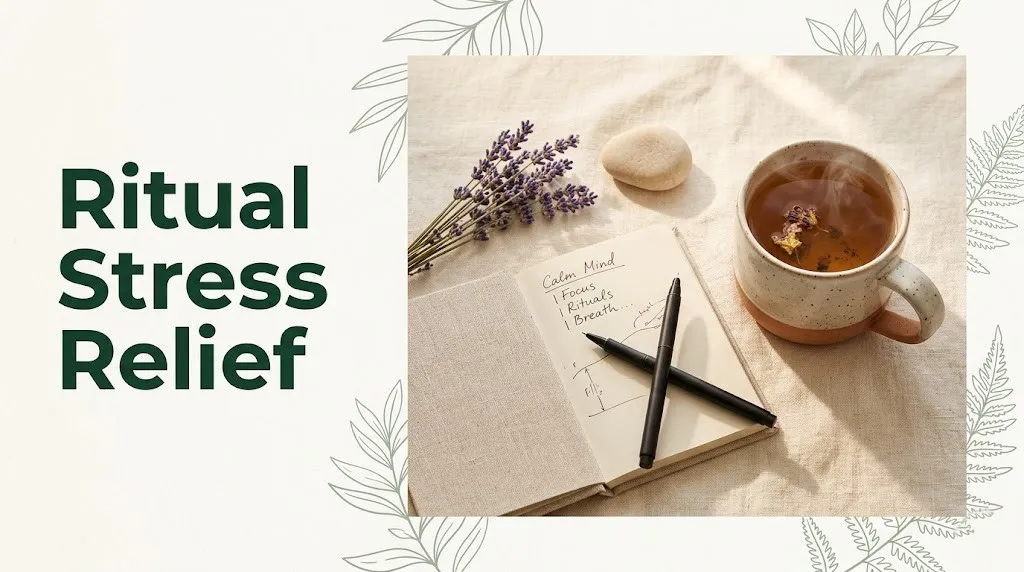
The word “ritual” carries cultural weight that sometimes leads people to assume it requires spiritual or religious framing. It does not. In the context of behavioral health research, ritual refers to a structured, repeated behavioral sequence performed with attention and intention, regardless of cultural or spiritual content. Research published in Psychosomatic Medicine has examined the psychophysiological effects of secular ritual behavior and found that the structure itself, independent of belief, contributes to perceived control and reduced physiological arousal.
- Rituals are not the same as habits (explained further in the next section)
- Rituals do not need to be spiritual to produce stress-reducing physiological effects
- The consistency and predictability of the sequence are active ingredients, not decoration
- Short rituals practiced consistently outperform elaborate rituals practiced inconsistently
People with obsessive-compulsive tendencies should note that rigid ritual adherence can be counterproductive. Flexibility within a ritual structure is preferable for individuals with anxiety-prone temperaments, and a licensed clinical psychologist can help distinguish between productive ritual behavior and compulsive patterns.
What Is a Stress Relief Ritual
A stress relief ritual is a personally meaningful, consistently performed behavioral sequence that signals to the nervous system that the threat state is ending and recovery is beginning. It differs from a habit primarily in the element of intentional attention: you perform it with awareness, not on autopilot.
Habits operate largely through the basal ganglia, the brain’s habit-processing hub, and they run without much conscious input once established. Rituals engage the prefrontal cortex alongside the basal ganglia: you are present and aware during the sequence, which activates attentional regulation processes that have their own cortisol-modulating effects.
Research from Harvard Business School, published in Organizational Behavior and Human Decision Processes, found that performing a personal ritual before a stressful task significantly reduced both self-reported anxiety and cardiovascular arousal compared to performing the same preparatory actions without the ritual framing. The mechanism proposed was reduced uncertainty: rituals create a felt sense of behavioral order that dampens the threat-detection firing of the amygdala.
The amygdala is the brain’s primary threat-detection center. When it perceives unpredictability or lack of control, it escalates its signaling to the hypothalamus, triggering CRH release and initiating the HPA axis stress cascade. A consistent ritual practice sends the opposite signal: predictability, structure, and behavioral mastery over the environment. This is not metaphorical. It is a specific neural signaling reduction.
| Feature | Habit | Stress Relief Ritual |
|---|---|---|
| Brain region primarily involved | Basal ganglia | Prefrontal cortex and basal ganglia |
| Requires conscious attention | No | Yes |
| Stress-reducing mechanism | Automaticity reduces decision fatigue | Perceived control, predictability, embedded practice |
| Timing flexibility | High | Moderate (consistency aids effectiveness) |
| Strengthens with | Repetition alone | Repetition plus intentional attention |
For older adults, the prefrontal cortex undergoes age-related changes that affect its capacity to regulate amygdala responses. This means ritual-based stress management may require longer practice periods to establish the neural associations that produce parasympathetic activation in adults over 65.
Why Rituals Reduce Stress
Rituals reduce stress through two distinct but complementary mechanisms: the psychological effect of perceived control on the HPA axis, and the physiological effects of the specific practices embedded within the ritual sequence.
Perceived control is one of the most reliably stress-buffering psychological states documented in neuroendocrine research. When a person has a clear behavioral sequence they can perform in response to a stressor, the perception of control reduces corticotropin-releasing hormone (CRH) output from the hypothalamus. This is upstream from everything else in the stress hormone cascade. Less CRH means less adrenocorticotropic hormone (ACTH) from the pituitary, which means less cortisol from the adrenal cortex.
A 2021 study published in Psychoneuroendocrinology examined salivary cortisol patterns in adults who maintained structured daily routines compared to adults with unstructured days. The structured-routine group showed a more normalized cortisol diurnal rhythm, including a healthier cortisol awakening response, and lower afternoon and evening cortisol levels. This held true even when controlling for overall stress exposure, suggesting the structure itself had an independent buffering effect.
Think of the HPA axis like a fire alarm system. The amygdala is the smoke detector. When it detects unpredictability or perceived threat, it pulls the alarm and the HPA axis floods your system with cortisol. A ritual is like ensuring the alarm system has a “reset” button that you press at the same time every day. The alarm still fires when genuine threats appear, but the baseline sensitivity is lower, and the reset time is faster.
The second mechanism is the cumulative physiological effect of the practices inside the ritual. Diaphragmatic breathing activates the vagus nerve, increasing vagal tone and producing measurable reductions in heart rate and cortisol. Moderate aerobic movement reduces circulating cortisol and interleukin-6 over time. Expressive journaling reduces ruminative cognitive processing, which lowers tonic sympathetic nervous system activation.
For people with chronic fatigue syndrome or fibromyalgia, the standard stress physiology model applies with modifications. The HPA axis in these populations often shows blunted cortisol output rather than elevated cortisol, which means the goal of ritual-based stress management may be normalizing, rather than simply lowering, the cortisol response. A primary care physician or rheumatologist should be consulted before building an intensive stress ritual practice in these populations.
Key Takeaway: Rituals reduce stress at two levels simultaneously: the psychological effect of perceived control on CRH secretion upstream in the HPA axis, and the direct physiological effects of the embedded practices (breathing, movement, journaling) on cortisol, vagal tone, and inflammatory markers.
The Science of Ritual and Cortisol
The relationship between ritual behavior and cortisol is specific enough to measure. Salivary cortisol, the most practical non-invasive marker of HPA axis activity, has been used in multiple studies to quantify whether structured behavioral sequences produce measurable hormonal changes.
Harvard Health Publishing notes that cortisol follows a diurnal pattern: it peaks within 30 to 45 minutes of waking (the cortisol awakening response), then declines across the day, reaching its lowest point around midnight. Chronic stress disrupts this pattern, flattening the morning peak and elevating evening cortisol, which interferes with sleep quality, immune function, and glucose regulation.
A well-designed morning ritual targets the cortisol awakening response directly. Exposure to natural light within 30 minutes of waking supports a healthy morning cortisol peak and helps calibrate the circadian clock. This matters because a well-timed cortisol peak in the morning is not a sign of stress: it is the body’s natural energizing mechanism. The problem is chronic evening and nighttime cortisol elevation, which proper ritual structure can help address.
Research published in the Journal of Behavioral Medicine found that adults who practiced a consistent evening wind-down ritual for six weeks showed reductions in salivary cortisol measured at bedtime and improvements in sleep onset latency compared to a control group with no structured evening routine. The ritual group also reported lower scores on the Perceived Stress Scale (PSS), the validated 10-item self-report measure developed by Sheldon Cohen.
| Cortisol Pattern | Associated Condition | Ritual Impact |
|---|---|---|
| High morning peak, healthy decline | Normal acute stress | Maintain with consistent morning ritual |
| Flat diurnal rhythm | Burnout, chronic exhaustion | Morning light and movement ritual may help restore |
| Elevated evening cortisol | Insomnia, chronic stress | Evening wind-down ritual directly targets this |
| Blunted overall output | Chronic fatigue syndrome, PTSD | Requires individualized approach; consult a physician |
People taking corticosteroid medications (prednisone, hydrocortisone, dexamethasone) should be aware that exogenous corticosteroids suppress the HPA axis, altering the baseline cortisol picture. Ritual-based stress management can still be beneficial for this group, but cortisol-focused outcome expectations need recalibration. A primary care physician can clarify what realistic physiological outcomes look like during corticosteroid therapy.
Morning Ritual for Stress
A morning ritual for stress works by anchoring the transition from sleep to waking with a predictable, parasympathetically supportive behavioral sequence that sets a lower stress baseline for the rest of the day.
The cortisol awakening response means your HPA axis is already active within minutes of waking. What happens in the first 30 to 60 minutes shapes the cortisol trajectory across the entire day. A chaotic morning (alarms snoozing, phone checking immediately, rushing) keeps sympathetic nervous system activation elevated and maintains the cortisol spike at a higher level for longer. A structured morning ritual reverses this.
According to the Cleveland Clinic, light exposure within the first 30 minutes of waking is one of the most physiologically impactful actions for circadian regulation and mood. Light suppresses melatonin via the suprachiasmatic nucleus and supports the serotonin pathway that feeds into daytime alertness and evening melatonin production.
Here is a science-anchored morning ritual sequence for stress:
- Wake without immediately checking your phone. Phone-first waking spikes dopamine seeking behavior and cortisol simultaneously. Give your HPA axis 15 minutes before digital input.
- Get natural light within 30 minutes of waking. Stand near a window or step outside for 5 to 10 minutes. This calibrates your cortisol awakening response and supports circadian serotonin production.
- Perform 3 to 5 minutes of diaphragmatic breathing. Slow, nasal inhalation for 4 counts, exhalation for 6 to 8 counts. The extended exhale activates the vagus nerve and produces parasympathetic rebound.
- Move your body for at least 10 minutes. Walking, stretching, or light resistance exercise. Movement reduces circulating epinephrine and norepinephrine leftover from the stress of waking.
- Write one sentence about what you intend for the day. This engages the prefrontal cortex and activates the perceived-control mechanism that downregulates CRH.
For shift workers whose “morning” does not correspond to sunrise, the ritual sequence remains valid but natural light exposure should be replaced with a 10,000-lux light therapy lamp for 20 to 30 minutes at the start of the waking period. Circadian disruption in shift workers elevates baseline cortisol and interleukin-6, making structured transition rituals particularly relevant for this group.
Breathing Ritual for Stress Relief
A breathing ritual for stress relief works by directly activating the vagus nerve through the mechanics of slow, controlled exhalation, producing measurable reductions in heart rate, blood pressure, and salivary cortisol within minutes.
This is one of the most mechanistically precise stress relief interventions available without any equipment. The key is the exhale-to-inhale ratio. The vagus nerve runs from the brainstem to the abdominal organs and is the primary pathway of the parasympathetic nervous system. Slow exhalation stimulates the afferent (ascending) vagal fibers, which signal the brainstem to reduce heart rate and dampen sympathetic outflow.
The Cochrane Database of Systematic Reviews has assessed breathing exercises for anxiety and stress, finding consistent evidence that slow diaphragmatic breathing (6 to 10 breaths per minute) reduces self-reported stress and improves heart rate variability (HRV), a reliable measure of vagal tone and autonomic nervous system balance. HRV improvements from consistent breathing practice are detectable within two to four weeks.
Physiological breathing ritual (4-7-8 method or extended exhale method):
- Sit or lie with your spine reasonably straight. Place one hand on your abdomen.
- Inhale slowly through the nose for 4 counts. Your abdomen should expand before your chest.
- Hold gently for 4 counts (or skip the hold if it creates tension).
- Exhale through the mouth for 7 to 8 counts. Slow and complete.
- Repeat for 4 to 6 cycles. The total ritual takes 3 to 4 minutes.
The physiological effect is not subtle when done correctly. Heart rate typically drops within 2 to 3 breaths of a sustained slow exhale. Noticeable reduction in muscle tension occurs by cycle 3 to 4.
People with chronic obstructive pulmonary disease (COPD) or asthma should perform breathing rituals under guidance from a pulmonologist or respiratory therapist, as breath-hold components can be inappropriate and exhalation mechanics differ. Pregnant women in the third trimester may need to perform breathing rituals in a side-lying or supported seated position due to diaphragm compression from uterine expansion.
Key Takeaway: A slow breathing ritual with an exhale twice as long as the inhale directly activates the vagus nerve and produces measurable parasympathetic rebound within 3 to 5 minutes, making it the fastest-acting physiological stress intervention available without a device or prescription.
Movement Ritual for Stress
A movement ritual for stress works by reducing circulating stress hormones, specifically epinephrine, norepinephrine, and cortisol, through the metabolic and neurochemical effects of physical activity performed consistently as a structured part of the day.
The stress-exercise relationship is dose-dependent. Moderate-intensity aerobic exercise (50 to 70 percent of maximum heart rate, roughly a brisk walk or light jog where conversation is possible) produces the most reliable stress-buffering effects. A 2023 study published in Health Psychology found that 20 to 30 minutes of moderate aerobic activity reduced salivary cortisol and self-reported psychological stress compared to sedentary control conditions, with effects measurable for 2 to 4 hours post-exercise.
Beyond cortisol, exercise reduces pro-inflammatory cytokines over time. Regular moderate exercise suppresses interleukin-6 and tumor necrosis factor-alpha at chronic baseline levels, even though a single exercise bout acutely raises IL-6 as a muscular signaling molecule. The anti-inflammatory adaptation happens across weeks of consistent movement, not from a single session.
The ritual element matters here. People who anchor movement to a consistent time of day, a consistent location, and a brief pre-movement cue (changing shoes, a specific playlist, stepping outside) show better long-term adherence in behavioral research. The ritual frame transforms “exercising when I feel like it” into a practiced behavioral sequence the nervous system learns to expect and prepare for.
- Walking 20 to 30 minutes daily reduces perceived stress scores measurably within 4 to 6 weeks in controlled studies
- Yoga (60 minutes, 2 to 3 times per week) shows evidence for cortisol reduction in multiple controlled trials reviewed in Psychoneuroendocrinology
- Brief resistance training (15 to 20 minutes) provides catecholamine clearing without requiring cardiovascular exertion
- Cold water immersion or cool showers post-movement activate norepinephrine pathways and reduce inflammatory markers, though evidence in healthy adults is preliminary
For people with cardiovascular disease, a cardiologist or exercise physiologist should determine intensity parameters before a movement ritual is established, particularly for activities exceeding 50 percent of maximum heart rate. Older adults should prioritize resistance and balance elements alongside aerobic movement to protect against injury that would interrupt the ritual practice.
Journaling Ritual for Stress Relief
A journaling ritual for stress relief reduces the cognitive and neurobiological burden of chronic stress by externalizing ruminative thought patterns, which lowers tonic sympathetic nervous system activation and reduces the frequency of stress-activating intrusive thoughts.
Rumination, the mental habit of repeatedly cycling through worries or negative experiences without resolution, maintains sympathetic nervous system activation even in the absence of an actual stressor. The amygdala continues to treat ruminated threats as present threats. The prefrontal cortex can interrupt this cycle, but chronic stress impairs prefrontal regulation capacity.
Expressive writing research, originally developed through the Pennebaker paradigm at the University of Texas at Austin, has produced consistent evidence across dozens of studies. Writing about emotionally difficult experiences for 15 to 20 minutes, four days in a row, is associated with measurable improvements in immune function (natural killer cell activity, salivary immunoglobulin A), reduced healthcare visits, and lower psychological distress scores in controlled trials. The mechanism includes linguistic processing of emotional experience, which appears to engage the prefrontal cortex in a way that calms amygdala reactivity.
Structured journaling formats for stress relief include:
- Expressive writing: Write freely about a current stressor for 10 to 15 minutes without editing. Focus on your feelings and thoughts, not just the facts.
- Cognitive reappraisal journaling: Write the stressful event, then actively write an alternative, less catastrophic interpretation. This directly trains prefrontal cortex regulatory pathways.
- Gratitude journaling: Write 3 specific things you are grateful for, with one sentence of detail each. Research in Health Psychology found associations between gratitude journaling and reduced inflammatory biomarkers, though the mechanism is still being studied in controlled settings.
- Planning journaling: Write tomorrow’s three priorities and one potential obstacle. This reduces uncertainty, which dampens amygdala threat detection.
Adolescents show particularly strong responses to journaling-based stress interventions in school settings, according to research reviewed by the American Psychological Association. For this age group, private journaling with no parental access is more effective, as perceived privacy allows more honest emotional processing.
Key Takeaway: Journaling reduces stress not by venting emotions into a void, but by engaging the prefrontal cortex in structured linguistic processing of experience, which measurably reduces amygdala reactivity and lowers tonic sympathetic nervous system activation over time.
Evening Ritual for Stress Relief
An evening ritual for stress relief works by signaling to the HPA axis and sympathetic nervous system that the threat-assessment window of the day is closing, which supports the natural cortisol decline the body needs for quality sleep and overnight cellular repair.
Evening cortisol elevation is a hallmark of chronic stress and a major driver of sleep disruption. When the cortisol diurnal curve fails to decline properly by 9 to 10 PM, melatonin production from the pineal gland is suppressed, sleep onset is delayed, and the restorative slow-wave sleep stages are shortened. This creates a self-reinforcing cycle: poor sleep raises the next day’s baseline cortisol, which sustains the stress state.
A well-constructed evening ritual directly targets this timing. A 2022 review in Stress and Health found that pre-sleep relaxation rituals involving progressive muscle relaxation or structured sensory wind-down reduced sleep onset latency by an average of 8 to 12 minutes and improved subjective sleep quality scores compared to control conditions. The effect was strongest when the ritual began 60 to 90 minutes before intended sleep time.
Here is a science-anchored evening ritual framework:
- Set a consistent wind-down start time 60 to 90 minutes before sleep. Consistency trains the HPA axis to begin cortisol decline at this predictable point.
- Reduce overhead bright light. Blue-enriched white light suppresses melatonin. Shift to warm-toned, dim lighting or salt lamp-level illumination.
- Perform progressive muscle relaxation (PMR) for 10 to 15 minutes. Systematically tense and release muscle groups from feet to shoulders. PMR has strong RCT support for reducing physiological arousal before sleep.
- Limit screen engagement. Emotional content on screens, including news, social media arguments, or suspenseful video, activates the amygdala and maintains sympathetic output. Screen-free periods of 30 to 60 minutes before sleep are supported by sleep medicine research.
- Use one consistent sensory anchor. A specific scent (lavender, chamomile), a specific herbal tea (discussed in the next section), or a specific piece of ambient audio trains the brain to associate the sensory cue with the transition to rest.
For people with insomnia disorder, evening rituals are a core component of cognitive behavioral therapy for insomnia (CBT-I), the gold-standard treatment. If sleep disruption is severe or has persisted for more than three months, a licensed clinical psychologist specializing in behavioral sleep medicine can deliver CBT-I as a structured, evidence-based program that incorporates ritual elements alongside stimulus control therapy and sleep restriction techniques.
Sensory Ritual Stress Relief
Sensory ritual stress relief refers to the deliberate engagement of specific sensory inputs (smell, touch, taste, temperature, sound) in a structured sequence to activate the parasympathetic nervous system and reduce HPA axis output through non-cognitive pathways.
This matters because cognitive stress management techniques require prefrontal cortex engagement. When stress is severe, the prefrontal cortex is partially offline: chronic cortisol exposure reduces prefrontal cortex gray matter density and impairs its executive regulatory function. Sensory-based rituals bypass this limitation by engaging the nervous system through subcortical pathways, particularly the limbic system and the brainstem regulatory centers that respond to sensory input without requiring deliberate cognitive effort.
Olfactory input is unique among the senses because it bypasses the thalamic relay that other sensory inputs use, projecting directly to the amygdala and hippocampus via the olfactory bulb. This makes scent one of the fastest sensory pathways to limbic system modulation. A 2021 study in Chemical Senses found that lavender essential oil (Lavandula angustifolia) inhalation reduced heart rate and skin conductance responses (both sympathetic arousal markers) compared to a control odor, with effects evident within 3 to 5 minutes of exposure.
Sensory ritual components with evidence or strong clinical rationale:
- Warm water immersion: A warm bath or shower at approximately 40°C (104°F) 60 to 90 minutes before sleep reduces core body temperature on exit, which mimics the natural temperature drop that signals sleep onset. Research in the Journal of Physiological Anthropology supports warm water immersion for improving sleep quality and reducing reported psychological stress.
- Tactile grounding: Running hands through cold water, holding a warm cup, or using a weighted blanket (2 to 5 kg) engages interoceptive sensory pathways. Weighted blankets have preliminary evidence for reducing anxiety-related physiological arousal.
- Specific ambient sound: Nature sounds, binaural beats at delta frequencies (1 to 4 Hz), or consistent soft instrumental music activate auditory cortex pathways that compete with stress-generating ruminative thought processes.
People on the autism spectrum or with sensory processing differences may find certain sensory rituals overwhelming rather than calming. An occupational therapist specializing in sensory integration can help identify the specific sensory modalities and intensities that produce a calming rather than activating effect for this population.
Key Takeaway: Sensory rituals bypass the prefrontal cortex and engage the limbic system directly, making them uniquely effective for stress relief when cognitive techniques feel inaccessible because the stress level itself is impairing executive function.
Digital Detox Ritual and Stress
A digital detox ritual for stress relief involves establishing structured, consistently timed periods of disconnection from screens and digital communication devices, which allows the sympathetic nervous system to return to baseline by eliminating a reliable source of on-demand threat-detection triggers.
Digital input is not neutral from a stress physiology standpoint. Social media platforms are structurally designed to maximize emotional engagement, which means they disproportionately surface content that activates the amygdala: conflict, comparison, uncertainty, and threat. Each notification is a micro-unpredictability event that the nervous system processes as a potential demand requiring attention. Over a day of continuous digital access, these micro-activations accumulate into sustained elevated sympathetic tone.
A 2018 study published in Social Psychological and Personality Science found that limiting social media use to 30 minutes per day over three weeks significantly reduced self-reported loneliness and depression compared to a control group. While this specific study has not been fully replicated at scale, the directional finding aligns with what is known about cortisol response to social evaluation threats and uncertainty.
The ritual component adds the critical structural element. A digital detox is not simply “using your phone less.” It is a defined, consistent window with a specific start cue and end cue. “No screens from 8 PM to 7 AM” is a ritual. “Trying not to look at my phone so much” is not.
Implementation guidance for a digital detox ritual:
- Define a specific daily window (60 to 120 minutes minimum; overnight if possible).
- Create a physical separation: place the phone in a different room, not just face-down. Physical distance reduces the pull of the device more effectively than willpower alone.
- Establish what fills the window. An empty digital detox creates boredom that can increase cortisol in some individuals. Replace screen time with a sensory or physical ritual element.
- Set a consistent re-engagement time. Predictability on both ends of the detox window reduces anxiety about missing information.
Adolescents show a particularly pronounced cortisol response to social media-related social comparison, with research in Psychoneuroendocrinology linking high social media use in this group to elevated morning cortisol and disrupted HRV. Evening digital detox rituals have shown the strongest evidence for this population specifically in the context of improving sleep onset and reducing next-day reported stress.
Ritual Stress Relief for Anxiety
Ritual stress relief for anxiety can be effective for reducing physiological stress arousal and perceived stress levels in people with mild to moderate anxiety, but the approach requires specific modification to avoid reinforcing the avoidance and control-seeking patterns that maintain anxiety disorders.
This distinction is not subtle. For someone with generalized anxiety disorder (GAD), as defined by DSM-5 criteria, rituals carry a real risk of becoming compulsive reassurance-seeking or avoidance behaviors. A morning ritual that feels calming is adaptive. A morning ritual that becomes so rigid that any deviation produces significant distress has crossed into territory that a licensed clinical psychologist should assess.
The Anxiety and Depression Association of America (ADAA) notes that behavioral predictability can genuinely buffer anxiety by reducing the amygdala’s threat-detection load. The problem arises when the ritual becomes a safety behavior, meaning the person believes they cannot tolerate anxiety without it. Safety behaviors, as documented in CBT research for anxiety disorders, paradoxically maintain and strengthen anxiety over time by preventing the corrective learning that exposure produces.
For people with anxiety who want to use ritual stress relief adaptively:
- Choose rituals anchored in physiological evidence (breathing, movement, journaling) rather than purely symbolic actions
- Practice intentional flexibility: deliberately alter one element of the ritual weekly to prevent rigidity
- Use the ritual as a regulation tool, not a protection from all anxiety
- Apply acceptance and commitment therapy (ACT) principles alongside ritual practice: the goal is to function well even in the presence of anxiety, not to eliminate anxiety entirely
For people with panic disorder, rituals can be particularly helpful in the post-panic recovery phase, where structured parasympathetic activation (slow breathing, warm water, dim lighting) supports the return to baseline faster than unstructured recovery.
If anxiety symptoms meet clinical criteria, including persistent worry most days, difficulty controlling worry, and associated physical symptoms, a licensed clinical psychologist should conduct a formal assessment. Ritual-based self-care is not a substitute for evidence-based treatment for anxiety disorders.
Key Takeaway: Ritual stress relief can be genuinely helpful for anxiety when the rituals are physiologically grounded and practiced with flexibility, but rigid reliance on rituals as safety behaviors can paradoxically strengthen anxiety by preventing the corrective learning that reduces it over time.
Stress Relief Rituals for Chronic Stress
Stress relief rituals for chronic stress address a physiologically different problem than acute stress management, because the HPA axis, immune system, and autonomic nervous system have all adapted to a sustained high-cortisol state that cannot be resolved by a single session of any practice.
Chronic stress produces measurable structural and functional changes. A 2022 meta-analysis in Biological Psychiatry found that chronic stress is associated with reduced hippocampal volume, blunted prefrontal cortex regulatory capacity, and persistently elevated C-reactive protein and interleukin-6 levels. These are not temporary states that resolve with a good night’s sleep. They are adaptations that require consistent, sustained intervention over weeks to months to reverse.
The concept of allostatic load, developed by researchers Bruce McEwen and Eliot Stellar, describes the cumulative physiological cost of repeated or chronic stress exposure. High allostatic load is associated with cardiovascular, immune, and metabolic consequences that exist on a measurable biological gradient. Ritual-based stress management works on allostatic load by consistently reducing the daily cortisol burden and providing regular periods of parasympathetic recovery.
Research published in Psychoneuroendocrinology on mindfulness-based stress reduction (MBSR), the structured 8-week program developed by Jon Kabat-Zinn, found that consistent MBSR practice over 8 weeks produced measurable reductions in salivary cortisol, inflammatory cytokines, and amygdala gray matter density changes compared to waitlist controls. MBSR is itself a structured ritual system: it requires daily 20 to 45 minute formal practice at consistent times.
For chronic stress, ritual frequency and consistency matter more than duration per session:
| Practice | Minimum Frequency for Chronic Stress | Duration per Session | Evidence Level |
|---|---|---|---|
| Diaphragmatic breathing | Daily | 5 to 10 minutes | Strong RCT evidence |
| Moderate aerobic movement | 4 to 5 times per week | 20 to 30 minutes | Well-established |
| Progressive muscle relaxation | Daily (evening) | 10 to 15 minutes | RCT supported |
| Expressive journaling | 3 to 4 times per week | 10 to 15 minutes | Clinical study support |
| MBSR formal practice | Daily | 20 to 45 minutes | Well-established by meta-analysis |
People with chronic illness (type 2 diabetes, autoimmune conditions, cardiovascular disease) face compounded challenges because their HPA axis and immune function are already dysregulated at baseline. For this population, a primary care physician or specialist should be involved in any stress management plan, not because the rituals are dangerous, but because realistic outcome expectations differ and some practices (certain movement rituals, fasting-adjacent practices) may interact with medication schedules or condition management.
Creating a Stress Relief Ritual from Scratch
Creating a stress relief ritual from scratch requires selecting practices with physiological evidence, anchoring them to consistent daily time points, and building the sequence gradually rather than attempting a comprehensive routine from day one.
Behavioral research on implementation intentions, developed by psychologist Peter Gollwitzer, shows that “when-then” planning dramatically improves follow-through on intended behaviors. “When I wake up and make coffee, then I will do 5 minutes of slow breathing before checking my phone” is more effective than “I will do morning breathing practice.” The existing cue (making coffee) becomes the ritual anchor.
Here is a step-by-step framework for building your first ritual stress relief practice:
- Identify your highest-stress transition point. Is it waking up, starting work, ending work, or going to bed? Pick one. This is where the ritual will have the greatest physiological return.
- Select one embedded practice with strong evidence. Diaphragmatic breathing and progressive muscle relaxation are the strongest starting choices because they require no equipment, no special location, and produce measurable results within a single session.
- Set the duration at 5 minutes for the first two weeks. Consistency at 5 minutes beats inconsistency at 20 minutes. The nervous system needs repetition, not marathon sessions.
- Add one sensory anchor. A specific smell, sound, or temperature cue that consistently accompanies the practice. This accelerates the association between the cue and the parasympathetic response.
- Log consistency, not quality. Track whether you did it, not how well it went. Self-compassion in the process is itself a cortisol-regulating behavior, documented in research by Kristin Neff at the University of Texas.
- Add a second practice element in week three. Once the first element is established, add journaling, a movement component, or a digital detox window. Build incrementally.
- Reassess at six weeks. Use the Perceived Stress Scale (PSS-10), freely available from Sheldon Cohen’s research group, to measure whether your self-reported stress has shifted. This gives you real data about what is working.
For people with extremely limited time (caregivers, new parents, people working multiple jobs), the minimum viable ritual is 3 minutes of slow breathing at a consistent daily anchor point. This is enough to produce measurable vagal activation and provides the ritual structure and predictability that the nervous system benefits from. Perfection is not the standard. Consistency is.
When Stress Rituals Are Not Enough
Stress rituals are not enough when the underlying stress load exceeds what any self-management practice can address, when stress has produced clinically significant functional impairment, or when the stress presentation has crossed the threshold into a diagnosable mental health condition.
Ritual-based stress management reduces the physiological burden of stress. It does not change the stressor itself. When the stressor is genuinely overwhelming (grief, financial crisis, serious illness, abuse, traumatic events), rituals provide meaningful support but they cannot resolve the condition. This is not a failure of the approach: it is the appropriate limit of any self-care practice, clearly stated.
Signs that stress has exceeded the reach of ritual-based self-management:
- Stress symptoms have persisted at high severity for more than four to six weeks without improvement
- Daily functioning is impaired: work performance, relationships, basic self-care are consistently affected
- Physical symptoms are prominent and unexplained: persistent chest pain, gastrointestinal disturbance, immune suppression (frequent illness), significant sleep disruption lasting more than a month
- Emotional responses feel disproportionate to circumstances and are difficult to regulate
- Thoughts of self-harm, hopelessness, or worthlessness are present
If you are in crisis or experiencing thoughts of self-harm, contact the 988 Suicide and Crisis Lifeline by calling or texting 988 at any time. This service is free, confidential, and available 24 hours a day.
Burnout, as classified in the World Health Organization’s ICD-11, is a syndrome resulting from chronic workplace stress that has not been successfully managed. It is characterized by exhaustion, cynicism, and reduced professional efficacy. Burnout at clinical severity does not resolve through ritual practice alone. It requires structural changes to workload, occupational support, and often psychological intervention.
A 2023 study published in the Journal of Behavioral Medicine found that MBSR practice alone was insufficient for burnout recovery without concurrent changes in work conditions or workplace support structures. Ritual-based stress management is most effective as a component of a broader approach, not as a standalone solution to high-load stressors.
Key Takeaway: Stress rituals reduce the physiological burden of stress but cannot resolve the stressors themselves; when stress has caused functional impairment for more than four to six weeks, or when thoughts of self-harm are present, professional support is not optional.
Ritual Stress Relief and Professional Support
Ritual stress relief and professional mental health support are not alternatives to each other: they are most effective when used together, because professional treatment addresses the cognitive and environmental roots of stress while rituals support the daily physiological recovery process.
The professional referral question for stress-related concerns depends on presentation. A primary care physician is the appropriate first contact when physical symptoms dominate: persistent headaches, gastrointestinal disturbance, cardiovascular symptoms, or immune vulnerability. A primary care physician can rule out medical contributors, assess cortisol patterns through appropriate testing, and refer to specialists as needed.
A licensed clinical psychologist is the appropriate referral when stress has produced significant psychological symptoms, including anxiety meeting GAD criteria, trauma responses meeting PTSD criteria, or persistent low mood. Cognitive behavioral therapy and MBSR are the two most evidence-supported psychological treatments for stress-related conditions, with strong support from the National Institute of Mental Health. Both can incorporate ritual-based behavioral practices as homework components within the treatment framework.
A licensed professional counselor or marriage and family therapist is appropriate when the primary stressor involves interpersonal or relational dynamics, including work relationship stress, family conflict, or caregiver burden.
A board-certified psychiatrist should be consulted when psychological symptoms are severe enough that medication evaluation is warranted, or when a diagnosable anxiety or mood disorder is present. Medication and ritual-based behavioral practice are not in conflict: many patients benefit from pharmacological support that reduces the severity of symptoms enough to make behavioral practices more accessible.
What to bring to a first appointment about stress-related concerns:
- A two-week record of your sleep, stress symptoms, and physical symptoms (written notes are sufficient)
- A list of current medications and supplements
- A brief description of your primary stressors and how long they have been present
- Your score on the PSS-10 (Perceived Stress Scale), if you have completed it
Ritual-based stress management is genuinely useful, evidence-grounded, and practical. It is also a starting point and a maintenance tool, not a ceiling. Professional support expands what is possible, particularly for stress that has been high-severity for months or years.
Frequently Asked Questions About Ritual Stress Relief
What is the difference between a ritual and a habit for stress relief?
A ritual requires intentional attention during the practice, while a habit runs largely automatically through the basal ganglia without conscious engagement.
Rituals engage the prefrontal cortex alongside the basal ganglia, activating perceived-control mechanisms that reduce CRH secretion upstream in the HPA axis stress cascade.
Both can reduce stress, but rituals produce an additional layer of stress buffering through the psychological mechanism of behavioral predictability and felt control.
How long does it take for a stress relief ritual to actually lower cortisol?
A single session of slow diaphragmatic breathing can reduce salivary cortisol within 10 to 20 minutes by activating vagal tone and producing parasympathetic rebound.
Measurable reductions in baseline cortisol patterns, including improved diurnal cortisol rhythm, require consistent ritual practice over four to eight weeks according to research in Psychoneuroendocrinology.
The two-level answer is: single sessions produce acute effects, and consistent practice produces durable HPA axis recalibration.
What is the best morning ritual for stress?
The most evidence-supported morning ritual sequence for stress combines natural light exposure within 30 minutes of waking, 3 to 5 minutes of slow diaphragmatic breathing before any screen contact, and 10 to 20 minutes of light physical movement.
This sequence targets three distinct physiological mechanisms: circadian cortisol calibration, vagal activation, and catecholamine clearing through movement.
For shift workers without access to natural morning light, a 10,000-lux light therapy lamp for 20 to 30 minutes provides an equivalent circadian signal.
Can ritual stress relief help with anxiety disorders?
Ritual stress relief can reduce physiological arousal and perceived stress in people with mild to moderate anxiety, but requires careful implementation for clinical anxiety disorders.
For generalized anxiety disorder specifically, rituals must be practiced with intentional flexibility to avoid becoming rigid safety behaviors, which can paradoxically strengthen anxiety by preventing corrective learning.
A licensed clinical psychologist can integrate ritual-based practices into CBT or ACT treatment frameworks to ensure they support rather than undermine anxiety recovery.
Is there science behind the idea that rituals reduce stress?
Research published in Psychosomatic Medicine and Psychoneuroendocrinology supports that structured, predictable behavioral sequences reduce amygdala threat-detection firing and lower HPA axis output through the perceived-control mechanism.
Adults with consistent daily routines show more normalized cortisol diurnal rhythms and lower afternoon cortisol levels compared to those with unstructured days, even when controlling for overall stress exposure.
The embedded practices within rituals (breathing, movement, PMR) each have independent RCT-level evidence for cortisol reduction, making a well-constructed ritual a multi-mechanism intervention.
What should I do when my stress relief ritual stops working?
When a ritual stops producing a noticeable calming effect, it may have become too automatic, meaning the intentional attention component has been lost and it is now functioning as a habit without the perceived-control mechanism.
Re-engage the ritual by adding one new element, changing the sequence slightly, or bringing deliberate attention back to the sensory and physiological experience of each step.
If stress remains high despite consistent ritual practice over six to eight weeks, a licensed clinical psychologist or primary care physician should assess whether the stress load has exceeded what self-managed practice can address.
Closing
Ritual stress relief is not a wellness trend. It is a behavioral technology with specific physiological mechanisms operating at the level of the HPA axis, the vagus nerve, the amygdala, and the prefrontal cortex. When you build a ritual around evidence-based practices and perform it consistently, you are not just “taking time for yourself.” You are giving your nervous system repeated, predictable signals that the threat window is closing and recovery can begin.
The most effective starting point is the smallest consistent action: 5 minutes of slow breathing at the same time every day, anchored to something you already do. Let the consistency build the neural association. Add elements gradually. Measure your progress with the PSS-10 at six weeks.
If six to eight weeks of consistent practice does not move your stress level, that is useful information, not a personal failure. It means the stressor load or the underlying physiology needs professional attention. A licensed clinical psychologist or your primary care physician is the right next conversation.