Stress Relief Candles in 2026: Do They Actually Work?
Stress relief candles can support relaxation and create a calming environment, but their direct stress-reducing effects are modest and supported by preliminary evidence rather than large-scale clinical trials. They are not a treatment for clinical stress, anxiety disorders, or burnout. What they offer is a legitimate, low-cost sensory tool that, when used intentionally alongside evidence-backed stress management practices, may help shift your nervous system toward a calmer state.
The American Psychological Association’s 2025 Stress in America survey found that 62% of adults use some form of sensory self-care including scented products, music, or calming environments to manage daily stress. The global aromatherapy market has grown steadily, and candles represent one of the most accessible entry points. Yet most consumers cannot distinguish between a candle that smells pleasant and one that might actually influence stress physiology through the olfactory-to-limbic pathway.
You will learn exactly what the research says about stress relief candles, which scents have actual evidence behind them, how your brain processes inhaled fragrance compounds, the difference between genuine essential oil candles and synthetic fragrance products, what to look for when buying, who should avoid scented candles entirely, and where candles fit in a realistic stress management plan. No wellness marketing fluff. Just the neuroanatomy, the clinical evidence graded honestly, and practical guidance you can use.
Stress Relief Candles
Stress relief candles are scented candles marketed with the claim that their fragrance, typically derived from essential oils, can reduce stress, promote relaxation, or improve mood. They sit at the intersection of aromatherapy, home fragrance, and the wellness industry, a space where marketing claims frequently outpace the available scientific evidence.
The premise behind these products is not baseless. Inhaled fragrance compounds can access the brain’s emotion-processing centers through a direct neural pathway that bypasses conscious thought. This is the same mechanism that makes the smell of fresh coffee or warm bread emotionally evocative. Stress relief candles attempt to harness this olfactory-to-limbic connection deliberately, using fragrance compounds that research suggests may influence stress physiology.
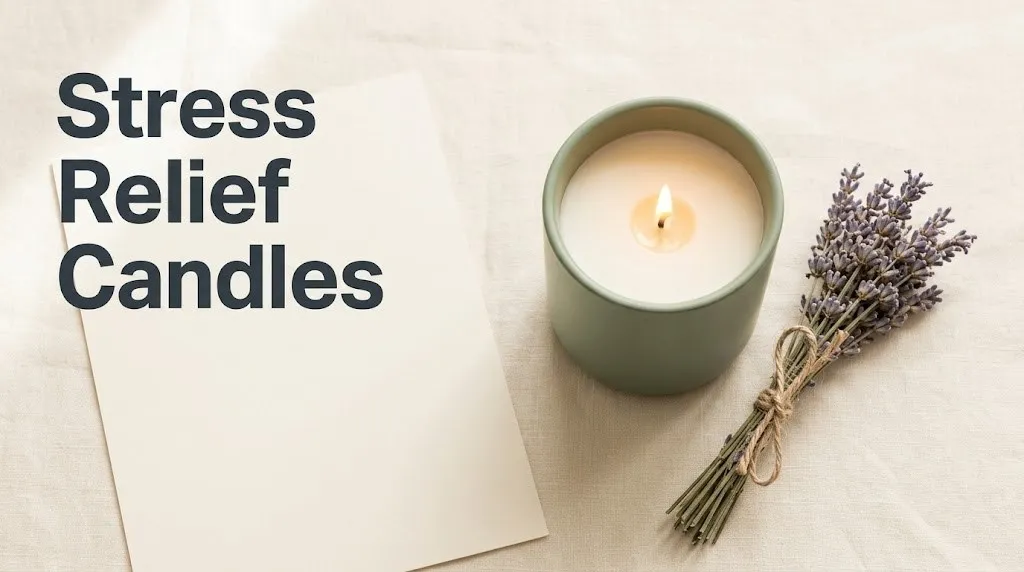
The product category spans a wide quality range. At one end are candles made with pure essential oils, natural waxes like soy or beeswax, and minimal synthetic additives. At the other end are paraffin wax candles scented entirely with synthetic fragrance oils that mimic lavender or eucalyptus but contain none of the plant compounds that aromatherapy research has actually studied. The label “stress relief” on a candle means nothing without ingredient verification. The fragrance industry is largely self-regulated, and terms like “natural” and “aromatherapy” have no legal definition on candle labels in the United States.
Do Stress Relief Candles Actually Work
Stress relief candles may produce a mild relaxation effect through the combination of olfactory stimulation of the limbic system, intentional ritual, and environmental modification, but the direct evidence for candles specifically is limited. Most research supporting aromatherapy for stress relief uses essential oil inhalation via diffusers, personal inhalers, or massage, not candles.
The distinction between candle aromatherapy and diffuser aromatherapy matters. Candles involve combustion. Heat from the flame can alter the chemical structure of essential oil compounds, potentially degrading some of the volatile organic molecules responsible for therapeutic effects. The concentration of fragrance compounds in the air from a burning candle is typically lower and less consistent than from a diffuser designed to aerosolize essential oils. This means that even when a specific essential oil has demonstrated stress-reducing effects in controlled studies, those findings cannot be directly assumed to apply to a candle containing that same oil.
What likely does work, regardless of the specific fragrance, is the ritual of lighting a candle, sitting quietly, and creating a sensory environment that signals to your nervous system that you are safe and can downshift from sympathetic to parasympathetic dominance. This behavioral component is real and should not be dismissed. The problem is when consumers mistake this ritual relaxation effect for a direct pharmacological effect of the fragrance itself.
Key Takeaway: Light a candle because the ritual and environment help you slow down, not because you expect the scent to directly alter your brain chemistry. The ritual is real. The pharmacology through a candle is uncertain.
What Makes a Candle Stress Relieving
What makes a candle potentially stress relieving is not a single factor but a combination of the fragrance compounds used, the delivery method, and the behavioral context in which the candle is burned. A candle that genuinely supports relaxation does so through multiple overlapping pathways, some sensory, some behavioral, and some neurochemical.
The sensory pathway involves the direct access that inhaled fragrance molecules have to the brain. When you inhale scent compounds from a burning candle, those molecules bind to olfactory receptors in the nasal epithelium. The olfactory receptor neurons send signals directly to the olfactory bulb, which projects to the amygdala, hippocampus, and other limbic structures without routing through the thalamus first. This gives scent a faster and more direct line to emotion-processing brain regions than any other sense.
The behavioral pathway involves the deliberate act of lighting a candle as a transition ritual. You come home, you light a candle, and your brain learns that this sequence means the workday is over and recovery time has begun. This is classical conditioning, and it works regardless of the specific scent. The candle becomes a cue for your nervous system to shift gears.
The neurochemical pathway, which is the most uncertain and the most marketed, involves the possibility that specific essential oil compounds such as linalool from lavender interact with neurotransmitter systems including GABA receptors, enhancing inhibitory signaling that calms neural activity. This is the mechanism that has some research support in controlled settings, but whether candle delivery achieves sufficient concentration to activate this pathway remains an open question.
The Olfactory Pathway and Stress Relief Science
The olfactory pathway provides the neuroanatomical basis for why inhaled scents might influence stress and emotion. It is the only sensory system with direct, unswitched access to the limbic system, and understanding this pathway explains both the potential and the limitations of stress relief candles.
The process begins in the olfactory epithelium, a patch of specialized tissue high in the nasal cavity containing millions of olfactory receptor neurons. Each neuron expresses one type of odorant receptor, and when a volatile fragrance molecule from a burning candle binds to its matching receptor, it triggers an electrical signal. This signal travels along the olfactory nerve, through the cribriform plate of the skull, and into the olfactory bulb, a structure that sits directly beneath the frontal lobe.
From the olfactory bulb, the signal diverges along multiple paths. One tract projects directly to the amygdala, the brain structure most closely associated with emotional processing, fear conditioning, and the initiation of the stress response. Another tract projects to the hippocampus, which integrates emotional experience with memory, explaining why scents can trigger vivid emotional memories. Additional projections reach the hypothalamus, which controls the autonomic nervous system and the HPA axis.
This direct wiring means that scent can influence your stress physiology before you are consciously aware of what you are smelling. The amygdala can begin modulating autonomic output within milliseconds of odor detection. A scent associated with safety and calm can, in theory, dampen amygdala reactivity and reduce sympathetic nervous system output, shifting the body toward parasympathetic dominance.
Think of the olfactory pathway like a dedicated phone line from your nose to your emotional brain. Other senses have to go through a switchboard in the thalamus first. Scent gets a direct call, which is why it can feel immediate and visceral.
How Scent Affects the Amygdala and Limbic System
Scent affects the amygdala and limbic system through direct neural projections that allow fragrance compounds to modulate emotional processing, stress reactivity, and autonomic nervous system balance. This is the central mechanism underlying any genuine stress-relieving effect of aromatherapy.
The amygdala functions as the brain’s threat-detection center. It continuously scans sensory input for signs of danger and, when activated, triggers the sympathetic nervous system’s fight-or-flight response through connections to the hypothalamus and brainstem. Cortisol release, increased heart rate, and heightened vigilance all follow from amygdala activation. The key insight for stress relief is that the amygdala can be calmed as well as alarmed, and scent is one of the sensory inputs that can influence this calibration.
Functional neuroimaging studies have shown that pleasant, familiar scents can reduce amygdala activation in response to stress. A 2021 study published in the Journal of Alternative and Complementary Medicine found that inhalation of lavender essential oil reduced amygdala blood flow compared to a neutral control odor. The researchers interpreted this as evidence that lavender’s anxiolytic effect operates through direct limbic modulation rather than through conscious cognitive appraisal.
The hippocampus adds the memory dimension. If you have used a specific candle scent during calm, pleasant experiences, the hippocampus encodes that association. Subsequent exposure to the same scent retrieves the associated emotional state, reinforcing the relaxation response through learned association. This is why consistency in your choice of scent matters. Rotating through different candles each week prevents this conditioning from developing.
Key Takeaway: Your emotional brain responds to scent before you think about it. A consistent calming scent paired with actual relaxation builds a conditioned response over time.
Lavender Essential Oil Stress Relief Evidence
Lavender essential oil (Lavandula angustifolia) has the strongest evidence base of any essential oil for stress and anxiety reduction, though the evidence comes primarily from inhalation and massage studies, not from candle-specific research. When evaluating lavender stress relief candles, you are extrapolating from this broader aromatherapy evidence.
The active constituents responsible for lavender’s proposed calming effects are primarily linalool and linalyl acetate, which together make up the majority of high-quality lavender essential oil. These compounds have been studied in both animal models and human trials. Linalool has been shown to modulate GABA-A receptor activity, enhancing the function of the brain’s primary inhibitory neurotransmitter. Increased GABA-ergic signaling produces calming, anxiolytic effects similar in mechanism, though not in potency, to benzodiazepine medications.
A 2019 Cochrane Database of Systematic Reviews analysis of aromatherapy for anxiety found that lavender inhalation showed a modest but statistically significant effect on state anxiety compared to placebo in several small randomized controlled trials. The effect sizes were small to moderate. Most included studies used lavender oil diffused into the air or applied to a cotton pad for direct inhalation, not burned in a candle. The Cochrane reviewers noted that the overall quality of evidence was low to moderate due to small sample sizes and methodological inconsistencies.
For candle users specifically, the practical takeaway is that lavender is the most defensible scent choice if you want to select a candle based on research rather than personal preference alone. The evidence for lavender’s calming properties is real, but the effect is mild, and the dose delivered by a candle is almost certainly lower than what was used in the studies that demonstrated benefit.
Bergamot Essential Oil and Cortisol Research
Bergamot essential oil (Citrus bergamia) has preliminary but promising evidence for stress reduction, with some studies suggesting it may lower salivary cortisol levels and improve mood during acute stress. The evidence is less robust than for lavender but points in a consistent direction.
Bergamot oil’s primary active constituents include limonene, linalool, and linalyl acetate, providing some mechanistic overlap with lavender while adding the distinct citrus terpene profile. Limonene has been studied for its potential mood-elevating properties, and animal research suggests it may influence serotonin and dopamine signaling in the prefrontal cortex.
A 2022 study published in Phytotherapy Research examined the effect of bergamot essential oil inhalation on salivary cortisol in healthy adults exposed to a standardized laboratory stressor. The bergamot group showed a smaller cortisol increase following the stressor compared to the control group, and self-reported anxiety scores were also lower. The study was small and the cortisol difference, while statistically detectable, was modest in magnitude.
Other research has examined bergamot aromatherapy in clinical settings. A study in the Journal of Alternative and Complementary Medicine found that bergamot inhalation reduced preoperative anxiety in patients awaiting minor surgery compared to placebo. Again, these studies used direct inhalation or diffusion rather than candles, so the translation to candle use involves uncertainty about dose delivery.
The combination of lavender and bergamot is a common commercial strategy in stress relief candles, and this combination has some research support for synergistic effects. The evidence is preliminary but consistent enough to take seriously.
Other Stress Relief Candle Scents Ranked by Evidence
Several other scents appear in stress relief candles with varying levels of research support. Understanding which scents have genuine evidence versus those that rely entirely on pleasant aroma helps you make informed purchasing decisions.
| Scent | Botanical Name | Key Active Compounds | Evidence Level | Best Research Finding |
|---|---|---|---|---|
| Lavender | Lavandula angustifolia | Linalool, linalyl acetate | Moderate (multiple small RCTs) | Reduces state anxiety in controlled settings |
| Bergamot | Citrus bergamia | Limonene, linalool | Preliminary (small RCTs) | May reduce salivary cortisol during acute stress |
| Roman chamomile | Chamaemelum nobile | Alpha-pinene, limonene | Limited (few studies) | Preliminary anxiety reduction in small trials |
| Clary sage | Salvia sclarea | Linalyl acetate, linalool | Limited (few studies) | One small study found reduced cortisol in menopausal women |
| Ylang ylang | Cananga odorata | Linalool, geranyl acetate | Preliminary (few studies) | Small study found reduced blood pressure and heart rate |
| Frankincense | Boswellia carterii | Alpha-pinene, limonene | Limited (mostly traditional use) | Very limited human research for stress specifically |
| Eucalyptus | Eucalyptus globulus | 1,8-cineole | Limited for stress | Better studied for respiratory benefits than stress |
| Rose | Rosa damascena | Citronellol, geraniol | Limited | Traditional calming use, minimal stress RCT evidence |
The evidence ranking reveals a clear hierarchy. Lavender has the most research, bergamot is a reasonable second choice, and other scents have minimal human stress research despite their traditional use in aromatherapy. Personal preference for a scent is a valid selection criterion because the behavioral and conditioning benefits of candles do not require a specific compound. But if you are choosing based on evidence rather than aroma, lavender and bergamot are the clear leaders.
Key Takeaway: Lavender and bergamot are the only scents with enough human research to justify a purchase based on evidence rather than personal preference. For all other scents, choose what you enjoy.
Essential Oil Candles Versus Fragrance Oil Candles
Essential oil candles contain volatile plant compounds extracted through distillation or cold pressing, while fragrance oil candles contain synthetic aromatic chemicals manufactured in a laboratory. The distinction matters for stress relief claims because aromatherapy research studies essential oils, not synthetic fragrances.
Essential oils are complex mixtures containing dozens to hundreds of naturally occurring compounds. Lavender essential oil, for example, contains linalool, linalyl acetate, camphor, 1,8-cineole, and many other constituents in proportions that vary by growing region, harvest time, and distillation method. This complexity is believed to contribute to therapeutic effects through multiple compound interactions. Research on lavender for stress has used genuine essential oil, not a synthetic recreation of lavender’s scent.
Fragrance oils are designed to smell like something specific, a lavender field, a vanilla cookie, fresh linen, but they contain none of the plant’s original biochemistry. They are created from petrochemicals and designed for scent stability, consistency, and low cost. A synthetic lavender fragrance may contain linalool produced in a laboratory, but it lacks the full suite of compounds present in true lavender oil.
For stress relief purposes, a candle made with genuine essential oils has at least a plausible connection to the aromatherapy evidence base. A fragrance oil candle, regardless of how pleasant it smells, has no scientific basis for direct stress-reducing effects beyond the ritual and environmental benefits that any candle would provide.
What to Look for When Buying Stress Relief Candles
When buying stress relief candles, look for candles that list specific essential oils by their botanical names on the label, use natural wax bases, and avoid undisclosed fragrance blends. The ingredient list tells you more about what you are actually buying than any marketing claim on the front of the jar.
The label should state the botanical names of essential oils used. “Lavender essential oil (Lavandula angustifolia)” tells you the manufacturer is using genuine essential oil from the correct species. “Lavender fragrance” or “lavender scent” means the candle contains synthetic fragrance oil. The term “aromatherapy candle” has no legal definition and can be applied to products containing only synthetic fragrances.
The wax base affects both burn quality and indoor air quality. Soy wax and beeswax burn more cleanly than paraffin wax, which is derived from petroleum and can release small amounts of volatile organic compounds during combustion. For someone using a candle daily for stress management, cleaner-burning wax is a reasonable choice, especially for those with respiratory sensitivities.
Third-party testing or certification for purity is a plus but rare in the candle industry. Some manufacturers voluntarily submit their essential oil blends for gas chromatography-mass spectrometry testing to verify purity and composition. This level of transparency indicates a manufacturer that understands their product is being purchased for more than just fragrance.
Soy Wax and Natural Ingredients in Stress Relief Candles
Soy wax and natural ingredient stress relief candles appeal to consumers who want to minimize synthetic chemical exposure while using aromatherapy products. The choice between soy, beeswax, coconut wax, and paraffin involves considerations of burn quality, scent throw, indoor air quality, and environmental impact.
Soy wax is made from hydrogenated soybean oil and burns at a lower temperature than paraffin, producing a longer-lasting candle with less soot. It holds essential oils well and releases them gradually as the wax pool forms. The primary limitation is that soy wax has a weaker cold scent throw, meaning the candle may not smell as strongly before lighting compared to paraffin. For stress relief purposes where the active scent is released during burning, this is not a major drawback.
Beeswax burns even more cleanly than soy and produces negative ions when burned, which some research suggests may help remove particulate matter from the air, though the stress-relief relevance of this is uncertain. Beeswax has its own mild honey-like scent that can blend with added essential oils.
Paraffin wax remains the most common candle wax because it is inexpensive and holds fragrance strongly. The indoor air quality concern is real but modest. The Environmental Protection Agency notes that burning paraffin candles can release trace amounts of chemicals including toluene and benzene, though at levels far below what is considered acutely harmful. For someone burning a candle for an hour daily in a well-ventilated room, the health risk is low. For someone with asthma, COPD, or chemical sensitivities, the cleaner waxes are worth the additional cost.
Stress Relief Candle Safety and Potential Risks
Stress relief candle safety involves standard candle fire safety plus additional considerations related to fragrance ingredients, indoor air quality, and the specific essential oils used. These risks are generally low but become more relevant when candles are used daily as part of a stress management routine.
The primary safety concern with any candle is fire. The Consumer Product Safety Commission reports that candles cause approximately 7,000 residential fires annually in the United States. Never leave a burning candle unattended, keep it away from flammable materials, and extinguish it before leaving the room or going to sleep.
Indoor air quality is a secondary concern. Burning any candle produces some particulate matter and volatile organic compounds. Paraffin wax candles produce more than soy or beeswax. Synthetic fragrance oils may contain phthalates, which are used as fragrance fixatives and have been identified as potential endocrine disruptors by some environmental health researchers. The exposure from occasional candle use is low, but daily use in a poorly ventilated room increases cumulative exposure.
Allergic reactions and respiratory irritation from fragrance compounds are a concern for susceptible individuals. Symptoms may include sneezing, headache, throat irritation, or asthma exacerbation. These reactions can occur with both synthetic fragrances and natural essential oils. A person who reacts to a candle should extinguish it, ventilate the room, and identify the specific fragrance to avoid in future purchases.
Key Takeaway: The safety risks of stress relief candles are generally low but increase with daily use and pre-existing respiratory conditions. Burn them in ventilated spaces and never leave them unattended.
Who Should Avoid or Modify Use of Scented Candles
Certain populations should avoid or modify their use of scented candles, including stress relief candles, because of specific health risks that are not relevant to the general population. These groups need more than standard fire-safety awareness.
People with asthma, COPD, or other chronic respiratory conditions should approach scented candles cautiously. Fragrance compounds, whether natural or synthetic, can act as respiratory irritants and trigger bronchoconstriction in susceptible individuals. An allergist or pulmonologist can provide personalized guidance, but a general rule is to ensure excellent ventilation and to extinguish the candle immediately if any respiratory symptoms develop.
Pregnant women may wish to limit scented candle use during the first trimester, when fetal organogenesis occurs and the precautionary principle suggests minimizing unnecessary chemical exposures. The specific concern is not about candles themselves but about certain essential oils that, at high internal doses, have historical associations with emmenagogue effects. The inhaled dose from a candle is far lower than oral consumption, and most obstetricians consider occasional candle use low-risk. A conversation with your obstetrician at a prenatal visit is reasonable.
Homes with pets require attention to species-specific safety. Cats are particularly sensitive to certain essential oil compounds because they lack the glucuronidation liver enzyme pathway needed to metabolize and excrete them. D-limonene, found in citrus oils including bergamot, and linalool, found in lavender, can accumulate in cats with prolonged high-concentration exposure. The exposure from a candle burned in a large room for an hour is low, but a candle burned in a small bathroom with a cat present creates higher risk. Dogs are less sensitive but can still experience respiratory or skin irritation.
What Stress Relief Candles Can and Cannot Do for Stress
Stress relief candles can create a calming sensory environment, serve as a behavioral cue for relaxation, and provide a modest olfactory-based modulation of stress physiology at best. They cannot treat clinical anxiety disorders, eliminate chronic stress, replace evidence-based stress management practices, or compensate for insufficient sleep, poor nutrition, or unmanageable life demands.
What candles can do is support an environment conducive to relaxation. Dim lighting, a pleasant scent, and the ritual of setting aside time to sit quietly create conditions under which your nervous system can shift toward parasympathetic dominance. This environmental contribution to stress management is real and legitimate. The problem arises when consumers believe the candle itself is doing the therapeutic work.
What candles cannot do is reverse the effects of chronic allostatic load accumulated over months or years. A candle does not meaningfully lower baseline cortisol, does not remodel the amygdala after chronic stress exposure, and does not build the cognitive coping skills that cognitive behavioral therapy provides. Expecting a candle to address a stress disorder is like expecting a warm bath to treat pneumonia. The comfort is real. The treatment is not.
If your stress is interfering with your ability to work, maintain relationships, or experience pleasure for more than two weeks, a candle is not the solution. A licensed clinical psychologist or primary care physician can evaluate whether what you are experiencing has crossed from manageable stress into a condition requiring professional support.
How to Use Stress Relief Candles Effectively
To use stress relief candles effectively, pair the candle with intentional relaxation practices rather than burning it as background while you continue scrolling on your phone or working. The candle supports the practice. It does not replace it.
To build a stress relief candle ritual, choose a consistent time of day when you can sit undisturbed for ten to fifteen minutes. This might be after work, before bed, or early morning before others wake. The consistency trains your brain to associate the scent with the shift from activity to rest.
Light the candle in a clean, uncluttered space. Sit comfortably nearby where you can smell the fragrance without it being overwhelming. Close your eyes. Take slow, diaphragmatic breaths at a rate of about five to six breaths per minute, which research has shown optimizes heart rate variability and stimulates the vagus nerve. The scent provides a sensory anchor for your attention. When your mind wanders to stressful thoughts, return your attention to the scent and your breath.
Extinguish the candle after fifteen to twenty minutes. Let the experience stand as complete. The compounding effect of this practice over weeks is where any genuine stress management benefit lies. The candle is a tool for the ritual, not the active ingredient itself.
Complementary Stress Relief Practices Beyond Candles
Stress relief candles fit best as one small component of a broader stress management approach that includes evidence-backed practices with stronger research support. Relying on candles alone for stress management is like relying on a single side dish for complete nutrition.
Mindfulness-based stress reduction programs have demonstrated meaningful reductions in perceived stress and cortisol levels across multiple randomized controlled trials. Unlike candles, MBSR has a robust evidence base for clinical stress reduction. Cognitive behavioral therapy directly addresses the thought patterns that amplify and perpetuate the stress response. These are the evidence-backed interventions that should form the core of a stress management plan.
Regular physical activity, particularly moderate aerobic exercise performed for 30 minutes on most days, reduces baseline cortisol, improves sleep quality, and increases resilience to acute stressors. Sleep hygiene practices that ensure seven to nine hours of quality sleep per night protect against the accumulation of allostatic load. Social connection and meaningful relationships buffer stress through oxytocin-mediated mechanisms that a candle cannot replicate.
If you are in crisis or experiencing thoughts of self-harm, contact the 988 Suicide and Crisis Lifeline by calling or texting 988 at any time. This service is free, confidential, and available 24 hours a day.
Frequently Asked Questions About Stress Relief Candles
Do stress relief candles actually work or is it just marketing?
Stress relief candles have a small genuine relaxation effect through the ritual of use, environmental modification, and possible olfactory-limbic modulation, but the direct pharmacological effect of the fragrance through a candle is not well-established by research. The marketing claims typically overstate what the evidence supports. Most of the benefit comes from the behavioral practice surrounding candle use, not from the scent molecules themselves.
What candle scent is best for stress relief?
Lavender (Lavandula angustifolia) has the strongest evidence for stress and anxiety reduction based on multiple human randomized controlled trials, though these studies used direct inhalation or diffusion rather than candles specifically. Bergamot (Citrus bergamia) has preliminary evidence for reducing salivary cortisol during acute stress. Other scents including chamomile, clary sage, and ylang ylang have limited but suggestive research support.
Can stress relief candles help with anxiety?
Stress relief candles may provide mild, temporary relaxation that can complement professional treatment for anxiety but cannot treat generalized anxiety disorder or other clinical anxiety conditions. The effect size is small and the evidence is preliminary. Someone with diagnosed anxiety should view candles as an environmental support tool, not as a treatment, and should work with a licensed clinical psychologist or psychiatrist for evidence-based care.
Are essential oil candles better than regular scented candles?
Essential oil candles contain the actual plant compounds that aromatherapy research has studied, making them more defensible from an evidence perspective than fragrance oil candles, which contain synthetic chemicals designed to mimic natural scents. A lavender essential oil candle contains linalool and linalyl acetate. A lavender fragrance candle smells similar but contains none of the compounds studied in the research literature.
Are stress relief candles safe for pets?
Cats are particularly sensitive to essential oil compounds including limonene and linalool because they lack the liver enzyme pathway needed to metabolize them, and prolonged high-concentration exposure can cause toxicity. Burning a candle in a large, ventilated room for an hour poses low risk, but burning one in a small bathroom with a cat present increases risk. Dogs are less sensitive but can experience respiratory irritation. Consult your veterinarian for specific guidance.
How should I use a stress relief candle for best results?
Light the candle in a quiet, uncluttered space and sit comfortably nearby for ten to fifteen minutes while practicing slow diaphragmatic breathing at five to six breaths per minute. Do this at a consistent time daily to build a conditioned relaxation response. Use the scent as a sensory anchor for your attention. The benefit comes from the ritual and the breathing, not from passive background burning while engaged in other activities.
Stress relief candles occupy a legitimate but limited place in stress management. They are environmental support tools, not treatments. The lavender and bergamot essential oils they sometimes contain have preliminary evidence for stress reduction, but that evidence comes from research that used more concentrated delivery methods than a burning candle provides. What works most reliably is not the scent pharmacology but the behavioral ritual you build around the candle.
Buy a candle because you enjoy the scent and the ritual of lighting it, not because you expect it to meaningfully alter your stress biology on its own. Choose one with genuine essential oils listed by botanical name, a clean-burning wax base like soy or beeswax, and a fragrance you find genuinely pleasant. Then pair it with the evidence-backed practices that actually move the needle on stress: regular exercise, quality sleep, mindfulness practice, and when needed, professional support from a licensed clinical psychologist.
Your nervous system will respond to the ritual you build around the candle more than it responds to the fragrance compounds in the air. Make the ritual count.